
Xinjiang Polo (Pilaf): The Ultimate Guide to the Region’s Most Iconic Dish
What Is Polo? More Than Just “Xinjiang Fried Rice”
If you have ever traveled the Silk Road, you already know that Xinjiang cuisine is about more than just kebabs. At the heart of every Uyghur home, at every festival table, and at every roadside langman (noodle restaurant) across the region, there is one dish that stands above all others: Polo (also spelled Pilaf, Pulao, and in Chinese as Zhuafan 抓饭).
Polo is not a side dish. It is the dish. Fragrant long-grain rice slow-cooked with lamb, carrots, onions, and a careful blend of spices, all in the same pot until the grains turn a brilliant golden orange. It is served hot, often with a bowl of shopan (salted milk tea) on the side, and it is the first thing a Uyghur host will put in front of a guest.
This guide will take you through the history, the ingredients, the technique, and—most importantly—exactly where and how to order Polo on your next trip to Xinjiang.
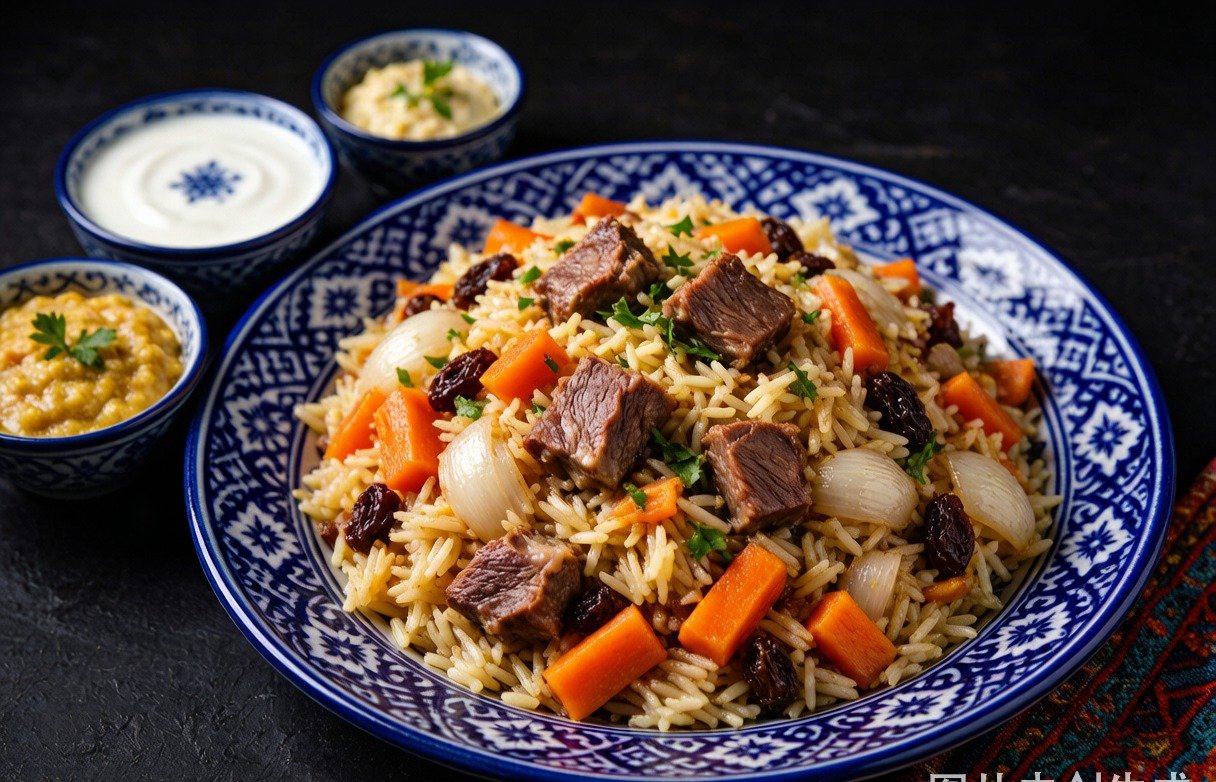 Xinjiang Polo pilaf with lamb and carrots in a traditional wooden bowl” />
A Dish That Traveled the Silk Road
The word Polo comes from the Persian polow / pilaf, and the technique is thousands of years old. It spread from ancient Persia along the Silk Road, evolving in every stop: the Uzbeks made it with chickpeas and quince; the Indians turned it into biryani with saffron and chilies; the Uyghurs made it their own with local lamb, wild carrots, and Xinjiang spices.
Historical records suggest that Polo was already a staple in the oasis cities of the Tarim Basin—Kashgar, Kuqa, Turpan—more than 1,500 years ago. The dish was practical: it could feed a large family from a single pot, it stored well, and the calories from rice and lamb were essential for life on the trade routes.
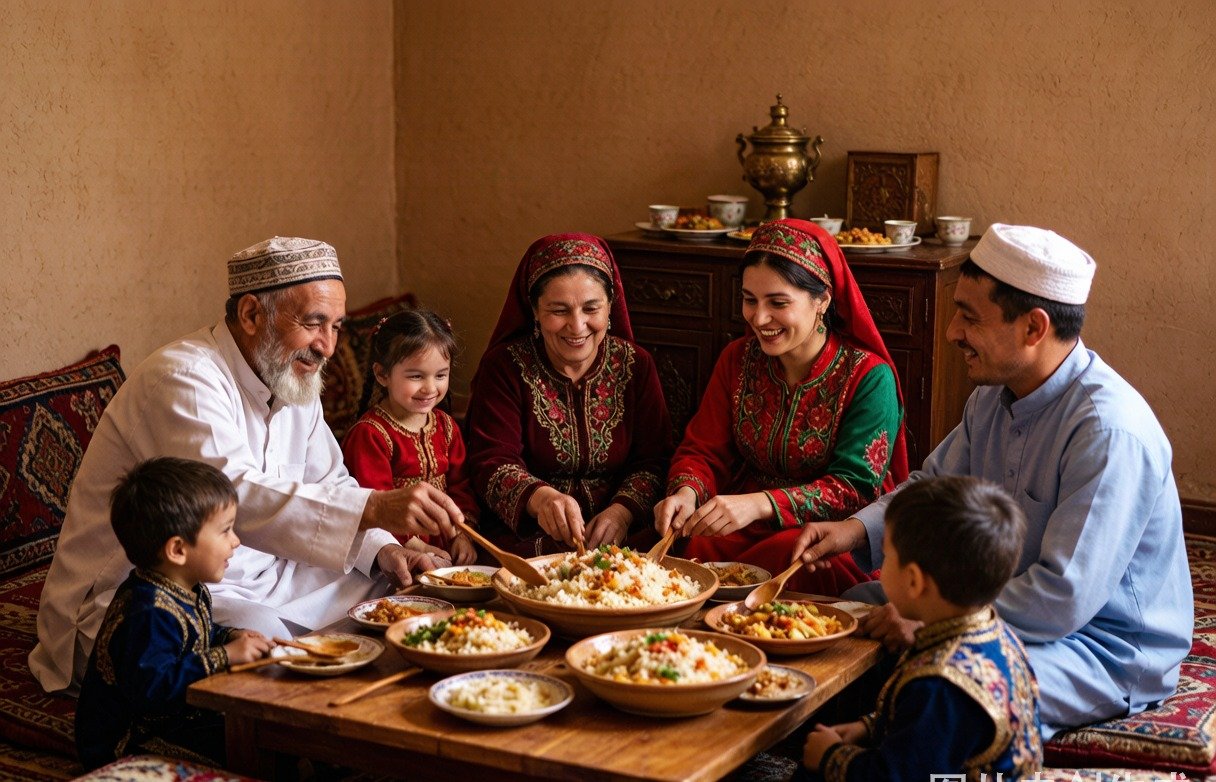
Today, Polo carries deep cultural meaning. At a Uyghur wedding, the groom’s family prepares a massive cauldron of Polo to serve all the guests. During Roza Heyt (Eid al-Fitr) and Kurban Heyt (Eid al-Adha), no celebration is complete without it. When a guest arrives at a Uyghur home, the host does not ask “Are you hungry?”—they simply start making Polo.
Ingredients: What Makes Xinjiang Polo Unique
Polo looks simple. It is not. Every ingredient has a reason, and the best versions are the result of small choices that separate a good Polo from a forgettable one.
The Rice
The foundation is long-grain rice, ideally the local Xinjiang variety or high-quality Indica. The grains must remain separate after cooking—never mushy, never sticky. The rice is washed 3-5 times before cooking to remove excess starch. Some chefs soak it for 30 minutes; others swear by adding it directly to the hot broth. Both methods work; the difference is in the final texture.
The Meat
Lamb is traditional and, for purists, the only option. The best Polo uses lamb with a moderate amount of fat—the fat renders into the rice as it cooks, giving it that characteristic richness. In Kashgar, you will sometimes find Polo made with beef; in northern Xinjiang, chicken Polo appears on some menus. But if it is your first time, order the lamb version.
The Carrots (Yes, Carrots)
This is the surprise for first-time visitors. Polo is orange because of carrots—lots of them. They are cut into thick strips and fried with the meat at the beginning, then slowly release their sweetness into the rice. In Xinjiang, two types of carrot are used: the common orange carrot and the local Hongxin (red-heart) carrot, which is sweeter and more aromatic.
The Onions
Onions (piyaz in Uyghur) are fried first to create the flavor base. They must be cooked slowly until soft and golden but not burnt. In many Uyghur kitchens, the onion fat is considered the most important part of the entire dish.
The Spices
The spice blend is deceptively simple: cumin (the signature Silk Road spice), black pepper, sometimes a touch of cinnamon or star anise, and salt. No chili. Real Polo is not spicy—it is fragrant. If your Polo is burning your mouth, you are not eating the traditional version.
The Optional Extras
In different regions you will find additions: raisins (especially in Turpan Polo), chickpeas, dried apricots, or even quail eggs. In Kashgar restaurants, it is common to see Polo served with a wedge of pickled garlic on the side—don’t skip it, the combination is outstanding.
How to Make Polo: A Home Kitchen Guide
You do not need a polot-kazan (traditional Polo cauldron) to make a respectable version at home. Here is a practical recipe that works in a standard heavy-bottomed pot or Dutch oven.
Ingredients (Serves 4-6)
- 500g lamb shoulder or leg, cut into bite-sized cubes (include some fat)
- 400g long-grain rice, washed and drained
- 3 large carrots, cut into thick matchsticks
- 2 large onions, sliced
- 3 tablespoons lamb fat or vegetable oil
- 1 teaspoon cumin seeds (or 2 tsp ground cumin)
- 1/2 teaspoon black pepper
- 1 teaspoon salt (adjust to taste)
- 600ml hot water or lamb stock
- Optional: 50g raisins, 50g chickpeas (pre-soaked)
Step-by-Step
Step 1 — Render the fat: Heat the lamb fat or oil in a heavy pot over medium-high heat. Add the onion and fry until golden and soft, about 5-7 minutes. This step builds the flavor foundation—do not rush it.
Step 2 — Brown the meat: Add the lamb cubes and brown on all sides. Season with cumin, black pepper, and half the salt. The meat does not need to be fully cooked at this stage—it will finish in the rice.
Step 3 — Add the carrots: Stir in the carrot matchsticks and cook for 3-4 minutes until they begin to soften. If using raisins or chickpeas, add them now.
Step 4 — Add water and simmer: Pour in the hot water or stock. The liquid should just cover the meat and vegetables. Bring to a boil, then reduce to a gentle simmer. Cover and cook for 20-25 minutes until the meat is tender.
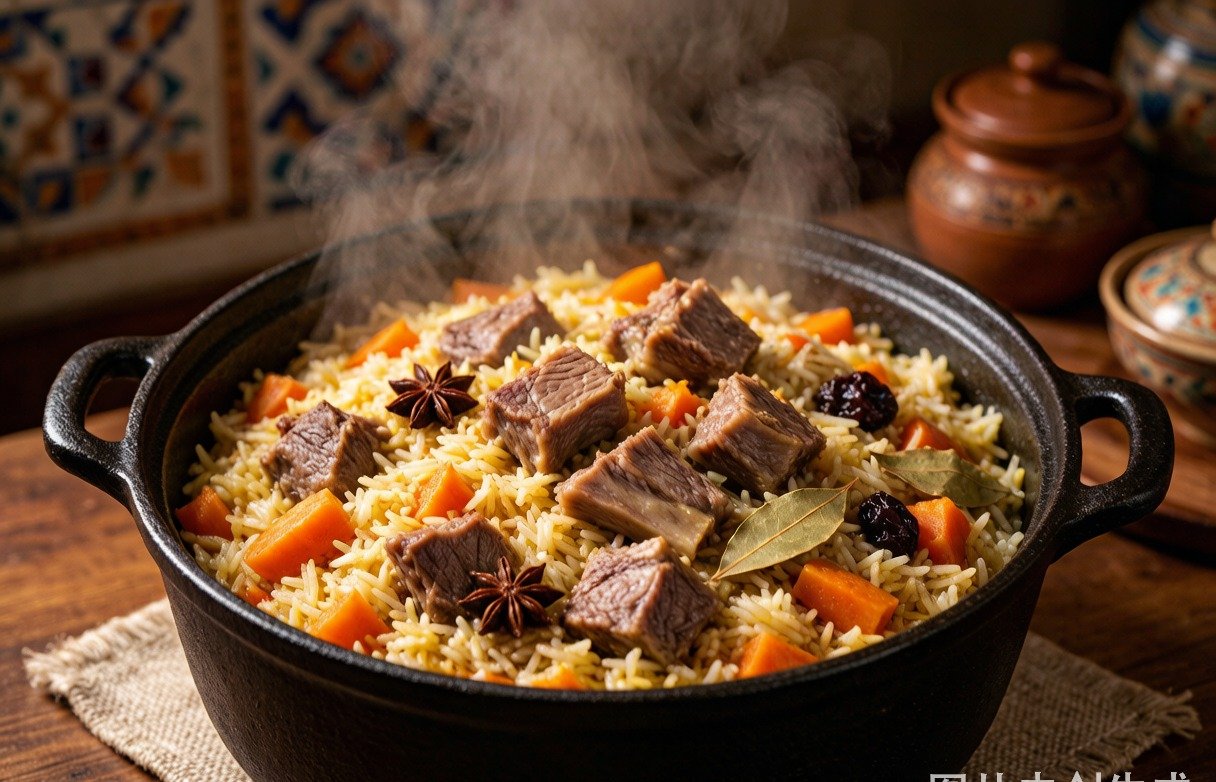
Step 5 — Add the rice: Spread the washed rice evenly over the meat and vegetables. Do not stir—the rice should sit on top in an even layer. If the liquid has reduced too much, add a little more hot water so it comes about 1cm above the rice level.
Step 6 — The steam: Cover tightly (place a clean kitchen towel under the lid to seal in the steam). Reduce heat to the lowest setting. Cook for 20-25 minutes without lifting the lid. The rice will absorb all the liquid and steam to perfection.
Step 7 — The mix: Turn off the heat. Remove the lid and, using a large spoon, gently fold the rice, meat, and carrots together. Taste and adjust salt. Let it rest for 5 minutes before serving.
Where to Eat the Best Polo in Xinjiang
Polo is everywhere in Xinjiang, but quality varies dramatically. Here are the most reliable places to find an exceptional version.
Kashgar (Kashgar Old Town)
Kashgar is the spiritual home of Uyghur Polo. The restaurants around the Id Kah Mosque and inside the Old Town serve some of the most authentic versions you will find anywhere.
- Price range: 25-45 RMB per portion
- What to order: “Kashgar Polo” (with lamb, carrots, and often a side of pickled garlic)
- Pro tip: Go in the morning (9-11 AM) when the rice is fresh and the meat is at its tenderest. Many Kashgar opol (restaurants) sell out by 2 PM.
Urumqi (Grand Bazaar Area)
Urumqi has more restaurant variety, including modern takes on Polo. The area around the International Grand Bazaar (Erdaoqiao) has dozens of Uyghur restaurants where Polo is a menu staple.
- Price range: 30-60 RMB per portion
- What to order: “Dabang Polo” (served in a large wooden bowl, often with extra lamb on top)
- Pro tip: Look for restaurants where the Polo is cooked in a visible open kitchen—the sight of the large cauldron is your quality guarantee.
Yining (Yili Valley)
The Yili region has its own Polo style, often slightly sweeter due to the local carrot varieties and sometimes including wild herbs. The night market in Yining is an excellent place to try a roadside version.
- Price range: 20-35 RMB per portion
- What to order: “Yili Polo” (often served with a side of local dairy—kaymak or yogurt)
On the Road: Highway Rest Stops
Surprisingly, some of the best Polo in Xinjiang is found at highway rest stops along the G30 and the Duku Highway. These are often cooked in massive cauldrons by experienced chefs and served fresh to travelers. If you see a line of truck drivers at a rest stop—get in line. They know.
How to Order Polo: English Menu Reference
Most Uyghur restaurants have a Chinese-only menu, and English is not widely spoken. Here is a practical reference to help you order with confidence.
| Dish Name (English) | Uyghur / Chinese | Description |
|---|---|---|
| Polo (Lamb Pilaf) | Zhuafan (抓饭) / Polo | The classic: rice, lamb, carrots, onions |
| Dabang Polo | 大帮抓饭 | Served in a large bowl, extra meat |
| Chicken Polo | 鸡抓饭 | Milder, less fatty than lamb version |
| Vegetable Polo | 素抓饭 | No meat; carrots and onions only |
| Polo with Pickled Garlic | 抓饭配糖蒜 | The classic side—order it every time |
| Shopan (Milk Tea) | 奶茶 | Salty milk tea—the perfect Polo companion |
Useful phrases:
- “Yi fen zhuafan, xiexie” — One portion of Polo, thank you
- “You tang ma?” — Is there soup/broth? (Some places serve Polo with a side of meat soup)
- “Tian ma?” — Is it sweet? (Some versions include raisins and taste slightly sweet)
- “Bie fang lajiao” — Please don’t add chili (Polo is normally not spicy, but some kitchens add chili flakes on top)
 Uyghur restaurant” />
Polo Etiquette: How to Eat It Like a Local
In Uyghur culture, Polo is traditionally eaten with the right hand (using thumb and fingers to shape small portions of rice). Using your left hand is considered impolite. That said, in tourist-friendly restaurants, forks and spoons are always available—and no one will be offended if you use them.
If you are invited to a Uyghur home for Polo, observe these customs:
- Wash your hands before eating (a basin and pitcher will be brought to you)
- Wait for the eldest person to start eating first
- It is polite to accept a second serving—refusing can be seen as impolite
- After eating, place your right hand over your heart and say “Rahmat” (thank you)
Polo and Uyghur Cuisine: A Deeper Connection
Polo is only the beginning. Once you have tried an authentic version in Kashgar or Urumqi, you will start to see the logic of Uyghur cuisine everywhere: the careful layering of flavors, the respect for ingredients, the balance of sweet and savory, the communal nature of every meal. Polo is the dish that best represents this philosophy—simple ingredients, patient technique, and a result that is far greater than the sum of its parts.
On your next trip to Xinjiang, make Polo your daily breakfast or lunch. It costs less than a coffee in London or New York, it will keep you fueled for hours of exploring the bazaars and landscapes, and—most importantly—it is the most direct way to understand the culture you have traveled so far to experience.
Practical Tips for Food Travelers
- Best time to eat Polo: 9-11 AM for the freshest rice; most traditional places sell out by early afternoon
- Average price: 25-45 RMB in local restaurants; up to 80 RMB in high-end Uyghur restaurants in Urumqi
- Vegetarian option: “Su zhuafan” (素抓饭) is available in most places—it omits the meat but keeps the carrot-onion flavor base
- Takeaway: Many small Polo shops will pack it in a disposable container for takeaway—perfect for long bus or train journeys
- Dietary note: Traditional Polo is halal. All meat is slaughtered according to Islamic practice. Pork is never used.
Final Thoughts
You can read about the Silk Road, you can visit the ruins, you can walk through the Old Town in Kashgar at sunset—but until you have sat at a low table with a steaming bowl of Polo in front of you, you have not really arrived in Xinjiang. It is a dish that connects you to 1,500 years of history, to the families who have been making it the same way for generations, and to the simple, generous hospitality that defines this part of the world.
Order it. Eat it with your fingers if you dare. And when you get home, try making it yourself—the recipe above will get you surprisingly close to the real thing.