
Xinjiang Kebabs: The Ultimate Guide to Chuan’r, Barbecue Culture, and Where to Eat Them
Xinjiang Kebabs: The Ultimate Guide to Chuan’r, Barbecue Culture, and Where to Eat Them
Last updated: June 2026
Walk into any night market from Kashgar to Urumqi and the first thing that hits you isn’t the sight—it’s the smell. Wood smoke, sizzling fat, cumin, and chili drifting over charcoals that have been burning since dusk. This is the scent of Xinjiang, and at the center of it all are the kebabs: skewers of marinated meat grilled over open flame, known locally as chuan’r (串儿).
For foreign travelers, Xinjiang kebabs are often the gateway into the region’s food culture. They’re cheap, everywhere, and genuinely addictive. But there’s more to them than meat on a stick. This guide walks you through what they are, how they’re made, the different varieties you’ll encounter, and—crucially—where to find the best ones.
What Are Xinjiang kebabs, Really?
The word kebab means different things in different places. In Turkey it might be doner; in India, seekh kebab minced and spiced. In Xinjiang, a kebab (chuan’r) is specifically cubes of meat—almost always lamb—threaded onto a metal or wooden skewer, seasoned with salt, cumin, and chili, then grilled over charcoal.
The technique traces back along the Silk Road. Central Asian nomadic groups grilled meat over open fires as a practical way to cook while moving livestock. The Uyghur version evolved to use the specific spice profile that defines Xinjiang cooking: cumin (introduced via trade with Central Asia), chili (via the Americas, later adopted into Chinese cuisine), and salt. No complicated marinades, no long resting times—just good meat, high heat, and confidence.
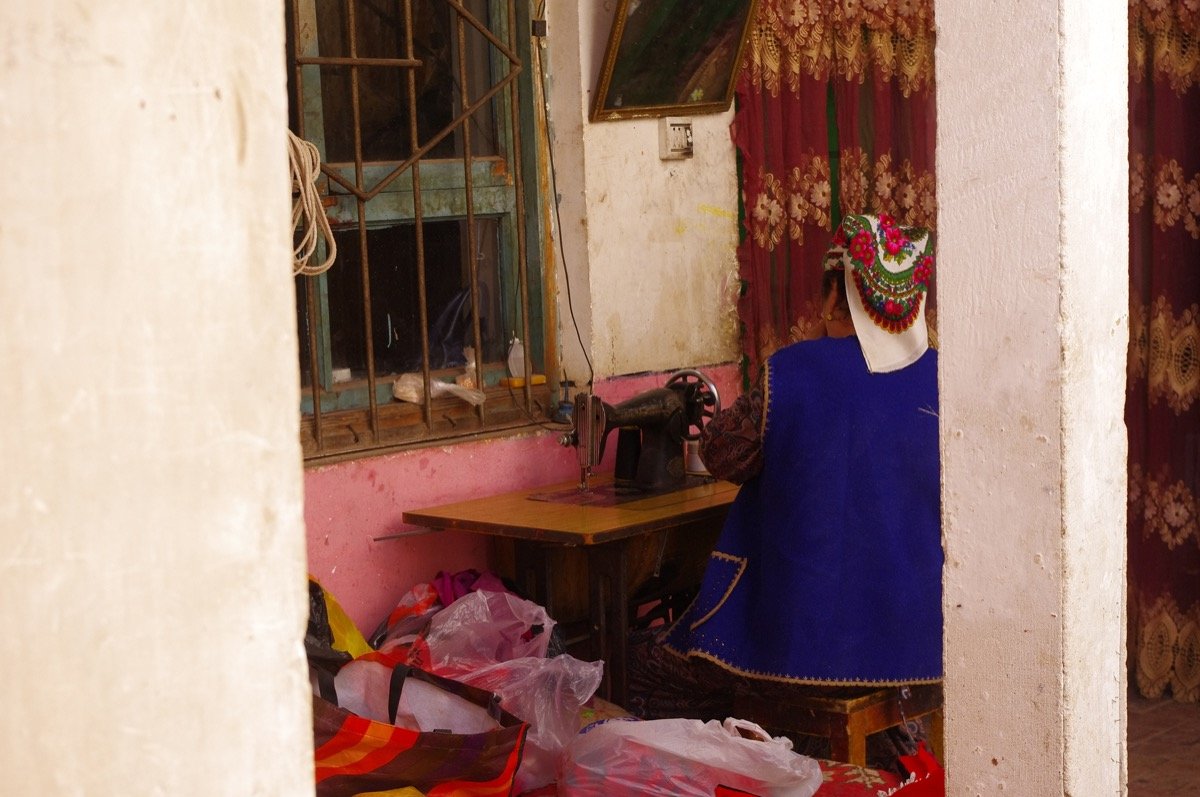 Kashgar Old Town night market with kebab stalls and grilled meat skewers”>
The Anatomy of a Perfect Xinjiang Kebab
A proper Xinjiang kebab has three non-negotiable elements:
1. The meat: Almost always lamb (yang rou). The cuts used are shoulder or leg, with small pieces of fat interleaved between the meat cubes. That fat is essential—it renders over the charcoal, basting the meat as it cooks. The result is juicy, slightly smoky, and rich without being greasy. Beef appears occasionally; chicken is less common but available in some cities.
2. The seasoning: Before grilling, the meat is tossed with a mix of salt, ground cumin, and chili flakes. Some vendors add a pinch of black pepper or a drop of vegetable oil. That’s it. The goal is to enhance the meat, not mask it. Over-spiced kebabs are a tourist trap warning sign—authentic ones let the lamb speak for itself.
3. The grill: Real Xinjiang cuisine kebabs are grilled over charcoal, preferably from fruit wood (apple or apricot wood gives a subtle sweetness). You can tell immediately: if there’s no wood smoke, it’s not the real thing. The skewers are turned constantly by hand, not spun on an electric rotisserie.
Types of Kebabs You’ll Encounter
Yang Rou Chuan (lamb kebab) — The Classic
This is the default. Cubes of lamb threaded 4-5 per skewer, grilled until the edges crisp and the fat renders. In Kashgar and other southern Xinjiang towns, the meat is often slightly fattier and more aggressively spiced; in the north (Urumqi, Yining), the seasoning tends to be more restrained.
Price: ¥3–8 per skewer depending on city and tourist factor. In local neighborhoods, ¥3–5 is normal; at airport restaurants, expect ¥10+.
Dapan Kebab (Big Plate Kebab)
A newer invention aimed at the Instagram era: a massive skewer (sometimes 30–50 cm long) with larger meat chunks, often served with flatbread and onions on the side. These are more of a meal than a snack. They originated in Urumqi’s food streets and have spread across the region. Fun to order, filling, and very photogenic—but purists will tell you the smaller skewers have better fat-to-meat ratio.
Ji Rou Chuan (Chicken Kebab)
Cubes of chicken thigh (sometimes breast, but thigh is juicier) with bell pepper and onion alternating on the skewer. Less traditional than lamb but common in Halal-friendly spots where diners might avoid red meat. The flavor is milder; vendors often add extra chili to compensate.
Shu Cai Chuan (Vegetable Skewer)
Not technically a kebab in the meat sense, but these share the grill: capsicum, eggplant slices, tomato halves, and mushrooms threaded and spiced the same way. Eggplant is the standout—the flesh goes creamy against the charred skin. Vegetarians will find Xinjiang street food challenging (almost everything is meat-based), but vegetable skewers and naan are reliable fallback options.
Yaka Kebab (Grilled Lamb Flank)
In some Uyghur restaurants, you’ll see yaka on the menu—this is a flat, wider cut of lamb (flank or skirt) threaded onto a broader skewer, almost like a small steak on a stick. The texture is different: slightly chewier but more intensely flavored. If you see it, order it.
The Culture of Kebabs: Night Markets and the Social Grill
Kebabs in Xinjiang aren’t just food—they’re a social institution. The rhythm of a Xinjiang evening goes like this: dinner around 20:00 (Xinjiang runs on UTC+6, two hours behind Beijing), then, once it’s fully dark, everyone drifts toward the night market or the food street. Families, couples, groups of friends—all moving from stall to stall, ordering skewers by the half-dozen, eating standing up or perched on plastic stools.
The grill master is usually a young Uyghur man working a portable charcoal brazier, sometimes with a battery-powered fan to stoke the fire. He’ll have a metal cart with spice trays, a stack of skewers, and a pair of long metal tongs. Watching him work is part of the experience: the rhythm of turning, the practiced shake of the cumin tin, the way he knows exactly when a skewer is done without checking.

Where to Eat the Best Kebabs in Xinjiang
Kashgar (Kashi) — The Spiritual Home
If you only eat kebabs in one Xinjiang city, make it Kashgar. The Kashgar Old Town night market (near the East Gate) is the most famous, but don’t overlook the smaller stalls tucked into the alleyways of the old city. Some of the best kebabs I’ve had were from a tiny operation with three skewers and a charcoal brazier, run by a guy who’d been doing it for 20 years in the same spot.
Where to go: Kashgar night market (Ye Shi) behind the Old City East Gate; the food street near Id Kah Square in the evenings; and the small grills outside the Sunday Livestock Market if you’re there on a Sunday morning (yes, kebabs for breakfast is a thing).
Urumqi — The Capital’s Food Streets
Urumqi has the most diverse kebab scene because it’s the most cosmopolitan city in Xinjiang. You’ll find traditional Uyghur grills, but also fusion styles and higher-end restaurants serving elevated versions. The International Grand Bazaar (Erdaoqiao) area has a dense cluster of kebab stalls in the evening.
Where to go: The food street behind the Grand Bazaar (starts around 21:00); Hongshan Park area for a more local crowd; and the night market on Renmin Road for a mix of Uyghur, Kazakh, and Han Chinese street food.
Yining (Ghulja) — The Ili Valley Style
Yining’s kebabs reflect the city’s Kazakh influence. You’ll see more beef and horse meat options (yes, horse meat kebabs are a thing in Ili), and the seasoning tends to be slightly different—more black pepper, sometimes a brush of melted butter before serving. The Yining food scene is underrated and less touristy than Kashgar or Urumqi.
Where to go: The night market along Jiefang South Road; the food stalls near the Ili River bridge in the evening.
Turpan — The Oasis Grill
Turpan’s kebabs are notable for being cooked in extreme heat—sometimes the ambient temperature is 40°C and the grill is another 300°C. The result is a very fast sear. Turpan vendors also sometimes offer chuan’r served with a side of steamed buns (mantou) to soak up the juices. It’s a practical, filling combination.
How Xinjiang Kebabs Are Made: The Technique
If you’re curious about the process (or want to try making them at home), here’s the traditional method:
Step 1 — Meat selection: Lamb shoulder or leg, cut into 2–3 cm cubes. Fat is left on and cut into similar-sized pieces. The fat-to-meat ratio is typically 1:3 or 1:4 per skewer.
Step 2 — Seasoning: The cubed meat is tossed with salt, ground cumin, and chili flakes. Some recipes add a splash of vegetable oil or a sprinkle of cornstarch to help the spices adhere, but many vendors keep it dry. Marination time can be as short as 15 minutes or as long as overnight—there’s no consensus, and both approaches produce good results.
Step 3 — Threading: Metal skewers (reusable) are more common than wood now, though you’ll still see wooden ones in rural areas. The pattern is usually meat-fat-meat-fat-meat, with 4–6 pieces per skewer depending on size.
Step 4 — Grilling: Over hot charcoal (not gas), turned every 30–60 seconds. Total cooking time is 3–5 minutes. The goal is a sear on the outside, pink-but-safe on the inside. Overcooked kebabs turn gray and dry—a tragedy.
Step 5 — Serving: Slid off the skewer onto a plate, or handed to you still on the stick (the more common street style). Often served with raw onion slices, which cut the richness of the lamb beautifully.
Etiquette and Tips for Travelers
How to order: Point and hold up fingers. “San chuan’r” (three kebabs) works fine; most vendors speak enough basic English or will just smile and nod. In Uyghur-speaking areas, “uch chuan’r” (three kebabs) might get a bigger smile.
Spice level: Xinjiang kebabs are moderately spiced by default. If you want more chili, say “la yi dian” (a bit spicy) or “hen la” (very spicy). If you want mild, “bu yao la” (no spice) usually works. Cumin is harder to skip—it’s fundamental to the flavor—but you can ask, and they might accommodate.
Accompaniments: Kebabs are almost always eaten with naan (flatbread) and often with laghman noodles or polo (pilaf) as part of a larger meal. A plate of kebabs + naan + a bowl of laghman is a complete dinner for one person, and it’ll cost you under ¥50.
Safety: Stick to busy stalls with high turnover. The meat should be grilling in front of you, not pre-cooked and reheated. If a stall looks empty while the one next to it has a crowd, trust the crowd.
Timing: Kebabs are an evening food. Most stalls don’t set up until after 20:00, and the best ones often sell out by 23:00. Plan accordingly—showing up at 19:00 will get you lukewarm coals and limited options.
Kebabs Beyond the Street: Restaurant Versions
While street kebabs are the soul of the tradition, Uyghur restaurants also serve elevated versions. In a proper Uyghur restaurant, you might encounter:
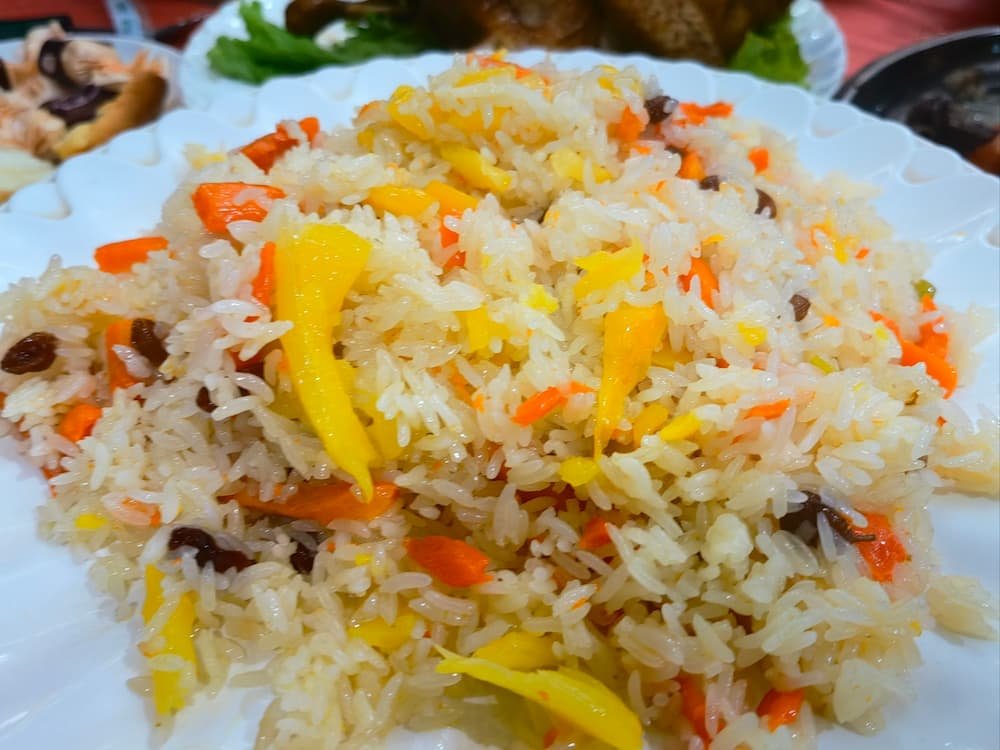
- Zhua Fan with Kebab: A skewer served on top of a plate of polo (pilaf), the juices running into the rice. This is comfort food at its peak.
- Kebab Platters: A selection of different skewer types (lamb, chicken, vegetable) arranged on a shared plate for the table. Good for groups.
- Indoor Grills: Some restaurants have built-in charcoal grills at each table (like Korean BBQ but Uyghur-style), where you grill your own skewers. Fun, interactive, and hard to mess up.
A Note on the Name: Chuan’r vs. Kebab
You’ll see both terms used. Chuan’r (串儿) is the Chinese term, derived from the word for “string” or “skewer.” Kebab is the English borrowing from Persian/Arabic/Turkish. In Xinjiang, Uyghur speakers use the word shashlik (from the Turkic root for “skewer”)—so if you want to sound local, order “shashlik” in a Uyghur restaurant. In practice, pointing and smiling works everywhere.
Practical Information for 2026 Travelers
| Topic | Detail |
|---|---|
| Average price (local stall) | ¥3–8 per skewer |
| Average price (tourist area) | ¥8–15 per skewer |
| Best time to eat | 20:30–23:00 |
| Vegetarian options | Vegetable skewers, naan, polo (sometimes without meat) |
| Allergies | Cross-contamination is common; open grills share space |
| Payment | Cash preferred at street stalls; WeChat Pay / Alipay at restaurants |
The Bottom Line
You haven’t really been to Xinjiang until you’ve stood on a street corner at 21:30, smoke in your hair, cumin on your fingers, working through a plate of lamb skewers and a chunk of naan. It’s not fine dining. It’s not healthy. It’s not even particularly clean by Michelin standards. But it’s真实 (real), it’s delicious, and it’s one of the most distinct culinary experiences you’ll have in China.
If you’re planning a Xinjiang solo travel itinerary, build your route around the food as much as the scenery. The landscapes will stay with you, but the taste of that first perfect kebab—charred edges, rendered fat, cumin sharp on the tongue—that stays with you longer than you’d expect.
Know a kebab spot we missed? Spotted a stall in a village that wasn’t on the map? Let us know. We’re always updating this guide with new finds from the road.