
Xinjiang on Beijing Time: Time Difference, Meal Hours, and the Early-Out Late-Back Driving Rhythm
My first trip to Xinjiang was mid-July 2019. When I landed at Urumqi Diwopu the phone read 10:40 p.m. Walking out, the sky was still light, western clouds lit orange like a 7 p.m. inland. I tapped the lock screen again. No mistake: 22:40.
The driver asked if I’d eaten. I said on the plane. He said good, you can still eat in the city; roadside barbecue stalls were just firing up. That night I set the alarm for 7 a.m. to leave for Nanshan by eight. I woke to full daylight, went down for noodles, and found only one convenience store open, clerk dozing. The front desk girl said breakfast starts at 8:30, why not sleep more?
That is Xinjiang self-drive lesson one, and it has nothing to do with the car. You must first make sense of time.
One Time Zone, but the Sun Doesn’t Read Maps
All of China uses Beijing time, UTC+8, based on 120°E. No exceptions; Xinjiang is the same. Your phone, tickets, notices, checkpoint logs all show Beijing time.
The problem is Xinjiang sits far from 120°E. Urumqi is around 87°36’E, over 32 degrees off, so its true solar time runs about two hours ten minutes behind Beijing time. When your phone says noon, Urumqi’s sun has only reached roughly 10 a.m.
Farther west the gap widens. Kashgar near 76°E runs nearly two hours fifty minutes behind; Tashkurgan is farther still. Heading east, Hami at 93.5°E narrows it to about one hour forty minutes, so Hami feels “normal” next to Kashgar. From Hami to Tashkurgan is nearly 2,000 km and over an hour of solar difference within Xinjiang itself.
Keep one rough conclusion: Xinjiang’s sun runs about two hours behind your phone. Southern Xinjiang adds another half hour. That sentence carries your whole trip.
You’ll Hear “Xinjiang Time”
Folk “Xinjiang time” is simply Beijing time minus two hours, used mostly by older villagers and bazaar traders. Young people and all formal settings, offices, schools, stations, hospitals, use Beijing time only. What you adapt to is that life overall shifts two hours later.
I learned this the hard way. In Kashgar I booked a car to White Sand Lake for “nine at the hotel.” At nine no show; he said our nine, I’ll be at eleven. We left two hours late and the light had gone harsh. Since then I always ask: is that Beijing time?
Locals Live Two Hours Later
The routine isn’t laziness; bodies follow the sun. With sunrise and sunset both late, eating and sleeping follow.
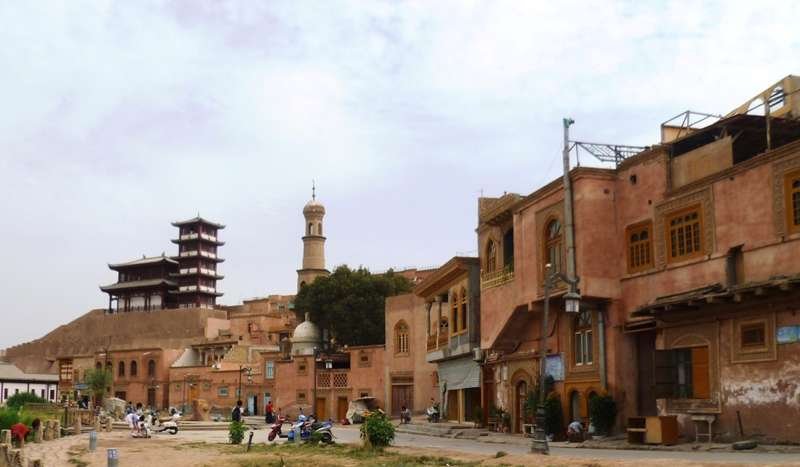
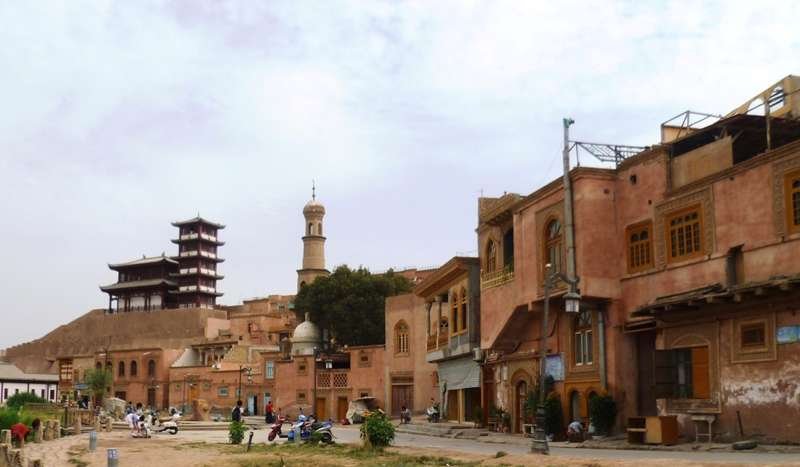
A common summer rhythm: offices open at 10, lunch break 1:30 to 2, back 3:30 or 4, off 7:30 to 8. Lunch falls between 2 and 3 p.m., literally. Walk into a noodle house at noon and the kitchen may still be chopping. Dinner is 9 to 10 p.m., night markets full at 11. Last August in Kashgar old town I ate baked buns at 9:30 p.m. expecting closing; two-thirds of the tables were taken.
Understand this and much falls into place. You stop complaining and start fitting your plan into it, because the whole society’s open hours run on it.
Park Hours Are Beijing Time, Don’t Convert
All official opening times are Beijing time; you do not subtract two hours. But because life shifts later, those times look absurdly late and many assume a typo.
The regional museum opens 10:30, closed Mondays; arrive at 9 and only the guard is there. Around Kashgar, shops near the old town barely stir before 10, shutters up around 11. Natural parks open earlier, following daylight; Kanas, Hemu, Nalati start shuttles around 7 or 8 so you catch sunrise, and for Kanas’s sea of clouds many leave before 4 a.m.
My habit: call the night before to confirm, not check a webpage. Hours shift with season and crowds; online info lags. Checkpoints also log Beijing time; most main ones staff 24 hours, but remote border gates have hours. Tashkurgan’s permit office follows the “10 open, 2 lunch” rhythm; arrive at 2:30 and wait until 4. The Duku opens only in summer, typically mid-June to mid-October, with timed releases and possible night bans; all notices are Beijing time.
Summer Daylight Runs Longer Than You Expect
Late June has the longest days. Around Urumqi the sky whitens around 5:20 a.m., sunset near 22:00, fully dark after 22:40, roughly seventeen hours of light. Kashgar runs another forty minutes later; for the Milky Way wait until 23:30.
The gain is obvious: more road and sights than inland, by hours. The loss is over-driving. With light out you feel it’s early, another hundred kilometers slips by, then your hotel is 150 km of mountain road away. I once finished the Bayinbuluk-to-Kuqa pass in the dark, palms sweating.
Daylight varies by month; June and September differ by over two hours. For each month’s light and weather, check our Xinjiang month-by-month weather guide, then decide daily mileage.
Breakfast Is the Biggest Trap
Before 8 a.m. Beijing time most towns have no proper place to eat. Hotel breakfast runs 7:30 to 10 by tier; county guesthouses may skip it; homestay hosts rise late, tell them the night before.
The fix: prep the night before. Buy two naan, yogurt, boiled eggs, almonds or raisins. Naan keeps in the car, crumbled into yogurt it’s a meal. Highway service stores run 24 hours with noodles and bread, but township gas stores vary; I hit one locked, clerk saying the manager arrives at 11. Keep food and drink in the car; a thermos or car kettle is worth carrying. Details are in our Xinjiang self-drive essentials checklist.
The Lunch Break: Doors Likely Closed
Between 2 and 4 p.m. your odds of getting anything official done drop. Gas pumps run, but repair bays may nap two-plus hours. Banks and permit windows post breaks plainly; in Korla I arrived at 1:40 to a 14:00 to 15:30 rest sign. I turned this into my own break, parking in shade or ordering slow soup-noodles. For must-do tasks, aim for 11 to 1:30 or after 4.
How I Schedule My Day
My stable summer northern Xinjiang timetable, all Beijing time: up at 7 (sky light over an hour); leave 8:30 to 9 (few cars, slanted light, good photos); lunch 12 to 1:30 (kitchens just opening, food fast); 2 to 4 hide from the sun, no photos; 4 to 8 the best stretch, light soft, crowds thin; finish lodging by 9:30, holding this hard however bright; dinner 9:30 to 11.
Winter compresses this. December Urumqi sunrise nears 9:50, sunset about 18:10, only eight-odd hours of light; I leave at 9:30 or 10 and avoid mountain roads after 17:30.
Plan Mileage by Light, Not Kilometers
Inland you count kilometers; in Xinjiang count usable daylight first. Summer northern Xinjiang has fourteen hours, but meals, photos, checkpoints eat in. I cap real driving at seven to eight hours, about 450 to 500 km on ordinary roads, a comfortable ceiling.
Mountain roads discount further. The Duku, under 400 km, took me a full day 9 to 21 with little lingering, tight curves, low limits, possible control. Plan 400 km as “easy” and you’ll drive blind. Winter leaves maybe five or six real driving hours; I keep daily mileage 250 to 300 km. After sunset the half-hour of afterglow has weak contrast; Xinjiang roadsides carry sheep, cattle, camels near-invisible in dusk. When it darkens, stop. Run your plan against our pre-departure driving checklist, writing each day’s start, end, and backup lodging.
Service Areas, Restaurants, Supermarkets
Trunk expressway service areas are easiest: fuel and toilets 24 hours, but restaurants before 8 a.m. often only noodles. National roads follow local hours; before 10 the sign light isn’t on, and “dough not kneaded yet, want cold noodles?” is common. Cold noodles are always ready, which saved me. County supermarkets open around 10:30, close 22:00 to 23:00; township shops follow the owner’s mood. Many kitchens cook to order, so big-plate chicken at 22:00 is forty minutes; in a hurry pick noodles, soup, or kebabs.
Photographers: Shift Everything Later
Good light follows the sun. Summer northern Xinjiang sunrise near 6, blue hour 5:00 to 5:40; catch it and you’re up at 4:30. Sunset 21:50 to 22:00 with forty minutes of afterglow. Two golden windows: dawn 5 to 7:30, dusk 19:30 to 22. Between 11 and 17 the light crashes straight down, photos dull. Stars need 23:30 for true dark; shoot stars and sunrise and you get four-odd hours sleep, so schedule one star night then skip the early rise. Autumn is easiest: late September sunrise slips to 8, sunset 19:30, both in human hours.
With Elders and Kids, Drop Another Notch
The gap hits them harder. My parents’ first two Kashgar days were lost: no dinner by 9, mother’s stomach ached; 7 a.m. daylight woke her. Day three I moved dinner to 19:30 and it smoothed. With preschool kids cap distance under 200 km and honor the midday hotel break. Elders wake early; give them a walk or pre-bought breakfast so they don’t wait.
Lodging Time Notes
Hot water can trip you; city chains fine, but county inns and homestays, especially solar or boiler, often have it only in a window. Ask “when is hot water” at check-in. Checkout is usually noon, roomy by Xinjiang rhythm. Hemu, Kanas, Baihaba have shuttle last runs ending at dusk; time your village entry, don’t expect to drive down at night.
First Timer: Ease In for Three Days
Day one in a city, museum and bazaar, dinner on local rhythm, asleep before 23, no long drive. Day two a 200 km hop leaving at 10, allow a nap. Day three normal mileage and early rise; by then your clock has caught up. This looks like losing two days, but loosen early and the next ten won’t break from fatigue.
Routes: Hitting the Times
Duku, Nalati to Kuqa (mid-July): left 8:30, ate at Bayinbuluk at 10:30 because the next 100 km has no reliable eatery, viewpoint at 11:30 before crowds, past Tieliemaiti tunnel at 16:00 as temperature dropped to single digits, Dalongchi at 19:00, Kuqa at 21:00. Leave two hours later and the final pass is dark; the Duku at night is not advised.
Hemu mist: host said rise 4:30 to 5, climb 5:30, light by 6:20. Beijing-time 6:30 sunrise equals local solar 4:20; in Hemu, out at 5 is normal. Pamirs, Kashgar to Tashkurgan (late June): I left at 10 (late sunrise, quiet checkpoints), lunch in Tashkurgan at 14:00 after the altitude climb, Stone City at 19:00, sun behind hills at 21:30, among Xinjiang’s finest dusks. For Khunjerab get the border permit early. Desert highway Luntai to Minfeng: on road before 9, full tank, lunch prepped, one push; noon glare is unshootable, dawn and sunset are the beauty.
The Fatigue of the Gap Is Real
First two days your body runs the inland clock: 9 p.m. sun blazing yet you’re sleepy; 7 a.m. daylight yet you can’t wake. Seal the blackout curtain, carry a sleep mask; don’t push past 23:30. No caffeine after 4 p.m., since local solar is only 2 then. Follow the local two-hour midday rest and your afternoon sharpens. And don’t change your phone’s time zone; “Xinjiang time” in your head only, phone on Beijing time, or bookings and navigation break.
Contacting the Inland: A Two-Hour Offset
You eat at 21:00 and call parents; they’re bedtime. I once called at 22-plus and my mother asked “what’s wrong?” Now I call before 19:00. Conversely inland work meets at 9 while Xinjiang’s sun is at local 7; move meetings past 11 Beijing time. Train releases, flight sales, hotel cancels, park reservations all run Beijing time to the second; watch the clock, don’t read it as Xinjiang time. Delivery support opens at 9 Beijing time but local stations at 11, so don’t count on urgent items on the road.
Winter Is a Different Logic
December Urumqi sunrise nears 9:50, sunset 18:10; Kashgar’s past 10, only eight to nine hours of light. Your day compresses to half; night driving risk is higher with black ice, so reach lodging before dark. The gain is friendly light times: winter sunrise needs only a 9:30 rise. Monthly daylight and road conditions vary hugely; before fixing dates see our best time to visit Xinjiang in 2026.
Small Details Easy to Trip On
Navigation’s arrival time is trustworthy but won’t say if the destination is dark; I check sunset and back-calculate to arrive one hour before. Hotel check-in is Beijing time after 14:00, but a napping county innkeeper may not answer; call ahead. Refill at half tank anytime, many stations close after 20:00. Bazaars peak 11 a.m. to 2 p.m. and 6 to 9 p.m.; don’t expect open shops at 8 p.m. for souvenirs.
Frequently Asked Questions
Does Xinjiang use Beijing time?
Yes, all official times, tickets, notices are Beijing time. “Xinjiang time” is folk speech for local solar time, not an official zone.
Subtract two hours from park hours?
No. The listed time is the time; go by your phone. They look late only because local life runs late.
Good summer departure?
Northern Xinjiang 8:30 to 9:30, southern 9 to 10. Too early and shops are closed.
Max daily kilometers?
Summer plain highways 400 to 500 km ceiling; mountain roads half; winter 250 to 300. Adjust to stamina and car.
Southern vs. northern feel?
The south is farther west, solar time another 30 to 40 minutes behind, routine later; in Kashgar dinner past 21:30 matches locals.
Set phone to local time?
Never. Keep Beijing time; adjust the ruler in your head.
A Last Word
Time in Xinjiang costs nearly every first-timer tuition: missed sunrises, hungry mornings, waiting at a station until 4, driving mountain roads in the dark. One cause: applying inland routine to a sun two hours late.
Keep the phone on Beijing time; default the sun two hours late; prep tomorrow’s breakfast; plan mileage by daylight; stop when it darkens. Those few rules smooth the rest. I’ve come to like this rhythm, at 9 p.m. still waiting for sunset, the Milky Way overhead. For more first-timer details, see our ultimate Xinjiang first-timer tips, and step on the potholes on paper first.