
Drone Regulations in Xinjiang: Where You Can and Cannot Fly
I brought a drone to Xinjiang twice. On the first trip, in 2017, I flew it four times and nobody said anything. On the second, in 2023, I carried 900 grams of aircraft, controller and batteries for eighteen days across 3,400 km and launched it exactly once, at a spot a local guide specifically approved. It has stayed at home since.
That is the honest summary of drone flying in Xinjiang, and I would rather tell you now than have you discover it after paying excess baggage. What follows is the actual legal framework, the specific places where flying is prohibited, what happens when it goes wrong, and the narrow set of circumstances where it is genuinely worth bringing.
The Bottom Line
Flying a drone in China is legal and regulated. Flying one in most of the places you want to photograph in Xinjiang is not permitted, either because the airspace is controlled or because the scenic area management prohibits it. Enforcement is consistent and taken seriously.
If your itinerary is a standard tourist loop through Kanas, Sayram Lake, the Duku Highway, Kashgar and the Pamir, my recommendation is to leave the drone at home. If you are a working photographer with a commissioning client, you need a Chinese production partner handling permissions, not a travel blog.
The Legal Framework
China’s Interim Regulations on the Administration of Unmanned Aircraft Flight took effect on 1 January 2024. This replaced a patchwork of provisional rules with a single national framework covering registration, operator qualifications, airspace classification and penalties.
Three principles drive everything downstream. Civil drones above the micro threshold must be registered under a real-name system. Flight in controlled airspace requires prior approval. And operators need a licence for anything beyond the lightest categories in most circumstances.
| Category | Rough threshold | Registration | Operator licence |
|---|---|---|---|
| Micro | Under 250 g | Generally exempt | Not required |
| Light | Up to 4 kg empty, 7 kg max takeoff | Required | Not required in designated suitable airspace, operator 16+ |
| Small | Up to 15 kg max takeoff | Required | Required |
| Medium and large | Above 15 kg | Required | Required, plus flight approval |
Most travel drones fall into micro or light. A DJI Mini series aircraft under 250 g sits in the micro band, which is why so many travellers assume it is unrestricted. It is not. Micro drones are exempt from registration, not from no-fly zones, altitude limits or scenic area rules.
Registration, and Why It Is Hard for Foreigners
Registration happens through the CAAC’s UAS Operation Management system, usually referred to as UOM. You create an account, enter the aircraft serial number, and receive a registration number that must be displayed on the airframe.
The friction points for a foreign visitor are practical rather than legal. The interface is Chinese-language. Account creation expects a Chinese mobile number for verification. Identity verification is built around Chinese ID cards, and passport handling exists but is less smooth. Flight activity applications, where required, are submitted through the same system and expect you to describe the operation in Chinese.
I have watched a well-prepared photographer spend three evenings on this in a Urumqi hotel and give up. If you are determined, arrange it before you travel with help from a Chinese-speaking contact.
Where You Absolutely Cannot Fly
These are national restrictions and apply everywhere in China.
- Airports and their clearance zones. The protected area extends well beyond the fence line. Urumqi, Kashgar, Kanas, Yining, Korla, Hotan and Turpan all have active airports, and Xinjiang has been opening more of them, as covered in the 2026 flight route update. Several sit close to tourist areas.
- Military facilities and installations. Not always marked. Not always obvious.
- Government buildings and public security facilities.
- Border areas. Which in Xinjiang means a great deal of the frontier country, including the approaches to Khunjerab, the Irkeshtam and Torugart corridors, Baihaba and much of the Altai frontier.
- Railway lines, major power infrastructure, dams and reservoirs.
- Crowds and public gatherings. Markets, festivals, busy squares.
- Above 120 m altitude for light and micro categories in normal operation.
- Beyond visual line of sight, and at night without specific authorisation.
Xinjiang also sits under extensive controlled airspace. Even where none of the above applies, the airspace above you may still require prior approval to enter. That is the part that catches people who have checked a map app and concluded they are clear.
Scenic Areas: Case by Case
Separate from national airspace law, individual scenic areas set their own rules as site managers, and they enforce them through gate staff and security. A site can prohibit drones even where the airspace itself is technically usable.
| Location | Position in 2026 |
|---|---|
| Kanas Scenic Area | Prohibited. Signage at the gates, staff will intervene |
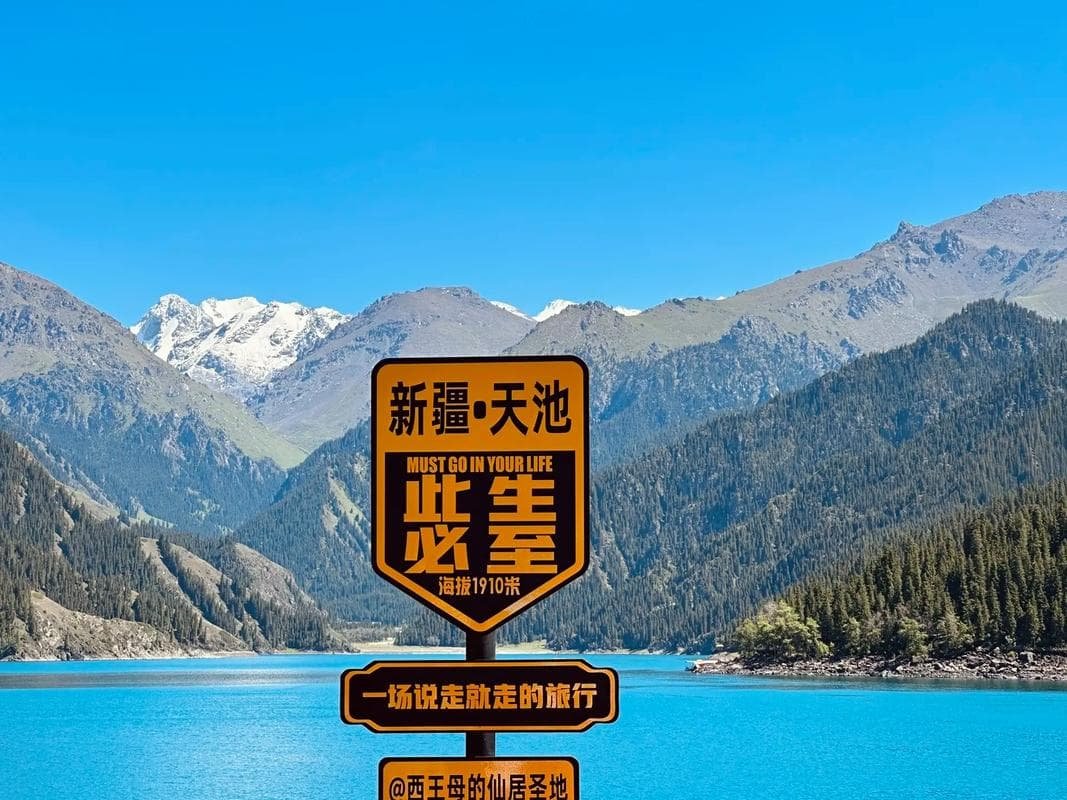
| Heavenly Lake (Tianchi) | Prohibited |
| Kashgar Old Town | Prohibited. Dense residential area, crowds, sensitive sites nearby |
| Id Kah Mosque and religious sites | Prohibited, and inappropriate regardless of the rules |
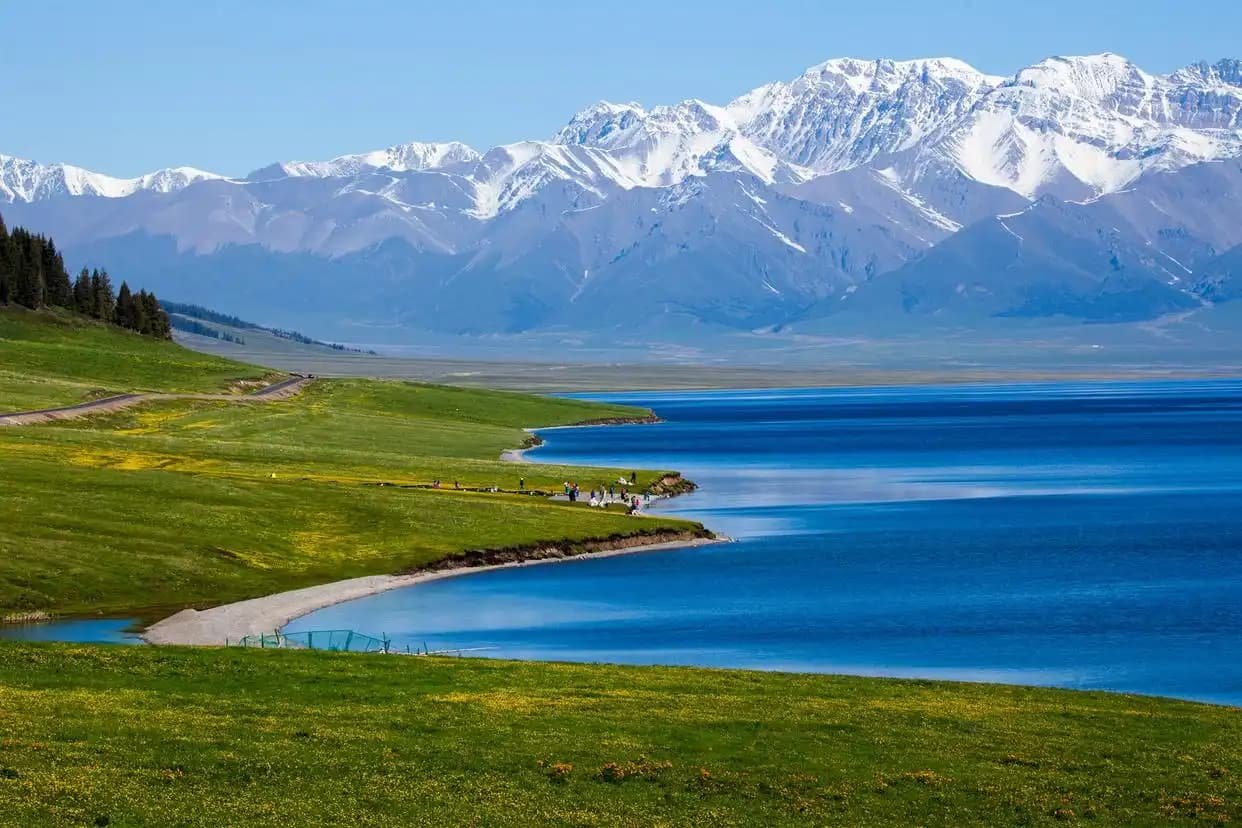
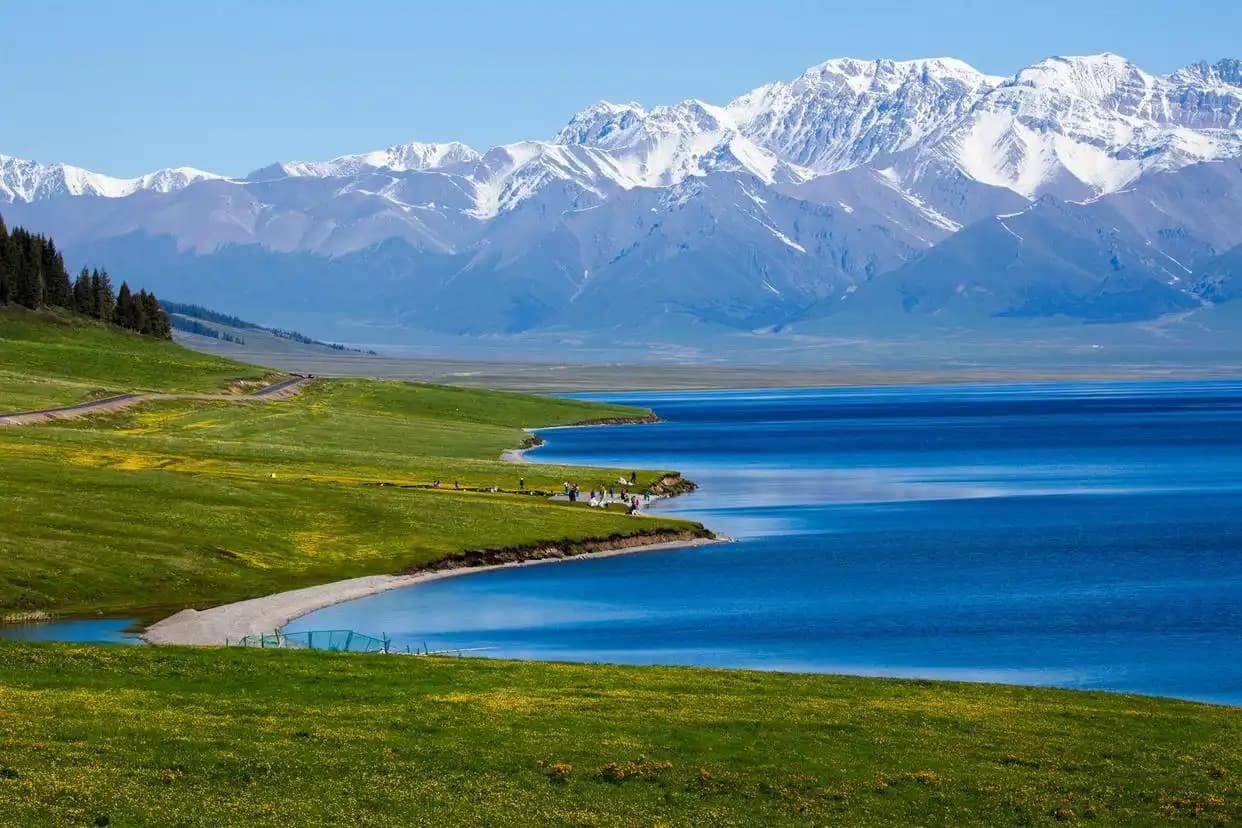
| Sayram Lake | Restricted, varies by zone and season. Ask at the gate |
| Nalati and Bayanbulak | Generally prohibited within the managed areas |
| Koktokay National Geopark | Restricted within the park. Ask management, do not assume |
| Duku Highway viewpoints | No blanket rule, but controlled airspace and checkpoints make it impractical |
| Karakul Lake and the Pamir | Border zone. Treat as prohibited |
| Turpan sites, Jiaohe and Gaochang | Prohibited as protected cultural heritage sites |
The pattern is clear enough. Everywhere worth flying is either a managed scenic area, a heritage site, a border zone or under controlled airspace. That is not an accident of geography, it is what makes those places significant.
What Happens If You Get Caught
The graduated reality, based on accounts from other photographers and one close call of my own.
Most common outcome: a member of scenic area staff or a security officer asks you to land immediately and put the aircraft away. Polite, firm, over in two minutes. This is what happens when you launch somewhere you should not have but caused no actual problem.
Next tier: your equipment is examined, footage is reviewed and you may be asked to delete it. You will be asked for your passport and your details will be recorded. Expect this to take an hour or more.
Serious tier: confiscation of the aircraft, an administrative fine, and a formal process. Under the 2024 regulations, penalties for unauthorised flight in controlled airspace or restricted zones start in the hundreds of yuan and rise substantially for serious cases. Flying near an airport or a restricted facility is at the top of that range.
The variable that matters most is where you flew, not how sorry you are afterwards. A drone over a grassland with no infrastructure in sight is a different conversation from a drone over a checkpoint. Do not treat this casually, and read the broader context in the Xinjiang travel safety update.
Getting the Drone There in the First Place
If you decide to bring one, the transport logistics are their own project.
Lithium batteries must travel in cabin baggage, never checked. Batteries up to 100 Wh are generally accepted without approval, and 100 to 160 Wh usually needs airline consent, with a typical limit of two spares. Most travel drone batteries sit comfortably under 100 Wh. Tape the terminals and carry them in individual bags or the manufacturer’s case.
Security screening at Chinese airports will identify a drone in your bag. Expect the case to be opened and the aircraft inspected, at both departure and arrival. At Kashgar and Urumqi this is routine and unhurried. Have the batteries accessible so you are not unpacking everything on the belt.
Train travel with a drone is possible, and security screening at stations is thorough. Long-distance buses vary.
Where Aerial Work Is Realistically Possible
There is a narrow band of situations where I would consider it. Open desert or steppe well away from any settlement, infrastructure, airport approach or frontier. Private land where the owner has agreed. Areas outside managed scenic zones where a local contact has confirmed the airspace status.
Even then, the sequence I would follow is: check the airspace status in the official system, confirm with a local who understands the area, ask permission from whoever manages the land, fly low and briefly, and land the moment anyone shows the slightest concern.
What I would not do is launch on the basis that a Western drone app shows the area as unrestricted. Those databases are not authoritative for Chinese airspace.
How to Get the Shot Without a Drone
This is the useful part, because the aerial look is achievable here more easily than in most places.
Xinjiang is full of elevated road viewpoints. The Duku Highway climbs through switchbacks with pull-offs that give you 300 m of vertical over the valley floor. The Guozigou Bridge viewing area looks down on a mountain valley from a considerable height. The Sayram Lake ring road has elevated sections on the southern shore. Kanas has a proper observation deck at Guanyu Pavilion, reached by a long stair climb, which delivers the classic bend-in-the-river shot that people try to get with drones.
Hire a car and go up. On my 2024 trip the three images I was happiest with were all shot from a tripod at a roadside pull-off, and none of them required a permit, a registration number or a conversation with security.
Chairlifts and cable cars at several scenic areas also give you altitude legally. So does getting up before dawn and walking uphill for forty minutes, which nobody wants to hear.
Common Questions
Is a sub-250 g drone allowed because it does not need registration?
No. Registration exemption is not a flight permission. Micro drones are still bound by no-fly zones, altitude ceilings, scenic area prohibitions and controlled airspace rules.
Can I get a permit as a tourist?
Flight activity applications exist, but the system is built for domestic operators with Chinese identity documents and a defined operational purpose. Tourism is not a strong case. A commercial shoot with a licensed Chinese production company is the workable route.
Will customs seize my drone on arrival?
Bringing a personal drone into China as a tourist is generally permitted and I have not had one confiscated at entry. Inspection is likely. The problem is flying it, not carrying it.
What about a GoPro on a pole, or a 360 camera?
No airspace issue. Scenic areas sometimes restrict selfie sticks and tripods in crowded spots, but that is a crowd management rule and easy to comply with.
Can my Chinese friend fly it for me?
The same rules apply to them. Having a Chinese national operate the aircraft does not create permission that does not otherwise exist, and it puts them at risk rather than you.
Do rules differ between northern and southern Xinjiang?
The national framework is identical. Practical restriction is tighter near frontiers and around sensitive infrastructure, which affects the Pamir and the border counties more than, say, the open country near Turpan.
What to Do Next
Decide honestly what the drone is for. If the answer is a handful of holiday clips, leave it at home and save 900 grams plus the anxiety. That is the decision I made and I do not regret it.
If you have a genuine professional reason, start with a Chinese production partner three months out. They will handle registration, airspace applications and site permissions in a way you cannot do from a hotel room.
Either way, spend an hour before your trip marking the elevated road viewpoints on your route. The Duku switchbacks, the Guozigou overlook and the Kanas observation deck will give you most of the aerial perspective you wanted, legally, with no paperwork and no conversation with a security officer.
Based on the Interim Regulations on the Administration of Unmanned Aircraft Flight, effective 1 January 2024, and on-site observation through August 2026. Scenic area policies change. Aviation rules are enforced by national authorities and this article is general information, not legal advice.