
The G3012 Turpan-Kashgar Expressway: Southern Xinjiang’s Backbone
The boring road that makes everything possible
Travel writers love the dramatic roads — Duku, the desert crossings, the Pamir switchbacks. Nobody writes about G3012, the Turpan–Kashgar Expressway, and that is exactly why you should understand it. It is the 1,300-km spine of southern Xinjiang, the road you will spend the most uneventful, grateful hours on, because it lets you leap between oasis cities while the desert does its worst on either side. I have driven it in halves a dozen times; last spring I did the full Turpan-to-Kashgar run in two days and appreciated it more than any switchback.
What G3012 actually is
G3012 is a divided, tolled expressway running from Turpan west through Korla, Aksu, and Kuqa to Kashgar, with spurs south to Hotan. It is not scenic in the postcard sense — it is functional, smooth, and fast, with a 100–120 km/h limit and long, empty lanes. But “boring” here is a feature: it turns a potential three-day slog on old G314 into a comfortable two-day drive with reliable fuel, rest areas, and washrooms.
Think of it as the connective tissue. The Turpan guide, the Korla guide, Aksu, Kuqa, and Kashgar guides all assume you will arrive on this road. Knowing how it flows makes those destinations reachable without burning a vacation day in transit.
Tolls and how much they really cost
The expressway is tolled by distance. From Turpan to Kashgar the total came to about ¥430 in a standard SUV when I last drove it — roughly ¥0.35/km, paid at booths that mostly take the domestic ETC or scan a QR code (keep cash or a Chinese payment app ready; our tolls and ETC guide has the booth-by-booth detail). For the time saved, it is cheap. The alternative old road is free but adds hours and has far rougher surfaces.
Rest areas worth knowing
Unlike the desert highways, G3012 has proper service areas every 40–60 km: fuel, toilets, sometimes a noodle counter. I learned to time breaks at the bigger ones — Toksun, Korla, Aksu, Bachu — and skip the tiny ones that only have a pump. The road-food and supply guide lists what to expect at each, and it is worth a read before a long stretch.
Where it gets interesting despite itself
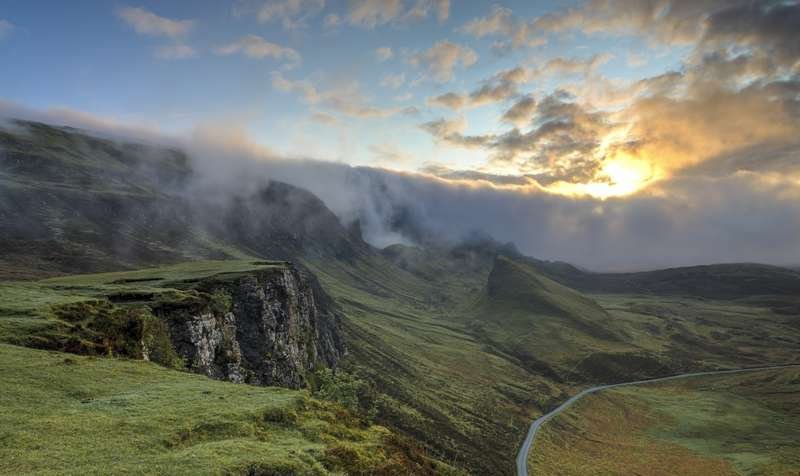
The expressway is not without views. East of Korla it skirts the Taklamakan’s northern edge, and on clear days the dune line glows orange to the south. West of Aksu the road climbs toward the Tianshan’s western spurs, and the Kuqa exit funnels you toward the red-rock canyons. The Kuqa Grand Canyon is a 30-minute detour off the expressway and one of the best half-days in the region.
Between Korla and Aksu the road also passes the edges of the Tarim oil fields — nodding pump jacks as far as you can see, a strange industrial counterpoint to the desert. It is the kind of detail that makes the long drive feel like a real place rather than a highway through nowhere.
Driving notes from hard experience
- Crosswinds. The Turpan–Korla section is infamous for gales that shove a high-profile SUV sideways. I got hit by a 70 km/h gust near Toksun and scrubbed 20 km/h off instantly. Our strong-wind zones guide maps the worst stretches.
- Speed cameras. They are frequent and the limit drops sharply near every city exit. The fines are automated; there is no arguing.
- Fatigue. The emptiness lulls you. I swap drivers or take a 15-minute nap at every second service area. The night-driving and fatigue guide is required reading for the long hauls.
Sample plan: Turpan to Kashgar in two days
Day 1: Turpan → Korla, ~440 km, with a detour to the Flaming Mountains if weather allows. Day 2: Korla → Kuqa (canyon) → Aksu → Kashgar, ~860 km, which is a long push; I’d actually break it at Aksu and arrive Kashgar on Day 3 relaxed. Budget ¥500–700 in fuel and tolls total, plus hotels in Korla and Aksu.
The verdict
G3012 will never make your photo album’s front page. But it is the reason a southern Xinjiang road trip is practical for a foreign visitor on a rental and a clock. Learn its rhythm, respect its winds and cameras, and it will carry you from the grape valleys to the Pamir gateway with far less stress than you feared.