
Wenquan County: Two Days in Bortala’s Hot Spring Valley
By day nine of a northern Xinjiang loop my lower back had opinions. I had done the pass, the lake, two grasslands and roughly 2,400 kilometres, and the thought of another scenic viewpoint was genuinely unappealing. So I did something I had been putting off for three trips and drove west from Bole into Wenquan County to sit in hot water for two days.
It fixed everything. It also turned out to be one of the more interesting corners of Bortala prefecture, which nobody tells you because the county’s entire reputation is “there are springs there”.
What Wenquan County actually is
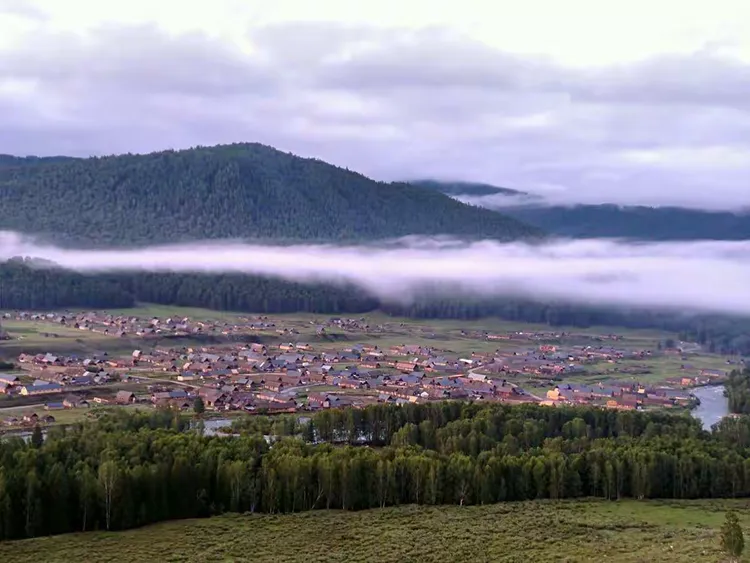
The name is literal — Wenquan means hot spring in Chinese, and the county’s Mongolian name, Arishang or Arishan, carries the sense of sacred or medicinal water. It sits in the western arm of Bortala Mongol Autonomous Prefecture, up against the Kazakhstan border, in a broad valley between the Alatau ranges at somewhere around 1,300 to 1,600 metres depending where you stand.
Geothermally it is genuinely active. There are dozens of springs across the county, several developed into bathing facilities of varying quality, with water emerging at temperatures from pleasantly warm up to genuinely scalding — the hottest sources I have seen quoted run around 60°C and are cooled before use. The mineral profile varies spring to spring; the local literature makes claims about rheumatism and skin conditions that I am in no position to assess and would treat as folk tradition rather than medicine.
The bathing culture here is not Japanese and not European. It is closest to a Central Asian sanatorium tradition — functional tiled indoor pools, often single-sex, sometimes with private rooms rented by the hour, attached to guesthouses and small hospitals. Some of the newer developments have built outdoor pools aimed at tourists. Both experiences are worth having and they are not the same thing.
The three kinds of soak
The county sanatorium type
These are the originals. Concrete and tile, plain, sometimes attached to a rehabilitation facility, filled with local Mongol and Kazakh families and a lot of elderly regulars. Entry has cost me between ¥20 and ¥50. Nobody speaks English. You will be the only foreigner and probably a mild curiosity, and if you are relaxed about that it is by far the most memorable version.
Private rooms with a deep tub are usually available for something like ¥50 to ¥100 an hour, which is the practical option if the communal setup makes you uncomfortable or if you are travelling as a mixed-gender couple.
The resort type
Several hotels in and near the county town have built proper spa facilities with outdoor pools, varying temperatures, and rooms above. Expect ¥300 to ¥600 for a room with bathing included, and expect the standard to be decent rather than luxurious. In winter these are excellent — sitting in 40°C water at minus 15°C with snow on the pool edge is a specific pleasure.
The wild type
There are undeveloped seeps in the surrounding valleys. Herders know them. Some are on grazing land, some are close to the frontier zone, and I would be cautious about seeking these out without a local companion, both for permit reasons and because an unmanaged geothermal pool can be far hotter than it looks. I have soaked in one, at the invitation of a family whose summer camp was nearby, and it was the best of the three. I cannot give you directions to it and would not if I could.
Getting there
From Bole, the prefectural seat, Wenquan county town is roughly 100 kilometres west on good road, about ninety minutes. From Urumqi the whole run is in the region of 600 kilometres, most of it fast expressway along the G30, and it makes far more sense as a leg of a northern loop than as a destination.
The natural approach for anyone already touring: come over from the Ili valley or down from the pass, spend a night at the big lake, then continue west. Our Bortala and Bole guide covers the prefecture’s road network and towns, and the geography is simple enough that you will not get lost.
Public transport exists — buses from Bole to Wenquan run several times a day — but the springs are scattered and having your own vehicle transforms the trip. Taxis within the county are cheap and drivers know every facility by name.
The permit question
Wenquan County borders Kazakhstan, and parts of it sit inside the frontier management zone. The county town and the main spring facilities have been accessible to me with a passport, but the valleys running up toward the frontier are a different matter and there are checkpoints. If your itinerary includes anything beyond the developed area, sort a permit first — our guide to Xinjiang border permits by county explains how, and Bortala is one of the prefectures where it genuinely matters.
When to come
Winter, if you are brave, and I mean that sincerely. December through February gives you the classic experience: deep cold, steam, empty facilities, cheap rooms. Nights drop well below minus 20°C in January. The roads are maintained but you want proper winter tyres and no schedule pressure.
June to September is the comfortable season and pairs the springs with the surrounding grassland at its best. It is also when domestic visitors come, so book the better places ahead in July and August.
Shoulder months are quiet and slightly bleak. April is mud season. October has good light and thinning crowds.
Whenever you come, treat this as the recovery stop rather than the highlight. That is its function and it performs it superbly. The broader survey in our piece on Xinjiang’s hot springs after long drives covers the alternatives elsewhere in the region; Wenquan is the densest concentration and the one where the water is the actual reason the town exists.
The rest of the county
Two days here is not two days of bathing. A few things worth your time:
The grassland. The valley floor and lower slopes are Mongol and Kazakh grazing country, and in summer there are camps within easy driving distance of town. This is unpolished pastoral landscape without any tourism infrastructure at all. If you want to arrange a night in a yurt, ask at your guesthouse rather than looking for a booking site; the arrangement in our guide to village family stays describes how this works in practice.
Mongol culture. Bortala is a Mongol autonomous prefecture and Wenquan has a significant Mongol population, largely Torghut. This is a different cultural register from the Uyghur south and the Kazakh grasslands — different food, different Buddhist rather than Muslim tradition, different music. Look for milk products: dried curd, clotted cream, butter tea.
Stone circles and petroglyphs. The county has archaeological sites including ancient burial mounds and rock art in the surrounding hills. Signage is minimal and some sites are hard to find without a local guide. If you are interested, ask at the county cultural office, which in my experience was staffed by somebody delighted that anyone had asked.
How to actually soak, if you have never done this in China
The mechanics differ enough from Western spa culture that a short briefing saves embarrassment.
At a sanatorium-type facility you pay at a window, get a numbered locker key or a plastic token, and change in a shared room. Full nudity in single-sex indoor pools is normal and expected; swimwear is normal in mixed outdoor resort pools. Watch what everyone else is doing for ten seconds and copy it.
Wash first, properly, at the taps or showers before entering the pool. This is not a suggestion. The pools are for soaking, not cleaning.
Do not put your head under. Do not swim. Do not bring soap or shampoo into the water. Do not take a phone into a communal pool — apart from the obvious, it reads as taking photographs and people will react.
Twenty minutes in, then out to cool for five, then back in. Repeat two or three times. The hottest pools are marked and locals will happily tell you which one you should not be in yet. Drink water between rounds; the mineral water is warm enough to dehydrate you faster than you notice.
Expect to be talked to. Xinjiang bathhouses are social spaces and an obvious foreigner in a county-town pool is going to get questions, usually where are you from and are you married. Have four sentences of Chinese ready and it becomes a pleasant twenty minutes rather than an awkward one.
What a two-day visit costs
Rough numbers from my last trip, for two people, driving our own vehicle.
Two nights in a mid-range spa hotel with bathing included: about ¥760. Three extra sanatorium sessions at other facilities to compare: ¥120 total. Two private-room hours: ¥140. Meals — noodle houses, one hotpot dinner, breakfasts: roughly ¥260. Fuel for the run from Bole and local driving: around ¥180. A bag of Mongol dried curd and some bread to take away: ¥40.
Call it ¥1,500 for two people for two days, which is modest for what amounts to a rest cure in a border county. Doing it on the cheap — county guesthouse at ¥130 a night, sanatorium bathing only, noodles twice a day — would bring it under ¥700 for the pair, and honestly that version is the more interesting one.
Practical notes
Bring flip-flops and your own towel. Sanatorium-type facilities may provide neither, or provide something you would rather not use.
Shower before entering pools. This is expected and enforced by other bathers’ expressions.
Do not soak for an hour on arrival if you have driven all day and are dehydrated. I made this mistake and stood up feeling genuinely unwell. Twenty minutes, water, rest, then more.
Cash matters. Small facilities take mobile payment now but the older ones sometimes have a handwritten ledger and a cash drawer.
Food in the county town is Han northwest, Hui and Mongol: noodle houses, a couple of hotpot places, dumplings, and at least one restaurant doing proper Mongol boiled mutton. Nothing sophisticated. Everything filling.
Why I now build it into every northern loop
Xinjiang road trips are physically harder than people expect. The distances are enormous, the altitude changes are real, and the diet is heavy. Somewhere around day eight or nine, most travellers I have shared a road with start making small mistakes — missed turns, short tempers, one too many late arrivals in an unbooked town.
A county whose entire purpose is hot water, positioned conveniently between the lake country and the frontier, is the correct answer to that. You lose a day of sightseeing and get back three days of functioning. And you end up in a Mongol border county with steam coming off the pools and old men playing cards in the changing room, which is a better story than another viewpoint anyway.