
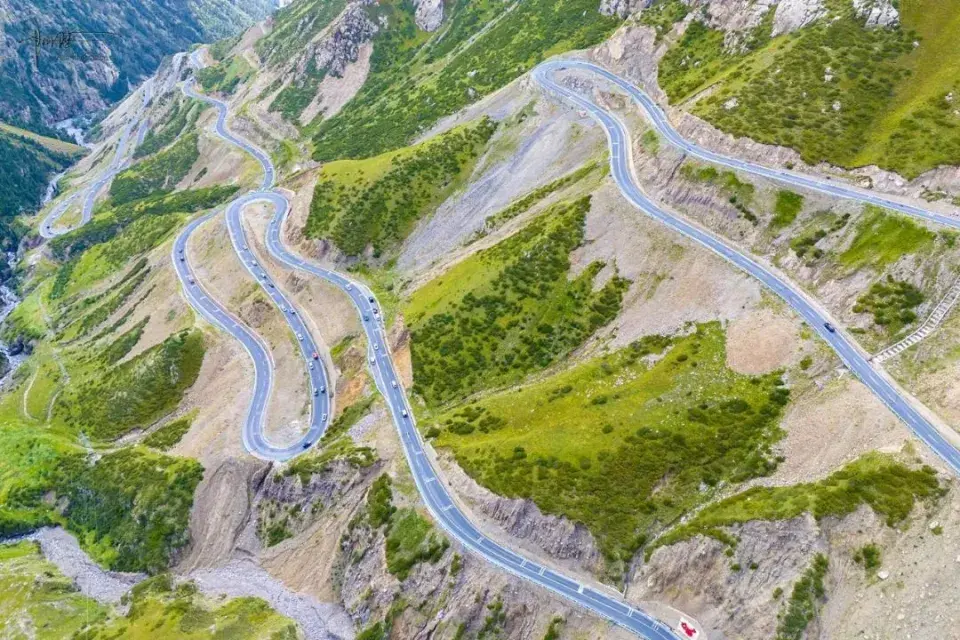
Dushanzi Grand Canyon: A Self-Drive Stop on the Duku Highway’s Northern Edge
I rolled into Dushanzi on a Tuesday in July 2023, chasing the northern mouth of the Duku Highway, and found the Grand Canyon waiting like a wound opened in the earth. Most foreign drivers blow past it on their way south, but this red walled gorge is worth a full half day on its own. I spent the afternoon walking the rim, watching light slide down a kilometre of dropped stone, and I have pointed every road tripper I meet back toward it ever since.
Where the Canyon Actually Sits
The canyon lies about 30 km south of Dushanzi city, right at the northern end of the Duku Highway, which is the famous road that cuts straight through the Tian Shan. It is the first major scenic stop you reach if you are driving the Duku from the north, which makes it a natural warm up for the bigger passes to come. The gorge itself runs roughly 20 km long and drops about 1 km from rim to the river far below.
This is not a roadside overlook you glimpse from the window and forget. The whole area opened as a formal scenic zone only around 2020, so the infrastructure is new and the crowds are still lighter than the famous spots further south. If you want a base to sleep, fuel up, and plan the next leg, our guide to Dushanzi town covers where to stay and which pumps take foreign cards.
How the Rock Formed
The walls are bands of red and grey sedimentary rock laid down over roughly 100 million years, then cut by water and wind into the fluted shapes you see today. Stand at the edge and you can read the strata like pages of a very old book. The colour shifts with the sun, moving from dull brick at noon to a deep ember once the light leans west.
What surprised me most was the scale. The photographs never show how wide the gap is, or how small the river looks from the top, and no screen prepares you for the drop.
Getting There by Car
From Dushanzi city it is a straight 30 minute run south on the Duku Highway to the entrance gate, with good tarmac the whole way. From Urumqi the drive is about 250 km, out along the G30 expressway and then either the S101 or the Duku itself, depending on the season and which approach you prefer. I came up from the south the day before and doubled back, which let me see the canyon in both directions and beat the morning coach crowds.
If you are building a longer loop, the S101 Tian Shan scenic highway is a brilliant alternative approach and saves the canyon for a quiet afternoon. The S101 is rougher in places than the main Duku, so check your tyres and your spare before you commit to it, and carry extra water for the slower stretch.
Signage on the final approach is clear, with brown tourist boards pointing to the gate a few kilometres before you arrive. I filled the tank in Dushanzi and did not need fuel again until well south of the canyon, but the northern Tian Shan has long empty runs, so start every morning with a full tank.
Tickets, Parking and What You Pay
Entry was ¥40 when I visited in July 2023, paid at the gate by card or phone, and the staff were used to foreign passports by then. Parking cost another ¥10 and the lot is close enough to the rim that you barely walk at all. The glass skywalk, a separate platform that juts out over the void, cost an extra ¥20, and I thought it was worth the money for the sheer drop beneath your feet.
There is no combo ticket that I found, so budget the two fees separately and bring small cash just in case the card reader is down. The value is fair for what you get, which is a maintained path, clean toilets, and a view that costs nothing to stare at for as long as you like. Students sometimes get a discount on the entry fee, so carry your ID if that applies to you.
The Best Time of Day to Shoot
The canyon faces so that the warm light lands on the far wall in the late afternoon, roughly 17:00 to 19:00 in summer. I arrived at 16:00 and wished I had come an hour later, because the deep reds did not really catch fire until the sun leaned west. Bring a jacket even in July, since the wind off the rim gets cold fast once the sun drops.
Summer days in this part of Xinjiang run long, so you have plenty of evening light to work with, and the last buses of tourists are usually gone by 18:00. That leaves the rim quiet for the best photographs of the day, with only the wind for company.
Why Late Afternoon Wins
At noon the walls flatten into a single dull tone and your photos look tired and flat. The low sun rakes across the sediment and pulls every groove into relief, which is exactly what makes the place photogenic. If you only have one window, spend it from 17:00 to 19:00 and let the colour do the work for you.
Walking the Rim and the Glass Skywalk
A metal railing runs the length of the main viewing rim, which is reassuring when the wind gusts and the drop is a full kilometre. The paths are wide and graded, so you do not need hiking boots, though the surface is loose in spots near the edges. There are several built platforms along the way, each one framing a different slice of the gorge, and I stopped at all of them.
Drones are banned in parts of the area, and the signs are clear, so watch for the no fly markers before you launch anything. Rangers do patrol the rim, and a fine is the last souvenir you want from Xinjiang. The glass skywalk is the one place you pay extra, and it is the one place you feel the height in your knees as the floor goes transparent under your shoes.
Food, Water and Facilities
There are a few food stalls near the entrance selling noodles and grilled meat, but the choice is thin and the prices climb with the tourist season. I packed two litres of water and finished most of it in the dry heat, which tells you everything about how thirsty the place makes you. Fill every bottle in Dushanzi before you leave, because the canyon itself sells little beyond basic snacks.
Toilets exist at the gate and at the main platform, basic but serviceable, and I never had to queue outside peak hours. Do not count on anything open early or late, since the scenic area runs on daylight hours through the summer. A hat and sunscreen matter more here than almost anywhere else on the Duku, because there is no shade on the open rim and the UV is fierce.
Combine It With the Duku Highway
The real reason to stop here is that it sits on the threshold of one of the great mountain drives in Asia. After the rim walk, fuel up and point the car south toward the passes, and you will understand why people call this the road of a thousand curves. Our full Duku Highway road trip plan lays out where to sleep and which viewpoints to time on the climb.
Two stops worth folding into the same day are the Daxiaolongchi alpine lakes, which sit higher on the road and turn the rock a different shade of blue, and the Qiaorma martyr monument, a quiet pull off that marks the road’s hardest stretch of construction. Both are an easy half day south of the canyon, so plan to camp or lodge further up if you want to see them in good light.
A Side Trip to Dushanzi Oil City
If you have a morning spare, the old oil city on the edge of town is a strange and honest slice of industrial history, with Soviet era blocks and the well that started the region’s petroleum story. It pairs well with the canyon because both are about what the earth gives up under pressure, one in stone and one in black gold. I spent an hour there and left glad I had not rushed straight through to the mountains.
The oil city is free to wander and a ten minute drive from the centre, with a small museum if you want the full timeline. Go before the heat builds, since there is little shade and the story is told mostly through the buildings themselves. It is a good low key counterpoint to the drama of the rim, and a handy way to use a spare morning while the canyon light is still flat.
When the Canyon and the Road Close
The scenic area generally runs from May to October, which lines up with the safe window for the Duku Highway itself. The highway closes in heavy snow, roughly November to April, and in those months the canyon is reachable only by the long way around through the low passes. Plan your trip for summer if you want both the road and the rim open at once.
Even inside the season, a late spring storm can drop snow on the high passes and shut the Duku for a day or two without warning. Check the road status in Dushanzi before you commit to a southbound morning, because a closed pass turns a short drive into a long detour. The canyon gate itself stays open in most weather, but the access road shares the Duku, so the same closures apply to your approach.
Safety Notes for Solo Drivers
The rim is fenced, but the wind here is no joke, and a gust can push you toward the edge if you lean out for a photo. Keep one hand for the railing and one for the camera, and step back between shots to steady yourself. The roads around Dushanzi are good, yet the Duku turns serious within an hour of the gate, so rest before you climb.
Carry water, a charged phone, and a rough offline map, because signal thins out past the canyon and disappears by the first big pass. I had coverage at the gate and lost it soon after, which is normal for this part of the Tian Shan. Tell someone your plan for the day, since solo driving here means you are your own rescue if a tyre lets go on the climb.
My Route in Brief
Here is the loop I would run again: sleep in Dushanzi, reach the canyon by 16:00, walk the rim and the skywalk until 19:00, then spend the next day driving south on the Duku with the lakes and the monument as stops. It is a gentle, scenic start to a big road, and it lets you earn the harder kilometres with your legs already rested. Dushanzi Grand Canyon is the prologue the Duku deserves, and skipping it would be the one mistake I would not make twice.
If you take only one thing from this guide, take the timing. Arrive late, stay until the light fails, and let the red walls do what they have done for a hundred million years, which is to leave people quietly staring into the dark.