Makit and the Dolan: Music, Hunt, and Weave on the Southern Tarim
The People Who Kept the Old Way
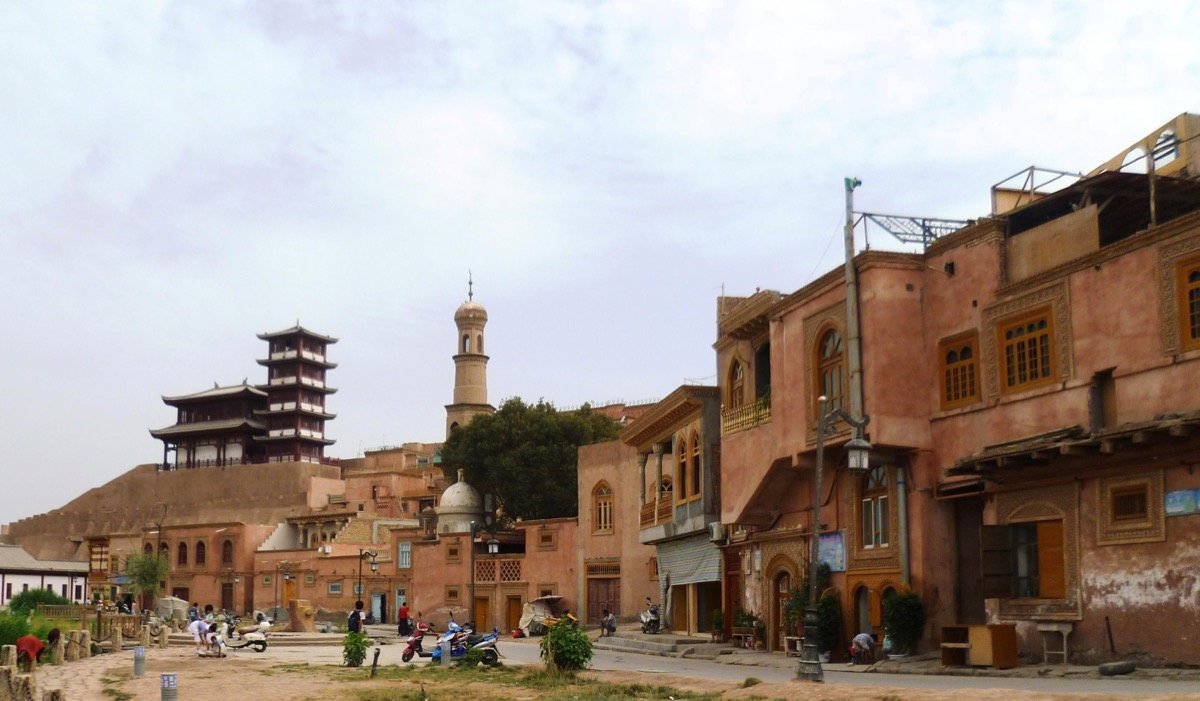
Southwest of Kashgar, in Makit County on the southern Tarim edge, live the Dolan (also called Dulan) — a subgroup of Uyghurs who for centuries kept a distinct world inside the reed forests of the Tarim. They have their own dialect, their own Muqam music, a famous communal hunt, and a craft of thick-woven bags and rugs. I came for the music and stayed for the whole culture, which the cities have smoothed over but Makit still speaks aloud. If you want the Uyghur past that the headlines miss, this is where to listen.
Makit town is 190 km southwest of Kashgar on the G3012, a 2.5-hour run. The Dolan culture is in the county’s villages and its one small museum, not a single ticketed site.
The Drive Down
The G3012 southwest of Kashgar runs through the same farmed desert as the road to Zepu, but carries on to Yarkand (Shache) and on to Makit. I left Kashgar at 9 a.m., stopped for nang at a Yarkand halt, and reached Makit at noon. Fuel and food are easy the whole way. Pair Makit with Yarkand in one southern day — the two together are the cultural counterweight to Kashgar city’s bazaar bustle.
Dolan Muqam and the Hunt
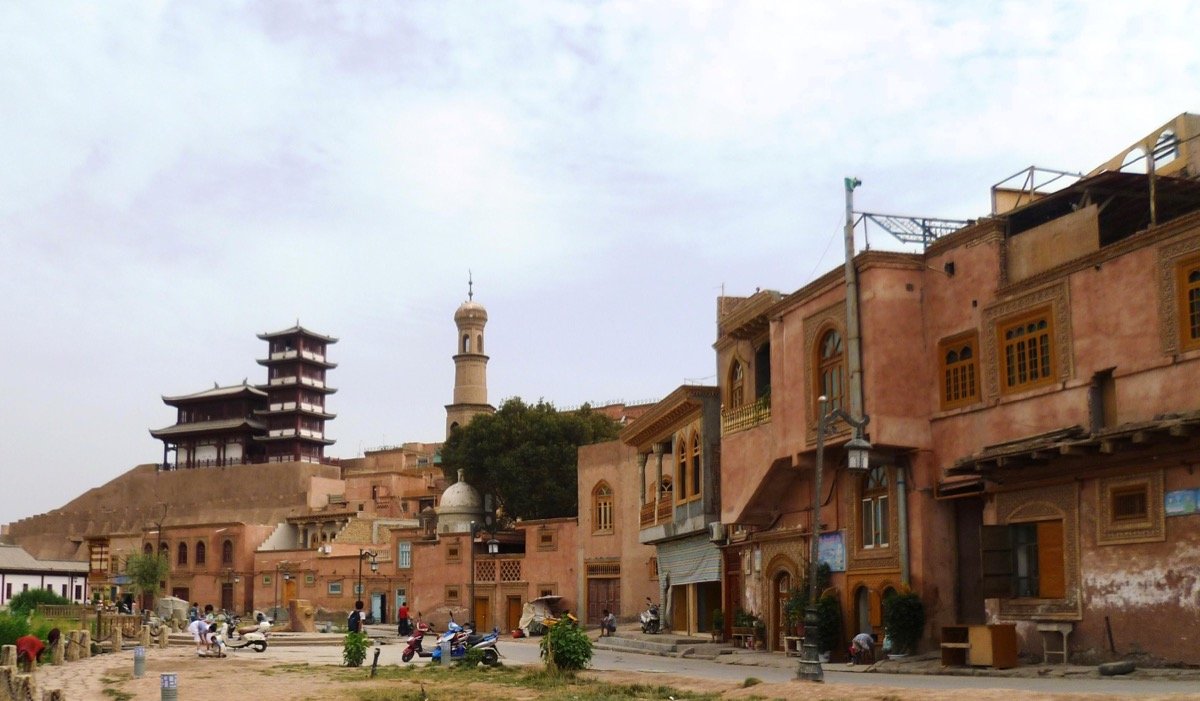
The Dolan Muqam is a rougher, older cousin of the Lükchin and Kashgar suites — fewer ornaments, more drive, built around a hunt. The old suite narrates the communal pursuit of a wolf or boar through the reed forest: the gathering, the chase, the kill, the feast, set to rawap, dutar, and a frame drum. I saw a village performance in a courtyard off the Makit bazaar: six men, no stage, forty minutes of rising tempo that ended with the whole circle clapping. It is not in any concert listing; ask at the bazaar teahouse and someone will point you to the players.
The Dolan hunt itself is now a stylised dance rather than a real wolf chase, but it survives as a set piece the elders still teach the boys. Watching it, you see a whole ecology encoded in motion — the Tarim reed forest, the river, the pack. The Dolan craft guide on this site covers the woven bags that came out of the same forest life.
The Weave and the Market
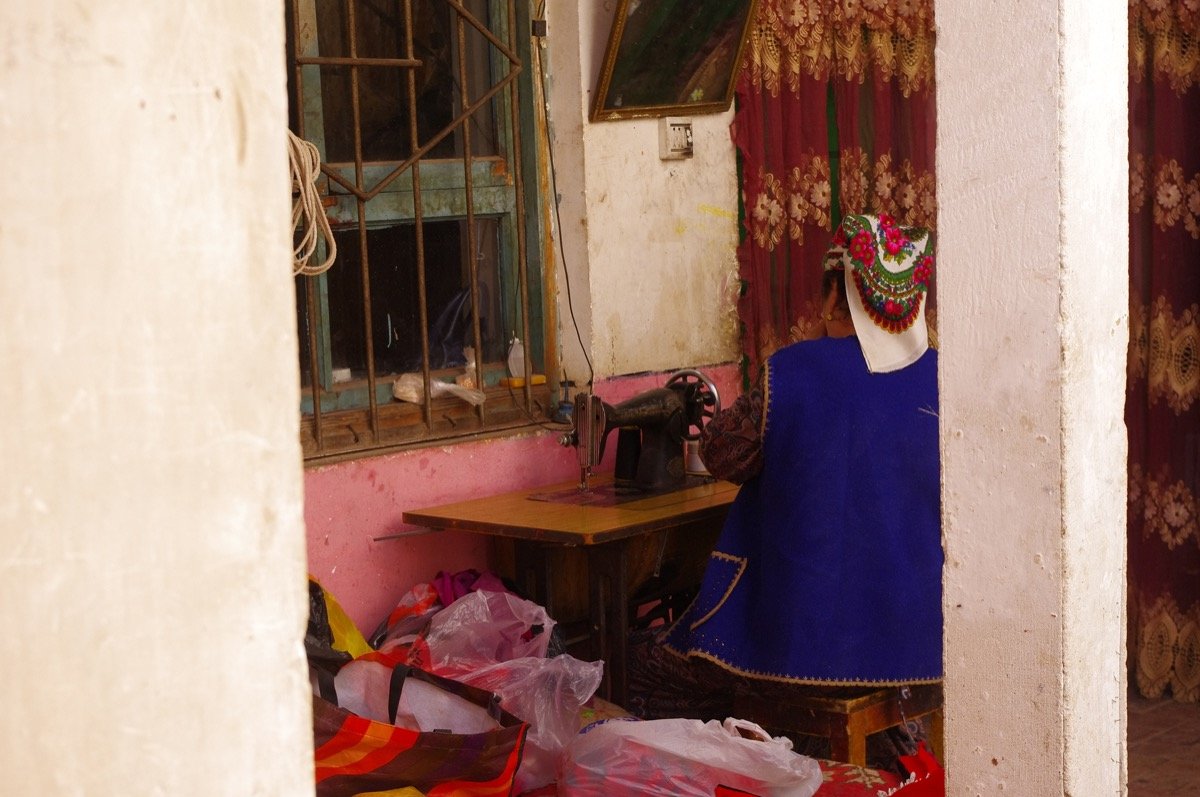
Dolan women weave thick dolan chápán bags and rugs on horizontal looms, using local wool dyed with walnut, madder, and indigo. The result is heavy, geometric, and nothing like the fine Silk Road carpets of the cities — these are working objects from a working forest culture. The Makit bazaar (Sunday, like everywhere) is where you find them: ¥150–400 for a bag, ¥600+ for a rug, all negotiable, all cash. I bought a small bag for ¥220 and use it still; it has outlasted three suitcases.
The Kashgar livestock market sells the famous Sunday spectacle; Makit’s bazaar sells the quieter craft and is the better place to actually meet a maker. Go Sunday, arrive by 10 a.m., and walk the wool row before the tour buses from Kashgar arrive at noon.
Food in the Dolan Country
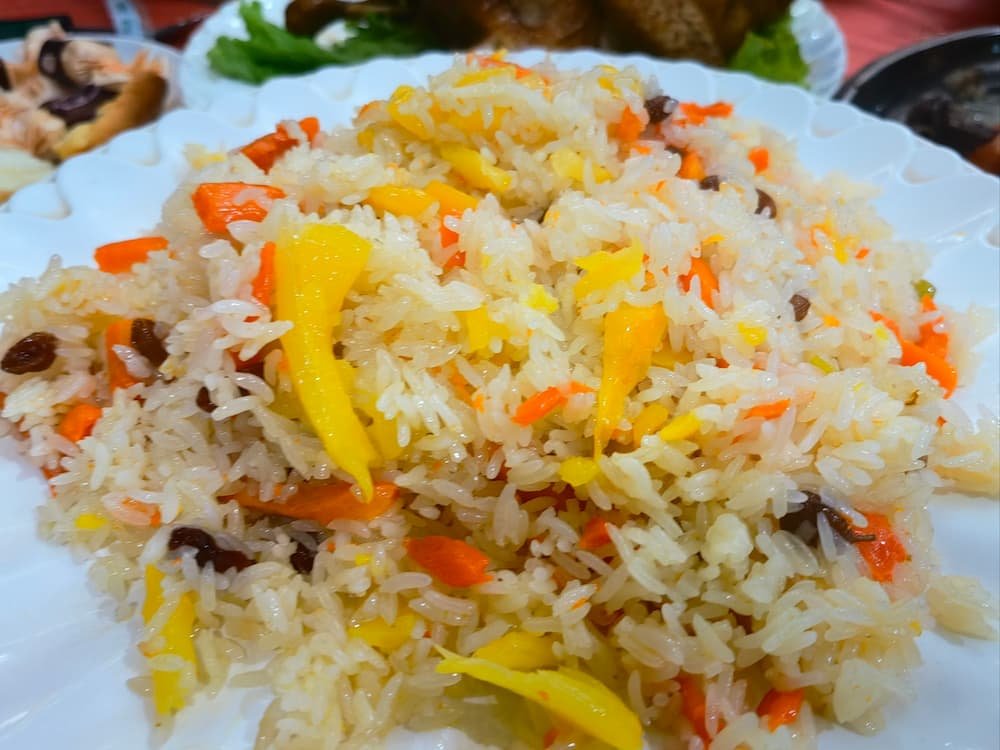
Makit eats the southern table with a Dolan lean: zhuafan with extra raisin at ¥22, kawap at ¥3 a stick, and a river-fish dish (the Tarim balik) grilled at ¥15 that you will not find in the cities. The bazaar food row does laghman at ¥16 and milk tea at ¥4. I ate a fish and a stack of nang at a riverside stall for ¥35 and called it the best lunch of the southern loop. Cash only at the bazaar; cards in the town shops.
Where to Sleep
Makit has basic hotels at ¥130–200 a night, clean and air-conditioned, fine for a culture night. I stayed one night to catch the Sunday bazaar and a courtyard music session, then drove back to Kashgar (2.5 hours) for comfort. The Hotan table 260 km south is the next cultural stop if you are looping the south.
When to Go
April to May and September to October are mild and the bazaar is full. June to August is hot (38°C+) but the music still happens at dusk. The Sunday bazaar runs year-round; winter is cold and thin but the craft row still opens. The southern loop’s comfortable months are April–May and September–October, the same window as Yarkand and the poplar forests.
Practical Notes
No border permit for Makit — interior south. Checkpoints on the G3012 are light. The bazaar and museum take cash; carry ¥500 for craft. Mobile signal is full in town, patchy in the villages. Ask before photographing people and performances; a shared tea earns more than a raised camera. The Dolan dialect differs from standard Uyghur — a translation app helps, and a smile covers the rest.
Makit is the Xinjiang the cities edited out. Drive southwest from Kashgar, sit in a Makit courtyard, and let the Dolan play you the hunt their forest taught them. You leave knowing the Tarim was once a living world, not just a road to somewhere older.
The Dolan Dialect and Language
Dolan Uyghur is its own thing — a dialect thick with words the Kashgar and Yarkand speakers do not use, some traced to the old forest life and the hunt. I speak no Uyghur, but a translation app and a willingness to butcher the greetings got me further than I expected; the villagers corrected me with laughter, not offence. The language carries the culture — the hunt song’s words are Dolan words, and a standard-Uyghur speaker catches only the shape of it. Sit in a courtyard session and you hear a vocabulary the cities lost.
The Kashgar dialect is the prestige one tourists learn; Dolan is the one you listen to, not speak. The difference is the whole point of the trip south.
The Reed Forest
The Dolan world was built on the Tarim reed forest — the qamghaq thickets that once lined the river and gave wood for houses, reed for roofs, and cover for the hunt. The forest has shrunk with the river, but a stand still runs along the Makit reach, and a track north of town reaches it. I walked the reed edge one morning with an old hunter named Yakup, who pointed out the run of a boar long gone and the place the pack would wait. The reeds are shoulder-high, silver in wind, and silent; you see at once why a communal hunt made sense and why the music remembers it.
The forest is also where the wool came from — not the reeds, but the pastoral life the reeds sheltered. The Dolan craft guide covers the weave; the reed forest is the green room behind it.
Making a Bag: At the Loom
If you are lucky, a village weaver will let you watch. The Dolan loom is horizontal, pegged to the earth floor, worked with a stick and a beating comb, and the chápán bag grows slowly — a day for a small one, a week for a rug. The wool is local, washed in the river, dyed with walnut husk (brown), madder (red), and indigo (blue) the weaver keeps in jars. I watched a woman finish a bag’s border in an hour of rapid pass-after-pass and understood why the price is fair; the object holds a week of a life. Buy direct at the loom and you pay the maker, not a shop — ¥150–300 for a bag, cash, and a story with it.
Makit gave me the Uyghur past the cities edited out: a dialect, a forest, a hunt set to music, a bag woven by hand. Drive southwest from Kashgar, sit in a courtyard, watch the loom, and you leave knowing the Tarim was once a living world, not just a road to somewhere older.
The Sunday Bazaar Walk
Makit’s bazaar is the heartbeat and the best walk in the county. Arrive by 10 a.m. (it runs from dawn, peaks at 11), and follow this order: the livestock pen east of the square (sheep, goats, the odd camel, priced by eye), the wool row behind it (the Dolan bags and rugs, ¥150–600, all cash, all negotiable), the food strip (laghman, zhuafan, the river fish at ¥15), and the teahouse on the corner where the musicians gather. I did the loop in two hours and bought a bag, ate a fish, and caught the start of a session — a full Dolan morning in one market. The Kashgar market is the famous one; Makit’s is the one where you meet the maker.
Dolan Food, Deeper
Beyond the bazaar staples, Dolan cooking has two dishes worth seeking. Balik kawap — the Tarim river fish, butterflied and grilled with cumin — is the region’s signature and ¥15 at the riverside stall, ¥40 at a town restaurant. Qatiq — a thick sour yoghurt the herders make — comes with nang as breakfast, ¥6, and cuts the desert heat. I ate both over two days and rated the fish the better story, the yoghurt the better cure. The Hotan table to the south shares the river-fish idea; Makit’s is the upstream version. Cash at the stall, cards in the town shop.
Getting a Session, Revisited
The reliable way to a Dolan Muqam session: sit at the bazaar teahouse Sunday late morning, drink chay, and watch the old men. When they pick up cases and drift toward a courtyard, follow at a distance and sit at the edge. Do not film standing; sit, listen, and the photos come when they smile. I caught my best session by doing nothing for an hour first — the music is a gift, not a show, and the givers decide. The Dolan craft guide is the woven half of the same culture; the session is the sung half, and you need both to read it.
The Makit Museum
Off the square, the small Dolan culture museum holds the evidence: old rawap and dutar instruments, a loom with a half-woven bag, photographs of the hunt as dance, and a panel on the dialect’s forest words. It is free, takes 40 minutes, and sets up the bazaar and the courtyard. I read it first and then recognised the loom in the lane and the hunt in the song — the museum is the key to the living town. The Dolan craft guide is the wider context; the Makit museum is the local one, and the two together explain the culture.
Overnight in the County
Sleep in Makit to catch both the Sunday bazaar and a weekday session — the music is likelier when the crowd is thin. The county hotels (¥130–200) are clean and air-conditioned; I took one for ¥160 with a guarded lot and a rooster that started at 5. The town shuts by 10 p.m. and opens with the bazaar at dawn; the rhythm suits the culture. From Makit, Kashgar is 2.5 hours north for comfort, Hotan 4 hours south for the next cultural stop. The southern loop runs Kashgar–Yarkand–Makit–Hotan, and Makit is the musical middle, the place to slow and listen.