Bringing or Renting a Bicycle or E-Bike on Your Xinjiang Trip
A car gets you across Xinjiang. A bike gets you into it. After two weeks of driving the big loops, I started keeping a folding bike in the trunk, and the trip changed. I rode the riverside path in Yining while the car sat at the guesthouse. I looped Sayram Lake on two wheels when the shuttle bus would have rushed me. I rolled into village lanes off the highway that no parking lot was built for. This guide covers the two ways to do it: bring your own bike and fight the airline, or rent one when you land. It also covers e-bikes, which are a different animal with their own rules and their own range problem.
Why a bike changes the drive
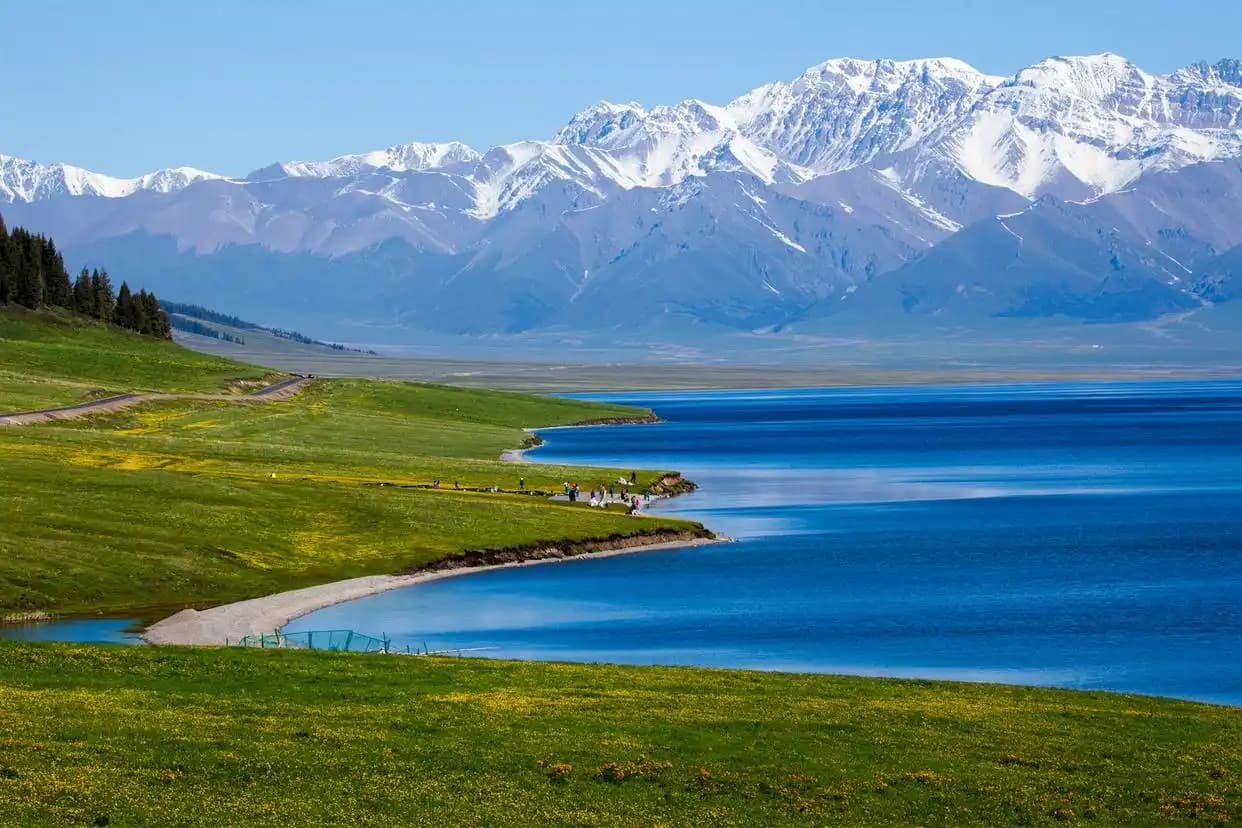
The distances in Xinjiang are so long that the car is non-negotiable. But the car is also a cage. You see the region through a windshield at 100 km per hour, and every stop is a planned event with a parking spot. A bike drops that speed to 15 or 20 km per hour and turns any pullout into a destination. On the day I rode from my camp near Sayram Lake into the lakeside town for breakfast, I passed three things I would have missed in the car: a flock of geese, a herder moving sheep, and a small cafe with fresh bread.
The bike also fixes the last-mile problem. Plenty of sites have a gate 5 km from the actual view. The shuttle runs on a schedule you do not control. On a bike you leave when you want and stop when you want. For a solo traveler who values that freedom, the bike pays for itself in patience saved.
What kind of bike works
A folding bike was my choice because it fits the trunk and clears the airline rules more easily. A hardtail mountain bike is better on the rough village lanes and the gravel paths near the lakes. A road bike is the wrong tool here: the surfaces are mixed and the wind is strong. If you bring one bike, make it a sturdy hybrid or a folding model with 20-inch wheels and decent tires. I ran 1.75-inch tires and was glad for them on the washboard roads outside Turpan.
Flying in with your own bike
Most international airlines treat a bike as oversized luggage, not a separate fee, if it is in a proper box. I flew in with mine in a cardboard bike box taped shut, and paid nothing above my bag allowance on two of three legs. The third airline charged ¥600 at the counter, which I could have avoided by booking the bike as checked sports equipment in advance. Box it, weigh it under 23 kg, and tell the airline before you arrive.
The box is the headache. Urumqi airport has no bike shop that hands out boxes, so I kept the box from my outbound flight and taped it back together. In Kashgar I saw a traveler pay a guesthouse owner ¥40 for a used box. Plan to rebuild the box for the flight home, and pack a roll of tape in your case. Tools and the pedals come off, the bars turn, and the wheels stay on if the box is big enough.
Renting a bike locally instead
You do not have to fly with one. Yining, Urumqi, and Kashgar all have rental shops, and the quality is decent if you know what to check. I rented a city bike in Yining for ¥40 a day, and a better hybrid for ¥70 a day near Sayram Lake for the loop. The lake shop even threw in a helmet and a lock. The catch is availability: in July the good bikes were gone by 10 am, so I learned to rent the evening before.
If you are already renting a car, add a bike to the plan rather than bringing your own. Our complete 2026 car rental guide for independent travelers explains which rental companies allow a bike rack on the roof or hitch and which forbid it, because a scratched roof rail can cost your deposit. A trunk-mounted rack carried my folding bike fine and kept the inside clean.
E-bikes and where they actually work
An e-bike sounds perfect for the wind and the distance. In flat Yining it is great. On the Sayram Lake loop, which has a long climb on the east side, the assist saved my legs and I still pedaled. The problem is range. The rental e-bikes near the lake gave me 40 km of assist before the battery dipped, and the full loop is 90 km. Past 40 km I was on plain pedal power into a headwind, which is exactly the situation the motor was supposed to prevent.
Local e-bikes are built for short city hops, not touring. If you want to tour on assist, bring a proper e-bike with a 500 wh or larger battery, or plan to charge mid-ride. The lake cafes will let you plug in for the price of a coffee. I did this and stretched one battery to the full loop by charging 30 minutes at the north shore.
Charging the e-bike on the road
This is the part nobody warns you about. Charging an e-bike is not the same as charging a phone, and the plugs vary. I carried a standard wall charger and a long extension, and it worked at every guesthouse and at the camp spots that had a toilet block with a socket. For the car-based trip, the same charging habits matter as for an electric car, and our self-drive EV charging guide maps the places where you can top up both the car and a bike battery overnight, which is handy if you run an e-bike off the car’s 12V or a small inverter. A 300-watt inverter off the cigarette socket charged my bike pack in two hours while I slept.
Where the bike shines most
Yining is the best city ride in the region. The Ili river path runs for kilometers with shade and food stands, and the traffic is calm compared with Urumqi. I rode it at 7 am and had the path mostly to myself, then ate lamb pancakes at a stall that opened at 8. Sayram Lake is the best loop, flat enough on the west half and quiet early before the tour buses arrive at 10.
The village lanes are the hidden win. Off the G30 near Toksun and again near Aksu, I turned down dirt lanes between fields and found orchards, canals, and old mud houses with no other tourists. The car could not have gone there without blocking the lane. Twenty minutes on the bike showed me more local life than a full day of highway.
pairing the bike with a paddle
Some days the best move is to leave the bike and take the water. At Sayram and a few other spots you can rent a kayak or a paddleboard for an hour and see the shore from a different angle. Our lake kayaking and paddleboard guide lists which lakes allow it, what it costs, and which ones need you to bring your own gear because the rental shack only opens in peak season. I biked to the north shore one morning and paddled it the next, and the two views did not overlap at all.
Rules, roads, and staying alive
Xinjiang traffic is tolerant of bikes in town but impatient on the highways. Do not ride the G30 shoulder. Trucks use the full lane and the wind off a passing truck at 100 km per hour will knock you sideways. I rode only inside towns, on paths, and on the signed lake loops. The one time I had to use a rural road to reach a village, I stayed hard right and wore the bright vest the rental shop gave me.
Helmets are not always enforced but the falls are real. The washboard road outside Turpan threw me once at low speed and the helmet took it. Carry water on the bike, because the heat in the Turpan basin in June hit 41 degrees and there is no shade on the lanes. A two-bottle cage and a 4-liter day is the minimum.
Pairing the bike with camping
The bike and a tent are a strong combo. I camped at the free spots our team maps, then rode the bike into the nearby town for food and water instead of moving the car. That saved fuel and kept the camp quiet. Our free camping and boondocking spots guide marks which sites have a flat path into the nearest village, because not all of them do, and a bike turns a 6 km walk into a 15-minute spin.
The folding bike packed into the tent bag area of the car meant I never had to choose between camping gear and the bike. On nights I stayed in a guesthouse, the bike lived in the room with me, which the owners in Kashgar and Yining were fine with once they saw it was clean and folded. Do not leave a bike on a car rack overnight in a town car park. Two travelers I met lost wheels to thieves in Urumqi in one night.
If a bike feels too slow, go bigger
Some travelers want the wind but not the pedal. A motorcycle covers the same last-mile freedom at highway speed and handles the long empty roads between towns that a bike cannot. The paperwork is heavier: a license that China recognizes, insurance, and a route that respects the border checkpoints. Our motorcycle touring self-drive guide lays out the permit steps, the border rules, and the rental versus import choice, which is the same fork you face with a bicycle but with more forms. I considered it, then stuck with the folding bike because the paperwork for a foreign rider was more than my two weeks allowed.
Bike versus motorcycle versus car
The car does the distance. The motorcycle does the distance with feeling. The bike does the place. My setup was car plus folding bike, and it covered both needs without a single permit beyond the car’s. If I had had a month, I would have added a motorcycle leg in the Ili valley, where the roads are good and the views are close. For most first trips, car plus a rented or carried bike is the simpler win.
What it cost me, in real numbers
My own bike flew free on two legs and cost ¥600 on the third, plus ¥40 for a box in Kashgar. The folding model needed no rack, just the trunk. On the rental side, I paid ¥40 a day in Yining and ¥70 a day at Sayram, total ¥330 across the trip for the days I rented instead of using my own. The e-bike experiment at the lake cost ¥90 for the day with the mid-ride charge. All in, the bike added about ¥1,000 to an 18-day trip and gave me mornings I would have missed in the car.
The cheaper path is to rent locally and skip the flight box entirely. If your route starts in Urumqi or Yining and ends there, rent a bike for the days you need it and walk away at the end. The fly-with-your-own math only wins if you ride most days and hate rental quality.
My packing list for a bike day
Fold the bike, clip the pedals, and pack a multitool, two spare tubes, a patch kit, and a small pump. The tire size is odd on folders, so bring tubes that fit, because a village shop will not have 20-inch ones. Add a bright vest, a lock, two water bottles, and sunscreen. A rear light helps in the early dark if you ride at 6 am for the good light. None of it is heavy, and all of it earned its place when I flatted on the Sayram loop and fixed it in ten minutes.
Charge the e-bike the night before, not the morning of. The lake shops open at 9 and the good battery is gone by then in peak season. I charged at the guesthouse, rolled out at 7:30, and had assist for the climb before the wind picked up. The rider who charged at the shop started at 10 and fought the headwind on a low pack.
The short version
Bring a folding or hybrid bike if you ride often and can box it. Rent one in Yining, Urumqi, or Kashgar if you do not. Use an e-bike only where the range fits the ride, and charge it before you need it. Keep the bike off the highways, wear the helmet, and lock it indoors at night. Pair it with the car for distance and with a tent for the quiet mornings. The bike will not replace the drive, but it will be the part of the trip you talk about first when you get home, the part where Xinjiang slowed down enough to actually see.