
The Ceps of the Tianshan: Foraging Boletus and Porcini in Xinjiang’s Pine Forests
The Morning I Found My First Cep
I had driven the 260 km from Urumqi down into the Ili valley the day before, and I woke at a guesthouse in Kuerdening to a cold blue dawn. The spruce smelled like wet pennies. My host, a Kazakh man named Askar, handed me a wicker basket and a small knife and said the ceps would be out if the night had been wet. We walked maybe 800 metres up a logging track until the pines thinned and the ground went mossy. There it was. A brown dome the size of a child’s fist, pushing up through last year’s needles, the white stem fat and clean.
I had read about Boletus edulis for years. Seeing one in the dirt of the Tianshan felt like meeting a celebrity who had quietly moved into your suburb. That was late September, which is the month that matters here. The season runs from roughly the first week of September to the end of October, with the fat weeks falling between the 20th of September and the 15th of October, after the first cold rains and before the hard frosts close the high forest.
You want the ground damp but not frozen. You want mornings near 4°C and afternoons that barely reach 14°C. Get those conditions above 1,500 metres and the boletes come, sometimes a dozen to a square of moss if the summer was kind.
Where the Boletes Grow
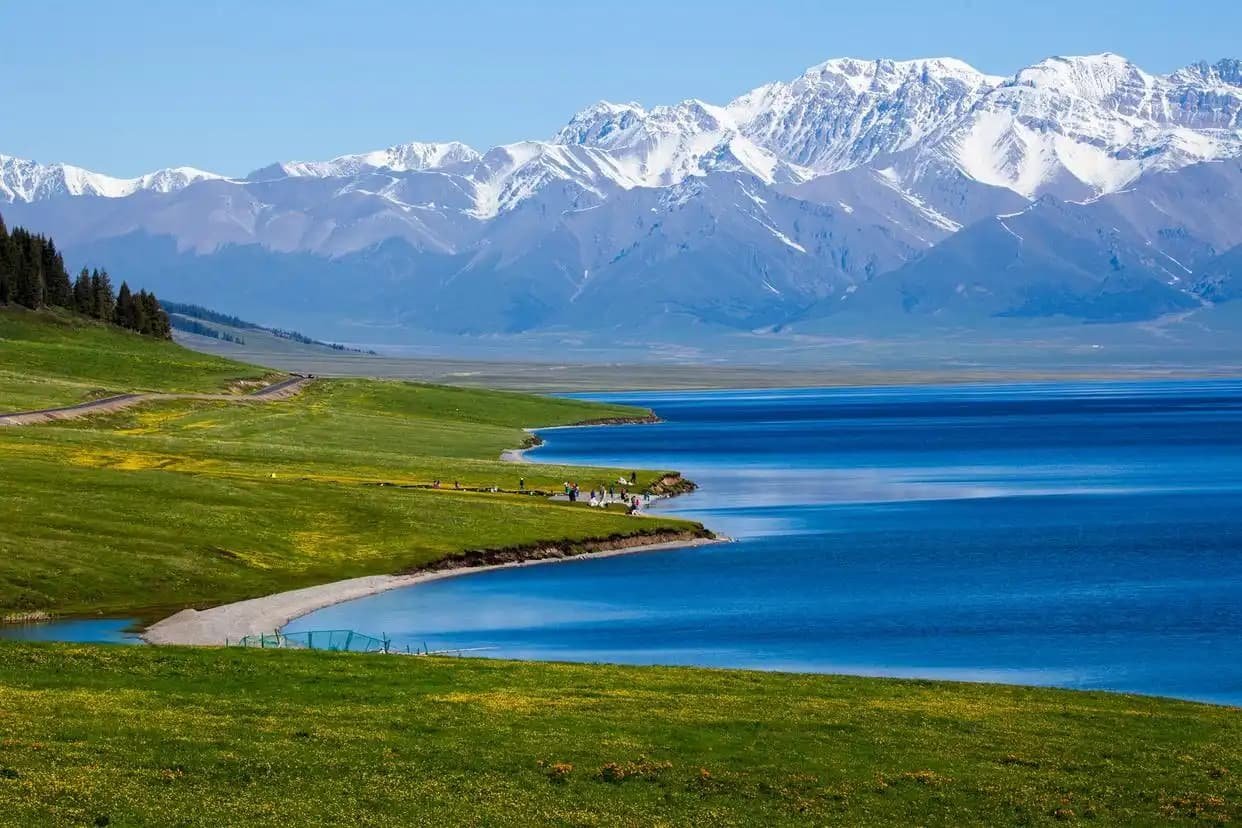
The Tianshan range is the heart of it. The pine and spruce belts between about 1,500 and 2,400 metres hold the classic cep grounds, and Kuerdening is the easiest place a self-driver can reach them. The reserve sits about 90 km east of Gongliu town and roughly 160 km from Yining, the main city of the Ili prefecture. I paid ¥45 at the gate and was on a forest road within ten minutes. The trees here are mostly spruce, and the ceps love the duff beneath them.
The Altai to the north is the other great mushroom country. It is a longer haul, close to 800 km from Urumqi by the S21 desert expressway if you are coming from the south, or a shorter run up from the northern border. The larch and pine forests around Hemu and Kanas produce boletes too, often a week or two behind the Tianshan because the cold comes earlier. Locals in the Altai villages dry astonishing quantities and sell them through the winter.
I have also found decent flushes on the northern slopes above Urumqi itself, in the spruce bands of the Tianshan’s eastern spurs, though the picking there is thinner and the city crowds thicker. For a traveller with a car and a free week in autumn, the Ili loop, Kuerdening, and a swing up toward the Altai make a clean arc of about 1,500 km of driving with good mushroom country at both ends.
The wider edible landscape beyond mushrooms is worth a look on the same trip. Our guide to foraging for wild greens and berries walks through what else ripens across these same forests in the same weeks, from sea buckthorn to wild apples that the Ili valley is famous for.
Reading the Forest Floor
Identification is the part you cannot fake. A cep has a few tells that, once you have seen them in person, stick in your hands rather than your head. The cap is a rounded bun, brown to chestnut, drying paler, and it feels faintly suede-like, never slimy. Cut it and the flesh stays white. The underside is not gills. It is a sponge, a mass of tiny tubes the colour of fresh cream when young, yellowing with age. That sponge alone rules out half the dangerous look-alikes, because the truly nasty gill mushrooms announce themselves with blades under the cap.
The Cap and the Sponge
Young ceps have a cap you can press without it bruising blue. If the flesh or the tube layer stains a vivid blue within seconds of cutting, leave it. That blueing reaction shows up in several boletus relatives that are at best questionable and at worst gut-wrenching. The cap margin on a true cep stays tucked under, round, almost like bread dough proofing. When the cap flattens and cracks, the mushroom is old and the insects have usually won.
Size helps you judge age more than species. A button cep no wider than a two-yuan coin is a year’s spore maker and should be left. A cap at six or eight centimetres across, still rounded, is the sweet spot. I have pulled caps the width of a dinner plate up near 2,200 metres, but by then the stem is usually woody and the worms have moved in from the base.
The Stem and the Skirt
The stem is swollen, pale, and marked with a fine raised network, a reticulation, near the top. It looks a little like the skin of a ripe pear under a magnifier. A cep has no ring, no skirt flaring from the stem the way an amanita does. That matters, because the death cap and its relatives are the mushrooms that actually kill people, and they wear a skirt.
If you see a ring around the stem and gills underneath, you are not holding a bolete at all, and you should step back. The smell is a quiet check too. A cep smells faintly of hazelnut or dried porcini from a packet. Anything sharp, chemical, or sweetly rotten is a reason to drop it and wash your hands.
What Not to Confuse Them With
The honest risk in Xinjiang’s forests is not that ceps are hard to tell apart from anything deadly on sight. It is that a tired, cold, excited forager stops checking each mushroom and starts filling the basket. The satan bolete, Boletus satanas, grows in the same limestone soils and looks plump and pale, almost inviting, but it will lay you out with vomiting and cramps. The bitter bolete, Tylopilus felleus, is not fatal but will ruin a whole pan with its choking bitterness, and it looks enough like a cep to fool a beginner on a grey afternoon.
Then there is the wider family of amanitas in these woods, the fly agaric with its red cap and white warts, and the pale death cap hiding in the leaf litter. Neither is a bolete, but a novice who has decided everything round and stemmy is food has made exactly the mistake that ends badly. I carry a small field guide and I still show my first ten picks of any day to Askar before they go near the pan.
When in doubt, the rule is blunt: doubt means leave it. A poison centre in Urumqi will tell you the same, and the nearest one is a long, sick drive from a Kuerdening logging track at night. If you want to read about the spring morel hunts that pull foragers into these hills earlier in the year, the morels carry their own look-alikes and their own cautions worth knowing before you trust your eye.
The Cooking Fire
Locals here do not fuss over ceps. The default treatment, the one I ate most, is sliced thick and fried in a little oil with three or four cloves of garlic and a pinch of salt until the edges go golden. The texture turns from spongy to meaty, and the smell fills a kitchen the way good bread does. A plate of this at a roadside guanzi outside Kuerdening cost me ¥38 and came with flatbread I used to wipe the oil from the bowl.
Drying is the preservation that matters through the long winter. The Altai families thread ceps on string and hang them above the stove, or lay them on screens in the sun for two or three days until they snap. A kilo of fresh ceps collapses to maybe 100 grams dried, and the flavour concentrates into something almost smoky. At the Urumqi wholesale market I saw dried porcini going for around ¥120 a kilo in September, dropping to ¥80 by late October as the season’s haul hit the stalls. Fresh caps at the same market ran about ¥30 a kilo, cheaper the further north you bought them.
The third way, and my favourite on a cold evening, is the noodle soup. Hand-pulled laghman or narrow short noodles go into a clear broth with tomato, a little mutton, and a handful of fresh or rehydrated ceps. The mushrooms give the soup a depth that the meat alone never reaches. I ate a bowl like that in a Yining noodle house for ¥25 and the cook, hearing I had been up in the forest, slid two extra ceps onto the spoon with a grin. Garlic at those roadside kitchens costs the cook almost nothing, a clove or two, and that is the whole secret.
Joining a Foray
You do not have to go alone. In Kuerdening and around Yining, guesthouse owners and a few Kazakh and Uyghur guides run informal forays through September and October, usually leaving after breakfast and returning by midday with a basket each. I paid Askar ¥300 for a half-day that included the gate fee, the basket, and a lunch of what we found. In the Altai, the villages around Hemu organise similar walks, and the homestays there often throw the evening’s pick into the communal pot for free if you stayed the night.
The Kuerdening forest trails are gentle enough for most drivers to reach by car, and a guide saves you the worst of the guesswork on your first morning. Book a day ahead in peak season, because the good guides take maybe six people at a time and the weekends fill. A shared foray splits the ¥300 guide cost and is also simply warmer company when the mist comes down.
If your interest runs to the medicine side of these mountains, our piece on snow lotus and other medicinal herbs describes the higher, barer ground where the ceps do not grow but the collectors still climb. The two pursuits share a season and a landscape, but they ask for different boots and a different head for altitude.
What to Bring and When to Go
Gear is simple and cheap. A woven basket costs about ¥15 at any Ili market and lets the spores fall as you walk, which a plastic bag does not. A pocket knife for clean cuts, a litre of water, and ankle boots that can take wet needles are the rest. I keep a small notebook with the date and the kilometre marker of each good spot, because the same clearing will fruit again next year almost to the day if the rains come.
The weather window is the part you plan around. In Kuerdening the first hard frost usually lands near the 10th of October, and the picking drops off within a week of it. I aim for the last two weeks of September, when the days are still mild and the night rains have done their work. Up in the Altai the same window arrives a week earlier, so a traveller chasing the season can start north and drift south, stretching the ceps across a month of driving.
Fuel is the quiet cost of the chase. A full loop from Urumqi to Ili to the Altai and back runs close to 2,000 km, and at northern prices that is about ¥1,100 in petrol for a sedan, more for a 4×4. The mushroom money you save at the market barely covers the tank, and that is fine. You did not come for the savings.
A Few Honest Warnings
Respect the ground you pick. The Tianshan and Altai forests are not infinite, and a line of drivers each taking thirty kilos a day through October does add up. I take what I will eat in three days and leave the small ones, the button ceps no wider than a coin, to spore another year. Some reserves ask you not to dig, only to twist the stem, so the mycelium stays in the soil. A ranger at the Kuerdening gate reminded me of exactly this, and the ¥45 entry feels fairer when you follow the rule.
Altitude is its own quiet hazard. Above 2,000 metres the air is thin and the forest roads are rough, and I have watched fit travellers get light-headed hauling a full basket uphill. Drink water, move slowly, and do not combine the walking with a long drive on the same day if the road is unfamiliar. The season also overlaps with early snow up high, and a forest track that was dry at nine can be ice by two.
None of this should scare you off. A September day in the spruce, a basket warming on your arm, and a plate of garlic ceps at the end of it is one of the better reasons to point a car at the mountains. The forests are generous if you are careful, and the learning curve is short once someone shows you the first ten. Go with a guide the first time. Bring a knife, a basket, and a little humility about what you think you know. The Tianshan will sort the rest.