

Xinjiang Border Permits: Getting Into Tajik and Kanas the Right Way
Xinjiang Border Permits: Getting Into Tajik and Kanas the Right Way
The first time I tried to drive to Tashkurgan, I was turned back at a checkpoint fifty kilometers short of town because my border permit listed the wrong county. I spent the next morning at the Kashgar Public Security Bureau fixing it, missed a day, and learned the lesson that everyone learns once: in Xinjiang the permit is not paperwork, it is the trip. Get it right and the Pamir opens up. Get it wrong and you are buying a very expensive U-turn.
This guide focuses on the two permits travelers actually need: the one for the Tajik Autonomous County (Tashkurgan, the Karakoram Highway, and the Pamir) and the one for the Kanas nature reserve in the north. For the full step list, the step-by-step border permit guide is the document to follow on the day.
The Tajik (Pamir) permit
Most foreign travelers need this to go past the checkpoint at the base of the Pamir ramp south of Kashgar. You apply at the Entry-Exit department of the Kashgar PSB, typically with your passport, a passport photo, and your planned route. Processing is same-day in most cases, sometimes within two hours if you arrive when the office opens at 10 a.m. The permit names the towns you may enter, so list every stop: Tashkurgan, Karakul Lake, the Khunjerab approach if you are going that far.
The permit is free, but the queue is real in peak season. I arrived at 9:30 a.m., was out by noon, and drove south that afternoon. The broader travel permits guide covers the other restricted zones, including the military-sensitive areas you should not even photograph.
Kanas and the north
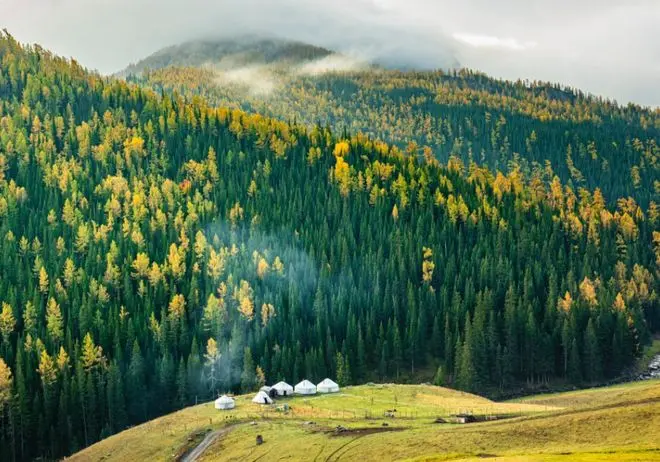
Kanas in the Altay region requires its own border-area paperwork because it sits near the Kazakh, Russian, and Mongolian tri-border zone. The rules shift by season and by nationality, so confirm at the Beitun or Altai PSB when you arrive rather than trusting a blog post. In practice most visitors enter Kanas on the standard scenic-area ticket and only need the extra permit if they venture into the buffer villages or cross to the nearby borders.
The key difference from the Pamir: Kanas is busy and commercial, so the permit is a formality. The Pamir is quiet and militarized, so the permit is law. Treat them differently.
Khunjerab and the international edge
If your plan reaches the Khunjerab Pass into Pakistan, the rules change again. That crossing needs a Pakistani visa, a Carnet de Passage for the vehicle if you are driving your own, and far more lead time. The Khunjerab Pass guide lays out the crossing in full. Most travelers stop at the Chinese side of the pass and turn back, which needs only the Tajik permit plus the standard checkpoint courtesy.
Checkpoints: what actually happens
Between Kashgar and Tashkurgan you pass three to four police checkpoints. At each, hand over passport and permit, smile, and wait while they scan. It takes two to five minutes. The speed-limit and checkpoint fines guide explains the road rules around them, and the short version is: slow down, indicate, and do exactly what the officer gestures. Arguing gets you nowhere and costs you time.
The Khorgos border port guide is the one to read if your interest is the Kazakhstan crossing in the far north instead of the Pakistan one in the south. Different port, different permit, same principle: the paperwork decides the trip.

Common mistakes that cost a day
Listing only “Tashkurgan” when you also want Karakul Lake. Forgetting your photo and queuing twice. Arriving at the PSB at 4 p.m. and missing the cut-off. Driving past the first checkpoint before you realize the permit was never stamped. I have made three of these. None are fatal, all are annoying, and all are avoidable if you treat the permit as the first stop of the trip, not the last thought.
My checklist
Passport with at least six months validity. Two printed photos. A written route with every town named. Cash for the PSB area (cards are fine in the city but the office surrounds are cash-first). A copy of the permit stored on your phone and a paper copy in the glovebox. With those, the Pamir is a straightforward, stunning drive instead of a bureaucratic trap.
The border permit is the price of admission to the most dramatic landscape in China. Pay it properly in Kashgar, and the road to the roof of the world is yours.
Documents to carry every single day
On the Pamir the permit is not a one-time formality. You show it at multiple checkpoints, and you show your passport at every one. I kept a clear folder with the passport, the permit, and a printed copy of the permit, and handed the folder over without fumbling. Officers appreciate speed and order. A traveler who digs through a backpack at every stop slows the line and draws attention; a traveler who is ready moves through in seconds.
Also carry your Xinjiang travel permit confirmation and any hotel registration receipts from Kashgar. In rare spot checks the police want to see where you stayed, and a paper receipt settles it instantly. I photographed every receipt and kept the photos in a dedicated album on my phone.
What really happens at the checkpoint
The reality is boring, which is the best kind. You slow, indicate, pull to the side. An officer in uniform approaches, you hand over the folder, they scan the passport, glance at the permit, maybe ask where you are going, and wave you through. Total time, two to four minutes. Nobody searched the car, nobody was difficult, and everyone was professional. The anxiety I carried from the blogs dissolved at the first checkpoint and was gone by the third.
The one thing they do watch is speed and behavior. Drive calmly through the zone, do not photograph the booth, and do not argue. The checkpoint is a formality you pass by being ordinary.
Permit myths that waste your time
Myth one: you need the permit weeks ahead. For the Tajik permit you usually get it the same day in Kashgar. Myth two: foreign travelers cannot go at all. They can, with the permit, to the standard Pamir towns. Myth three: a travel agency must arrange it. You can do it yourself at the PSB for free. Agencies help if you want ease, but they are not required. The travel permits overview debunks the rest, and reading it saves you from paying for help you do not need.
The truth is simpler than the fear. Show up in Kashgar with your passport, apply in the morning, drive south in the afternoon. The Pamir has been welcoming foreign travelers for years under exactly this system. Trust the process, and the roof of the world is yours to photograph.
Kanas and the north permit
The Kanas nature reserve in the Altay sits near the tri-border with Kazakhstan, Russia, and Mongolia, and it carries its own entry rules on top of the standard scenic-area ticket. In peak season the reserve limits daily visitors, so book the entrance and the internal shuttle ahead, ideally through the official platform, and confirm at the Beitun or Altai PSB whether your nationality needs the extra border paperwork for the buffer villages. Most travelers enter on the normal ticket and never need more, but the few who wander into the fringe settlements without checking have been turned back.
The north is busier and more commercial than the Pamir, so the permit there is a formality, not a gate. Treat Kanas as a scenic visit first and a border zone second, and you will be fine.
A permit-day checklist
Arrive at the Kashgar PSB at opening, before 10 a.m. Bring passport, one printed photo, and a written route with every town named. Keep the issued permit with your passport at all times. Photograph both, front and back, and store the photos in a dedicated album. Tell your hotel the plan so the registration matches. That is the whole system, and it takes one morning. The rest of the Pamir is just driving, stopping, and the occasional friendly checkpoint that waves you through.
The permit is free, the process is same-day, and the reward is the most dramatic road in China. Do it properly once and you will wonder why the blogs made it sound like a trial.
If your plans change
Plans shift on the Pamir: a pass closes, a storm sits, a hotel overbooks. The permit lists your towns, but officers understand weather and road reality, and a changed overnight within the permitted zone is rarely a problem if you explain it calmly. I once diverted to a lower town to dodge a snow line, mentioned it at the next checkpoint, and was waved through. The permit is a plan, not a cage; flexibility inside its bounds is expected.
The permit and your peace of mind
The real value of doing the paperwork properly is not the stamp. It is the calm of driving south knowing every booth will nod you through. Half the travelers I met on the Karakoram were anxious about a document they had not sorted, and that anxiety leaked into the whole trip. Sort it in Kashgar on day one, then forget it. The Pamir is demanding enough without carrying paperwork worry on top of the altitude.
Final thought
The border permit is the gatekeeper to the most dramatic landscape in China, and the gate is easier to pass than the rumors claim. Sort it in Kashgar on the first morning, carry it with your passport, and the Pamir opens without fuss. Treat the checkpoint with calm and the officers with respect, and the road to the roof of the world is yours. The paperwork is the small price of a very large view.
A practical note for the worried: the PSB in Kashgar processes foreign travelers daily and the staff are used to the routine. Arrive early, bring the photo, and the wait is the only discomfort. The permit is free, the process is same-day, and the only real risk is the one you imagine the night before.