
Xinjiang Roadside Assistance & Breakdown Guide: Flats, Repair Shops & Rescue Numbers

Last July I blew a tire on the Duku Highway, about 42 km north of Qiaolma. Right rear, a sharp rock rolled from the hillside — a bang, the wheel yanked half a turn right. It was 3:30 p.m., 2,700 m up, one signal bar, no other car in sight. I knelt to fit the spare and found the jack handle missing — the previous renter had lost it.
I waited one hour and forty minutes before an SUV bound for Urumqi stopped and lent me a handle. Since then, before any Xinjiang trip, I lay hands on four things: the jack, the handle, the spare’s pressure, and the tow eye. This piece is practical: the common failures, the rescue numbers that connect, where repair shops sit on each route, and the pits I have stepped in.
The most underestimated risk of driving Xinjiang is not the road or weather — it is how far help is once you break down.
First, your “rescue radius”
Inland on the expressway, help arrives in forty to sixty minutes. That expectation fails in Xinjiang.
The problem is scale. Urumqi to Kashgar via the Lianhuo and Beijing–Xinjiang expressways is about 1,470 km; Korla to Hotan across the Taklamakan has roughly 522 km with almost no towns. On the Minfeng–Qiemo road I have seen over 90 km with no building at all.
Before leaving I divide the route by distance to the nearest repair point into three bands.
Green zone: within 50 km of a county — call and wait. Yellow zone: 50 to 150 km; rescue reaches but you may wait three to five hours. Red zone: beyond 150 km with no signal — the desert highway’s middle, the Wusun path edges, parts of the Duku between Hashilegen and Qiaolma, much of the G219 Xinjiang–Tibet line. There your first move is not the phone but judging whether you can hold out until someone passes.
I spend twenty minutes the night before, pairing this with offline maps and signal-dead-zone preparation, marking red zones on the offline map. There I keep the tank above half, drop speed, and do not overtake.
The five most common Xinjiang breakdowns
Over some 30,000 km, plus talk with mechanics and drivers, the failure types are remarkably concentrated.
1. Flat or punctured tire (over half I have seen)
Common for plain reasons: gravel on mountain and resurfaced roads, summer heat (Turpan asphalt hits 60°C at noon, pressure already high), and worn rental tires.
On pickup I check tread depth and sidewall bulges. Press a one-yuan coin into the tread; if the emblem base shows too much, swap the car. A sidewall bulge must never be driven — I once returned a rental over exactly this.
Repair is cheap; county towns are full of plugs (¥20–40, mushroom ¥60–100). A new tire runs ¥350–600 domestic, ¥800–1,500 for Michelin or Continental. Obscure sizes may need a day to fetch from the prefecture.
2. Dead battery
Common in autumn and winter. After November, minus-ten mornings leave cars dead; in Hemu one morning three of a dozen parked cars were jump-starting. Another cause is self-inflicted — parked watching stars with hazards, fridge and dashcam on, the battery gives in hours. I keep a portable jump starter (a few hundred yuan, glove-box sized); it beats cables, which need a second vehicle you may lack in a red zone.
3. Overheating
Comes on long climbs — the Duku to 3,400 m Hashilegen, the Tianshan and Yizhao roads. Signs: needle toward red, AC stops cooling, sweet smell. Pull over safe, kill the engine, open the hood, wait twenty minutes. Never twist the hot radiator cap. Top low coolant with pure water, then antifreeze in the county.
4. Undercarriage scrapes and the oil pan
The top killer on unpaved sections — old Hemu road, Urho Ghost City dirt, herder tracks. A low sedan forced through hurts the oil pan; once cracked, oil drains in kilometers and the engine is wrecked. Rule: under 15 cm clearance stays off routes marked “dirt.” Want those places, rent a high-clearance SUV; the extra cost beats the repair.
5. Glass and paint
Does not affect driving but affects the return. Trucks fling stones that pit windshields constantly; of three trips, twice mine took a hit. Renting, always buy separate glass coverage — ¥10-odd a day versus ¥1,000–2,000 for an OEM pane.
Rescue numbers: which connect
Storing numbers is useless without knowing which to dial.
12122 — traffic and roadside rescue. The national expressway alarm-rescue number; on the Lianhuo, Beijing–Xinjiang and Tuhe expressways it answers. State the expressway, direction, and nearest kilometer marker — every shoulder sign reads “K1234,” far better than “near a gas station.”
The rental company’s 24-hour line. If rented, your first call. National chains (Shenzhou, eHi, ZuZuche) cover 100–200 km around Urumqi, Kashgar and Yining outlets; beyond that you pay tow fees, ¥8–15 per km. Local shops vary — at signing ask coverage, out-of-range charges, and the replacement plan.
The insurer’s roadside help. Every property insurer offers free basics — jump, fuel, spare swap, limited towing (usually free within 50–100 km). Ping An, PICC and CPIC have decent county networks. Many buyers never know; call service before leaving.
110 and 122 for injury or accidents; do not clog them for a mere fault. 96122 is a regional hotline with unstable coverage — backup only.
No signal — three layers
Layer one: move to signal; many “dead zones” are a few km. Layer two: find facilities — maintenance stations (daoban), gas stations, checkpoints, toll booths all help; a G217 daoban worker radioed a repair point ahead for me. Layer three: flag a car — long-haul drivers generally stop, especially local SUVs and trucks. Stand on a straight shoulder, arms out, never inside a curve; hazards on, triangle 150 m back.
For desert highway or Xinjiang–Tibet routes, rent a satellite phone or Beidou text device (¥50–100/day) — cheap against six extra stranded hours.
Repair-shop distribution by route
Rule of thumb: prefecture cities fix anything, counties fix routine faults, townships only plug tires and add water.
Northern loop (Urumqi – Karamay – Burqin – Kanas – Altay – Fuyun – Qitai)
Easiest. Urumqi, Karamay, Altay have brand 4S shops; Burqin and Fuyun handle most issues; Kanas has only basic plugging, Hemu almost none — check before entering.
Yili loop (Urumqi – Sayram Lake – Khorgos – Yining – Nalati – Bayinbuluk)
Yining is the hub with full 4S and easy parts; Huocheng, Qapqal, Nilka, Xinyuan, Gongliu all have proper workshops. Sayram Lake and Bayinbuluk are limited; between them is yellow zone — head toward Nalati if trouble.
Duku Highway (G217 Dushanzi – Kuqa)
Worth a separate mention: most failure-prone yet hardest to rescue. 561 km, repair only at the ends and mid-point Qiaolma (basic plugging and jumping). Opens around mid-June, closes early October. Heavy traffic helps flagging help but jams last hours. Rules: fill at Dushanzi, pre-check spare pressure, depart before 7 a.m. The detailed Duku Highway conditions and segment planning is worth reading first.
Southern loop (Korla – Kuqa – Aksu – Kashgar – Hotan – Minfeng)
Korla, Aksu, Kashgar, Hotan are prefecture cities; Kuqa, Baicheng, Shache, Yecheng counties suffice. The real difficulty is the Taklamakan desert highway. The 522 km Minfeng–Luntai stretch has pump houses and stations but no repair. Before it, a full check at Korla or Hotan — tires, coolant, oil, belts, cabin filter (dust clogs it). The complete Taklamakan desert highway crossing preparation has a finer checklist.
Pamir and Tashkurgan
G314, 314 km, 1,300 m to 3,100 m. Road is good but altitude saps power; turbos less so. Tashkurgan town has middling repair; beyond toward Khunjerab, none. This route needs a border permit — sort it before departure, not at the checkpoint.
Three real incidents
42 km north of Qiaolma, blowout
3:30 p.m., ~55 km/h, rockfall. Right: hazards, eased off, stopped on a wide straight shoulder, set the triangle. Wrong: no tool check at pickup. I flagged a car for the handle, fitted the spare, crept to Qiaolma; the sidewall was torn, unrepairable, and he lacked my size (235/60R18), so I limped 180 km on the full-size spare to Kuqa and fitted a ¥480 domestic tire.
Lesson: full-size versus donut spare is a huge gap. A donut is capped at 80 km/h and only tens of km — at pickup, peek under the trunk; if it is a donut and you plan the Duku or desert highway, consider another car.
Near Flaming Mountains, Turpan, overheat
Mid-July, 48°C ground, climbing with AC on, the gauge lit yellow. I switched AC off, heater on (counterintuitive but real — it dumps engine heat into the cabin), dropped to 40, pulled into a clearing, waited half an hour. Coolant low; I topped to mid-line with bottled water and crept to Shanshan, where a ¥150 radiator leak fix followed.
Lesson: the heater trick works. Around Turpan, Shanshan and Hami in summer, avoid long climbs noon to 4 p.m. — eat and rest in shade, move after four.
Hemu lot, no start
Early October, minus six. A local in a pickup jumped me; after starting he said idle fifteen minutes then drive half an hour. I did, no further trouble. Lesson: I then bought a jump starter. Polarity order matters — both positives, then rescuer’s negative, then the stricken car’s ground point; reverse to remove. If unsure, let the local mechanic do it.
Summer and winter differ completely
Summer (June–September) is heat and stones: overheating, high pressure, flats, AC glitches. Carry extra water, avoid peak heat, check coolant. A summer-only hazard is storms and debris flows; I once waited two hours for a Yizhao closure. Never force flooded or muddy sections; wait for the crew.
Winter (November–March) is cold and slip: dead battery, thick oil, frozen washer fluid, poor grip. Essentials: real snow tires (not all-seasons), -30°C washer fluid, shovel and chains, low-temperature oil. My first Altay winter on all-seasons, an icy descent barely braked; engine braking alone slid me to safety. Never again. Winter rescue is slower — northern December is dark by 6:30 p.m.; my rule is to reach the stop before 5 p.m.
On repair shops, frank words
Xinjiang county mechanics are underrated — they handle old cars and harsh roads yearly. In Minfeng a master heard my engine and named a loose AC belt, fixed in ten minutes for ¥50. But asymmetry is real: pick shops by brand authorization or map reviews; agree the quote first (labor runs ¥50–150, below inland); look at the old part removed; wait for a prefecture city if the fault is safe to drive. Some southern masters speak limited Mandarin but all understand — slow down, use gestures. Politeness smooths things.
Frequently asked questions
Can a beginner self-drive? Yes, with modest routes — northern or Yili loop first (asphalt, dense counties). The Duku tests nerve, not high skill. Desert highway and Xinjiang–Tibet, trip two.
Rent an off-roader? Depends. Asphalt needs only a high-clearance SUV; true 4WD only for dirt, tracks or sand. Doubling rent for “just in case” is not worth it.
Dangerous solo? Risk is fatigue and no help. Keep daily distance under 350 km, avoid night, take popular routes. Two cars together is best — one breaks, the other covers.
One-way rental? Yes — Urumqi pickup, Kashgar or Yining drop, for a ¥hundreds–2,000 fee.
Car unfixable? Rented, call the company for a swap. Your own, ship it inland via Urumqi logistics, ¥3,000–6,000, about a week.
One sheet of paper
Phones die and lose signal. I print an A4 in the visor with four things: numbers (rental rescue, insurer, fellow vehicles, family, 12122, 110); vehicle info (plate, VIN last six, policy, contract); the day’s plan (start, end, towns, ETA — leave a copy with family); and key nodes (stations, counties, repair places — the green/yellow/red bands). Also message companions each morning and on arrival; ten seconds with signal becomes others’ basis if you vanish.
Two cars together
Keep within sight in mountains, a few hundred meters on straights; confirm the team present every half hour. Split fuel and water — do not pile reserves in one vehicle. Agree a lost-contact plan in advance. Walkie-talkies beat phones (¥hundreds a pair, worth it on the Duku). Assign one person to “call the stop” — when they say stop, no debate.
Tools and spares I keep
Each earned its place over three trips.
Jack and handle — confirm present at pickup. Cross tire wrench (¥30-odd, beats the factory L-handle on rusted nuts). Portable inflator (¥100-plus; plugs, pressure drifts, sand deflation). Tire gauge. Jump starter — winter essential. Tow rope (5-ton; helps others too). Triangle and reflective vest — the vest is life-saving roadside. Coolant and oil, one-liter bottles. Headlamp (hands free on a tire). Entrenching shovel for sand, dirt, snow. Fuses, duct tape, zip ties (under ¥20; I taped a loosened fender for 800 km).

Not worth carrying: full wrench set, hydraulic gear, backup generator — heavy, and real problems still need a master. Tools fix “small” issues, not big ones.
Insurance and claims
Your own car: confirm rescue limits, free towing km, and out-of-town direct-pay before leaving; some firms reimburse only after you return. Rental: buy all — base + waiver + glass + tire, ¥60–120/day more, ¥1,000-odd over ten days; one windshield pays back. The trap is the waiver’s scope — many contracts exclude tires, glass, scratches, wading, single-vehicle accidents; read the exemptions, especially how “single-vehicle” is defined. After a claim, report first, get an assessment, then repair; self-repairing then seeking reimbursement usually fails. For the comparison, see which Xinjiang travel insurances you actually need.
Stranded in no-man’s-land
Worst case: red zone, car dead, no signal, dusk.
Safety first. Move to the outer shoulder, hazards on, triangle 150 m+ back (Xinjiang speeds are high; 50 m is not enough). Everyone out beyond the barrier — not inside; a rear-end with people aboard is far worse.
Inventory. Water, food, fuel, battery, warm clothes — July nights at Bayinbuluk drop below 5°C, Pamir colder. Knowing how long you can last drives every choice.
Do not walk. The car is the most visible target and your shelter. Hiking for signal is the most common fatal error here; two serious cases I know both abandoned the car on foot. Unless sure of a nearby village, stay with the car.
Spend the phone sparingly — off data, low brightness, on only to dial. Prepare to be found — mirror glints by day, marker lights or flashlight by night; step out at engine sound.
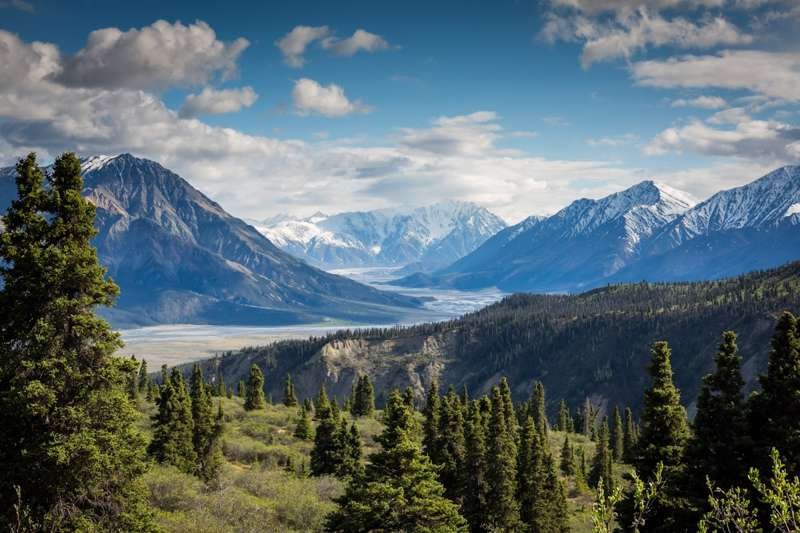
Routine tourists almost never hit this; popular routes carry real traffic, the Duku and Yili loop in summer are convoys. Real red-zone risk sits on a few hardcore lines — Xinjiang–Tibet, Wusun outskirts, Lop Nur, unusual desert crossings. If your plan lacks these, treat it as background.
Habits I keep
Tank never below a third — stations sit far apart and need registration and queues. Find lodging before 6 p.m.; night driving is the riskiest segment (livestock, trucks, fatigue). Two hours driving, fifteen minutes rest — Xinjiang straights hypnotize. Documents in one clear pouch before checkpoints. Walk the car each morning — tires, leaks, lights, twenty seconds that catches plenty.
Finally
I did not write this to scare anyone. Three trips, 30,000-plus km, my worst was that flat — a hundred forty minutes waiting. Most runs go smoothly.
But Xinjiang magnifies small problems; inland a nail is a ten-minute plug, here it can become half a day. The difference is preparation, not the fault.
Lay hands on the jack, charge the starter, mark the red zones, save the numbers — under two hours, yet they turn a breakdown from “fully passive” to “knowing the next step.” Enough.
If still planning, first read the complete Xinjiang self-drive guide, settle itinerary and vehicle, then return to this prep. Order right, things flow.