
Xinjiang in March: Thaw, Reopening Roads and the First Green of Spring
March is the month Xinjiang stops holding its breath. The snow pulls back from the valley floors, the blocked passes begin to clear, and for a self-driver this is the quiet window before the summer convoy arrives. I have crossed the province in this shoulder month three times now, and the reward is simple: empty roads, honest prices, and a landscape caught halfway between winter and green.
The Weather You Actually Get
Northern Xinjiang stays stubbornly cold. Around Urumqi, Yining and the Ili basin, daytime highs sit between 5°C and 12°C in early March, climbing to about 13°C by the final week. Nights still drop to -8°C near the start of the month. You will scrape frost off the windshield most mornings in the north.
Southern Xinjiang is a different country. Kashgar runs 14°C to 18°C by day with nights around 2°C to 6°C. Turpan, tucked into its own furnace of a basin, can touch 22°C and feel almost Mediterranean in the afternoon sun. The gap between noon and midnight is the thing that fools first-timers: a 15°C swing in a single day is normal, and I have left Kashgar in a t-shirt at lunch and needed a fleece by eight.
Wind is the real March hazard. The corridor west of Urumqi through Dabancheng funnels spring gales that have tugged the wheel out of my hands at 90 km/h. Gusts of 20 to 30 m/s are reported through the season, so I check the wind forecast before any east-west run and park the idea of a roof box if it looks nasty.
The south is not uniform. Kuqa and Aksu sit a touch cooler than Kashgar, with days around 12°C to 16°C early in the month, while the Turpan basin runs hot and dry and can be 10°C warmer than anywhere else you will drive. I plan layers around the basin crossings and peel them off as the thermometer climbs.
Roads Reopen, and Some Stay Shut
This is the month of partial openings. The high passes that close for winter start to budge in late March, but the headline alpine route, the 561 km Duku Highway between Dushanzi and Kuqa, does not open until June. Do not plan a March crossing of it. The northern stub toward the alpine meadows stays snowbound, and the gates are chained.
What does open is the backbone of the south. The G3012 ring around the Taklimakan is clear year-round and gives you fast, lonely highway from Kashgar east through Aksu to Kuqa and on toward Turpan. The G217 from Kuqa up toward the southern Duku gate is usually passable but demands a phone check, and the G218 and G216 through the north begin to thaw and reopen in patches.
March is also when construction crews start patching the damage that the freeze left behind. I keep the road closures and construction guide bookmarked for exactly this reason, because a 40 km detour around a slide can wreck a tight schedule if you only learn about it at the barrier. When in doubt I call the 12122 highway line; the operators will tell you in plain terms whether a gate is open.
Where I Would Point the Car
If you only have March, drive the south. I would land in Urumqi, spend a night, then either fly south or settle in for the long haul down the G3012. A Kashgar-to-Kuqa run is the sweet spot: roughly 720 km of open highway, two or three easy driving days, and a string of oasis towns that are just waking up.
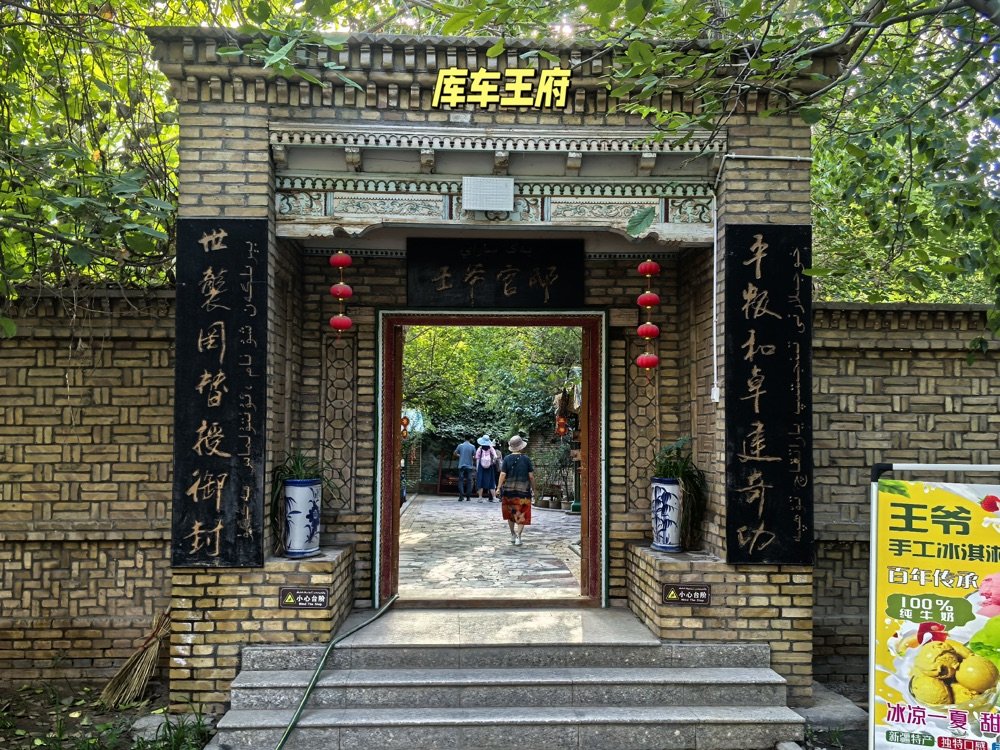
Kashgar itself is the obvious anchor. The old town is calm in March, the Sunday livestock market is in full swing, and the drive out to the Pamir fringes is clear if you hold off on the highest passes. Kuqa, the old kingdom town, gives you the royal mansion, the Kizil Thousand-Buddha caves an hour northwest, and a food scene that punches well above its size.
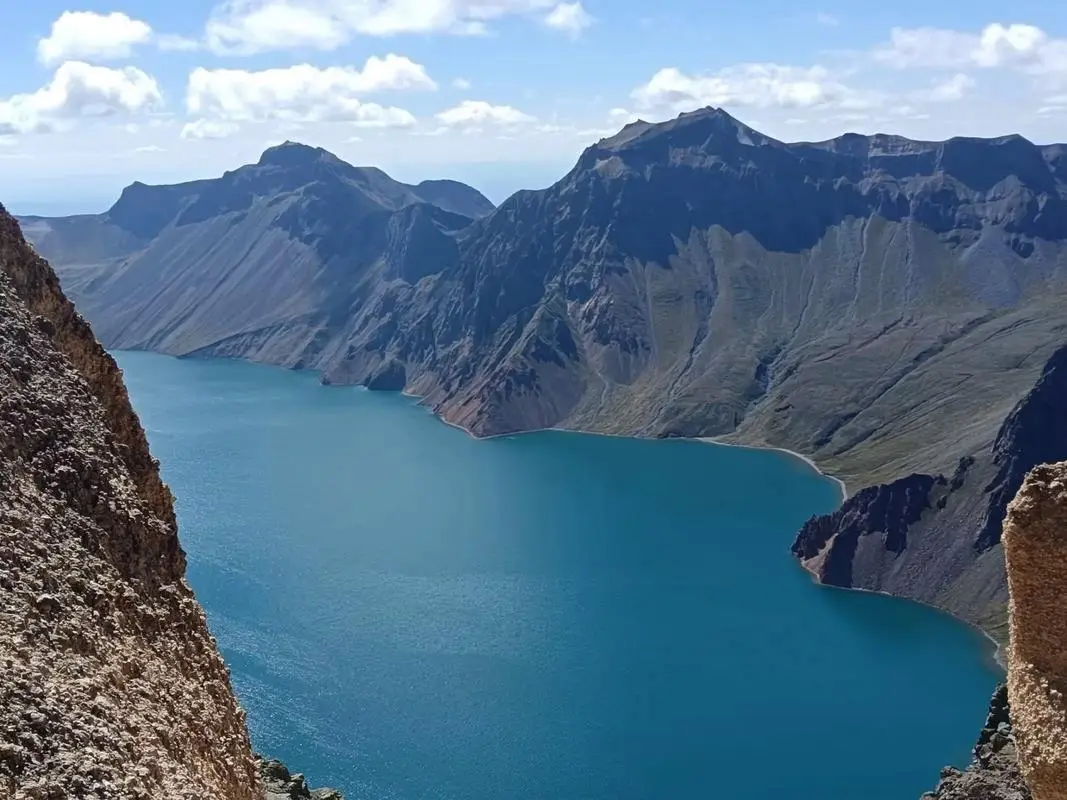
The north is not worthless, just quiet. Urumqi to Heavenly Lake is an easy 110 km and the lake is a dramatic slab of ice-to-water transition in March. The Ili valley is still grey, with Sayram Lake frozen solid and Nalati under snow, so I treat the north as a taster rather than a destination this month.
One detour I rate highly is the run east to Turpan from Korla, about 220 km, for the grape valleys, the ruined city of Jiaohe, and the surreal sight of the Flaming Mountains. It is hot, dry, and full of history, and in March you have the sites almost alone.
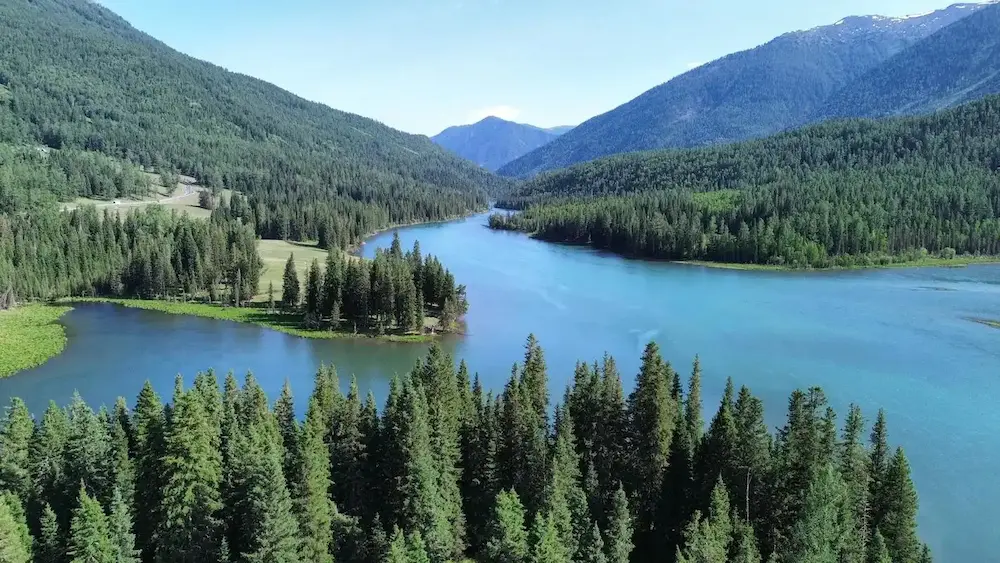
The high country is still asleep, and that is worth saying plainly. Kanas, the postcard lake up near the Altai, is locked in snow and closed to through traffic for most of March. The image below shows what it looks like when it finally reveals itself, but plan to see it in another season rather than betting on an early opening.
What the Land Looks Like
March is a study in contrast. The mountains are still white top to bottom, but the oasis floors are changing by the week. Along the irrigation ditches near Kashgar and Yining, the first thin green appears on the willows by the third week, and apricot buds begin to swell on the orchard trees.
I love this in-between state. The desert highways are bordered by last season’s dead grass, then suddenly a canal flashes with reflected sky and a row of poplars throws the first yellow-green. It is not the lush June you see in brochures, but it is honest, and you have the view to yourself.
The Taklimakan’s edge is where March is most theatrical. The dunes still hold their winter shape, but the wind starts to redraw the ridges, and at dusk the whole horizon goes copper. I once pulled over for an hour near Aksu just to watch the light move across the sand, and saw two cars the entire time.
Food, Lodging and Prices
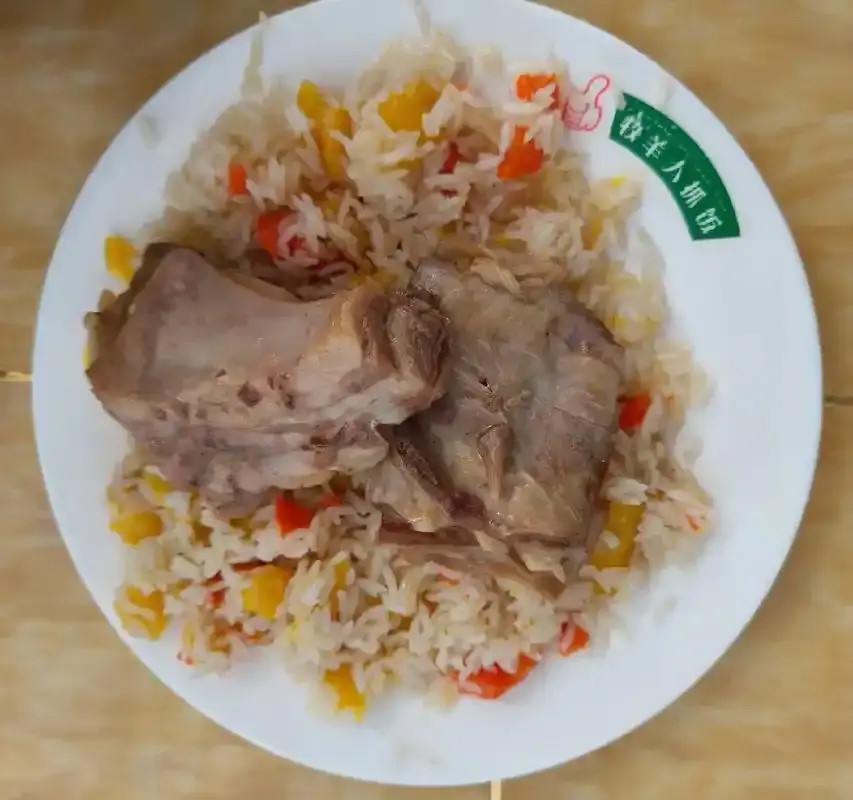
Low season means the table is generous. A plate of pilaf with lamb runs ¥25 to ¥40, a bowl of laghman noodles about ¥18 to ¥30, and skewers come in at ¥3 to ¥5 each. Samsa, the baked meat pastries, are ¥4 to ¥6 from a street oven, and I have eaten better ones in a Kashgar side street than in restaurants charging three times the price.
Rooms are soft too. A decent guesthouse in Kashgar runs ¥120 to ¥200, while a comfortable Urumqi hotel lands around ¥200 to ¥350. Owners have time to talk in March and the bargaining is real; I have walked into a ¥280 room and left paying ¥220 simply by asking what the month rate was.
A Route I Would Actually Run
Here is a twelve-day southern skeleton I have driven and would happily do again. Days one and two: Urumqi to Korla (around 330 km) then on to Kuqa (260 km), with the Kizil caves on day two. Day three lingers in Kuqa for the mansion and the bazaar. Days four through six run Kuqa to Aksu (about 260 km) and on to Kashgar (roughly 460 km), breaking the long leg at a midpoint.
Days seven and eight belong to Kashgar: the old town, the market, and a day trip toward the Pamir foothills if the gate is open. Days nine and ten loop back north through the desert highway, or duck into the Ili valley if the weather holds. Days eleven and twelve return to Urumqi. It is about 2,000 km of driving, calm and uncrowded.
For the broader picture of how March fits the year, my month-by-month planning guide lays out the trade-offs, and the best-time overview is worth a read before you book flights. If the orchard talk has you impatient, the full spring blossom trail explains where April takes the story, and the May driving report covers the month when the grasslands finally turn.
Fuel, Cash and the Long Gaps Between Towns
The desert highways are not short of fuel, but the spacing between stations will surprise you if your mental map comes from Europe. I treat half a tank as empty and fill up at every county town, because the run from Aksu to the next real stop can be 150 km of nothing but telegraph poles and the occasional herder.
Payment is the part that trips up foreign drivers. Many pumps still will not take an overseas card, and the self-service screens rarely carry an English option. I keep about ¥2,000 in cash for fuel and snacks, and where I can I link a Chinese payment app to my card so the attendant can scan my phone. It is not elegant, but it works, and the station clerks in small towns are patient once they see you are trying.
Service areas on the G3012 sit roughly every 40 to 60 km, though in low season a few close their shops and leave only the pumps running. I stop at the open ones for the restrooms, which are basic, and I always carry my own tissue and a bottle of water. A full thermos and a packed lunch turn a long desert leg into something close to pleasant.
The Pamir Gate and Foreign Permits
If the south tempts you up toward Tashkurgan and the Karakul lake, you need a border-region permit, and March or April is a good time to sort it because the queue is short. I collected mine at the public security bureau in Kashgar with my passport and a passport photo, and the whole thing took a relaxed morning.
Without that slip of paper the checkpoint at the foot of the Pamir turns you back without argument. With it, the road opens into some of the most dramatic driving in the country: the white cone of Muztagh Ata rising over a frozen-melting lake, the yurts by the roadside, and a highway that climbs past 3,000 meters before you reach the border town. I have done it in March when the high pass still had snow walls beside the lane, and in April when the first green showed in the valleys below.
Take the altitude seriously even in spring. The air at Tashkurgan sits around 3,100 meters, and a driver who feels fine in Kashgar can get light-headed behind the wheel. I drink extra water, skip the heavy lunch, and pull over for a walk every couple of hours on the climb.
Light, Photography and the Empty Roads
March gives a self-driver the thing you cannot buy in July: room. I have stopped dead in the middle of a four-lane highway to photograph a line of poplars because there was no one behind me for ten minutes. The low spring sun throws long, warm light across the desert in the late afternoon, and the early mornings carry a thin frost that makes the oasis canals glow.
The cold, clean mood of a March morning is worth the early alarm and the frozen windshield. Heavenly Lake at about eight, before the day-trippers arrive and while the ice at the shore still holds the pink of sunrise, is the shot I tell everyone to get, and the quiet is the real prize.
What to Pack and Watch
Keep snow tires on if you are driving the north; the passes and shaded valley roads ice over at night well into April. I carry chains regardless, plus a real emergency kit, because a March stall on a quiet desert highway can mean a long wait for the next vehicle.
Dress in layers and pack for two seasons in one day. A windproof shell earns its place on the Dabancheng crossing, and I always carry extra water and a paper map because signal thins out past the oasis towns. None of this is difficult. March simply asks you to check the gate before you drive to it, and the payoff is a Xinjiang most visitors never see.