
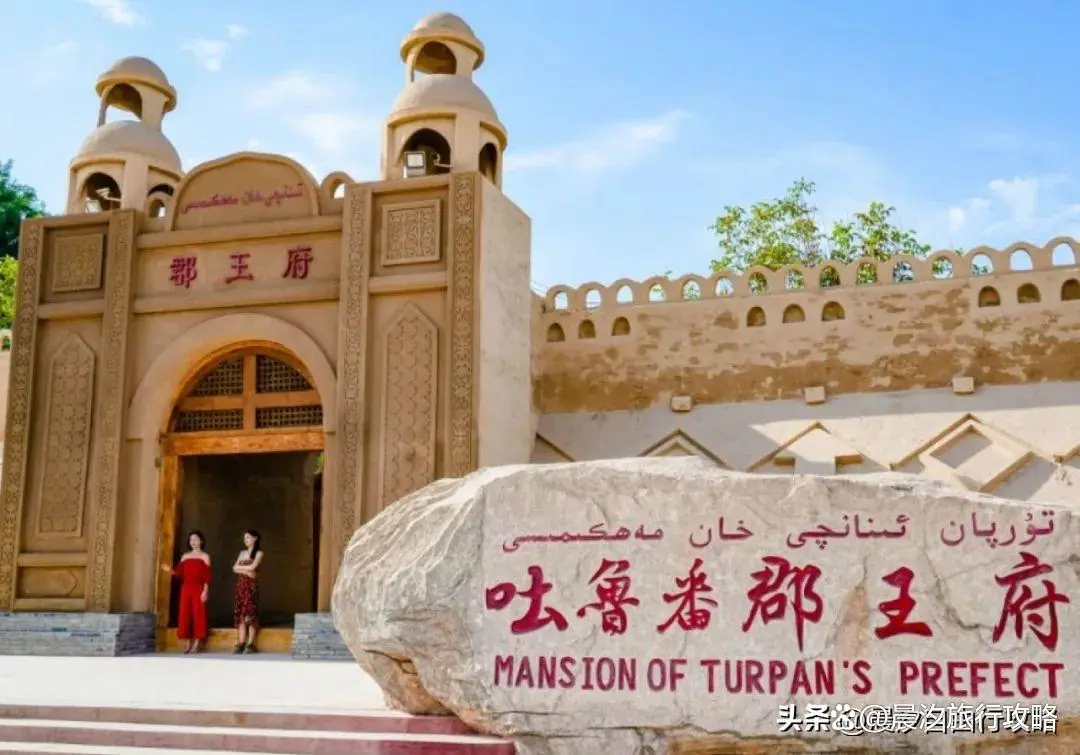
Russian and Cossack Heritage in the Ili Valley: Yining’s Lost Tsarist Quarter
I reached Yining in the blue hour before the Ili valley’s heat lifts, parking my rented SUV on a side street where the plane trees throw long shadows. Ghulja, as the old maps called it, sits where the Ili River bends toward Kazakhstan, and the air that evening smelled of ripe apricots and woodsmoke. Most travelers blow through on their way to the grasslands, but I had come for something quieter: the ghost of a Russian town that once lived inside this Chinese city.
Yining is the capital of the Ili Kazakh Autonomous Prefecture, a green and prosperous corner of Xinjiang wedged against the mountains. It feels different from Turpan or Kashgar. The streets are broad, the water is generous, and the faces in the bazaar carry a mix you will not find elsewhere in the region. For a century this was a frontier where empires met, and the Russians left the deepest mark of all.
The Street Once Called the Russian Quarter
I started where the old consulate district used to be, a grid of lanes west of the city center that locals still point to as the Russian quarter. The formal name has changed a dozen times, but the bones of the place have not. Wide lots, deep gardens, and timber houses with steep shingled roofs stand among the brick apartments the later decades built.
The houses stopped me first. They are low and square, painted in faded ochre and pale blue, with verandas that wrap the corners and eaves carved into little scalloped fringes. I wandered a lane with no name on my map and counted seven of them in a row, their windows framed in the same heavy timber I had seen in Siberian towns. A woman watering geraniums on a veranda nodded at me. “My grandfather built this,” she said in a mix of Uyghur and Russian I only half caught. That was the whole romance of the place in one sentence.
History sits close to the surface here. The Russian presence in the Ili valley began in earnest after the Qing court signed the Treaty of Tarbagatai in 1864 and later the Saint Petersburg Treaty of 1881, which opened the region to Tsarist trade. Russian merchants followed the Ili River upstream from Semirechye, set up warehouses, and slowly built the quarter I was now walking. By the early 1900s the street had a consulate, shops selling Samovars and felt boots, and a community that spoke Russian louder than any other tongue on the block.
A Tsarist Trade Post in the Ili Valley
It helps to remember what the Ili valley was before the railways swallowed the steppe. This was the soft underbelly of the Tian Shan, a belt of river meadows and black soil where grain grew tall and the passes were low enough to cross with loaded carts. The Russians wanted the valley’s wool, hides, and grain, and they wanted a listening post close to a Qing border that was visibly weak.
The Tsarist trade post was never a fort in the military sense. It was a cluster of brick warehouses, a customs yard, and a row of merchants’ homes protected by the consulate’s flag. Cossack guards in grey greatcoats stood at the gate, more symbol than garrison, but the message was clear. The empire that owned the other side of the mountain had parked a piece of itself on Chinese soil.
What surprised me was how ordinary the legacy feels now. The trade post is gone, replaced by a school and a row of noodle shops, yet the street plan remains Russian: generous blocks, lanes set at right angles, room for carts to turn. When you drive the modern ring road around Yining you are tracing, without knowing it, the old consulate district’s edge.
For travelers who want the wider picture of the prefecture, I leaned heavily on my notes from the self-drive route through Qapqal and the Xibe county west of Yining, which loops you past the same river country the Russian merchants once shipped across.
The Cossacks Who Came With the Empire
The Cossacks deserve a paragraph on their own, because they are the part of the story most guidebooks get wrong. They were not simply soldiers. In the Ili valley they were border guards, mail riders, and farmers pressed into the service of a frontier that stretched from the Urals to the Pacific. The Tsar posted Cossack households here as a human fence, families who would plow the soil by day and report movements by night.
I found their trace in the small things. The poplars planted in strict lines along the old lanes were a Cossack habit, copied from the windbreaks of the Ukrainian steppe. The pickled cabbage and the sour rye bread that still turn up in Yining kitchens came with them. Even the way the verandas face the morning sun is a Russian frontier custom, meant to catch the first light and keep the frost off the door.
Walk the district today and you sense a layered settlement. The Cossack line, the merchant line, the later Soviet-era traders who arrived in the 1950s to help build factories, and the Chinese and Uyghur neighbors who absorbed all of it. Yining never stopped being a crossroads. It simply changed which empire held the map.
The Orthodox Church and the Russian Cemetery
The heart of any Russian community abroad was its church, and Yining had one. The old Orthodox chapel sat among poplars on the north side of the quarter, a modest wooden building with a single pale onion dome that caught the evening light like a small brass bell. Services stopped long ago and the building changed hands more than once, but the shape of it remains a landmark the old residents still name first.
The Russian cemetery is the place that undid me. It lies a short drive from the center, behind a wall of old elms, where weathered headstones lean at every angle and the Cyrillic inscriptions have been softened by a hundred winters. I read names I could not pronounce and dates from the 1880s through the 1930s, whole families laid in rows. A caretaker told me, through a translator, that people still come from Almaty and Moscow to find grandfathers. Some find them. Some only stand and listen to the wind in the leaves.
What the cemetery makes plain is that this was never a holiday post. People were born here, married here, died here, and stayed in the ground when the borders moved. The Orthodox faith, the language, the recipes, the carpentry: all of it rooted deeper than politics. That is why the quarter survives in timber and stone while the empires that sent it have faded.
If you want to understand how these small transplanted communities fit into Xinjiang’s bigger human mosaic, the best single read I found is the guide to Xinjiang’s Russian, Tatar, Uzbek, and Daur communities, which places Yining’s Russians inside a much older pattern of movement across Central Asia.
Walking the Wooden Houses Today
Back in the quarter I let myself get lost on purpose. The houses reward slow attention. Look at the joinery: the corners are notched, not nailed, the old Siberian way, so the walls flex with the frost and never crack. Look at the windows: double-hung, with little carved pediments, painted a cheerful green or cornflower blue that fights the dust. Look at the gardens: currant bushes, apricot trees, and always a bench by the gate.
A retired teacher invited me in for tea when he caught me photographing his eaves. His parlor held a Soviet wall clock, a framed icon in a corner, and a shelf of books in three alphabets. He spoke of his grandmother, a Cossack bride who arrived by cart from Verny, the city now called Almaty, in 1923. “She thought she would go home in a year,” he laughed. “She died here at ninety. Home became this street.”
I thought about that line for the rest of the trip. The Russian quarter of Yining is not a museum. It is a neighborhood where people hang laundry and fix their roofs, and the Tsarist past is simply the foundation they stand on. You do not need a ticket or a guide. You need an afternoon and the willingness to knock, politely, on history’s front door.
A Self-Drive Loop Through Russian Yining
Yining makes an ideal base for a slow loop, and the city itself is best seen by car at the pace of a Sunday. I parked outside the ring road and walked the inner lanes, then drove north to the Turgen Gorge route through Yining county, about 60 km east, where the same river meadows the Russian merchants loved open into alpine forest. The gorge road follows a clear stream and ends at a meadow loud with marmots, a fine counterpoint to the town’s quiet history.
The next morning I pointed the SUV south toward the rolling hills of the Kalajun grassland, roughly 150 km by good highway, where the Kazakh yurts and the Russian timber houses turn out to share a love of open sky and warm wood. Driving between them, you feel the valley’s old logic: everyone came for the grass and the water, and everyone left something behind.
For a longer run, the Yizhao Highway carries you from the Ili basin up over the Tian Shan toward the south, a drive of close to 200 km that climbs from orchards to glacier country in a single brutal, beautiful afternoon. I did it as a return leg, sleeping in Yining both nights so the Russian quarter became a home address rather than a stop.
Where the Heritage Lives On
You will not find a sign that says “Tsarist Quarter” in Yining, and that is part of the charm. The heritage is in the carpentry, the cemetery, the church silhouette, and the old men who still argue the football scores in Russian on a bench. It is a layer under the city, easier to feel than to photograph, and it rewards the traveler who slows down.
I left on the third morning with the smell of apricots still in my shirt. The SUV’s GPS wanted me on the fast road north, but I took the old consulate street one last time, windows down, and watched the painted verandas slide past. A hundred years of empire had washed up here like driftwood and been quietly built into someone’s house. That, I decided, is the real monument of the Ili valley. Not a wall or a flag, but a street where a Cossack bride’s grandchildren still water the geraniums.
If you give Yining two nights instead of none, the Russian past will find you. Walk the lanes west of the center after the heat drops. Buy bread from the old bakery. Stand a while in the cemetery and read the dates. The Ili valley has always been a place where borders were soft, and the Russian quarter is the sweetest proof that the people who cross them tend to stay.