
Driving in Xinjiang With Kids: Car Seats, Motion Sickness & Road-Tested Stops
Why Driving Xinjiang With Kids Is Different
Two summers ago my wife and I took our then four-year-old and six-year-old across Xinjiang by car, roughly 1,800 km from Urumqi to Yining and back. People told us we were brave. Honestly, the hard part wasn’t the distance, it was the 320 km straight shot between service areas on the G30, and the moment our youngest announced she was going to be sick at kilometer 297. This is the guide I wish we’d had before that first morning.
The Child Seat Law in China (Yes, It’s Real)
China’s Road Traffic Safety Law requires children under a certain height or age to use a child restraint. In practice, police in Xinjiang enforce it loosely on quiet county roads but strictly at the big city checkpoints and toll stations. I was asked about it at the Urumqi airport highway entrance and again at a checkpoint near Korla. The officer waved us through once he saw two proper seats belted in, but the family ahead of us, with a toddler on a lap, got pulled aside for a talking-to.
The rule of thumb: any child under 140 cm or roughly 10 years old should be in an appropriate seat. Rear-facing for the littlest, a high-back booster for the older one. Fines are modest, around ¥50 to ¥200, but the real cost is a child who isn’t protected when you hit a pothole at 100 km/h on the Duku.
Renting or Borrowing a Seat
Most international rental desks at Urumqi Diwopu Airport offer child seats as a paid extra, usually ¥30 to ¥60 per day. Book it when you reserve, not at the counter, because stock runs out in July and August. We pre-booked through our rental company and still had to wait 20 minutes while they fetched one from the back.
If you’re flying in from another Chinese city with your own seat, bring it. Chinese airlines count a child restraint as checked baggage with no fee, and your own seat means your kid is already used to it. Some hotels along the Ili valley, the family-friendly ones, keep a spare booster you can borrow for a day trip; it’s worth a WhatsApp or WeChat message ahead.
For the wider picture on cars and paperwork, the self-drive essentials guide covers what to sort before you collect the keys.
Managing the Long Highway Stretches
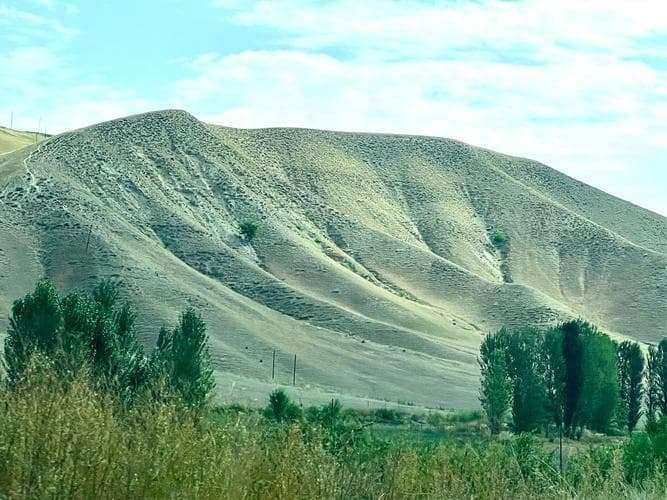
Xinjiang’s scale is the challenge. The G30 from Urumqi to Khorgos is over 500 km of mostly straight road, and kids who are fine for an hour fall apart by the third. Our strategy was to break the day into 90-minute blocks with a real stop at the end of each.
Service areas here are better than you’d expect. Every major one has toilets, a shop, and often a small playground or at least open space to run. We treated each as a 20-minute reset: toilet, snack, ten minutes of running in circles. That rhythm kept meltdowns rare. The speed limits and checkpoint guide is handy here, because knowing where the next enforced stop is helps you plan the breaks.
Dealing With Motion Sickness
Our oldest is a champion puker on mountain roads. The Duku Highway climbs from 600 m to over 3,400 m across switchbacks, and by the second pass he was pale. What worked: we gave him the front passenger seat (he was over 140 cm, so legal without a booster), cracked the windows for airflow, and avoided reading or screens entirely.
Ginger biscuits from a Yining bakery settled his stomach better than any pill we tried. We also kept a stash of small paper bags in the door pocket and a change of clothes in the boot, which we sadly needed once. If your child is prone to it, talk to your doctor before the trip about suitable medication; don’t wait until you’re at kilometer 297 with no pull-off for 40 km.
Altitude adds a layer. Above 2,500 m some kids get headachy and queasy from the thin air rather than the road. Our altitude sickness prevention guide explains how we acclimatized slowly and kept the little ones hydrated on the Pamir approach.
The Window-Seat Trick
One thing that surprised me: letting the kids spot things out the window turned dead time into a game. Whoever saw the first camel, the first snow peak, the 100th wind turbine got a sticker. It sounds silly but it bought us 40 quiet kilometers more than any screen did, and screens make nausea worse anyway.
Family-Friendly Stops That Actually Work
Not every attraction is kid-compatible. Here’s where we had genuine luck:
Sayram Lake, near the Kazakh border, has a flat lakeside loop where you can park and let them scramble on the rocks for an hour. The Sayram Lake transport guide has the self-drive entry points.
Nalati Grassland in the Ili valley runs horse-cart rides short enough for a three-year-old, and the yurt camps sell warm milk tea that our kids still talk about. We spent a half-day there and it was the trip’s highlight.
Urumqi’s regional museum has a quiet, cool children’s corner and air conditioning, a lifesaver on a 38°C August afternoon when everyone needed to decompress. Plan one indoor stop per long day; it resets the whole car.
Snacks, Water, and the Cooler That Saved Us
We packed a soft cooler with ice packs each morning. Xinjiang’s heat is no joke, and a warm juice box is a revolt waiting to happen. Inside: cut watermelon from the morning market (¥6 for half, genuinely the best they’ll ever eat), yogurt drinks, and a bag of naan broken into strips for chewing.
Water was the constant. At altitude and in dry heat, kids dehydrate fast and don’t say so. We pushed a cup every stop and carried 6 liters in the boot at all times. The packing guide lists the rest of our kid-specific kit, from spare clothes to a tiny first-aid pouch.

Sleep and the Daily Rhythm
We learned to start early, around 7:30, drive the big miles before noon heat, and be settled by 5 pm. Afternoon naps in the moving car are gold; we timed the longest legs to overlap with our youngest’s sleep window. Hotels with family rooms are common in county towns, and most will add a simple cot for ¥40.
Nights at altitude were cold even in July, so the kids slept in layers. A familiar small blanket from home went a long way toward keeping them calm in a strange room.
If You’re Nervous, You’re Not Wrong
Xinjiang with kids is a bigger logistics lift than, say, a European road trip, but it’s entirely doable and the payoff is real. Our six-year-old now identifies apricot orchards and knows the difference between a Bactrian camel and a dromedary, which is more geography than most adults have. Seats sorted, snacks stocked, breaks planned, and the long roads become the easy part.
For a broader plan covering ages, routes, and where to base yourselves, the family travel guide for 2026 is the place to start building your own loop.