
Xinjiang with Kids: Towns and Drives That Work
Xinjiang rewards families with space, wildlife, and hands-on culture that screens can’t match—but its scale also makes poor planning painful with children in tow. This Xinjiang travel guide is built from real family trips: which sights suit which ages, how to handle the long drives, and how to keep costs and meltdowns down across a two-week loop. The short version: go north with little ones, keep stages short, and let the landscape do the entertaining.
The single biggest family mistake is overfilling the days. Distances here are measured in hundreds of kilometers, and a tired child in a car at the end of a 500 km stage is no one’s idea of a holiday. Build in lazy mornings, picnic stops by a lake, and one “nothing” afternoon every three days. The payoff is a trip your kids actually remember instead of one they slept through.
Is Xinjiang Good for Kids?
Absolutely, with the right route. Children under 6 do best on the gentle northern lakes and grasslands, where short walks, boat rides, and yurts hold their attention. Ages 7–12 can handle half-day hikes and the desert highways. Teens will love the self-drive freedom and the novelty of sleeper trains and border towns. The main challenge is distance: stages of 300–500 km are normal, so a private car beats buses for families who can nap and snack on their own schedule.
Altitude Note
Most family routes stay below 2,500 m, safe for kids. The Pamir (3,000 m+) is better saved for ages 10+ who can describe how they feel. Watch for headaches and skip high passes if a child is unwell. Keep the first night at a lower base—Urumqi at 800 m is a fine acclimatization stop before any mountain leg.
Best Family Stops by Age
Ages 3–6: Lakes and Easy Boardwalks
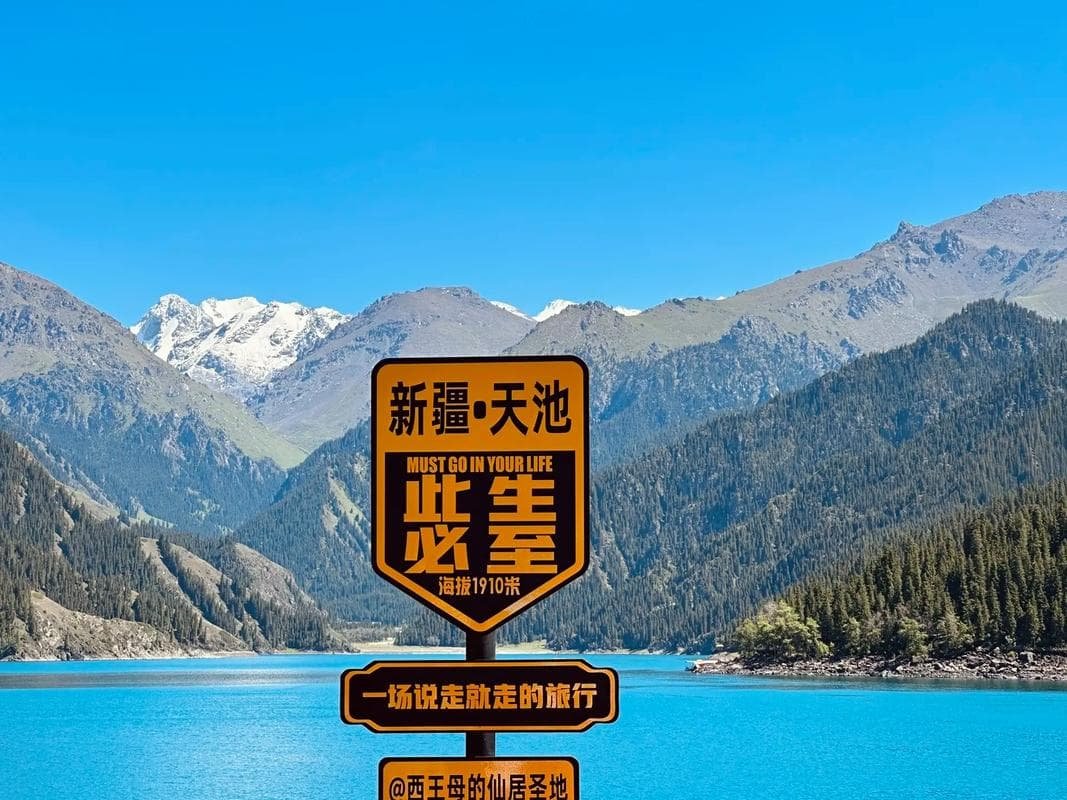
Heavenly Lake (Tianchi) is ideal—a cable car up, a flat lakeside walk, and paddle boats. Sayram Lake offers a 90 km ring road you can drive with stops for photos and yak sightings; the wetland boardwalk is stroller-friendly. Both have clean restrooms and snack stalls, which with small children is half the battle. Bring a carrier for non-walkers; the boardwalks are smooth but long.
Ages 7–12: Grasslands and Culture
Nalati Grassland lets kids ride ponies and meet Kazakh herders; the Kashgar Old Town has a children’s folk-craft lane and endless alleyway exploring that feels like a maze game. The Urumqi Regional Museum has mummies that fascinate older children (save for ages 8+), and the Urumqi science museum covers a rainy afternoon. A short camel ride at the desert edge near Turpan is unforgettable for this age.
Ages 13+: Big Drives and Deserts
Teens handle the Duku Highway drama and a Taklamakan Desert crossing, both of which feel like adventures rather than sightseeing. The Beiting Ruins and Jiaohe Ancient City turn history into exploration games—hand them a map and a “find the Buddha niche” challenge. Older teens can try a beginner ski day in winter at the Altai resorts, a genuine highlight.
Sample 10-Day Family Loop
| Day | Base | Activity | Kid appeal |
|---|---|---|---|
| 1–2 | Urumqi | Regional Museum, Red Mountain Park | Mummies, city views |
| 3 | Tianchi | Cable car, lakeside walk | Boats, easy |
| 4–5 | Yining / Sayram | Lake ring, lavender (Jun–Jul) | Yaks, flowers |
| 6–7 | Nalati | Grassland, pony ride | Horses, yurts |
| 8–9 | Kuqa / Turpan | Grand Canyon, Grape Valley | Rocks, fruit |
| 10 | Urumqi | Departure | — |
Practical Tips
Transport With Children
Hire a car with a driver for 600–900 RMB/day; it removes the stress of navigation and lets kids nap between stops. Chinese law requires child seats for under-4s, but availability varies—bring a lightweight travel harness that fits any seatbelt. Sleeper trains (Urumqi–Kashgar is 24h) are an adventure but hard on toddlers; fly the long legs and save trains for teens who think bunk beds on rails are brilliant.
Food and Health
Xinjiang food suits picky eaters: naan, Laghman noodles, and grilled meat are near-universal, and fruit is abundant and cheap. Carry diarrhea meds, rehydration salts, and a basic fever reducer; rural pharmacies stock these but labels are Chinese, so bring a translation app screenshot. Tap water isn’t for drinking—buy 5 L jugs (8–12 RMB). Yogurt and milk tea are safe and popular with kids, and a bowl of hand-pulled noodles fixes most bad moods.
Entertainment on Drive Days
Long stages need a plan. Download offline cartoons and audiobooks before you leave wifi, pack a small “car bag” of crayons and a notebook, and use the scenery as a game—count yurts, spot herds of sheep, guess the next mountain’s color. Stop every two hours at a scenic pull-off; the roadside picnic with bought naan and watermelon is often the day’s best memory.
Money and Packing
Scenic areas charge a child ticket (half price under 1.2 m, free under 1.1 m at most). Pack layers even in summer—grassland mornings drop to 10°C. Sun hats, a small backpack, and a refillable bottle are essentials. A SIM with data keeps maps and translation working; buy at the airport on arrival and tether the tablets.
Safety and Comfort
Carry passports for the whole family; hotel check-in requires them, and border zones need them for permits. Keep a paper copy of your route and the driver’s number. Most scenic areas have first-aid posts, but the nearest real hospital is in the city—know your nearest county town each night, and save its clinic address offline.
What to Pack for Kids, Room by Room
A family packing list is its own art. For the car: a small cooler for yogurt and watermelon, a trash bag, window shades for the south-facing side, and a “quiet box” of magnetic games and a tablet with offline shows. For the child: two pairs of shoes (sandals for the lakes, closed trainers for trails), a sun hat with a chin strap, a light rain shell, and a fleece even in July—grassland mornings are cold. For the parents: a compact first-aid kit, child-safe sunscreen, and a translation card listing allergies in Chinese.
Don’t overpack clothes; laundries exist in every city and guesthouses often offer a wash service for a few RMB. Instead pack layers that mix and match, plus one “hero” outfit per kid for the inevitable photo at the colorful Kanas or Kashgar backdrops. A familiar small toy or blanket does more for a melting-down toddler than any plan, so keep it in the daypack, not the checked bag. Carry passport copies for every family member in two separate bags; hotels and border checks ask for them constantly, and a lost original is far easier to replace with a copy in hand.
A Sample Day for Ages 7–12
To show the rhythm, here is a realistic grassland day. 8 a.m.: leave the yurt after milk tea and flatbread; 9–10:30: pony ride arranged through the herder (80–120 RMB for half an hour); 11: a short boardwalk walk to a viewpoint with a snack stop; noon: lunch of laghman at the scenic-area food court; 1–3: rest hour back at the yurt during the hot, windy peak; 3:30–5: craft activity—making naan or watching felt-making with a Kazakh family; 6 p.m.: early dinner and stargazing before bed. Built-in rest beats the exhaustion that ruins the next day, and the slow middle keeps kids engaged rather than overwhelmed.
Health Kit and Doctors
Pack a clearly labeled kit: oral rehydration salts, children’s ibuprofen in both syrup and tablet form, a thermometer, antiseptic wipes, bandages, anti-diarrhea medicine, and any prescription your child takes regularly with the script copied. Pharmacies in county towns stock most of these but rarely in English; a translation app photo of the drug name speeds things up. For anything serious, the county people’s hospital is competent for routine care, and Urumqi and Kashgar have international-standard facilities—know which city you’ll reach fastest from each stop.
Altitude and Little Ones
Most family routes stay low, but if you dip into the Pamir or cross a high pass, watch kids closely. Signs of altitude trouble in children are crankiness, poor sleep, loss of appetite, and a headache they may not be able to name—so ask and observe. Ascend gradually, hydrate aggressively with warm drinks, and have a clear plan to descend if symptoms persist beyond a night. We never push a child above 3,000 m without a prior night at mid-altitude, and we keep the first high day short and playful rather than ambitious.
Finally, lower your expectations of perfection and raise your tolerance for wonder. The best family moments in Xinjiang rarely happen on schedule—a lamb wandering onto the boardwalk, a herder pressing a handful of walnuts into small hands, a sunset that stops the car in its tracks. Leave gaps in the plan for those, and the trip will feel generous rather than rushed. Those unscheduled pauses are the postcards your kids will actually remember.
Updated July 2026. By Karl Huang.