
Xinjiang Solo Female Travel: Real Tips, Safety & What to Expect
Updated July 2026 | By Karl Huang
When women ask me about Xinjiang solo female travel, the first worry is almost never the landscape. It is the unknown. They have seen the maps, the long distances, the news headlines, and they wonder whether a woman can really ride a sleeper train to Kashgar or walk the lanes of an Uyghur old town alone. The short answer, after years of helping independent travelers plan routes across the region, is yes. The longer answer is that the risks are different from what most people imagine, and knowing that difference is what makes the trip relaxed instead of stressful.
This guide is written for women planning their first solo trip to Xinjiang in 2026. It covers the safety reality by region, what to wear, where to sleep, how to move around, and the small daily things that actually matter when you are the only person in your group.
| Quick reference | What you need to know |
|---|---|
| Overall safety for women | High in cities and tourist towns; the real hazards are nature and distance, not personal crime |
| Best regions for a first solo trip | Urumqi, Turpan, Kashgar, Ili (Yining, Nalati) — all used to independent visitors |
| Dress code | No legal requirement; modest clothing helps at mosques and in rural areas |
| Solo-friendly transport | High-speed trains, domestic flights, DiDi app, long-distance buses |
| Emergency numbers | Police 110, Ambulance 120, Tourist hotline 12345 |
| Best time to go | May–June and September for mild weather and fewer crowds |
Is Xinjiang actually safe for women traveling alone?
The honest answer is that personal safety in Xinjiang is better than in most places travelers worry about more. Petty theft exists in busy bazaars, but violent crime against tourists is rare. The women I have sent off on their own have consistently reported feeling comfortable walking around Urumqi, Yining, and Kashgar during the day, and reasonably so in the evening near lit, populated streets.
The dangers that do exist are practical rather than personal. A flat desert highway at night with no signal. A mountain pass where altitude sneaks up on you. A village where no one speaks English and your translation app just stopped working. Those are the situations worth preparing for, and they apply to every traveler regardless of gender.
If you want the fuller picture on regional differences and how to handle emergencies, read our honest Xinjiang tourist safety guide before you book.
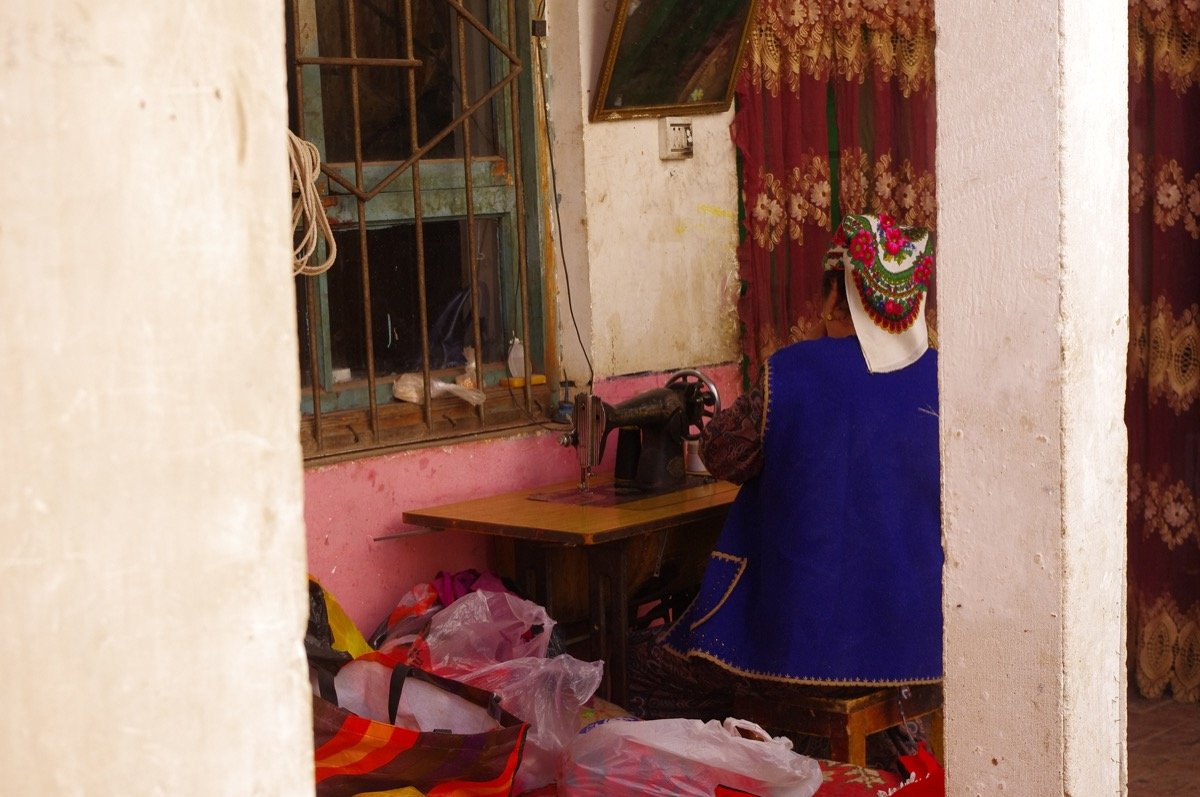
What to wear: the dress code reality
There is no dress code for foreign visitors in Xinjiang. You will not be turned away from restaurants, trains, or most public spaces for wearing shorts or a sleeveless top. That said, a little awareness goes a long way.
In Urumqi and other Han-majority cities, dress is as casual as anywhere in China. In Kashgar, Hotan, and rural southern areas, local life follows Islamic custom, and you will feel more comfortable and get warmer reactions in loose, longer clothing. I suggest packing a lightweight scarf. You do not need to cover your hair, but carrying one means you can step into a mosque or a village home without a second thought, and it doubles as sun protection on the plateau.
For the mountains and grasslands of the north, dress for weather, not culture. Ili and the Tianshan ranges cool fast in the evening even in July, and a solo traveler who is cold and stranded is a traveler with a problem. Our month-by-month weather guide breaks down what each season actually feels like on the ground.
Where to sleep: choosing hotels and hostels
For a first solo trip, I steer women toward mid-range hotels with a 24-hour front desk in the city center. They cost little more than a guesthouse, they have working heating and Wi-Fi, and there is always someone at the desk if something goes wrong at 11 p.m. Book through Ctrip (Trip.com) or Booking.com, both of which show real reviews and let you filter for solo-friendly stays.
Hostels exist in Urumqi and Kashgar and are a good way to meet other travelers, but check recent reviews for security and cleanliness before you commit. In smaller towns, the “hotel” you find on a map app may be a bare-bones local inn; that is fine for a night, but read the photos first.
One practical note: avoid booking remote rural guesthouses for your first night alone after a late arrival. Arrive in a town, settle in, and head out to the countryside the next morning with daylight on your side.
Getting around safely
Xinjiang’s transport network is genuinely good for solo travelers. High-speed trains link Urumqi with Turpan, Hami, and beyond; the Lanxin line and its extensions are clean, punctual, and well lit. Sleeper cabins on overnight trains have curtains you can pull for privacy, and the cars are patrolled.
Inside cities, DiDi (the Chinese ride-hail app) is the safest way to move at night. Taxis are metered and cheap, but agree on the price or insist the meter is on before you get in. For intercity travel, long-distance buses and domestic flights fill the gaps trains do not cover.
I do not recommend roadside hitchhiking. It is unnecessary when buses and rides are affordable, and it removes the paper trail that keeps solo travel accountable. If you want the independence of driving, our 10-day Xinjiang solo travel itinerary shows how to structure a route without relying on strangers.
Dealing with attention and awkward moments
The most common “safety” moment women actually experience in Xinjiang is not threat, it is attention. In smaller towns, a foreign woman walking alone is unusual, and curiosity shows up as staring, waving, or requests for photos. Almost always it is friendly. A firm but polite “bu hao yi si” (sorry, no) and a smile handles photo requests you do not want.
If a situation feels wrong, leave. Walk into a shop, a hotel lobby, or toward a group of families. Police presence is visible in tourist areas, and calling 110 gets a fast response in Mandarin or via translation app. Trust your read of a moment; the goal is not to be brave, it is to stay comfortable.
Money, connectivity, and daily practicalities
Carry two forms of payment. Alipay and WeChat Pay cover almost everything in cities, and foreign cards can now be linked in many cases, but a stack of small cash saves you when the scanner will not read your phone in a village noodle shop. Tell your bank you are traveling so your card is not frozen.
Buy a local SIM or eSIM on arrival so maps and translation work outside city centers. Download offline maps before long drives. A power bank is not optional; cold weather drains phones fast on the plateau.
Public bathrooms vary wildly in quality. In cities they are decent; at remote stops they are basic squat toilets with no paper. Pack tissues and hand sanitizer and you will never be caught out. None of this is gendered, but solo travelers notice it more because there is no one else to hand you the backup roll.
Emergency numbers and who to call
Save these before you land:
- Police: 110 (English not guaranteed, use translation app)
- Ambulance: 120
- Tourist service hotline: 12345 (local help and complaints)
- Your embassy: register with them before departure so they know you are in the region
Keep digital and paper copies of your passport, visa, and the address of tonight’s hotel in both English and Chinese characters. A taxi driver who cannot read your phone will understand a written Chinese address.
FAQ
Is it safe for a woman to travel Xinjiang alone as a first-timer?
Yes. Start in well-touristed cities like Urumqi, Turpan, or Kashgar, keep your accommodation central, and use trains or DiDi for movement. The region is accustomed to independent visitors, and personal crime against tourists is low.
Do I need to wear a headscarf in Xinjiang?
No. Foreign visitors are not required to cover their hair anywhere. A scarf is useful for mosque visits and as sun protection, but it is a choice, not a rule.
Can I take overnight trains by myself?
Absolutely. Sleeper cabins have curtains for privacy and are regularly patrolled. Book a lower or middle bunk if climbing to the top bunk in the dark worries you, and keep valuables in a small lockable bag beside you.
Will I be able to find women-only dorms or spaces?
Some hostels in Urumqi and Kashgar offer female-only dorm rooms; filter for them when booking. Otherwise, private hotel rooms are affordable and the most common choice for solo women in the region.
What should I do if I feel unsafe?
Step into a lit, populated place such as a hotel lobby or shop, and call 110 if you need police help. Trust your instinct to leave any situation that feels off, and let someone at your hotel know your rough plans each day.