

Xinjiang Travel Insurance Over 60: What Gets Excluded
My mother is 71. She has high blood pressure that sits under control with one tablet a day, and for two years I could not find a travel policy that would take the trip at all. Every quote came back either refused or priced so high it made no sense. When I finally sorted it for a February trip through Yunnan and then Xinjiang, I learned more about how these policies actually work than any broker had told me, and I wish someone had spelled it out plainly before I started paying for advice.
This article is the version I wanted at the start. It deals with the part of travel insurance almost every general guide skips: what happens when you are over 60, or when a health condition you already have might need treating while you are 3,000 km from the nearest hospital that speaks your language. Xinjiang makes this sharper than most destinations, because the northern loop and the Pamir road put you hours from anything.
What follows is based on the policies I compared in 2026, the claims paperwork I had to assemble, and the number of clinics and hospitals I actually mapped along the routes. Prices are what I saw quoted for a 14-day trip from a UK and a US departure, and they will move with your age band. Treat the figures as a shape, not a quotation.
Why standard policies refuse people over 60
The age limit in a travel policy is not a brick wall. It is a pricing gate, and it moves. Most plans built for backpackers stop selling at 65 or 70, and the ones that continueusually do so as a separate product with a medical screening attached. That is why the phrase “senior travel insurance” exists as its own category rather than being a checkbox on an ordinary form.
From what I has seen comparing quotes, the pattern is consistent. Under 65 you answer health questions and pay maybe 8 to 15 percent more than a baseline single-trip policy. Between 65 and 70 the premium climbs again and the questions get longer. Above 70, a large share of mainstream carriers will not quote at all, and you end up with a specialist medical insurer or a fixed-benefit plan.
That last type matters more than people expect. A fixed-benefit policy does not pay your actual hospital bill. It pays a capped amount per night or per condition, and you top up the difference. For a traveller who worries about cost above all else, that trade can be right. For someone who wants the real bill covered, it is the wrong product and the brochure will not say so loudly.
There is also the question of what the policy considers a “medical emergency” on a road you travelled yourself. Several carriers I looked at treat driving as a high-risk activity and exclude it unless you add a motorsport or manual-driving endorsement. At 70 that distinction is not academic: if you rent a car in Urumqi and have a heart event on the Duku Highway, the difference between a covered and an excluded policy is a six-figure conversation in a language you do not speak.
The age cliff: where carriers actually cut you off
I mapped the age bands across the carriers that were willing to quote for China at all, and the cliff is not where most people assume. It is not 60, and it is not 65. The cut lands in two places.
The first cut, at 66 to 69
This is where the premium jumps rather than the cover disappearing. On a two-week trip, a 66 to 69 traveller pays roughly double the rate of a 55 to 60 traveller for the same medical and cancellation limits. The health declaration gets longer too: not just “do you have a condition” but “list the medications”, “when was it last reviewed”, and “has it changed in the last 12 months”.
The second cut, at 70 and 71
This is where availability collapses. Of the mainstream plans I could price for China, fewer than half would quote at all above 70, and of those, most required a medical questionnaire that a GP has to sign. What did survive for my mother was a specialist medical travel insurer, priced in a very different band, with a daily limit rather than a trip limit.
Worth knowing: many carriers calculate the age as of the date you return home, not the date you leave. That one-word difference has caught people out. If you turn 71 the week before departure and your flight comes home after your birthday, the age band applied is the older one, and the quote you accepted in August may not be the cover that pays in March.
The practical lesson is boring but saves money. Run the quote at the age you will be on the return date, not the age you are today. If your trip straddles a birthday, that single change can move you into a different band and a different price, sometimes a much better one.
Pre-existing conditions: the declaration that decides your payout
This is the part that decides whether you are covered, and it is not the part the brochure leads with. A pre-existing condition is defined in the policy wording, not in the doctor’s notes. In the policies I read, it generally means any condition that had been diagnosed, treated or needed medication in a fixed window before you bought, commonly 30, 90 or 180 days.
That window is the whole game. A condition diagnosed last week may be excluded purely because it falls inside the observation window, even if you feel fine. A condition diagnosed five years ago and stable may be fine under the same policy. The date of diagnosis is doing more work than the severity of the illness.
Three conditions come up constantly for older travellers in Xinjiang: blood pressure, diabetes, and anything heart related. All three are manageable, all three are common on long trips at altitude, and all three are where declarations get written in a way that later causes arguments.
How to declare so the claim holds up
Write the declaration the way a claims assessor will read it six months later, with no information missing and nothing inflated. For each condition: what it is, when it was diagnosed, the medication and dose, and when you last saw a doctor. A line that says “controlled, reviewing annually” is not enough. A line that says “hypertension, diagnosed 2019, lisinopril 10 mg daily, GP review April 2026” is.
I made the second kind of error myself on one application. I listed one medication but not the second pill my father takes, because in his mind they were the same condition. When the claim form asked for a full list of medications, the mismatch looked like concealment rather than an ordinary slip. It slowed the whole thing by three weeks.
Medical evacuation from Xinjiang: what it really costs
Evacuation is the line item that justifies the expensive policy. It is also the line most people cannot picture, because it means a plane, not an ambulance.
The medical facilities around the northern loop are far better than outsiders expect. Urumqi has tertiary hospitals with international departments, and the large cities on the southern rim have competent care. What they do not have is everything, and what they do not have at 4,300 m on the Pamir road is a hyperbaric unit in the nearest useful plac Xinjiang altitude and health..
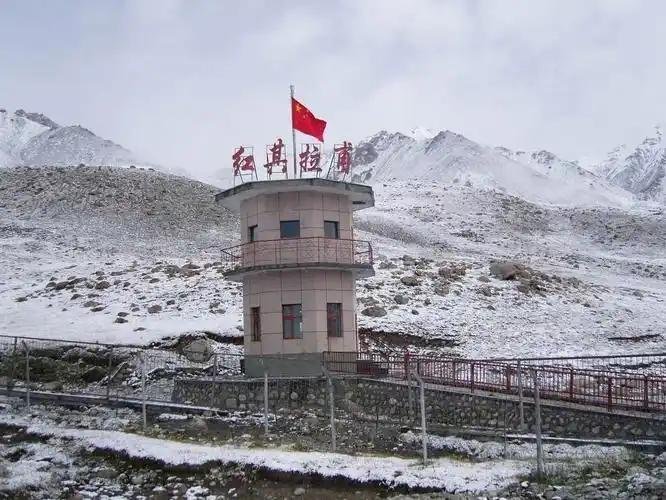
So the evacuation number in a policy is not about Urumqi. It is about Tashkurgan, about the 200 km of road between Kashgar and the plateau, about the days when the pass is closed by snow and the only way out is the vehicle you are standing next to. Repatriation by air ambulance from a Chinese provincial capital to Europe or North America runs well into six figures. From the Pamir, you add the ground leg first.
This is why the limit matters more than the premium. A policy with a 50,000 cover limit is not the cheap option at that altitude, it is a policy with a hole in it. I look for a minimum of 500,000 for anyone going above 3,500 m, and I treat 1,000,000 or more as the number worth paying for on the plateau routes.
What a senior-friendly policy costs in 2026
These are the quotes I saw in 2026 for a 14-day single trip covering China, for one traveller aged 68 with one declared condition, medical limit 1,000,000, no adventure-sport exclusion added:
| Type of cover | Approx 14-day cost | What you give up |
|---|---|---|
| Mainstream trip policy, under 65 baseline | USD 90 to 140 | Often refuses the age band entirely |
| Mainstream trip policy, 65 to 69 with declaration | USD 180 to 300 | Higher excess, narrower medical limit |
| Specialist medical travel insurer, over 70 | USD 400 to 700 | Daily limits instead of trip totals |
| Fixed-benefit plan | USD 120 to 220 | Pays a cap, not your actual bill |
The honest read is that the specialist options are expensive and usually worth it, while the mainstream options at this age are frequently bad value because they exclude exactly the thing you bought them for.
One more cost that surprises people: a rental vehicle excess. If you are driving, your travel policy will not touch the car. The rental desk will sell you a collision damage waiver whose deductibles run in the tens of thousands of yuan, and your travel policy has no view on that at all. These are two separate products, and buying one does not discount the other. If you are over 65 and renting, the car excess is not optional in practice, whatever the desk calls it on the form.
Documents to carry on the road
Paperwork is the part nobody enjoys and everybody ends up needing. The list for a traveller over 60 is short, but each item has a specific job.
For the insurer
Your policy certificate or policy wording PDF with the emergency number dialled by a human, not a chatbot. Mine had a 24-hour medical line that connected to a case manager in about nine minutes when I tested it, which I recommend doing once at home so you know the number by heart.
For the local hospital
A written summary of your conditions and medications, in Chinese. Mine was a single A4 page from a clinic in Urumqi, printed, with the medication names in both scripts. It is the single most useful thing I carry and I have never once had a traveller regret printing it. Even when the doctor’s English is good, the nurse recording the history is not, and that page does the work.
For the road
Your passport, the vehicle rental agreement, and the border permit if your route touches the Pami Xinjiang travel permit., the Kanas area or any of the border ports. The permit is checked at roadblocks, and being turned back at 4,000 m with a full day of driving ahead is not a situation worth risking.
One more thing that matters more as you age: a second person who knows your itinerary and your policy number. Not your travel companion, a separate person. On long desert days there is a window where your phone is unreachable and that person is the only route back to help.

Questions I get asked
Do I need travel insurance specifically for Xinjiang, or does any China policy work?
Most China policies cover the whole country on the same terms, so you are not buying Xinjiang separately. What you are buying is the altitude and distance piece, which is what makes a generic policy feel thin once you are on the Pamir roa Xinjiang travel insurance. or the Duku Highway in the wrong month.
Is it actually required?
No. Nobody checks your insurance at a Xinjiang checkpoint. It exists for the day you are 300 km from a hospital and the bill arrives while you are still three flights from home. Skip it and you are betting on a good outcome.
My condition is well controlled. Will it still be excluded?
Maybe not excluded, but it will be declined if it sits inside the observation window or if you declared it incompletely. The wording that causes trouble is “stable and managed”. Assessors read that as undefined. Name the condition, the date, the medication and the last review date.
Can my credit card cover me instead?
Often not. Card cover usually excludes pre-existing conditions, has a low medical limit, pays you back rather than paying the hospital directly, and commonly stops covering you once you rent a vehicle with their waive. It is a backstop, not a plan.
What if I turn 71 mid-trip?
It depends on how the policy calculates age, and the wording differs. Some use the departure date, some the return date, some the policy start. Read that line before you buy, not after your birthday.
What I would do next
If you are heading into Xinjiang over 60 with a health condition, get three things right and the rest is noise. Declare the condition properly with dates and medications. Buy a medical limit that means something at altitud accident and claim handling., not the cheapest number on the form. And treat the rental car excess as its own purchas car rental insurance and excess., because the travel policy will never pay for the vehicle.
The trip is genuinely worth doing. The northern loop in late August, the road down to Bayinbuluke with the swans already settling, the bazaar in Kashgar in the hour before the light goes, all of it works fine at 70. It just works better when the paperwork is boring and complete, and the paperwork is the part you can finish at home in an afternoon.