
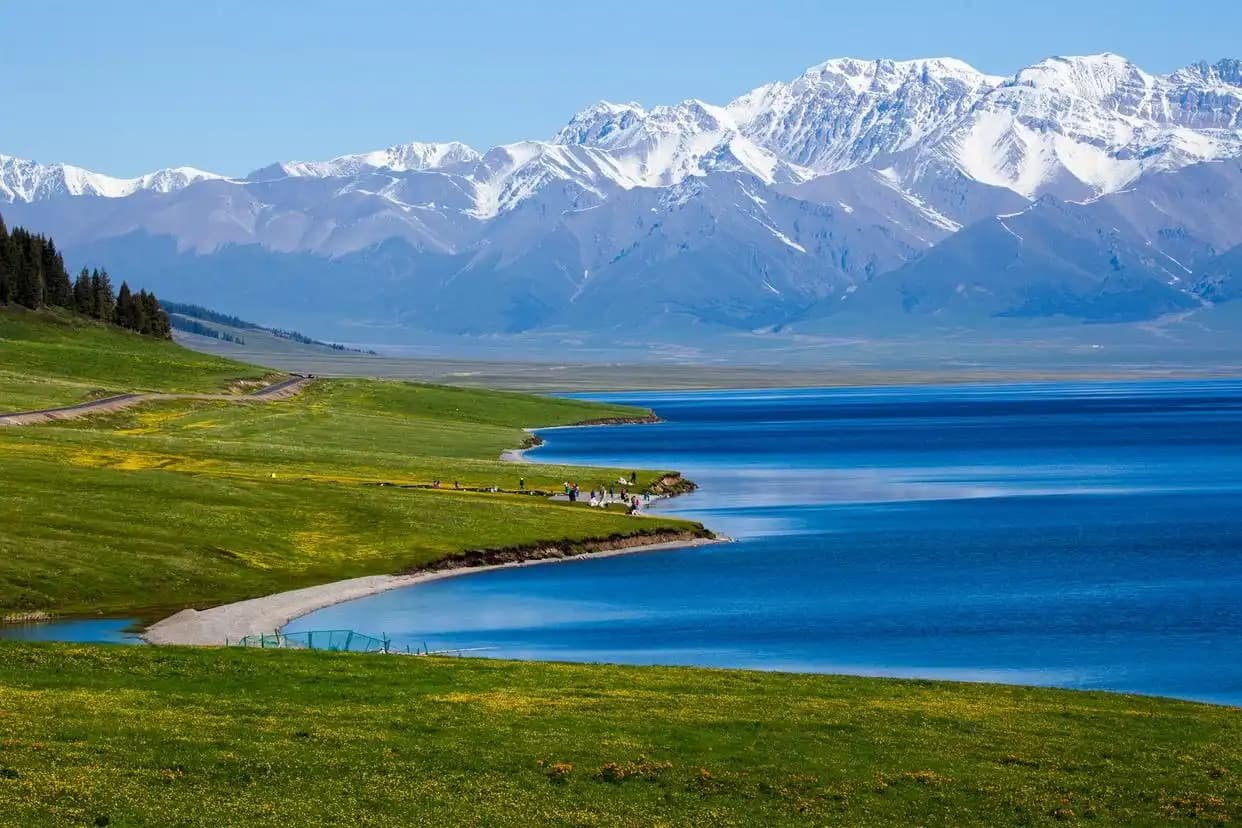
Bortala: The Gateway to Sayram Lake
Our Bortala (Bole) Travel Guide 2026 covers the prefecture that most travelers only skim on their way to a famous lake — yet it is one of the most strategically fascinating corners of any Xinjiang travel guide. Bortala Mongol Autonomous Prefecture, with its capital at Bole, sits where China meets Kazakhstan, wrapping the alpine Sayram Lake and the roaring Alashankou border port.
Why Bortala Matters
Bortala is small and windswept, but it punches above its weight. Its name means “blue-green grassland” in Mongolian, and the prefecture is home to ethnic Mongols, Kazakhs, Hui, and Han. The headline draw is Sayram Lake, the largest alpine lake in Xinjiang, ringed by snow mountains and famous for sudden weather and endless winds. Beyond the lake, Bortala is a living lesson in the new Silk Road — the China–Europe freight trains and the Alashankou Port move cargo toward Central Asia daily, and the frontier atmosphere is part of the appeal.
Sayram Lake — The Centerpiece
About 50 km from Bole, Sayram Lake sits at 2,073 m and is glacially fed, so its water runs a startling turquoise. A 90 km scenic ring road lets you circle it by car or bike, with viewpoints for the “sea of clouds,” swan inlet, and the wind-turbine ridgeline. The getting-to-Sayram guide covers the practical transfer details. Mornings are calm; afternoons often bring strong gusts, so secure your tent and hat, and start the loop early to catch the glassy surface.
Alashankou Port & The Frontier
Alashankou (Alataw Pass), roughly 70 km north of Bole, is one of China’s busiest rail gateways to Kazakhstan and beyond. You cannot cross as a casual tourist without the right visa and documents, but the port town, the custom zones, and the wind farms are worth a look for the sense of scale. The Xinjiang border permit guide explains what independent travelers need if they plan to linger near frontier zones, which is common on a western loop.
Wenquan County & Ebinur Lake
Wenquan (“hot spring”) county, southwest of Bole, has mineral spas the Mongols have used for centuries — a genuine soaker after cold plateau nights, and a good low-cost wellness break. East of the prefecture, Ebinur is a vast, shrinking salt lake and wetland that hosts flamingos and other migratory birds; access is limited, but the approach road is dramatic and the white salt flats are photogenic from a distance.
Getting to Bortala (Bole)
Bole has a high-speed rail station on the Urumqi–Khorgos line, about 2.5–3 hours from Urumqi, and a smaller airport with flights from Urumqi. By road, the G30 takes you west past Shihezi and Wusu; Sayram Lake is signed clearly. From Bole, the lake is a 50-minute drive north, and the Xinjiang transportation options make the approach painless.
| From | Distance | Drive / Train Time | Notes |
|---|---|---|---|
| Urumqi | ~530 km | 2.5–3 h train / 6 h drive | High-speed rail to Bole |
| Bole → Sayram Lake | ~50 km | 50 min drive | Well-signed scenic road |
| Alashankou Port | ~70 km | 1 h drive | Frontier zone, ID checks |
| Yining (Ili) | ~150 km | 2 h drive | Via G30 past the lake |
Best Time to Visit
June to September is best: the lake thaws, wildflowers carpet the shores in early summer, and the Huocheng lavender just south blooms in late June. The best time to visit Xinjiang window applies — winters are frigid and the lake can freeze solid, which is beautiful but brutally cold, and some mountain passes close.
A Suggested Day at the Lake
Arrive Bole the night before, drive to Sayram at first light, circle the eastern shore to the swan inlet, picnic at a viewpoint, then continue south toward Yining via the Huocheng fields if it is late June. Sleeping at the lakeside yurts lets you catch both sunrise and sunset without the day-tripper crush.
The New Silk Road at Alashankou
Alashankou is more than a border post — it is the busiest rail port on the China–Europe corridor, where container trains from Chongqing and Xi’an cross into Kazakhstan and on to Moscow and Duisburg. Watching a freight train thread the Alataw Pass is a visceral reminder that the Silk Road never died; it electrified. The port town has a raw, wind-scoured energy, and the surrounding turbines make it clear why this is also a renewable-energy frontier. You cannot wander the rail yard, but the approach and the customs zone convey the scale.
Where to Stay & Getting Around
Bole is the comfortable base, with mid-range hotels, a high-speed station, and an airport. At Sayram Lake itself, the yurt camps and lakeside cabins fill in July and August, so book ahead; the getting-to-Sayram guide has the transfer timings. A self-drive is ideal here because the lake loop is 90 km and buses only skim the highlights. The Xinjiang transportation network covers the train if you skip the car.
Wenquan Hot Springs & Local Life
Southwest of Bole, Wenquan county’s mineral springs have drawn bathers for centuries, and a soak after a cold plateau day is the region’s best low-cost indulgence. The town is small and overwhelmingly Mongolian and Kazakh, so it is also where you taste the herders’ dairy products — thick yogurt, kurut (dried cheese), and kumiss — in their home context rather than a city café.
Best Seasons & Weather Reality
Sayram’s weather is the headline risk: calm at dawn, gusting by noon, and capable of a sudden cold front even in July. The best time to visit Xinjiang for the lake is June to September, with early July the wildflower peak and late June the Huocheng lavender bloom just south. Pack a windbreaker and a warm layer no matter the month; the altitude and wind make it feel 10 degrees colder than the valley below.
A Note on Altitude
Sayram sits above 2,000 m, so some travelers feel slightly breathless on the first short walk — drink water, move slowly, and skip the alcohol on night one. The effect is mild and passes within a day, but it is worth knowing before you book a lakeside run or a long bike loop.
Practical Tips for Bortala
- Wind: Sayram is one of the windiest places in Xinjiang. Bring a windbreaker even in July; tents must be well-anchored to the ground.
- Stay: Bole has solid mid-range hotels. At the lake, stay in the yurt camps or the new lakeside cabins (book ahead in July–August).
- Eat: Try Mongolian milk tea and Kazakh dairy products, plus the usual Uyghur cuisine in Bole’s night market.
- Permits: The lake and Bole need no special permit, but the border permit matters if you push toward Alashankou’s restricted line or continue to Khorgos.
- Safety: Altitude is modest (2,000 m) so no serious sickness risk, but sun and wind burn fast. Carry water and lip balm, and watch the afternoon gusts near the water.
Frequently Asked Questions
Do I need a border permit for Bortala? No, for Bole and Sayram Lake. You only need the paperwork if you push toward the Alashankou restricted line or continue to Khorgos, and the border permit guide covers that.
Can I cycle the lake? Yes. The 90 km ring road is paved and the riding is spectacular, but the wind is the enemy — start at dawn and plan to finish before the afternoon gusts. E-bike rentals at the east gate are a popular compromise.
Is one day enough at Sayram? A day lets you circle the lake, but an overnight in a yurt catches both sunrise and sunset and avoids the day-tripper crush. Book the lakeside camps well ahead in July and August.
Know Before You Go
Money & payments. Bole and the lake camps take mobile pay, but the Alashankou port town and the Wenquan spas are cash-friendlier — keep ¥200–300 in notes. The lakeside yurts often prefer cash for small extras like firewood and extra blankets, so don’t arrive with an empty wallet.
Connectivity. Bole has good signal; Sayram Lake has coverage at the camps but dead spots on the windward eastern shore. Download your lake-loop maps and the Alashankou approach before leaving Bole, because the windy pass is the worst place to lose your navigation.
Packing. Wind is the constant here. A proper windbreaker, a warm layer even in July, lip balm, and secured tent pegs are the kit. Sunglasses are essential — the glare off the turquoise water is strong, and the gusts whip dust into your eyes.
Etiquette. The Mongolian and Kazakh hosts at the lake are hospitable and may invite you for milk tea; accepting is polite, and a small purchase of dairy supports them directly. At Alashankou, stay behind the marked lines and don’t photograph the customs zone — it is an active border, not a viewpoint.
Timing the wind. If you plan to cycle or photograph, treat the day as two halves: calm and clear before 11:00, then building gusts through the afternoon. Schedule the exposed eastern shore for the morning and the sheltered western inlets for later. The lake is beautiful in both, but the comfort gap is enormous.
Updated July 2026. By Karl Huang.