
Halal Food in Xinjiang: Restaurant Finder & Dining Card
A Malaysian couple I shared a table with in Turpan in 2022 had eaten nothing but instant noodles for two days. They had flown into Urumqi, stayed near the high-speed rail station, and could not tell which restaurants were safe. They were surrounded by halal food and did not know it. The signage was there. They just did not know what they were looking at.
Xinjiang is probably the easiest region in China for halal dining, and simultaneously the one where visitors get most confused, because the rules shift depending on which city you are standing in. In Hotan almost everything is halal. In Shihezi almost nothing is. Nobody puts that on a map.
This guide covers how to identify halal restaurants on sight, a dining card you can screenshot, and the specific places and regions where you need to pay attention.
The Signs to Look For
Four visual markers, in rough order of reliability.
清真 (qīngzhēn). Two Chinese characters, usually white on green, often on a plaque above the door or on the window. This is the standard Chinese term for halal. Learn to recognise the shape of these two characters and 90% of the problem disappears. They appear on restaurant signs, packaged food, bakeries and even some hotel breakfast counters.
Arabic script. حلال or the word مسلم somewhere on the signage, frequently alongside the Chinese.
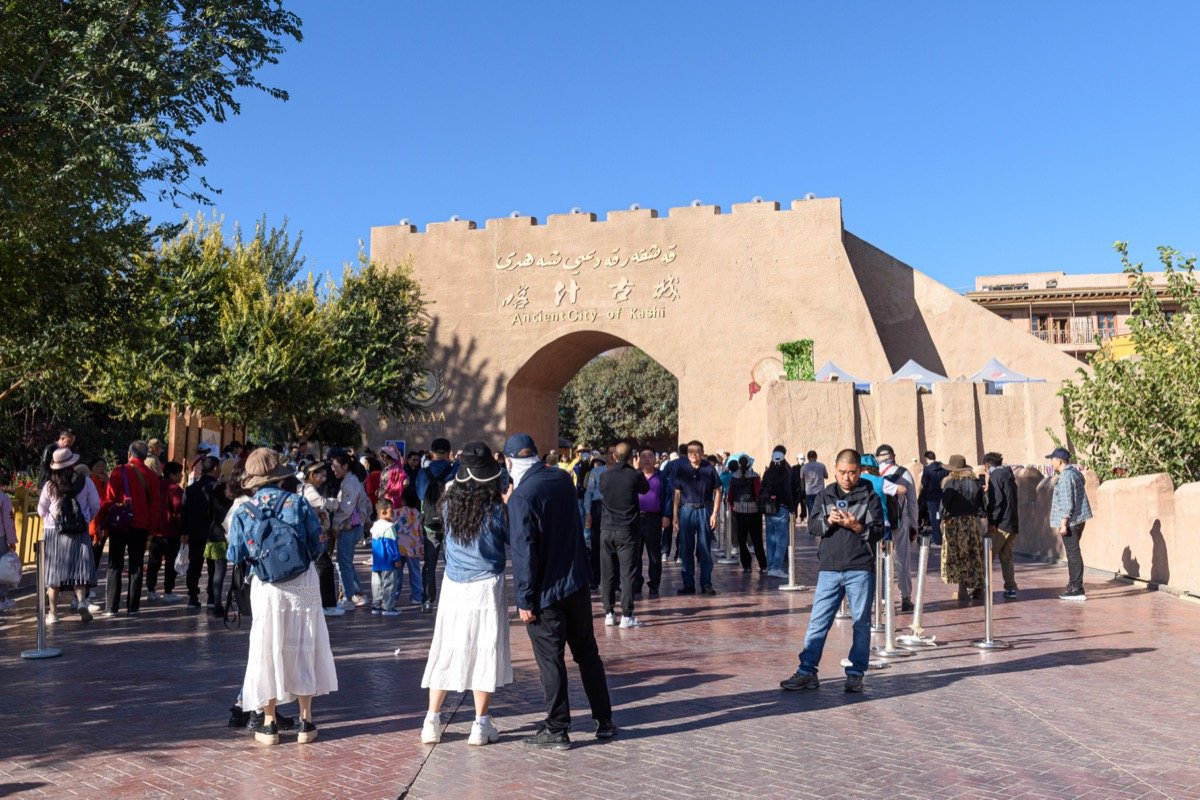
Uyghur script. In southern Xinjiang, restaurant names are written in Uyghur Arabic script above or instead of Chinese. A restaurant operating in Uyghur script in Kashgar or Hotan is halal in practice.
The colour and the crescent. Green awnings, a crescent moon, or a stylised mosque dome are common visual shorthand. Less definitive on its own, but combined with the above it is a safe read.
What does not work: assuming that lamb on the menu means halal. Plenty of Han-run barbecue places across Xinjiang serve lamb skewers alongside pork and beer. The meat is not the marker. The sign is.
The Regional Map
This is the part that trips people up. Xinjiang is not uniform.
Almost everything is halal
Kashgar, Hotan, Yarkant, Kargilik, Aksu, Kuqa, Turpan old city, Yining’s Uyghur neighbourhoods, Tashkurgan. In these places the default assumption can be reversed. You are looking for the rare non-halal restaurant, not the rare halal one. Pork is largely absent from the street food scene, and a Han restaurant serving it will usually be clearly marked and located in a newer district.
In the lanes of the Kashgar Old Town I have never once had to ask.
Mixed, check the sign
Urumqi, Korla, Hami, Changji, Bole, Altay town, Karamay. Urumqi in particular is genuinely mixed. The Grand Bazaar district and Shayibake are heavily halal. Newer commercial districts, shopping mall food courts and hotel restaurants often are not. A mall food court in Urumqi will typically have a mix, with the halal counters individually marked.
Halal is the exception
Shihezi, Kuitun, Wujiaqu, parts of Karamay, and the agricultural corps towns. These were built largely by Han settlers from the 1950s onwards and the food culture reflects Sichuan, Henan and Gansu origins. Halal restaurants exist, usually one or two per neighbourhood, often run by Hui Muslim families and marked with a large green 清真 sign. You will find one, but you will have to look, and in a small corps town it may be a fifteen-minute walk.
The Dining Card
Screenshot this. It has worked for me and for people I have travelled with in situations where nobody in the room spoke English.
Chinese
你好。我是穆斯林,只吃清真食品。
请问这家餐厅是清真的吗?
我不能吃猪肉、猪油、酒和非清真肉类。
请问附近有清真餐厅吗?
谢谢您的帮助。
Rough pronunciation for the key line: Qǐngwèn zhè jiā cāntīng shì qīngzhēn de ma? Meaning: is this restaurant halal?
Uyghur
سالام. مەن مۇسۇلمان. پەقەت ھالال تاماق يەيمەن.
بۇ ئاشخانا ھالالمۇ؟
چوشقا گۆشى، چوشقا مېيى ۋە ھاراق يېمەيمەن.
يېقىن ئەتراپتا ھالال ئاشخانا بارمۇ؟
رەھمەت.
Spoken shortcut: Bu ashkhana halalmu? Is this restaurant halal? And rahmat for thank you. More survival vocabulary sits in our Uyghur phrasebook.
The single most useful thing
Photograph the 清真 characters on your phone and simply show the picture while pointing down the street with a questioning expression. I have used this in a petrol station on the G216 and been walked personally to a restaurant 300 m away.
Finding Restaurants With Apps
Chinese mapping and review apps handle this well if you know the search term.
Amap (高德地图). Search the characters 清真 and it returns halal restaurants near you with distance, ratings and opening hours. This is the most reliable method in a city you do not know. Works offline for basic map data if you download the Xinjiang package in advance.
Dianping (大众点评). Search 清真 or 新疆菜. Reviews are in Chinese but photos and price ranges are readable regardless. Per-person spend is shown as 人均 followed by a number.
Meituan. Same search term, better for delivery, which matters if you are stuck in a hotel in a corps town at 22:00.
All three need a Chinese phone number for full functionality, though basic map search works without login. Getting connected is covered in our Xinjiang transportation guide, which also deals with the practical business of moving between these cities.
Transport Hubs and Awkward Situations
Airports
Urumqi Diwopu Airport has halal counters in both terminals, marked in Chinese and Arabic. Kashgar, Hotan and Yining airports are effectively fully halal. Expect airport prices, roughly ¥45 to ¥70 for a bowl of noodles that costs ¥20 in town.
Trains
Dining cars on long-distance trains through Xinjiang usually offer a halal option, and boxed meals are labelled. The reliability varies. On the Urumqi to Kashgar overnight service I have seen clearly marked halal boxes at ¥45 and I have also seen a trolley with nothing suitable.
Practical solution used by nearly every local traveller: bring your own. Naan, boiled eggs, dried fruit, instant noodles, sealed sausage. Every station forecourt sells all of it. My standard train kit costs about ¥35 and covers 20 hours.
Long-distance buses and remote roads
On the Karakoram Highway, the Duku Highway and the desert crossings, roadside stops are almost universally Uyghur or Kazakh run and therefore halal. The exception is some newer service areas on expressways where a chain operator has moved in. Those are marked.
Hotels
A hotel restaurant in Kashgar is almost certainly halal. A four-star business hotel in Urumqi or Karamay probably is not, and the breakfast buffet may include pork sausage and bacon. Ask at reception. The phrase 早餐是清真的吗 covers it.
Specific Places I Go Back To
Kashgar, Ostangboyi Road area. Dozens of small family restaurants. Polo (pilaf) at ¥18 to ¥25, lagman at ¥20 to ¥28. No menus in English. Point at what the next table has.
Hotan, near the main bazaar. Cheapest full meals I have found in Xinjiang. A plate of polo, a bowl of soup and tea for ¥22. I ate at one particular place four days running in October 2023 and the owner started putting extra meat on without being asked.
Urumqi, Shayibake district. Away from the Grand Bazaar prices. Big plate chicken (dapanji) for two at ¥88 to ¥120 including hand-pulled noodles, which is a large amount of food.
Yining, Kazanchi. Uyghur and Tatar mix, sweeter food, more dairy. Courtyard restaurants ¥40 to ¥70 per person.
Tashkurgan. Tajik-run places serving mutton, yak dairy and thick noodle soups. Limited choice, all halal, ¥25 to ¥45 a meal.
What to Order Without Thinking
Safe defaults in any halal restaurant in Xinjiang:
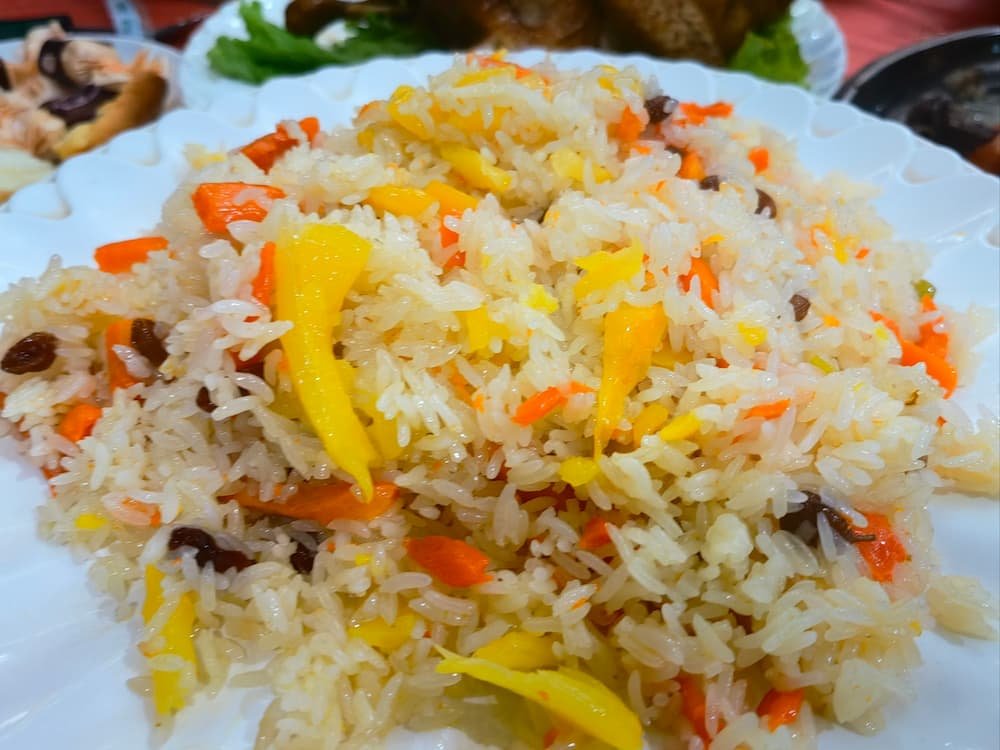
- Polo (抓饭, pilaf with lamb, carrot and rice), ¥18 to ¥30
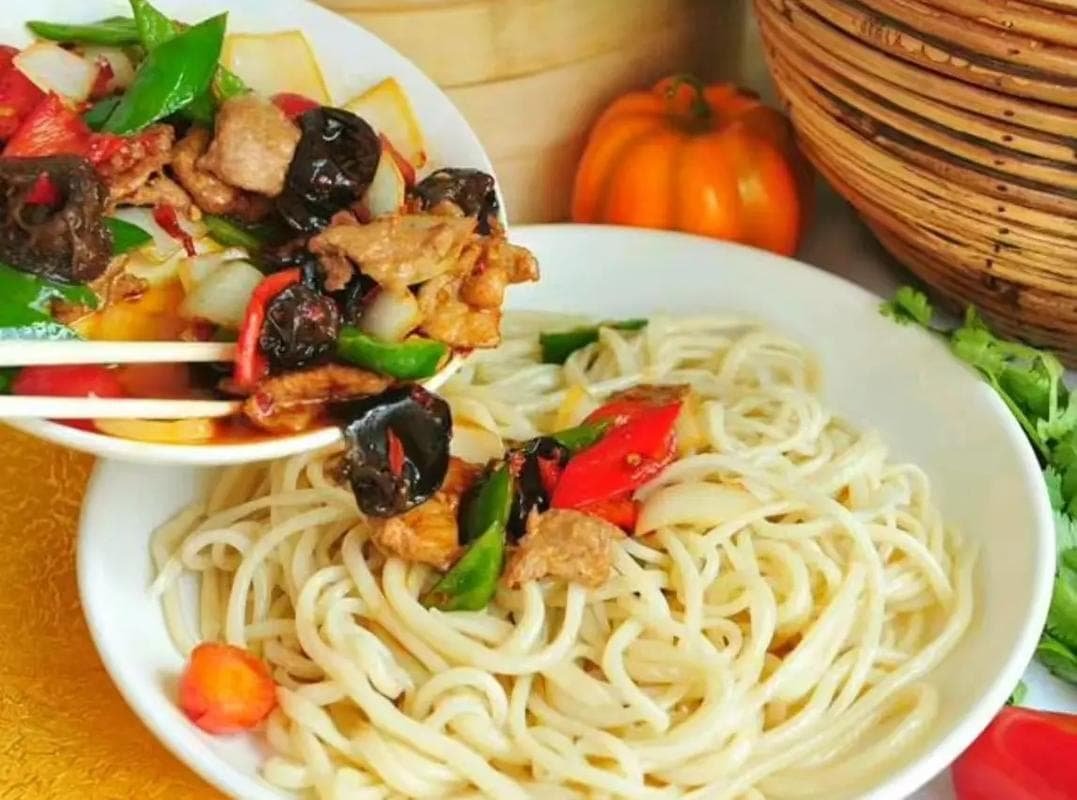
- Lagman (拉条子, hand-pulled noodles with a stir-fried topping), ¥20 to ¥30
- Dapanji (大盘鸡, big plate chicken), ¥80 to ¥130 for two to four people
- Kawap (烤肉, lamb skewers), ¥4 to ¥8 each
- Samsa (烤包子), ¥5 to ¥7
- Suoman (炒面片, torn noodle squares stir-fried), ¥18 to ¥25
- Naan, ¥2 to ¥5
Two people eat well for ¥60 to ¥100 in most of the region. Our halal dining guide goes further into the dishes themselves.
Alcohol, and Where It Turns Up
Halal restaurants do not serve alcohol, and most will not allow you to bring it. Xinjiang produces beer and wine, sold widely in supermarkets and in Han-run restaurants, so the two worlds coexist a street apart.
Cooking wine is the one to watch in mixed cities. Some Chinese dishes use rice wine in the marinade even where the meat itself is fine. In a properly 清真 kitchen this is not an issue.
Ramadan Practicalities
During Ramadan many restaurants in Uyghur neighbourhoods close during daylight and reopen after sunset, when they get extremely busy. Bazaar food stalls thin out. Hotels and Han-run establishments operate normally.
If you are fasting, the after-sunset meal is easy to find and generous. If you are not, eating discreetly indoors is the courteous approach in conservative areas. I keep bread and fruit in my room during those weeks rather than eating on the street.
Other Dietary Needs
Vegetarian. Difficult but workable. Xinjiang cuisine is meat-centred and vegetable dishes often contain lamb fat or meat stock. Reliable options are naan, liangpi cold noodles, tomato and egg dishes, stir-fried potato shreds, yoghurt, and fruit. The phrase 我不吃肉 means I do not eat meat, though be aware that in practice this is sometimes interpreted as excluding only red meat.
Vegan. Very hard. Dairy is everywhere. Self-catering from bazaars is the realistic approach.
Gluten. Nearly impossible in a wheat-based food culture. Polo and grilled meat are your two safe categories.
Five Things That Save Time
- Screenshot the 清真 characters and the dining card above before you lose signal.
- Download offline Amap data for the whole region.
- Assume halal in the south, verify in Urumqi, actively search in the corps towns.
- Carry train food. Bread, eggs, dried fruit, ¥35.
- Ask a taxi driver. In my experience this works better than any app, and the answer usually comes with an opinion about which place is best.
The Malaysian couple in Turpan, once shown the two characters, found a restaurant 90 metres from their hotel. They had walked past it four times.