
Essential Uyghur Phrases for Travelers: A Survival Phrasebook
The first Uyghur word I learned was rehmet. Thank you. I used it on a bread baker in Kashgar in 2015 and he laughed, refused my money, and gave me a second nan. That reaction has repeated itself so many times across southern Xinjiang that I now treat a dozen words of Uyghur as the highest-value item in my whole travel kit. It weighs nothing and it changes every interaction you have.
What follows is the phrasebook I actually use. Not the exhaustive academic list, which you will never memorise, but the roughly sixty words and phrases that come up daily, with honest notes on pronunciation and when to use which register.

Uyghur or Mandarin? Be Realistic
Mandarin is more useful across Xinjiang as a whole. Signage, transport, hotels, hospitals and most of the northern half of the region run on Mandarin, and you will use it far more often. If you have limited study time and you are doing a full loop, learn Mandarin numbers and basic phrases first.
Uyghur is where the warmth is. In Kashgar, Hotan, Yarkand, Kuqa and the villages of the south, dropping into Uyghur produces a visible shift in how people respond to you. Nobody expects a foreign visitor to speak it. Ten words is a gesture, and gestures land.
My own split is maybe 80% Mandarin and 20% Uyghur by volume of use, and the Uyghur delivers the better stories.
Pronunciation: Read This Before the Tables
Uyghur is written in a Perso-Arabic script. The Latin transcription below is Uyghur Latin Yëziqi (ULY), which is the standard system and the one you will see on academic materials and some bilingual signage.
| Letter | Sounds like | Example |
|---|---|---|
| x | The “ch” in Scottish loch, from the back of the throat | xosh (goodbye) |
| gh | A voiced version of the above, close to a French “r” | bagh (garden) |
| q | A “k” made deep in the throat | qanche (how much) |
| e | The “a” in cat | rehmet (thank you) |
| ë | The “e” in bed | yëqin (near) |
| ö | German ö, like “u” in fur with rounded lips | köp (many) |
| ü | German ü, “ee” with rounded lips | üch (three) |
| zh | The “s” in measure | zhurnal (journal) |
| j | The “j” in jam | jay (place) |
Stress usually falls on the last syllable. Say reh-MET, not REH-met. Getting the stress right matters more than getting the throat sounds perfect. I have never once had my accent corrected. I have had people fail to understand me because I stressed the wrong syllable.
Greetings
| Uyghur | Meaning | When to use it |
|---|---|---|
| Assalamu eleykum | Peace be upon you | The standard greeting. Hand over heart is a nice touch |
| We’eleykum assalam | And upon you, peace | The reply when someone greets you first |
| Yaxshimusiz | Hello / are you well | Polite, neutral, works with anyone |
| Yaxshi | Good / I’m well | The answer to the above |
| Ehwalingiz qandaq? | How are you? | Slightly warmer, for someone you have met before |
| Xeyrlik etigen | Good morning | Before about 11:00 |
| Xeyrlik kech | Good evening | After dark |
| Xush keldingiz | Welcome | You will hear this, not say it |
| Xosh | Bye | Casual, everyday |
| Xeyr xosh | Farewell | Warmer, for leaving people you have spent time with |
| Ete körüsheyli | See you tomorrow | Guesthouse hosts, drivers you are keeping on |
On register: Assalamu eleykum carries religious weight and is the most common greeting between men in the south. Using it as a visitor is welcomed rather than presumptuous, in my experience. If you feel unsure, Yaxshimusiz is entirely safe with anyone of any age or gender.
A note that took me a while to understand. Greetings between unrelated men and women are more reserved in conservative rural areas. A nod and a quiet yaxshimusiz is right. Do not extend a hand for a handshake to a woman unless she offers first.
The Twelve Words That Do the Most Work
| Uyghur | English |
|---|---|
| Rehmet | Thank you |
| Köp rehmet | Thank you very much |
| Kechürüng | Excuse me / sorry |
| Hä’ä | Yes |
| Yaq | No |
| Bolidu | OK, that works |
| Bolmaydu | No, that doesn’t work |
| Meyli | Never mind / fine |
| Chüshenmidim | I don’t understand |
| Bilmeymen | I don’t know |
| Bar mu? | Is there any? / do you have? |
| Qeyerde? | Where is it? |
Those twelve plus pointing will get you through almost anything. Bar mu attaches to the end of any noun. Su bar mu? Is there water. Chay bar mu? Is there tea. It is the most efficient piece of grammar you can steal.
Numbers and Prices
| # | Uyghur | # | Uyghur |
|---|---|---|---|
| 1 | bir | 10 | on |
| 2 | ikki | 20 | yigirme |
| 3 | üch | 30 | ottuz |
| 4 | töt | 40 | qiriq |
| 5 | besh | 50 | ellik |
| 6 | alte | 60 | atmish |
| 7 | yette | 70 | yetmish |
| 8 | sekkiz | 80 | seksen |
| 9 | toqquz | 100 | yüz |
| 11 | on bir | 1000 | ming |
Compound numbers stack in the obvious way. Thirty-five is ottuz besh. A hundred and twenty is bir yüz yigirme. Money is counted in yüen or the colloquial som, so ¥25 is yigirme besh som.
Useful price phrases:
- Qanche pul? How much?
- Bek qimmet. Too expensive.
- Erzan qiling. Make it cheaper.
- Menge … som bolamdu? Would … yuan work for me?
- Naqit pul. Cash.
Saying bek qimmet with a smile at a Kashgar carpet stall has knocked real money off my purchases. Saying it without a smile makes you a nuisance. For what things should cost before you start, the 2026 cost breakdown has current baselines.
Food and Ordering
This is where Uyghur pays off most, because the dishes have Uyghur names that Mandarin approximates badly.
| Uyghur | What it is |
|---|---|
| Nan | The bread. Dozens of varieties, baked in a tonur oven |
| Leghmen | Hand-pulled noodles with stir-fried topping |
| Suoman | Chopped noodle squares fried with vegetables and meat |
| Polu | Pilaf. Rice, carrot, mutton, sometimes raisins |
| Kawap | Skewered grilled mutton |
| Somsa | Baked meat pastry from the oven wall |
| Chöchüre | Small dumplings in broth |
| Göshnan | Meat-filled flatbread, pan fried |
| Chay | Tea |
| Süt chay | Milk tea |
| Doghap | Iced yoghurt drink with shaved ice |
| Qoy göshi | Mutton |
| Kala göshi | Beef |
| Toxu | Chicken |
| Tuxum | Egg |
| Köktat | Vegetables |
Phrases at the table:
- Bu néme? What is this?
- Bir leghmen bering. One laghman please.
- Achchiq bolmisun. Not spicy, please.
- Achchiq qilip béring. Make it spicy.
- Lezzetlik! Delicious.
- Toydum. I’m full.
- Hésabini élip kéling. Bring the bill.
- Göshsiz bar mu? Is there anything without meat?
That last one matters if you are vegetarian, and be prepared for the answer to involve mutton anyway. Vegetarianism is not a widely understood concept in rural Uyghur kitchens. Ordering köktat dishes and relying on nan, eggs and yoghurt works better than trying to explain the principle. The Xinjiang food guide goes deeper on what to order where.
Lezzetlik said to a cook who has come out to see how you are getting on is worth more than a tip. I have had free tea appear at the table because of it, more than once.
Getting Around
| Uyghur | English |
|---|---|
| Mashina | Car |
| Aptobus | Bus |
| Poyiz | Train |
| Ayropilan | Plane |
| Bekiti | Station / stop |
| Ongga | To the right |
| Solgha | To the left |
| Udul | Straight ahead |
| Yiraq | Far |
| Yëqin | Near |
| Toxtang | Stop (please) |
| Bu yerde toxtang | Stop here |
| … qeyerde? | Where is …? |
| Hajetxana qeyerde? | Where is the toilet? |
| Doxturxana | Hospital |
| Yardem bering! | Help! |
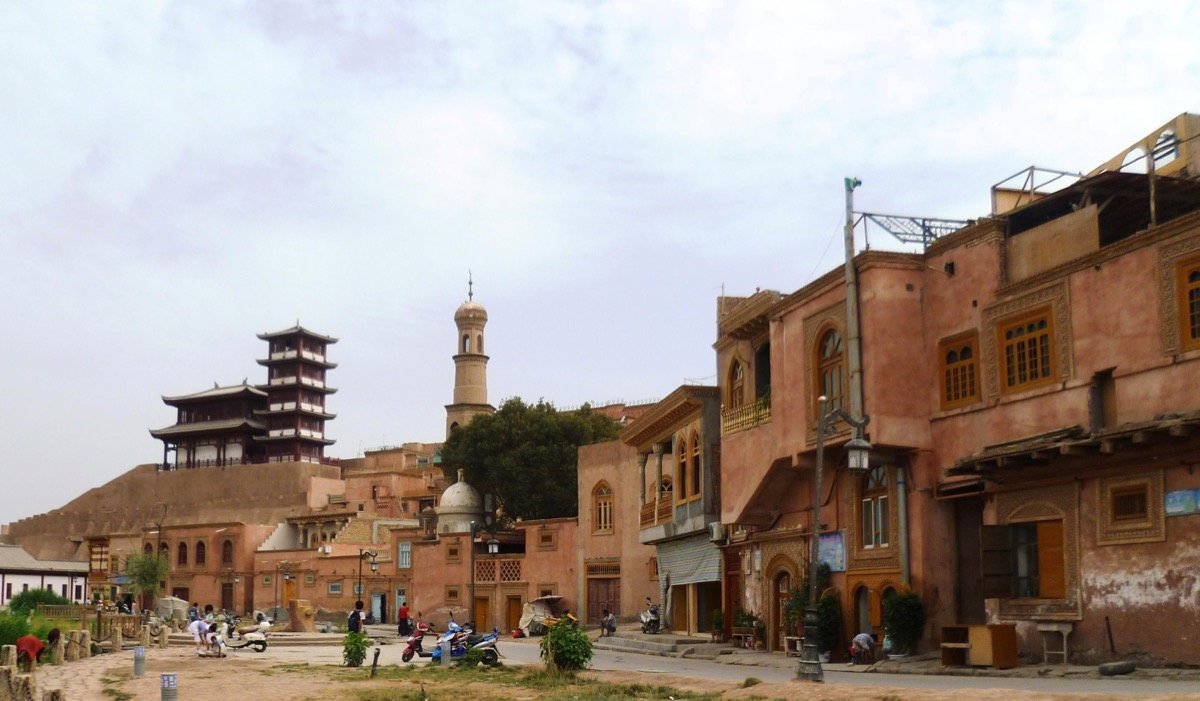
Asking directions works better if you name the landmark rather than the street. Streets have official names that locals may not use. Héytgah qeyerde? for the Id Kah area gets you a clear answer in Kashgar. Practical route planning is covered in the Xinjiang transportation guide.
Staying with People
If you are doing homestays or yurt nights, these come up constantly.
- Méhmanxana. Hotel or guesthouse.
- Öy. Home.
- Bir kéche qanche pul? How much for one night?
- Issiq su bar mu? Is there hot water?
- Bu yerde uxlisam bolamdu? May I sleep here?
- Rehmet, siz bek méhriban. Thank you, you are very kind.
- Aman bolung. Keep safe. Said on leaving.
- Yaxshi barghaysiz. Go well. What the host says to you.
Options for where to sleep across the region are compared in the accommodation guide, and in the south a family guesthouse will teach you more Uyghur in one evening than a month of apps.
Cultural Notes That Change How the Words Land
Language is half of it. These are the behavioural details that make the phrases work.
Right hand. Give and receive money, food and gifts with the right hand, or with both hands for something significant. The left hand alone reads as rude.
Hand over the heart. A small gesture accompanying a greeting or a thank you, palm flat on the chest, slight nod. It is warm and easy to copy and it is appreciated from visitors.
Bread is not just food. Nan carries symbolic weight. Do not place it face down, do not put it on the floor, do not throw away leftover pieces in front of your host. Tear it, do not cut it with a knife at the table.
Shoes off indoors. In homes and in many guesthouse sleeping rooms. Watch what your host does at the threshold.
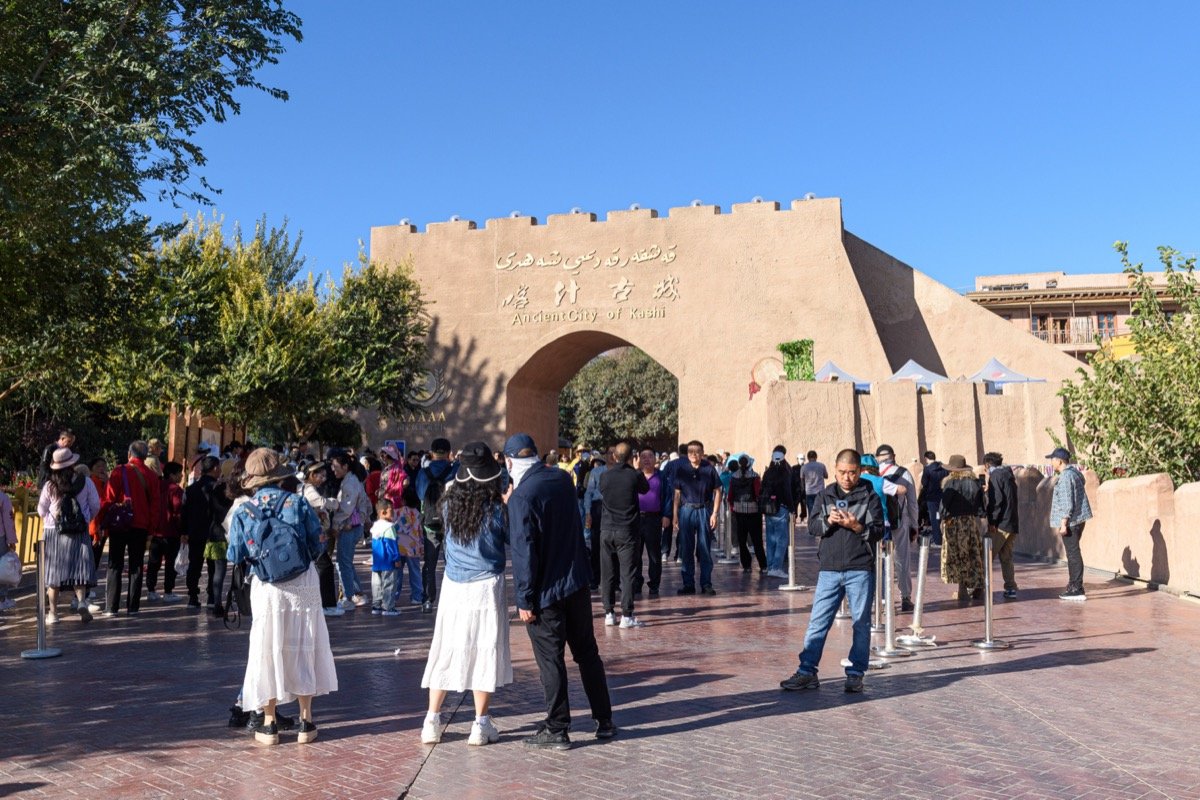
Photograph people only after asking. Sürete alsam bolamdu? means “may I take a photo”. Some people will say yes with enthusiasm, some will decline, and both answers deserve respect. The lanes of Kashgar Old Town are full of people going about their lives rather than posing for anyone.
Food and drink customs. Do not offer alcohol or anything containing pork to a Muslim host. If you are invited to eat and you are already full, accept a small amount rather than refusing outright.
Mistakes I Have Made
Pronouncing qanche with a front “k” instead of the throat “q” for about two years. People understood me from context, and one shopkeeper in Yarkand eventually corrected me kindly. Fix the q early.
Using sen (informal you) with an older man because I had learned it from a young guesthouse owner. Use the polite forms ending in -ingiz with anyone older than you or anyone you have just met. Yaxshimusiz rather than yaxshimusen.
Saying rehmet constantly for tiny things, in a very British way. Uyghur thanking is a bit less frequent and more weighted than English thanking. Nobody minds, but you will sound slightly odd.
How to Actually Learn These
Apps for Uyghur are thin. Duolingo does not offer it. What worked for me was a paper list of thirty phrases in my back pocket, reviewed on drive days, and then used badly in public until it stuck.
Better still, ask. Uyghur speakers are almost universally delighted to teach a visitor a word. Point at something, say bu néme?, and listen. I have learned more vocabulary from bread sellers than from any book. Write it down phonetically the way you hear it, not the way it is spelled.
Set a target of ten phrases before you land. Greetings, thanks, how much, delicious, where is the toilet. That is enough to change the tone of your whole trip.
Common Questions
Will people be offended if I use Mandarin instead?
No. Mandarin is widely spoken and used in daily commerce across Xinjiang. Speaking a little Uyghur is a bonus, not an obligation.
Is Uyghur similar to Turkish?
Both are Turkic languages and there is meaningful overlap in vocabulary and grammar. Turkish speakers I have travelled with picked things up fast and could sometimes half-follow a conversation. It is not mutual intelligibility, but it is a head start.
Can I read the script?
The Perso-Arabic script takes real study. For a two-week trip, work from the Latin transcription and learn to recognise a few shop-sign words like nan and chay by shape.
Do young people speak Uyghur?
Yes, widely in the south, alongside Mandarin. In Urumqi you will hear both constantly.
What about Kazakh and Kyrgyz areas?
In the Ili Valley, the Altai and around Tashkurgan, different languages dominate. Kazakh is Turkic and shares roots with Uyghur, so some words carry over. Tajik in Tashkurgan is Iranian and does not. Mandarin bridges all of them.
What to Do Next
Pick ten phrases from this page and write them on a card. My recommended ten: assalamu eleykum, rehmet, kechürüng, qanche pul, bek qimmet, bu néme, lezzetlik, hajetxana qeyerde, bolidu, xosh.
Practise the q and x sounds out loud for five minutes before you fly, because they are the two that will make you unintelligible if you skip them.
Then, on your first morning in Kashgar, buy a nan from a bakery and say rehmet. See what happens. In my experience it is the beginning of a much better trip than the one you planned.
Transcriptions follow Uyghur Latin Yëziqi. Reviewed August 2026 with reference to standard Uyghur teaching materials and checked against usage in Kashgar and Hotan.