
Xinjiang Cuisine Silk Road Food Guide
Why Food Isthe Silk Road in Xinjiang
For our complete Xinjiang solo travel Guide, see our dedicated Xinjiang Solo Travel Guide with practical details on safety, costs, and planning.
Most travelers come to Xinjiang for the landscapes — sapphire lakes, flame-colored canyons, and snow lines that look fake. They leave talking about the food.
That isn’t an accident. Xinjiang cuisine is the Silk Road made edible. For more than 2,000 years, this was the pressure valve where China’s wheat & tea, India’s spices, Persia’s garden crops, and the steppe nomads’ meat-and-dairy world collided. Caravan cities like Kashgar, Turpan, and Hotan didn’t just trade silk and jade — they traded recipes: grilling techniques, rice-cooking methods, spice blends, even the word for the dishes themselves.
When you sit down to a plate of polu (pilaf) in a Kashgar side street, or watch a cook pull a tray of samsa from a 500°C clay oven, you’re tasting the same trade routes that moved religions, languages, and empires. That’s why a proper Xinjiang cuisine Silk Road food guide has to be about history, not just a checklist of what tastes good.
 Xinjiang cuisine Silk Road Food Guide” class=”wp-image-375″ srcset=”https://www.xinjiangsolotravel.com/wp-content/uploads/2026/06/u1956421582149239896fm253fmtautoapp138fJPEG.webp 667w, https://www.xinjiangsolotravel.com/wp-content/uploads/2026/06/u1956421582149239896fm253fmtautoapp138fJPEG-300×225.webp 300w” sizes=”auto, (max-width: 667px) 100vw, 667px” />
The Historical Skeleton: How Xinjiang’s Food Got Here
1. The “Hu” Ingredients — When the West Walked East
Han dynasty records already describe crops arriving from the Western Regions: grapes, pomegranates, walnuts, cucumbers, sesame, coriander, carrots, and peas. The word hu(胡) — “Western/barbarian” in ancient Chinese usage — got attached to many of them (hutao胡桃 = walnut, huma胡麻 = sesame). Over centuries these weren’t just “introduced” — they became local: Xinjiang’s extreme day-night temperature swings make many of them sweeter and more aromatic than anywhere else on the continent.
2. The Islamic World’s Kitchen — The Central Asian Layer
Starting around the 8th–10th centuries, the Persian–Central Asian culinary toolkit arrived via the same networks: rice pilaf (polu/plov), tandoor-style bread (naan), layered pastries, lamb-centric grilling, and a spice grammar built on cumin, black pepper, and dried fruit rather than soy or five-spice. This layer gives Xinjiang its most recognizable identity: it smells like cumin and baked wheat, not like a wok.
3. The Nomadic Foundation
Underneath everything is the steppe: horse-riding cultures (Uyghur, Kazakh, Kyrgyz, Mongol/Tuvan) whose pantry is lamb, dairy, and wheat. Nomadic hospitality — “feed the guest first, talk later” — is still the moral grammar of Xinjiang dining. If a local invites you to tea and bread, go.
The Dishes That Define the Region (Your Core Eating List)
Below is the practicalhierarchy — the dishes you’ll actually encounter daily, ranked by how essential they are to a Xinjiang cuisine Silk Road food guide for independent travelers.
🔥 1. Kawap— Lamb Skewers (The Calling Card)
What it is: Cubes of fresh lamb — always with a ribbon of fat, never just lean — threaded on thin metal skewers, grilled over charcoal or red willow wood, dusted with salt, cumin, and chili flakes at the end.
Why it matters: This is the single most recognizable flavor of the region. The cumin isn’t a garnish; it’s structural. It tells you this food comes from the Silk Road, not from a wok station.
How to order like you know what’s up:
- “Kawap bir”(one skewer) / “Kawap ikki”(two)
- If you want the red willow version (wood imparts a subtle resinous smoke), ask “yighach kawap”— but honestly any grill sizzling in public view is fine.
- Price range: ¥3–8/skewer depending on city and size (2025–2026 street rates).
Watch for: The fat should be bubbling, not blackened. If the meat looks grey and dry before it hits your hand, walk to the next stall.
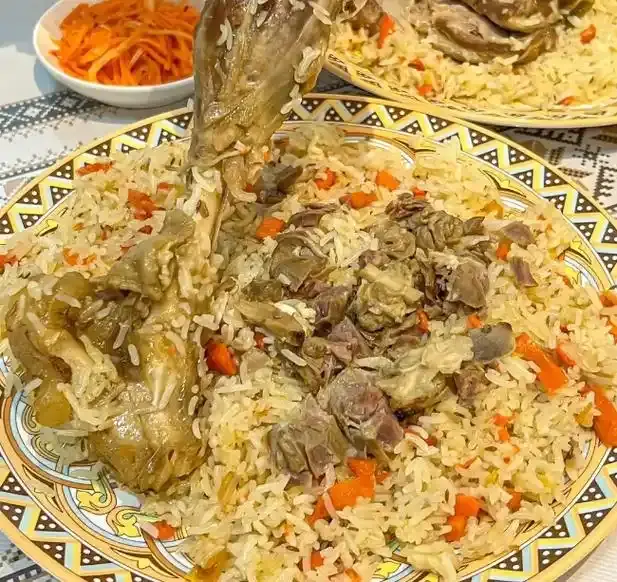
🍚 2. Polu(Uyghur Pilaf / Zhuafan) — The Silk Road’s Crown Rice Dish
What it is: Long-grain rice steamed in a heavy pot with lamb chunks, carrot ribbons, onion, and sheep fat, perfumed with cumin and sometimes a thread of safflower or clove, then crowned with raisins or dried apricot in the sweeter variants.
Why it matters: Pilaf is thehospitality dish. In traditional settings it’s eaten with the right hand (spoon/fork in restaurants now), and it comes with a side of pilah rang(onion-pepper-tomato salad)* to cut the richness.
Where it peaks: Kashgar and southern Xinjiang do the most iconic versions — deeper carrot color, sweeter dried fruit, slightly more ceremonial presentation.
Etiquette tip: If you’re in a family-run spot and they serve it in a kosa(wide communal bowl), don’t shovel. Scoop a portion, then eat from your own plate/bowl.
🍜 3. Laghman— Hand-Pulled Noodles (The Soul of the Road)
What it is: Fresh dough pulled into thick, chewy strands, laid into a bowl, then drowned in a stir-fry sauce of lamb, tomato, green pepper, onion, sometimes cabbage or potato, seasoned with cumin and chili.
Why it matters: You don’t just eat laghman; you watchit made. The noodle-puller stands in a corner of the room, slapping and stretching dough against the prep table in a rhythm that’s basically percussion.
Two styles you’ll hear:
- Savory/stewed laghman: Saucier, more gravy-heavy.
- “Belt noodles” (pidaimian)** — wider, flatter noodles often served withdapanji or in heartier combos.
Pro tip: In casual Uyghur eateries, if you finish your noodles and your bowl still has sauce, it’s normal (and cheap) to ask “yana qo’shing”(add more noodles ). Don’t be shy — refills are often ¥5 or even free in local joints.
🍗 4. Dapanji— Big Plate Chicken (The Hybrid Star)
What it is: A wok-born dish of chicken pieces, potatoes, bell peppers, and dried chilies in a rich, reddish, cumin-forward sauce, served over wide belt noodles.
Why it matters: Dapanji is the one “modern classic” everyone agrees on. It probably crystallized around Shawan / the G30 corridor in the late 20th century, but it spread everywhere because it works: spicy enough to be memorable, carb-heavy enough to be dinner, and social — it’s meant for the table, not the stall.
The rule: Sauce > chicken. When the meat’s gone, flag the waiter and ask for extra noodles into that sauce. That’s the bite locals actually wait for.
🥟 5. Samsa— Clay-Oven Baked Meat Pastry (The Breakfast King)
What it is: Minced lamb + onion + cumin sealed in a thin pastry wrapper, then glued to the inner wall of a 400–500°C naan pit(clay oven) to bake until the crust is deep gold and the inside is molten.
Why it matters: Samsa is arguably the single best street breakfast in Central Asia, period. History traces its ancestry back through Sogdian/Persian samosa-type pastries that rode the Silk Road east.
Where to catch them: Outside any working naan pit in the early morning — Kashgar Old City alleys, Turpan market streets, even Urumqi side streets. You’ll recognize the spot by the queue.
🫖 6. Nan(Naan) — The Bread That Runs the Place
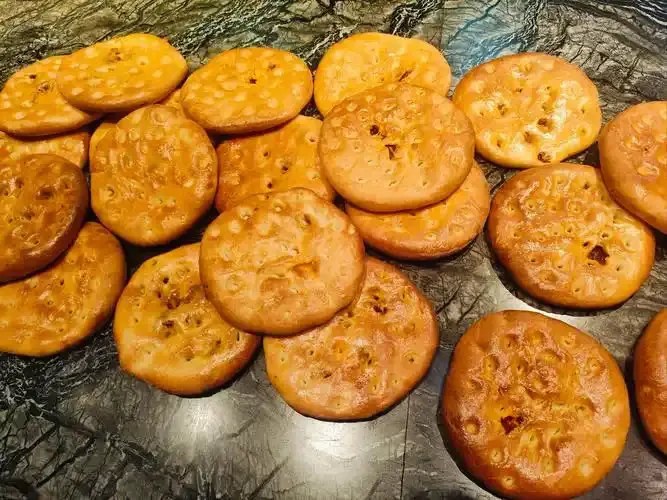
You don’t “order naan” like a side dish. You buy it hot from the oven by the piece — ¥3–8 depending on size and toppings (sesame, onion, sometimes a brush of sheep fat or a dusting of dried fruit).
Key types to know:
- Simple nan — everyday, torn and used to scoop everything above
- Rou nan (meat naan) — stuffed with spiced lamb
- Girde nan — ring-shaped, crustier
- Zira nan — dotted with cumin seeds
Rule of thumb for a Xinjiang cuisine Silk Road food guide: If you buy one naan, buy two. They go stale as they cool, but they’re still edible; fresh, they’re borderline addictive.
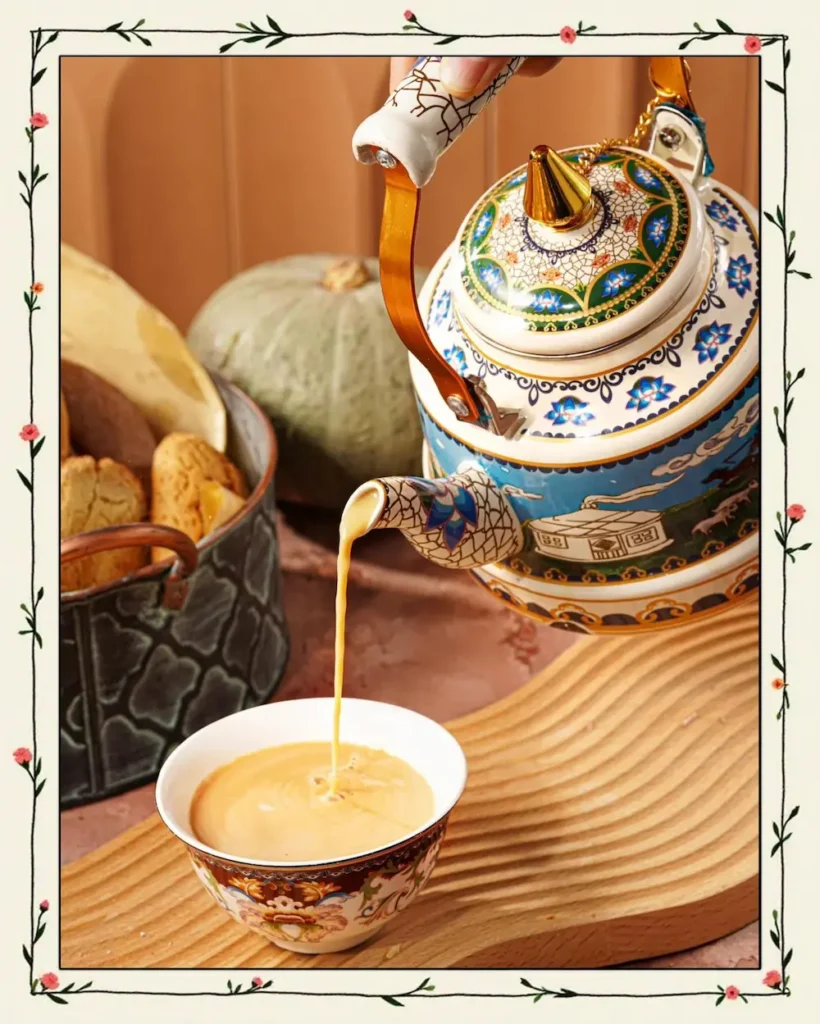
🍵 7. Chai— Salted Milk Tea (The Unsung Hero)
It looks unassuming. It’s brick tea + milk + a pinch of salt (sometimes a knob of butter), simmered slow. It’s the foil to every oily, cumin-heavy dish on this list. Drink it plain, or pair it with samsa/nan for breakfast.
Don’t assume it’s like chai from South Asia (that’s sweet). Xinjiang’s milk tea is savory first, sweet only if youadd sugar.
City-by-City: Where to Eat What (Your Geographic Food Map)
A real Xinjiang cuisine Silk Road food guide has to be geographic, because the food shifts:
📍 Kashgar (Kashi) — The Deep South: Old School & Ceremonial
- Eat here: Polu in family-run diners off the Old City fringes, samsa fresh from pit ovens on Oynawab Bazaar lanes, kawap along the night food street near Id Kah Square, and dumpling-style treats like chuchura(thin-skin dumplings) if you find a Sunday morning vendor.
- The scene: Kashgar is where the Silk Road kitchen feels leastpackaged. You’ll hear the clack of the noodle-puller’s dough before you see the sign.
- Timing hack: Sunday around the livestock/outer market orbit is the most “alive” food day — but it’s also crowded and chaotic. Go early (09:00).
📍 Urumqi — The Mixing Bowl
- Eat here: The International Bazaar (Grand Bazaar) for the spectacle + skewers + nuts/raisins; Erdaoqiao side streets for unglamorous, killer hand-pulled laghman; and hotpot/dumpling hybrids that show the Hui (Dungan) layer of the city.
- Reality check: Urumqi is where Xinjiang food meets modern logistics — it’s the easiest place to be a fussy eater, the hardest place to feel “lost in time.”
📍 Turpan — Date-Palm Heat & Vineyard Sweetness
- Eat here: Grape varietals you’ve never heard of in season, raisin types by the scoop, and Uyghur staples (naan, kawap, polu) served in a town that feels like an oven in July and a fortress all year.
- The kicker: Turpan’s karez (underground canal) tea houses — sitting in one after a morning of ruins is one of the cheapest, best sensory resets you can buy (¥5–15 for tea + a piece of naan).
📍 Yining (Ghulja) / Ili Valley — The Dairy & Flower Belt
- Eat here: Thicker yogurt, richer cream, kurt (compressed salty cheese balls), and honey that tastes like the valley’s actual flowers. The “Silk Road” here wears a lighter coat — more pasture, more softness, less scorched-earth spice.
📍 Hotan — The Far Southwest: Slow, Deep, Intense
- Eat here: Simpler, older-feeling polu recipes, more frequent use of black cumin & local herb blends, and samsa production that still feels like a hereditary craft (because it often is — multi-generation pit masters).
- Note: Hotan is less tour-pretty than Kashgar, which is exactly why the food can feel more unedited.
The “Hidden” Foods Worth Hunting (Beyond the Big 7)
These won’t be on every menu, but they’re the difference between tourist eatingand traveler eating:
| Dish | What Makes It Special | Best Context |
|---|---|---|
| Chuchura / Munggu (steamed dumplings) | Paper-thin wrappers over lamb-onion filling, served with vinegar-chili dip | Sunday market mornings |
| Sho’rpa (bone broth) | Crystal-clear lamb soup, healing-food status | Cold mornings, high altitude |
| Kavat (roasted pumpkin) | Pumpkin wedges halved, seeded, roasted near naan pits | Autumn market edges |
| Mishi Qurt (sweet cheese-sugar balls) | Nomad-energy compact | Yogurt/tea service |
| Kawas (fermented bread drink) | Honey-sweet, lightly alcoholic-adjacent fizz | Night market only, in moderation |