

Payzawat (Jiashi) Melon Country: Buying Fruit at the Field
A truck driver outside Bachu told me, with the seriousness of a man passing on classified information, that if I wanted a real melon I should not buy one in Kashgar. I should drive to Jiashi and buy it from the field. He then held up two fingers about eight centimetres apart to indicate the thickness of the flesh, which I initially thought was a joke.
It was not a joke. Two weeks later, in the last week of July, I stopped at a roadside pile of melons on the county road south of Payzawat and paid ¥8 for something the size of a rugby ball. The seller cut a wedge for me on the tailgate of his three-wheeler with a knife he wiped on his sleeve. The flesh was pale orange, dense, and so sweet that it made my teeth ache, and yes, it was roughly two fingers thick.

Where Payzawat is, and why the melons are like this
Payzawat County — Jiashi in Chinese, and you will see both names on signage — sits in Kashgar Prefecture on the road between Kashgar city and Bachu, roughly 120 kilometres east of Kashgar. It is flat, hot, irrigated farmland at the western edge of the Tarim Basin, and it has built a serious agricultural reputation on one crop.
The conditions are almost comically favourable for sugar accumulation in fruit. Summer days here run into the high thirties and occasionally above 40°C. Nights drop sharply. That daily temperature swing is what drives sugar into the flesh rather than into vegetative growth, and it is the same mechanism that makes Turpan grapes and Hami melons famous. Rainfall is negligible — meltwater irrigation from the Kunlun and Tianshan does all the work — so there is no dilution and very little fungal pressure.
The result, locally, is a sweet melon usually sold under the county name. Sugar content in the good ones is high enough that the cut surface goes glassy. Farmers talk about it in the way winemakers talk about vintages, and they will tell you exactly which week is peak.
The season, precisely
This matters more than anything else in this article. Come at the wrong time and there is nothing to see but dust and plastic sheeting.
Early melons appear from late June. The main harvest runs through July and August. September still has fruit, often at lower prices, with quality tailing off. By October it is over.
If I had one week to pick, it would be the last ten days of July: peak flavour, full roadside trade, and the county’s melon festival period, which moves around a bit but generally lands in this window. Our broader Xinjiang fruit season calendar lays out how this overlaps with grapes, figs and pomegranates elsewhere, and a well-planned late-summer trip can hit three or four of these harvests in sequence.
How to buy a melon properly
I have been taught this three separate times by three sellers who all did it slightly differently, so treat the following as consensus rather than gospel.
Smell the blossom end. The end opposite the stem should have a clear sweet perfume. No smell means underripe.
Press the blossom end gently. A little give is right. Soft and yielding means overripe and it will be mealy.
Look at the netting. On the netted varieties, dense raised netting across the whole surface indicates good development. Smooth patches are a bad sign.
Check the stem scar. A clean, dry, slightly sunken scar means it was picked ripe. A cut green stem means it was harvested early to travel.
Weight it. Heavy for its size is what you want.
The last piece of advice is not technical: buy from a field-side seller rather than a market in a city. Prices at the roadside in Payzawat run from a couple of yuan to around ¥10 for a whole melon in season. The same fruit in Urumqi costs several times that and has spent three days on a truck.
What a day in Payzawat looks like
This is a farming county, not a scenic area. There is no ticket, no viewpoint, no boardwalk. The activity is driving the county roads, stopping when something looks interesting, and eating.
Start early. Farmers are in the fields from first light and the roadside trade is liveliest before eleven, partly because of the heat. By two in the afternoon in July, everything human has gone indoors and the tarmac is shimmering.
Find the bazaar. Every county in southern Xinjiang runs a market on a fixed weekday and Payzawat’s is a proper one — livestock, produce, hardware, blacksmiths, and food stalls doing skewers and dumplings. Bazaar day transforms the county town from sleepy to chaotic. Our guide to planning a self-drive trip around bazaar days explains how to find out which day applies where, and it is the single best piece of trip-planning advice for the south.
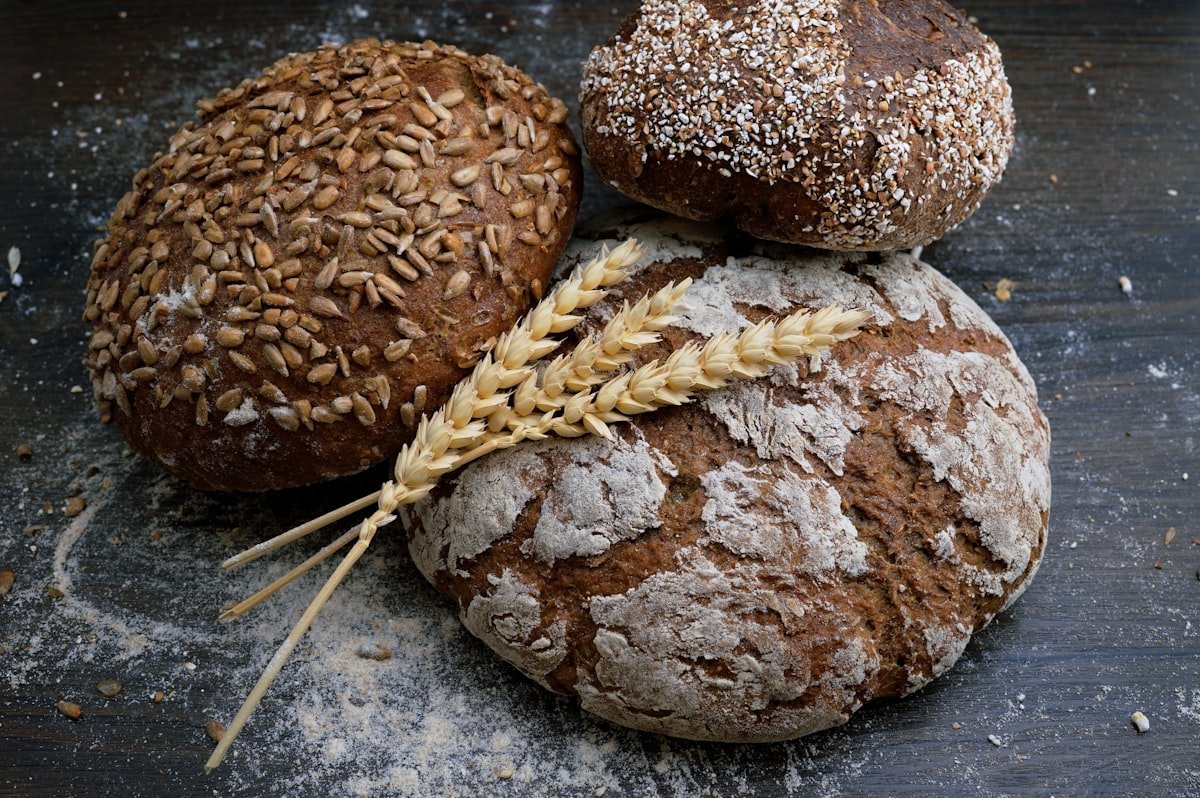
Eat the melon with bread. This is the local combination and it is better than it sounds: dense wheat naan, cold melon, hot green tea. The bakeries here fire the same range of breads described in our tour of Xinjiang naan varieties, and a plain thick-rimmed loaf straight off the oven wall against sweet melon is one of the great cheap pleasures of the region.
Beyond melons
Payzawat also grows cotton at scale, along with wheat, walnuts and pomegranates. The cotton harvest in September and October puts white drifts along every roadside and gives the county a completely different visual character from the summer green.
Livestock matters too. This is sheep country and there is a local reputation for a particular breed. Ask about mutton in any restaurant and you will get an opinion.
The county has some old mosque architecture and mud-brick village cores, unrestored and unmarked. I have wandered a few of these and been offered tea twice. This is not a tourist activity and should not be treated as one — walk slowly, greet people, do not photograph into courtyards.
Practical logistics
Most people visit Payzawat as a stop rather than a stay. It sits directly on the Kashgar–Bachu–Aksu run, which almost everyone doing the southern loop drives anyway.
From Kashgar city it is roughly 120 to 130 kilometres, about ninety minutes to two hours on the expressway, less if you push. Base in Kashgar and do this as a day trip, or stop en route eastbound. Our Kashgar travel guide covers the city end of that arrangement.
Continuing east, the next worthwhile stop is a bit over an hour away and gives you a genuine scenic break from the farmland; our piece on Bachu and Red Bay covers it, and combining the two makes a satisfying full day out of Kashgar.
Accommodation in Payzawat county town is basic — a few small hotels in the ¥100 to ¥180 range. Adequate, not charming. If you want comfort, sleep in Kashgar.
Bring cash in small notes. Field-side sellers increasingly take mobile payment but a farmer with a three-wheeler and no phone signal takes paper.
The heat is not a joke
July and August in this county are seriously hot. I carry three litres of water per person for a day of driving here, run the air conditioning constantly, and plan the middle of the day around being somewhere with a roof. Sun protection matters — long sleeves are more effective than sunscreen in this kind of dry heat.
If you buy a whole melon and are travelling by car, be aware that it will keep cooking in a hot boot. Eat it the same day or keep it in the footwell with the air conditioning on it.
Taking fruit with you, and what not to try
The obvious question after eating one of these melons is whether you can get one home. Short answers.
Within China, yes, with effort. A whole melon travels fine in a car for a couple of days if it stays out of direct sun. On a domestic flight it needs to go in checked baggage, wrapped, and it will probably arrive bruised. Sleeper trains are actually the best option — melons are a completely normal thing to see in a Chinese train carriage and nobody will look twice.
Internationally, no. Fresh fruit is prohibited entry into essentially every country you might be flying to, and attempting it risks a fine that costs far more than the fruit. Do not do this.
What does travel is the dried and processed version. Dried melon strips are sold in markets across the region, along with raisins, dried apricots, walnuts and jujubes. These are lighter, legal in most jurisdictions subject to declaration, and genuinely good — the melon strips in particular hold a concentrated version of the fresh flavour. Buy them loose by weight from a market stall rather than in a gift box, which is the same product at four times the price.
One caution on dried goods: declare them. Rules vary by destination and undeclared food is where travellers get into trouble, not the food itself.
Cotton, walnuts and the shape of the farming year
Understanding the county’s calendar helps you decide when to come for reasons beyond melons.
Spring, roughly March to May, is ploughing, planting and blossom on the fruit trees. Green, active, comfortable weather in the twenties.
Summer, June to August, is the melon harvest and peak heat. This is the food window.
September and October bring cotton, which is the county’s biggest crop by area. The picking operation is enormous and mechanised at scale now, though hand-picking persists in smaller plots. The landscape turns white along the roadsides and there is a great deal of truck traffic. Walnuts and pomegranates come in around the same period, and prices for everything drop.
Winter is quiet, cold, and grey, with temperatures below freezing and very little happening outdoors. There is no reason to visit Payzawat in January unless you are passing through anyway.
If I had to rank: last ten days of July for the melons, late September for cotton and cheaper fruit, April if you simply want pleasant weather and blossom.
Why a farming county deserves a stop
There is a version of Xinjiang travel that consists entirely of designated scenic areas: gate, ticket, shuttle bus, viewpoint, gate. It is efficient and it is also strangely sealed off from the place you are supposedly visiting.
Payzawat has none of that infrastructure, which means the only way to experience it is to interact with people who are working. You buy fruit from the man who grew it. You eat bread from the woman who baked it forty minutes ago. Nobody is performing anything for you because there is no tourism economy to perform for.
The melon is genuinely exceptional and I would drive two hours for one. But the reason I keep pulling off the expressway here is that a roadside stall in a hot county in the last week of July is one of the few places in Xinjiang where I am simply a customer, and that turns out to be the most comfortable way to be a foreigner in a small town anywhere.