
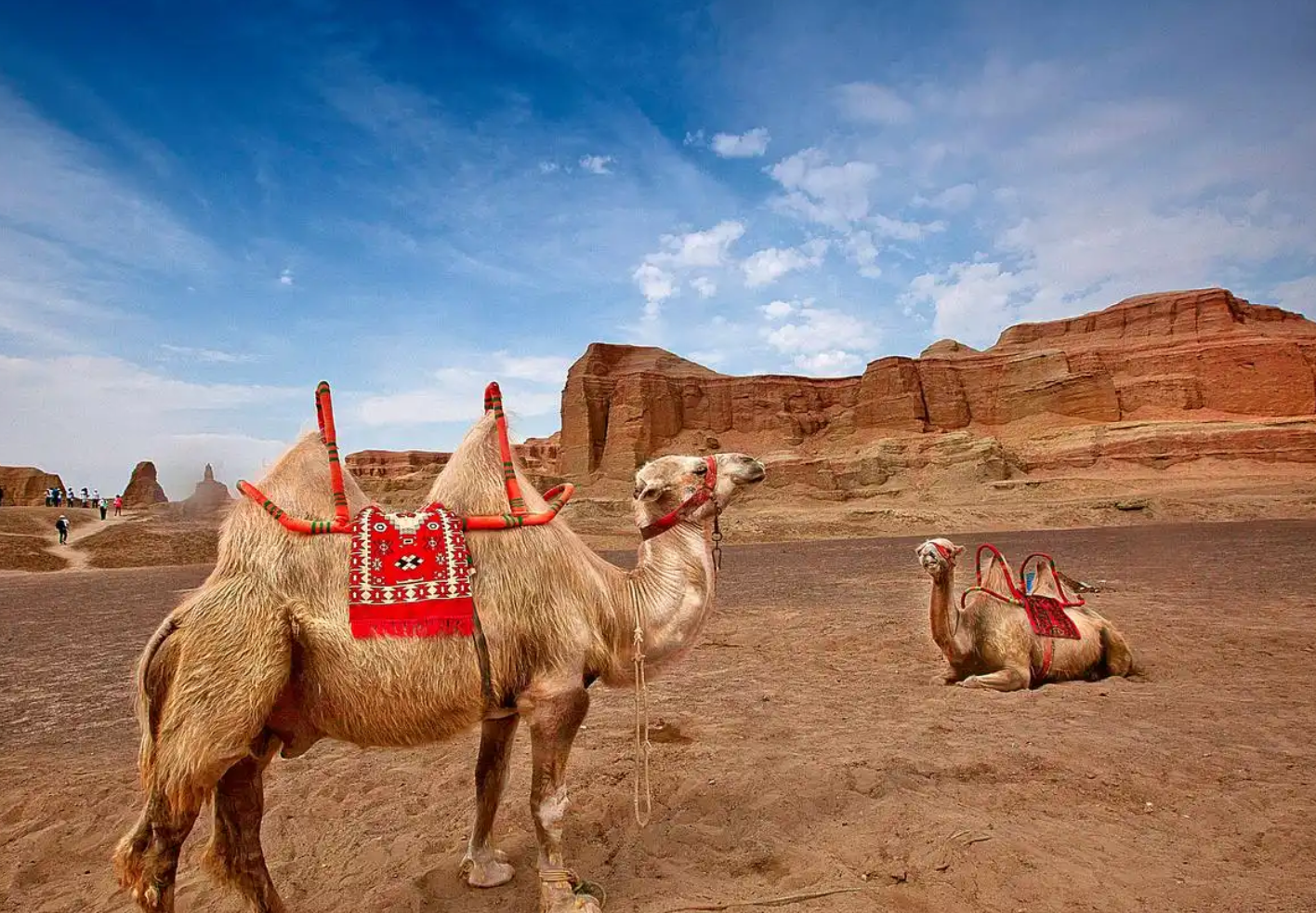
Camel Rides and Desert Camps: Adding a Slow Day to Your Xinjiang Drive
You Do Not Have to Just Drive Past the Sand
Xinjiang’s deserts are easy to experience as a thing seen from the window: a dune line on the horizon, a highway cutting straight through, a photo at a viewing platform. That is a fine way to tick a box. It is a poor way to feel the desert. The slow way, the way that stays with you, is to stop the car, hand the keys to no one, and spend a day or a night where the sand actually is.
Camel rides and desert camps are the accessible version of that. They exist at the edges of the major oases, run by local families, and they turn a transit day into a memory. I have done both near the Taklamakan and near the Kumtagh, and the two could not be more different in feel, which is the fun of it.
This is a guide to adding a slow desert day to a driving trip without turning into a package-tour prisoner.
Two Deserts, Two Experiences
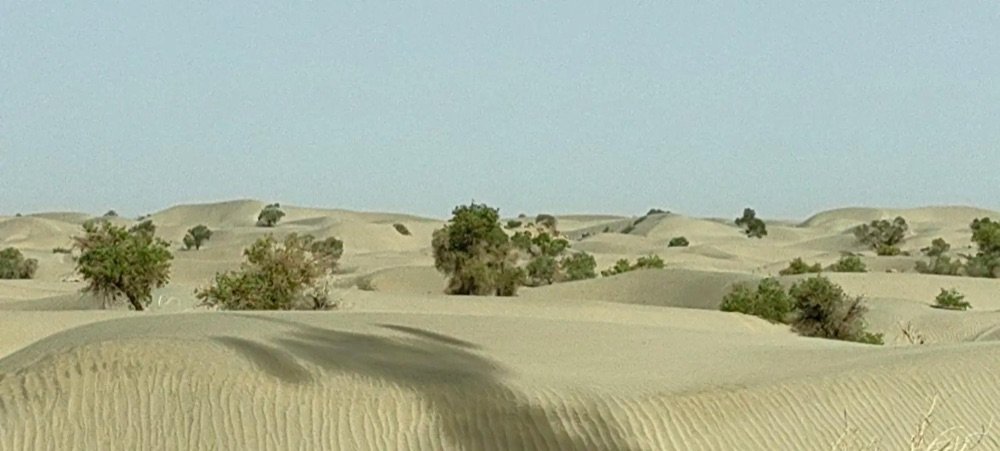
The Taklamakan is the giant, the sea of shifting sand that bounds the south. Near its northern edge, around the oasis towns, you can arrange camel treks onto the dunes and, in season, a night in a tented camp with a bonfire and a sky full of stars. The scale is humbling; you ride for twenty minutes and the oasis is already a green smudge behind you.
The Kumtagh, by contrast, reaches the edge of the town of Shanshan, so close you can see the dunes from the rooftops. The camel rides there are shorter and more casual, almost a local amusement, but the convenience means you can do it on a whim between driving days. I rode the Kumtagh camels at sunset and was back at a restaurant in town within the hour.
What a Camel Ride Is Actually Like
Manage expectations. A camel is not a horse. It stands up front-first, which pitches you backward, then back-first, which pitches you forward, and only then are you level and fifteen feet above the sand. The gait is a long, rocking sway that your body learns in the first five minutes or complains about for the next two days. I loved it. My traveling companion spent the ride laughing and the evening sore, and would do it again.
The treks are short, usually twenty to forty minutes, led by a handler who walks beside the lead animal. You will not be abandoned in the desert. You will, however, be photographed more than you expect; the handlers are proud of their animals and happy to snap you on top of one.
Camps and the Night Sky
The overnight camps near the Taklamakan are the real prize. A row of tents, a communal fire, a simple dinner of mutton and flatbread, and then the dark. The desert has no light to fight, and the stars come out in a density I have never seen in a city. The stargazing guide explains why Xinjiang’s skies are so clear, but lying in a camp chair at the dune edge is the practical version of the whole argument.
Camping independently is also possible; the self-drive camping guide covers the gear and the rules. But for a first desert night, a run camp saves you the setup and the worry, and the handlers know where the soft sand and the wind shadows are.
Logistics and Honest Cautions
Prices are negotiable and local. A short camel ride might run 50 to 100 yuan; an overnight camp with meals more like 300 to 500 depending on the season and the polish. Agree everything before you mount the animal. I have watched travelers argue about a “free” photo that turned out to cost 20 yuan, and it is easier to clarify up front.
Bring water, a hat, and something warm for the night even in summer; the desert drops twenty degrees after dark. The camps supply blankets, but a layer of your own is welcome. Footwear: closed shoes, because the sand climbs into everything open.
Pairing It With a Drive
The camel day works best as a punctuation, not the whole trip. I paired a Taklamakan ride with a morning at a nearby oasis town and an afternoon on the highway, so the slowness of the dunes set off the motion of the road. Near Turpan, the grape valley and the desert are close enough to do both in a day, with the camel ride as the sunset finish.
If you are looping the south, slot the camp between two long driving days as deliberate recovery. The fire and the quiet do more for a tired driver than another attraction would.
When to Do It
Spring and autumn are ideal: warm days, cool nights, manageable sun. Summer days are punishing on open sand, though the evening rides are fine. Winter is cold but spectacularly clear, best for the stargazing if you can stand the temperature. I would avoid the height of summer midday rides; the camel will survive it, but you will not enjoy it.
The Slow Payoff
Xinjiang is a driver’s region, and it is tempting to measure a trip in kilometers. The camel ride is the corrective. An hour on a reluctant, rocking, magnificent animal, with the oasis shrinking behind you and nothing ahead but sand, recalibrates the whole journey. You came to see a place, not to pass through it, and the desert is where that distinction is sharpest.
Stop the car. Ride the camel. Watch the fire. The highway will still be there tomorrow, and it will mean more once you have stood still in the sand beside it.
Choosing the Operator
Not every camel stand is equal, and the difference is not the animal, it is the setup. Near the big oases you will find a range from a single family with two animals and a kettle to a fenced compound with a hundred camels, a stage, and a soundtrack. I have ridden both, and for a first experience I prefer the smaller. You get the handler’s attention, the pace is gentle, and the camp, if there is one, feels like someone’s home rather than a business that happens to own sand.
The polished operations are not a scam; they are just a different product, more reliable and less surprising, which some travelers want. The thing to avoid is the middle: a place that looks casual but quotes park prices, with no clear answer on what the ride includes. Ask three questions before you agree. How long is the ride. What is the total price for rider, photo, and camp. And where exactly does the camp sit, because “out in the desert” can mean a five minute walk or a drive you did not expect to pay for.
What the Handlers Told Me
The camel families I met were Uyghur households who treat the animals as working partners, not props. One handler near Shanshan explained, through a mix of gestures and the few English words we shared, that a camel drinks maybe once every few days and stores fat in its hump, which is why it shrugs off the heat that flattens a person. Another near the Taklamakan insisted I wear his spare scarf against the wind, then laughed at my attempt to tie it. Those small exchanges are the real souvenir, better than any picture on the animal.
Tip in the local way: buy something, or hand over a few notes directly, rather than treating the photo as free. The handlers earn almost nothing from the ride fee itself and rely on the extras, which is why the “free photo” so often is not. Clarify, then pay with good grace, and you will be invited back to the fire.
A Mistake I Made
On my first desert camp I packed for the day and forgot the night. The brochure said blankets provided, and they were, but the desert at two in the morning near the Taklamakan dropped to maybe eight degrees even in early September, and the supplied quilt was thin. I spent an hour shivering and wishing I had brought the fleece I had left in the car. Since then I carry a closed layer and a real hat for any overnight, season be damned, and I have been comfortable every time.
The other mistake was water. I drank one bottle on a forty minute ride and thought that was enough, then walked the dune edge for an hour afterward and ran dry. The rule in open sand is dull but true: carry more water than the plan needs, because the plan never includes the part where you wander off to watch the light.
Packing for the Sand and the Night
Short list, all of it earned. Closed shoes, because open sandals fill in five steps. A hat with a brim, not a cap, because the side sun is what burns. Two liters of water per person for a day with a ride. A warm layer and a hat for the night, even in summer. A small headlamp if you are camping, because the path back from the fire is black. Cash in tens and twenties for the rides and the snacks. And a spare phone battery, because the cold and the photos will drain it faster than you expect.
Leave the good camera in a bag until you are off the animal; the rocking gait plus loose sand is a bad combination for expensive glass. The handlers will photograph you on their phones anyway, and those shots are often the best.
The Desert as a Punctuation Mark
I keep returning to the idea that the camel day is punctuation, not the sentence. On a long southern loop the highway becomes a rhythm you stop feeling, and the dune camp is what breaks it, the place where the trip turns from motion into stillness for one night. Do it once and you will plan the next trip around it. The pets guide covers bringing animals along if that is your setup, but for the camel day, leave the dog at the hotel; the handlers will thank you, and so will the camel.
The slow payoff is real. An hour on a reluctant, rocking animal, with the oasis gone and the sand endless, resets the whole journey. Stop the car, ride, watch the fire, and the road the next day means more because you stood still beside it.
One last practical word: book the camp a day ahead in season, by asking at your hotel or the oasis ticket office, because the good ones fill and the walk-up option is the thin one. I learned this the evening I arrived hopeful and found the tented row already full of a tour group, and settled for a fine but impersonal ride instead of the fire I wanted. A phone call or a hotel desk question the morning before turns a maybe into a yes, and the desert night is worth the small effort of planning.