
How to self-cater on a Xinjiang road trip: shops, prices and fruit by month
The morning I got tired of kebabs
It was day eleven. I was parked at a pull-off on the G3012 somewhere west of Korla, the steering wheel too hot to grip without a towel, and the thought of one more lamb skewer made me slightly sick. Two weeks of road food will do that to you. You start a Xinjiang loop hungry for the grilled meat and the hand-pulled noodles, and you end it dreaming of a tomato and a cold yoghurt. That gap, between what the road hands you and what your stomach quietly demands, is the whole reason I started treating supermarkets as a serious part of the route rather than an afterthought.
On a 3,000 km loop you cannot count on a restaurant being open when hunger lands. Towns thin out. Bazaar days wrap up by noon. The one place you hoped would feed you is shut for afternoon prayer, or simply gone, replaced by a boarded door and a dog. So you learn to carry your own food. The skill that saves the most money and the most bad moods is knowing what kind of shop you are actually walking into before you waste a detour on it.
The retail ladder you learn to read
Xinjiang’s shops sort themselves into a clear hierarchy. Once you know the rungs you stop burning fuel on shops that cannot help you.
Big-city chains
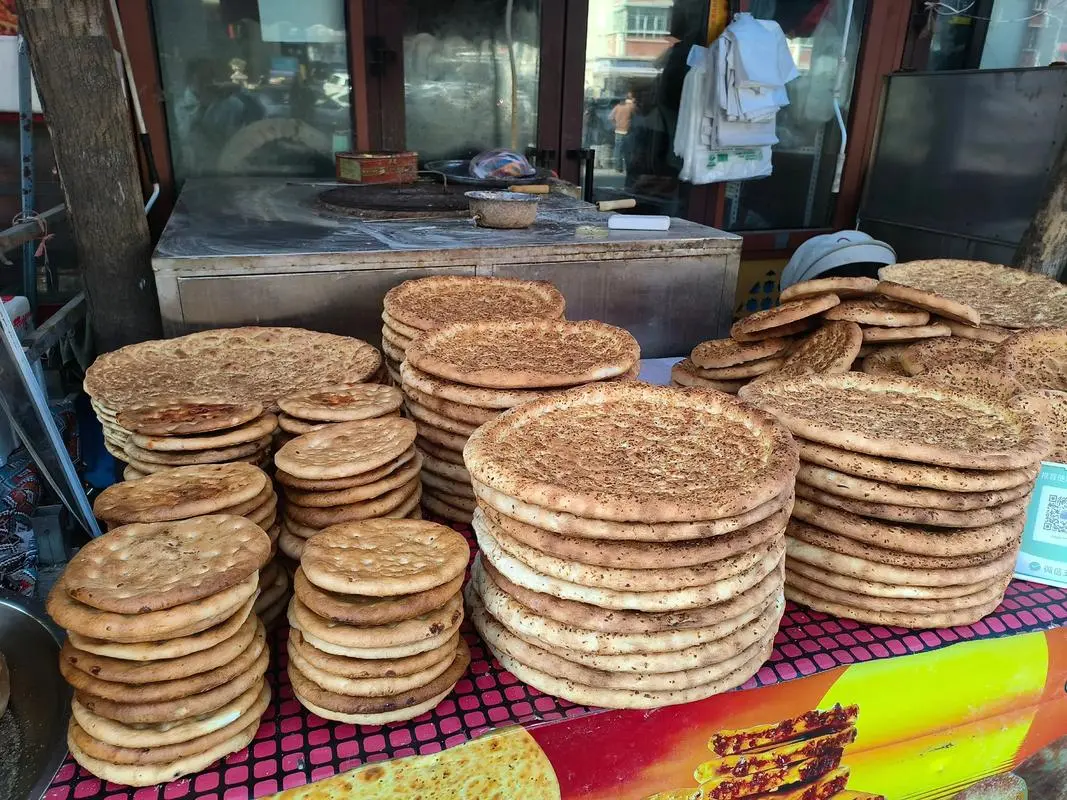
In Urumqi, Korla and Kashgar you get proper supermarkets. Bright aisles, a fridge wall of yoghurt and milk, a fruit section with scales, and staff who scan a barcode without a second look. Prices are posted on the shelf. You can fill a trolley the way you would at home. I do my big resupply here: a case of water, a stack of nan, yoghurt, tomatoes, cucumbers, dried fruit, and a bag of washed grapes if the season is right. These chains take mobile payment without a blink, and the air conditioning alone is worth the stop in July.
County-town shops
Drop to a county seat and the local shop, often signed in a way that transliterates roughly to “supermarket,” is a single room about the size of a living room with one staff member and sometimes a cat asleep on the drinks crate. Shelves hold instant noodles, biscuits, bottled drinks, a little fruit out front, and occasionally a fridge of yoghurt that you should check the date on. The range is thin but the basics are there. Cash still helps at this level, though mobile payment is spreading down from the cities faster than I expected.
Village shops and roadside stalls
A true village shop is one shelf of instant noodles and a fridge of warm cola. That is the entire inventory. Roadside farm stalls, by contrast, are gold: a pickup laid with melons, a grandmother with a basket of apricots, a stand of just-picked tomatoes with the dirt still on them. The stalls sometimes have no prices, just a number said out loud. You point, hold up fingers, pay. No words are needed, and none are offered.
I learned the ladder the hard way near a place called Lop, where I rolled into a “supermarket” sign expecting water and found a single warm bottle and a man who shrugged. Twenty kilometres later a roadside melon stall saved the afternoon. Now I resupply at the top of the ladder and treat the lower rungs as bonuses, not plans.
What to stock, what to skip
Stock the things that survive heat and a bouncing car. Nan bread keeps for days and gets better toasted over a camp stove. Tomatoes and cucumbers take a beating but last two or three days in a cooler. Hard cheese, if you find it, is a quiet win. Dried apricots and raisins weigh almost nothing and kill a sweet craving at 4 pm. Tinned fish, the small oil-packed kind, turns a plain bowl of noodles into a meal with protein.
Skip the obvious traps. Fresh leafy greens wilt in the heat and the dust and you will throw half of them out. Anything that needs a fridge and a clean fork is a gamble in a county town. Pre-cut fruit from a bucket on a hot pavement is how travellers meet the bathroom by midnight; whole fruit you wash yourself is the safe version. I once bought a sealed “fresh” salad at a highway stop and spent the next morning regretting it, which is why I now trust only what I can wash in my own cooler water.
Real prices in ¥
These are what I paid across a recent loop, in 2026, and they swing with the season and the town. Use them as a shape, not a promise. A round nan loaf runs ¥2 to ¥4 at a bakery or stall, less by the bag in a big supermarket. A whole Hami melon, the size of a small child, costs ¥5 to ¥12 in season at a roadside stall, and you will never finish one alone. Tomatoes sit around ¥3 to ¥6 a kilo. Cucumbers are ¥2 to ¥4 a kilo. A tub of plain yoghurt, the drinkable kind in a plastic bag or bottle, is ¥3 to ¥6. Bottled water by the case, 24 half-litre bottles, runs ¥18 to ¥30 in a chain and a bit more in a county shop. Instant noodles are ¥3 to ¥5 a pack. Dried fruit, apricots or raisins, runs ¥20 to ¥40 a kilo depending on grade. A small tin of oil-packed fish is ¥6 to ¥10.
If you want the wider picture on money, the piece on what a Xinjiang trip actually costs lays out daily food and fuel numbers that match these. Self-catering on a long loop knocked roughly a third off my daily food spend compared with eating out every meal, and the bigger win was never sitting in a dead town at 3 pm with nowhere to eat.
Water, bought by the case
The single most important habit is buying water by the case, not by the bottle. On a desert leg you can drink four or five litres a day and still feel dry, and a single bottle bought at a lonely stop costs ¥3 to ¥5 while a case works out under ¥1.50 each. I keep two cases in the footwell and move one into the cooler as the other empties. The empty bottles are not rubbish; I refill them at chain shops and service areas and keep them in the door pockets.
Planning your drinking water supply is its own discipline on the long empty stretches between Aksu and Kashgar, where the next shop might be 80 km off and the one you reach might be out of stock. Fill every container you own at a chain before you leave a city, and treat the case as your buffer, not your plan. On the hottest days I drank the cooler water first because it stayed under 15C while the footwell bottles cooked to tepid.
The fruit calendar by month
Xinjiang fruit is the argument for self-catering by itself. The calendar runs like this. May brings early cherries and strawberries in the wetter north. June is apricot month, small orange ones that taste like sugar, sold by the roadside basket. July and August are melon season, Hami and the local green kinds, and the heat makes them perfect. August into September is grape time, especially around the vineyard belts, eaten by the bunch. September and October are pomegranate and pear, the autumn fruits, firm and sweet. Winter closes the fresh window but dried fruit fills it, and the dried apricots from Turpan are worth a dedicated stop.
I have driven 200 km out of my way for a good melon and never regretted it. Buy whole, wash in your cooler water, eat the same day. A melon left in a 40C car for six hours splits and ferments, and the smell will live in your cabin for a week, so keep fruit in the shade and eat it before it earns a second thought.
Keeping it cool at 40C
A car in the Xinjiang summer is an oven with wheels. Parked, the cabin hits 50C or more, and even driving, the back sits at 35C plus. Yoghurt and cut fruit turn in an afternoon. This is where keeping food cold in a car cooler stops being a nice idea and becomes the thing that lets you eat well. A 12-volt cooler that actually cools, not just a soft bag, paid for itself in the first week. I run it off the cigar socket and pack it with frozen water bottles that double as drinking water as they melt.
Shade the cooler from direct sun with a towel. Open it rarely. Put the yoghurt and the cut fruit at the bottom where it is coldest, the drinks on top. A cheap thermometer tells you more than your hand does, and on a 42C day in the Taklamakan fringe I watched the unshaded cooler creep to 18C while the shaded one held 9C. The difference was a yoghurt I could still drink at dinner.
Halal shelves, cash and the language of pointing
Most of Xinjiang’s retail is halal, and the pork-free shelf is simply the normal shelf. You will not find pork in these shops, and you should not ask for it. The meat counter, if there is one, is lamb and beef. That is the whole story, and it makes shopping simpler, not harder, because the question of what is safe to eat answers itself.
Payment is the small friction. Big chains take Alipay and WeChat Pay, but linking a foreign card to those apps is its own project, and a county shop may only take cash. I carry ¥300 in small notes for exactly this. At the village level, holding up fingers and nodding is a complete conversation. Hand over the money, take the change, smile, leave. You need maybe ten words of the local language and none of them are required.
For stomach safety, protecting your stomach on the road is the companion read, because self-catering only helps if your cooler and your hands are clean. I wash with a bottle of water and a dollop of sanitizer before every roadside meal, and I keep a separate small towel just for the cooler so the yoghurt lid never touches dust.
Picnic gear and a two-day desert plan
Carry a small kit: a plastic cutting board, one knife, a couple of bowls, wet wipes, a corkscrew that is also a can opener, and a trash bag that seals. Rubbish discipline matters here in a way it does not at home. Outside the cities there are no bins, sometimes for a hundred kilometres, and the wind lifts every scrap. I eat, seal the bag, and carry it to the next real bin, usually at a service area or a town shop. Leave the landscape exactly as I found it, because the next driver deserves the same empty horizon.
A worked two-day plan for a desert leg, say Aksu west toward the Kashgar side:
Day one, resupply
In the last city, buy a case of water, a case of soft drinks, six nan, a kilo of tomatoes, a kilo of cucumbers, four yoghurts, a bag of dried apricots, two tins of fish, and a melon if in season. Load the cooler with the yoghurt, tomatoes, cucumbers and two frozen water bottles. The rest rides in the footwell. Lunch that day is nan, tomato, cucumber, tinned fish, eaten at a shade pull-off. Dinner is the same kit plus apricots. Cost came to about ¥90 for two people for the day, against ¥120-plus each if we had eaten out, and we ate better than the roadside restaurants were offering.
Day two, the long empty
Breakfast is yoghurt and nan. Through the morning you drink the cooler water first. At a roadside stall around noon, buy more fruit, wash it in your own water, and eat it there. Skip any bucket of pre-cut fruit. By evening you reach the next town and repeat the resupply. The cheap street snacks worth stopping for are the roadside ones, fresh off a grill, not the ones wrapped in plastic on a shelf. A skewer of lamb at a stall costs ¥3 to ¥5 and tastes like the trip, while a sealed “snack” costs more and tastes like nothing.
That is the whole system. Shop by the ladder, buy water by the case, eat the fruit in season, keep the cooler cold, and carry your rubbish out. The kebabs will still be there when you want them, and when you do not, you will have a tomato and a cold yoghurt waiting in the footwell, which on day eleven is exactly the meal you were praying for.