Street Photography in Xinjiang: People, Bazaars and Respectful Shooting
My favorite photograph from Xinjiang is not a landscape. It is a man in a white cap bent over a bowl of noodles in a Kashgar alley, steam across his face, a child’s hand tugging his sleeve. I took it at 8 in the morning, with one quiet question and a smile, before he even noticed the camera. Street photography here is generous if you are generous back. The markets, the tea houses, and the livestock yards are full of people who are proud of their work and mostly happy to be seen, as long as you treat them like people and not props.
This is a practical guide to shooting people and bazaars across Xinjiang as a foreign visitor. It covers where to point your lens, how to ask permission without awkwardness, how the light actually behaves, where the police will tell you to put the camera away, and how to share the results without causing trouble for anyone in the frame. None of it requires fancy gear. A phone or a single fixed lens will teach you more than a backpack of zooms.
Best markets to shoot
Start with Kashgar’s Sunday livestock market. It runs on Sundays, as the name says, about 15 kilometers out of the old town, and it is the real thing: thousands of sheep, cattle, and donkeys, traders in long coats slapping palms to close deals, and a dust haze you can taste. Go early, before nine, when the animals are being unloaded and the light is soft. The donkey market and the sheep pens are the most photogenic, and the men there are used to cameras. I spent two hours just watching a single haggle over a brown mare, and nobody asked me to leave.
In the city itself, Urumqi’s Grand Bazaar is the easy, central option. It is more polished than Kashgar’s animal market, with spice stalls, dried-fruit mountains, and carpet sellers who pose willingly for a tip of a few yuan. The architecture of the bazaar, with its tiled domes and tall gate, makes a strong wide shot even when the crowds thin. Shoot there in the late afternoon, when the tour groups leave and the local shoppers return.
Beyond those two, the small daily bazaars of Yining and the tool and knife lanes of the southern towns reward patience. The point is not to collect a checklist of markets but to find one you like and return to it. The second time a vendor sees you, the guard drops. I got my best portrait, of a bread baker with flour to his elbows, only after three mornings of buying his flatbread and never raising the camera. On the fourth morning he pointed at my bag and said, in so many gestures, go ahead.
The smaller city markets repay the same patience with a different kind of picture. The daily bazaar in Yining runs along the streets behind the river park, strong on dairy, herbs, and the smoked fish the Ili valley is known for. Hotan’s junction market is famous for jade and carpet stalls where the sellers are performers as much as merchants, and a posed shot there costs a few yuan and a laugh. Turpan’s morning market is quieter and hotter, the light already hard by seven, good for the piles of grapes and the men dozing in the shade of the vine trellises. Each place keeps its own rhythm, and the only way to learn it is to sit through one full cycle from setup to sweep-up.
Logistics help you stay longer and shoot better. Carry a second battery and a power bank, because cold mornings and constant framing drain both faster than you expect. Keep small change, 1 and 5 yuan notes, for the tea and the snacks that buy you a seat. Wear clothes that do not announce you as a tourist from a hundred meters: neutral colors, no loud logos, shoes you can stand in for hours. The less you look like a target, the more the market treats you as a regular.
Asking permission and showing respect
The rule I follow is simple. If a person is the subject, not just the background, I ask. In a market that means a small nod and a raised phone, or the universal gesture of framing my face with my hands and a questioning look. Most people say yes with a smile or a wave. Some say no, and that is the end of it. A refused photo is not an insult to me, it is a boundary, and I thank them and move on.
A few habits make asking easier. Shoot a few frames of the stall, the hands, the goods first, so the person sees you are interested in the craft and not just the exotic face. Show them the picture on your screen. That single act, turning the camera around, has unlocked more portraits for me than any polite phrase. When someone likes their photo, they often call a friend over to be next, and suddenly you have a small happy queue.
Children need extra care. I never photograph a child without a parent nearby agreeing, and I never post a clear face of a minor without thinking hard about it. In conservative areas, women may prefer not to be photographed at all, or may want to adjust their headscarf first. Wait for that. The picture you skip is cheaper than the discomfort you cause. Money changes the relationship fast: a few yuan for a posed shot is fine and expected at a tourist bazaar, but handing cash around a quiet neighborhood market turns warmth into a transaction and can draw the wrong attention from the wrong people.
Light and timing
Xinjiang sits far west, and the sun keeps odd hours. In summer it stays light past ten at night, and the good morning light runs late by big-city standards. I learned to shoot the livestock market from about 8:30 to 10:30, when the low sun rakes across the dust and gives every face a clean side light. Midday is flat and harsh, good only for the covered stalls where the shade is even.
Blue hour is your friend in the old towns. The alleys of Kashgar and the lanes of Yining glow warm from the shop lamps while the sky goes deep blue, and a slow shutter on a tripod captures both. I keep my ISO low and brace against a wall, because the handheld shots at 1/15 second come out soft. A small LED panel, the kind that clips to your phone, lets you lift a face in a dark tea house without flattening it.
Weather matters more than gear. After a rain the paved bazaars reflect light and the colors sharpen. Wind picks up dust that backlights a herd of sheep into a silhouette you cannot plan but can catch if your camera is already up. I keep my camera on a wrist strap and the lens at a mid setting, around 35mm equivalent, so I am not fumbling when something walks past. The decisive moment here is usually a donkey turning its head, not a model striking a pose.
Restricted zones and military checkpoints
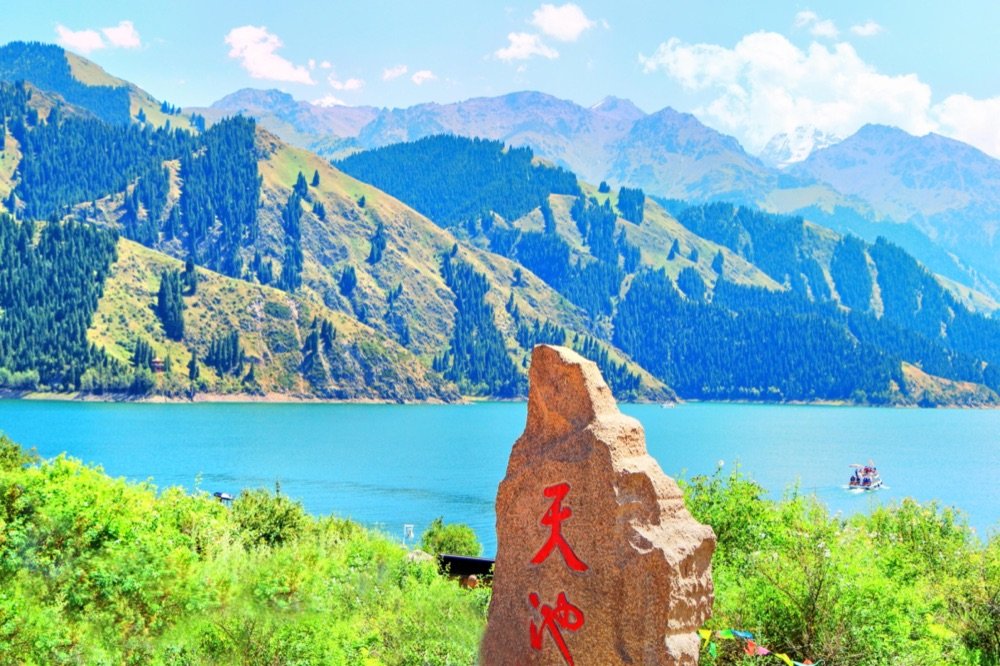
This is the part that catches careless visitors. Xinjiang has a visible security presence, and some places are off-limits to photography no matter how pretty they look. Train stations, police posts, army facilities, border crossings, and many bridge and tunnel approaches carry signs or have officers who will tell you to delete the frame. When in doubt, do not shoot. A deleted photo costs you nothing. An argument with a uniform costs you the rest of your day.
Checkpoints on the roads are normal, especially heading south toward the Pamir or out to Tashkurgan. You hand over your passport, smile, and wait. Photography at the checkpoint itself is a bad idea and can mean a long delay. I keep my camera in the bag through every stop and only lift it again once I am a kilometer past the barrier. The same goes for the occasional protest or gathering: step back, put the camera down, and move along.
For the current, specific list of places where the lens should stay capped, check Xinjiang’s photography-restricted zones before each leg of your trip, because the rules shift and a spot that was fine last year may be sensitive now. Locals are your best live source. If a shopkeeper waves you off from shooting a certain direction, believe them. They know which corner has a station you cannot see.
Editing and sharing responsibly
What you do after the trip matters as much as what you shot. I edit lightly: a lift in the shadows, a small pull on the highlights, and a gentle straighten. Heavy filters that turn a Kashgar alley into a saturated cartoon do a disservice to the place and to the people in it. The goal is to show Xinjiang as it is, not as a travel brochure wishes it were.
Before you post a face, ask whether that person would be comfortable being seen by strangers across the world. I blur or crop out clear faces when the setting is sensitive, when the person is a minor, or when I never got a clear yes. A strong photo of a spice stall or a pair of working hands often carries more truth than a portrait anyway. When I do post a face I have permission for, I caption with respect and context, naming the craft and the town, never reducing someone to an ethnic label or a costume.
Sharing also means giving back. If a vendor posed for you at the Grand Bazaar, buy something, even a 10-yuan bag of dried apricots. If a family fed you tea while you clicked away, send a print to the guesthouse that introduced you, and ask them to pass it on. I have mailed a handful of 4×6 prints home through Yining post offices for under 20 yuan each, and the guesthouse owners tell me the families light up when the photos arrive months later.
For building a wider route of places worth pointing the camera at, the scenic photography routes lay out regions from the Altai forests down to the Pamir, so you can plan a loop that hits the markets, the mountains, and the quiet in between. And when the sun goes down and the stalls fold, the night markets across the region open with grilled meat smoke and neon, a completely different subject that rewards a steady hand and a high ISO.
The single habit that improved my photography more than any lens was slowing down. Sit on a crate at the edge of the market. Buy a bowl of something. Let the place forget you are there. The pictures that come after that pause are the ones people remember, because they were taken by someone who actually watched, and who cared enough to ask.