
Bogda Peak: Standing Under Xinjiang’s Tallest Snowcap Above Heavenly Lake
Last September I left Urumqi before sunrise, drove the G216 north for about 70 km, and pulled into the tramway base below Heavenly Lake just as the first light hit the ridge. I had seen the postcards. Nothing prepared me for the real thing. Bogda Peak, the highest point of the eastern Tianshan at 5,445 meters, stood straight ahead, a white pyramid floating above a turquoise alpine lake, with a band of spruce so dark it looked painted on. This is the mountain every Xinjiang road trip eventually points at, even if most travelers only ever see it from the shore of Tianchi.
If you are planning a self-drive loop through northern Xinjiang, Bogda is worth more than a glance through the windshield. Below is what I learned after three separate trips to its foot, the numbers that actually matter, and the mistakes I made so you don’t have to.
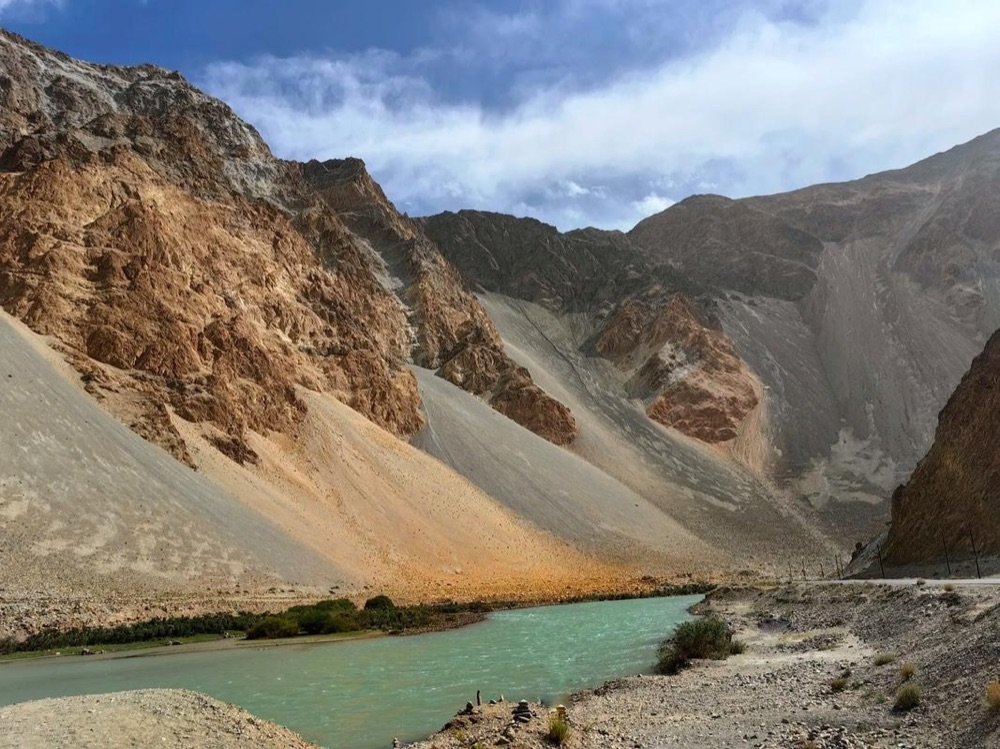
What Bogda Actually Is
Bogda is the highest summit of the Bogda range, the eastern spur of the Tianshan that runs east of Urumqi. The Chinese name means “mountain of the gods,” and for the local Kazakh and Mongolian herders it has always been sacred. The peak itself is 5,445 m above sea level, which makes it modest next to the Pamir giants down south, but it rises almost straight from the Junggar Basin, so the vertical relief feels enormous.
The massif holds three named peaks, Bogda I, II, and III, strung along a ridge with permanent glaciers hanging between them. The largest, the Bogda Glacier, feeds streams that run down into Tianchi and the wider Fukang farmland. On a clear morning the whole north face is lit a flat blue-white; by noon it often clouds over as valley heat pulls weather up the slopes.
Why travelers rarely climb it
Bogda I was first climbed in 1981 by a Chinese team, and it remains a serious mountaineering objective, not a tourist walk. Foreign visitors cannot simply buy a permit and head up. The standard route involves glacier travel, fixed ropes, and a high camp on the East Ridge. What you can do is stand at the lake, hike the ridge trails around Tianchi, and in winter ski or snowshoe the lower forest roads. That is more than enough for most road-trippers, and honestly the view from the shore beats most summit photos.
Getting to the Foot: Fukang and the Tianchi Road
The gateway town is Fukang , about 55 km east of Urumqi city center on the G216. I usually fuel and buy water there because the prices at the lake are steep. From Fukang a well-paved branch road climbs 40 km to the Tianchi scenic area entrance, then a shuttle bus or the cable car takes you the last 1,500 m of elevation.
If you drive your own car, you park at the lot around 1,900 m and switch to the managed shuttle; private cars are not allowed up the final switchbacks in peak season. Out of season the rule relaxes, but check at the gate. The Fukang gateway guide has the current gate times and the fuel stops I rely on.

Heavenly Lake as the Viewing Deck
Heavenly Lake, or Tianchi, sits at 1,910 m and is the single best place to see Bogda without a climbing permit. The water is glacial melt, so it stays cold and an unlikely green-blue even in August. A 2.8 km boardwalk runs the western shore; the eastern side has boat piers and a quieter horse-track trail that local Kazakhs use.
I spent one morning walking the full loop, about 9 km, and the light was best between 7 and 9 a.m. Later the tour buses arrive and the western shore gets crowded. If you want the classic reflection shot of Bogda in the lake, stand at the southeast corner near the Tianchi viewing points before 8 a.m., when the surface is still.
The temple and the legend
Halfway around the lake is a small Taoist temple, the Queen Mother Temple, built on a legend that the goddess bathed here. It is a short detour and a good excuse to rest. The plaque dates the site to the Yuan dynasty, though the current building is a rebuild. I liked it less for the religion than for the old pine beams and the quiet.
Best Seasons and Light
Bogda shows its face roughly 200 days a year, but the odds vary wildly by season. June to September is reliably clear in the mornings, with afternoon thunderclouds building after 2 p.m. October turns cold fast; the lake can freeze by late November and the road up may close with snow. I drove up once in early May and hit a late snow squall at 2,200 m that shut the cable car for the day.
For photography, the brief is simple: be at the shore before the sun clears the east ridge. That window is about 40 minutes. Miss it and you wait a full day. The high-altitude sun guide covers the UV load up here, which is no joke even when it is cold.
A Driving Loop From Urumqi
Bogda fits neatly into a one-day out-and-back from Urumqi, or a two-day loop if you add the southern shore hike and an overnight in Fukang. My preferred route:
- Day 1: Urumqi to Fukang (55 km, 50 min), lunch, then up to Tianchi (40 km, 70 min with the gate queue). Hike the west shore, dinner in Fukang.
- Day 2: Drive the S101 scenic highway south toward the grasslands, or push east to the Gurbantunggut edge if you want desert contrast.
The Urumqi city guide has the airport and supply details if you are starting cold. Most rental cars in Urumqi are fine for the paved climb; you do not need 4WD for Tianchi, though you will want it if you continue past the scenic area onto the forest tracks.
Practical Numbers
These are the figures I wish someone had handed me:
- Urumqi to Fukang: 55 km, toll about ¥15 on the G216.
- Fukang to Tianchi gate: 40 km, no toll but a ¥5 parking fee at the lot.
- Tianchi entrance: ¥215 bundled ticket in peak season (gate plus shuttle); off-season around ¥100.
- Cable car one way: ¥35, both ways ¥60. The walk up the old road is 8 km and takes about 2.5 hours.
- Shore loop: 9 km, 3 to 4 hours at an easy pace.
- Lake surface elevation: 1,910 m. Peak: 5,445 m. Vertical from shore to summit: 3,535 m.
Bring ¥200 in small cash even though cards work at the gate; the boat operators and the tea stalls on the east shore often have flaky card readers. The self-drive essentials guide lists the things I keep in the car for exactly these gaps.
Photography Without the Crowds
The south-east corner of the lake is the money shot, but everyone knows it. I got cleaner frames by hiring a local boat (¥80 for 20 minutes in 2025) to the far cove, where the reflection is undisturbed and the only sound is water hitting the hull. A 24-70 mm lens covered most of what I wanted; the peak is far enough that you need reach for detail on the seracs.
Drone flying is restricted inside the scenic area, and the rangers do check. Keep it packed unless you have written permission, which is rare for foreigners. The same rule applies across most protected lakes in Xinjiang, so plan your aerials for the open passes instead.
When the Weather Turns
The one time I got stuck was a July afternoon when a cell dropped 2 cm of hail on the upper boardwalk in ten minutes. The shuttle kept running, but the trail turned to slush. The lesson: carry a real rain shell, not just a poncho, and watch the clouds building behind Bogda after lunch. If the north face disappears, the lake will follow within the hour.
None of this should scare you off. Bogda is a forgiving mountain to visit because the hard part is someone else’s job. You drive, you ride up, you stand at the shore, and a 5,445 m peak does the rest. For a Xinjiang road trip that is a pretty good trade.
Hiking Past the Shore
The boardwalk gets the crowds, but the real Bogda walk is the east-shore trail that climbs gently through the spruce to a viewpoint called the Eagle Beak. I did it on my second trip and barely saw anyone. The path is 4 km one way, graded but rocky in spots, and it gains about 300 m. At the top you look straight down on Tianchi and the peak fills the whole northern frame. Take water; the thin air at 2,200 m makes a short climb feel like a long one.
Below the lake, the forest service road that is closed to cars in summer opens to hikers and horse riders. Locals rent stocky Siberian ponies at the east gate for ¥80 an hour if you want the view without the effort. I walked it once and rode it once; the ride is the better deal for tired legs, and the herders who lead the ponies know exactly where the lilies bloom in July.
Where to Eat and Sleep
Up at the lake the food is tourist-priced and limited: noodle stalls at ¥35 a bowl and grilled mutton at ¥10 a skewer in 2025. I eat one meal there for the experience, then descend to Fukang for the real food. Fukang has a night market on the east ring road with hand-pulled laghman for ¥18 and a lamb-offal soup worth the early start. For sleep, the lake has yurt camps at ¥260 a night in season, basic but warm, while Fukang has proper hotels from ¥180. I sleep in Fukang and drive up at first light; the lake at 7 a.m. belongs to you and the herders.
An Hour-by-Hour Photo Plan
If the mountain is your shot, run the day like this. Leave Urumqi at 5:30 a.m., reach the shore by 7:00, shoot the reflection until 7:45, walk the west boardwalk to the temple by 9:00, climb the Eagle Beak trail until 11:00, eat at the stall, then descend before the 2 p.m. cloud build. That timing has given me a clean Bogda in all three visits. Miss the morning and you are gambling on a clear afternoon, which in my experience you lose half the time.
Mistakes I Made So You Don’t
I once went in May without checking the cable car, which was closed for maintenance, and had to walk the old road up in slush. I once forgot the ¥215 bundled ticket and arrived cash-light. I once wore sneakers on the Eagle Beak after rain and slid half the way down. None of these ruined the trip, but each cost time and nerves that a five-minute check would have saved. Bogda rewards the prepared; it is not a hard mountain, but it is a high one, and the small things add up at altitude.
Winter at Bogda
The lake freezes by late November and the road up can close with snow, but the shoulder below stays open on clear days and the north face is stark and clean under a low sun. I drove up once in early December and had the whole lower road to myself, the spruce heavy with snow and the peak a flat white against a blue I have not seen elsewhere. Dress for minus fifteen, carry chains even in a rental, and turn back if the gate waves you off. Winter Bogda is quieter and harder, and for that reason the better reward if the weather holds.