
Xinjiang’s Ski Resorts: A Foreign Skier’s Guide to Altay, Urumqi and Beyond
Xinjiang’s Ski Resorts: A Foreign Skier’s Guide to Altay, Urumqi and Beyond
I first heard about skiing in Xinjiang from a Norwegian I met in a Kashgar guesthouse. He described powder so light it felt like floating, and slopes so long you could descend 1,200 metres without a single flat section. Three winters later I have driven my own 4×4 across the region in January, February and December, skiing five resorts and logging more than 4,300 km of winter road between them. This is the guide I wish I had before that first trip.
Xinjiang sits on the same latitude band as the Alps but receives a different kind of snow. The storms that sweep down from the Arctic across Siberia and Kazakhstan dump cold, dry flakes onto the northern ranges. The result is a reliable base that, in a normal season, lasts from late November until early April. If you are a foreign skier used to crowded European slopes, the space here will surprise you.
Why Xinjiang Belongs on a Skier’s Map
The numbers tell the story. Altay prefecture, in the far northwest, records an average seasonal snowfall of around 1.5 metres at village level and far more up high. The terrain parks and off-piste bowls sit between 1,300 and 3,000 metres above sea level. At those altitudes the air is thin and the snow stays dry. I have skied mornings where the thermometer read minus 24 Celsius and the snow still carved like sugar.
What drew me back after the first visit was the combination of scale and silence. A full-day lift ticket at a mid-size resort ran me 480 yuan in January 2025. A comparable pass in the Alps would cost four times that. The trade-off is distance and cold, but for a self-drive traveller those are part of the adventure rather than a drawback.
The region also connects cleanly to the rest of a winter trip. Most visitors pair the slopes with winter skiing and ice festivals, which stretch from frozen-lake fishing demonstrations to lantern displays carved from blocks of river ice. I spent one February evening watching locals drill holes through a metre of ice, then ate grilled fish beside a bonfire while the temperature fell past minus 18.
Timing shaped every good decision I made. My first winter was a December scouting trip, when the base was still building and two of the higher chairs had not opened. I returned in mid-January the next year and found the snowpack at its deepest, around 80 cm on the groomed runs and deeper off-piste, with the cold dry enough that the surface never turned to mush. February brought longer daylight and busier slopes, but also the ice-festival season that makes a rest day worthwhile. A solo skier with two weeks can comfortably hit both the deep-powder window and the festivals by arriving in late January.

Altay: The Powder Capital of the North
Altay city is the gateway. I flew into Urumqi, collected my rented Land Cruiser, and ran up the S21 desert expressway before turning north. The drive took the better part of a day, roughly 560 km of straight, well-planned road through open steppe and frozen wetland. The the S21 expressway to Altay is a genuine modern marvel: a four-lane highway crossing terrain that was, until 2021, a multi-day haul on bad roads.
Theski fields around Altay sit about 60 km from the city centre. The largest resort I visited opened its first cable car in 2018 and now runs eleven lifts, including a gondola that climbs 900 vertical metres in fourteen minutes. I timed one run from the top station to the base at nine minutes of continuous turning, a descent of 1,150 metres. That single slope would be a full day’s worth of vertical at many European hills.
Off-piste is where Altay earns its reputation. The tree-line sits low here, around 1,800 metres, which leaves vast open bowls above it. On a bluebird day in December I followed a local guide into a north-facing gully where the snow had not been touched since the last storm. We measured 42 cm of fresh on a flat test patch. My quads burned by the third lap, but I have rarely smiled so much on skis.
Prices in the villages stay gentle. A bowl of laghman noodles cost 28 yuan after a morning session. A night in a family guesthouse with heating and three meals ran 220 yuan. The resorts themselves are well equipped, with rental departments carrying current-model skis and boots, though I brought my own because my boot size is hard to match in remote areas.
Hiring a local guide changed my skiing more than any piece of gear. For 600 yuan a day I got a man who had grown up in these valleys and knew which gully held soft snow at noon and which ridge turned to breakable crust by lunch. He carried a probe and shovel, ran a transceiver drill with me at the car, and kept us off a wind-loaded slope that avalanched two days later. The resort ticket was cheap; the guide was the best money I spent in Altay.
Urumqi: City Slopes and High-Alpine Backdrops
Urumqi surprised me. I expected a metropolis with token ski hills, but the resorts on its southern rim are serious. The nearest one sits 38 km from the city centre, reachable in under an hour if the roads are clear. Higher resorts climb toward 2,700 metres and catch the same cold storms that feed Altay, just with a shorter season because of the lower latitude.
I based myself in the city for a week in January and skied three different hills. The largest offered 28 runs and a top-to-bottom vertical of 1,350 metres. A day pass was 520 yuan, and the morning queue at the main gondola never exceeded ten minutes. By mid-February the same hill got busier, so I learned to ski first tracks before 9.30 and quit by early afternoon when the surface softened.
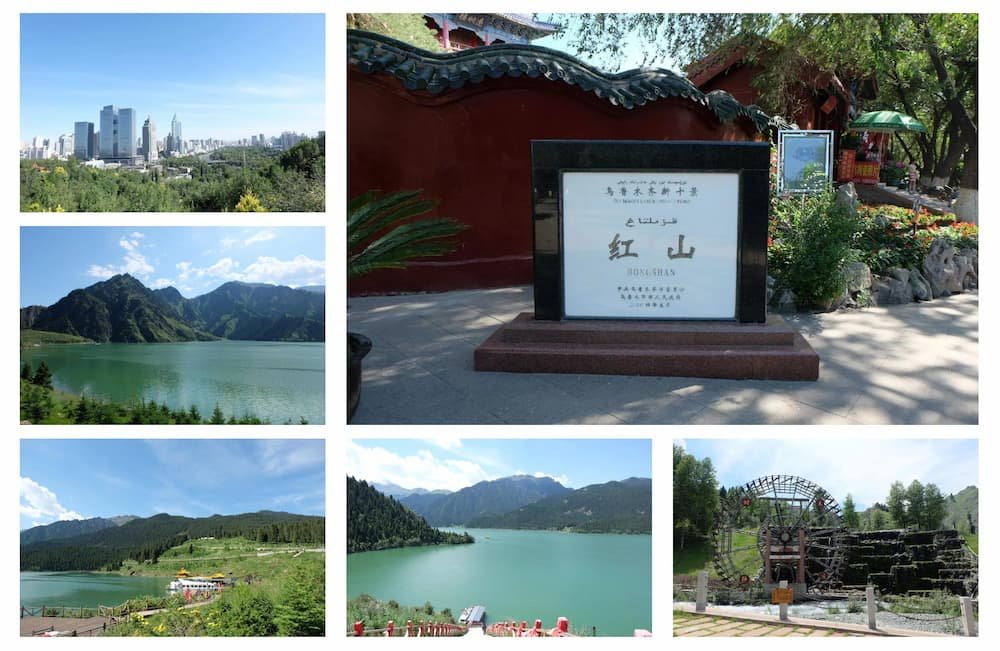
What makes Urumqi worth a stop is the contrast. You ski all morning in spruce forest, then descend to a city of two million for a hotpot dinner. I rented a car here rather than driving in, then used the metro and ride apps for evening trips. For a foreign visitor the mix of big-city comfort and nearby backcountry is unusual and welcome.
One run in particular stayed with me. The resort’s longest trail drops 1,350 metres from the top gondola to the base village, a blue that bends through three separate faces of spruce before opening onto a final glacial-grade straight. I skied it five times on my last day, each lap a little faster, and still reached the bottom with my legs intact. A drag lift at the base shuttles you back to the chair in four minutes, so the vertical stacks up fast. By 3pm I had logged 8,100 metres of descent, more than many Alps day passes deliver before the lifts close.
The winter tyres for the drive up matter even on the city approach roads. I fitted studded tyres in December after a local mechanic explained that the southern passes ice over before dawn and stay glassy until the sun hits them around 10am. That single change turned a white-knuckle commute into a relaxed thirty-minute glide.
Getting There by Car: Roads, Tyres and Weather
A self-drive winter trip is the best way to reach these resorts, but it demands respect for the conditions. My own vehicle wore studded winter tyres rated for minus 40 Celsius, and I carried two spare tyres, a 20-litre jerry can of fuel, and a diesel-fueled cabin heater for nights parked below minus 20. The distances are real: Urumqi to Altay is 560 km, Urumqi to the southern Taklimakan-edge resorts is over 700 km, and a full loop of the northern range can exceed 1,500 km.
Weather is the variable that decides everything. I was pinned in a guesthouse near Dushanzi for nineteen hours by a wind that drove snow horizontally and dropped visibility to under 50 metres. The lesson stuck with me. Before any long winter leg I now check two forecasts and ask the last petrol station attendant about road status. Good advice on driving in snow and wind saved me from a second stranding the following week when I rerouted around a closed pass.
Fuel and food planning is part of the sport. Stations thin out north of Altay, and some close overnight in deep winter. I learned to never let the tank drop below half and to stock water, nuts and a thermos at every stop. The roadside service areas along the newer expressways are clean, heated and stocked with hot food, but the older provincial routes can leave 150 km between decent stops. Plan like you are crossing a mountain, because in winter you are.
Beyond the Big Two: Smaller Hills Worth a Detour
Altay and Urumqi get the headlines, yet the smaller resorts rewarded me most. A hill near Sayram Lake opens when the surrounding plateau freezes, letting you ski with a view across a 450-square-km frozen sheet of ice. Another, tucked beside a former Soviet-era mining town, runs just four lifts but offers 1,000 metres of fall line and almost no other skiers. I had the entire mountain to myself on a Wednesday in January.
Farther south, resorts near the edge of the Taklimakan offer a strange pleasure: skiing in the morning, then watching the dunes of the world’s second-largest shifting-sand desert glow at sunset. The season there is short, roughly late December to mid-February, and the base is thinner, but the photo alone justified the 700 km drive from Urumqi.
I also skied a family-run slope outside Kuqa, where the owners lent me traditional fur boots and fed me roasted walnuts after each run. These places rarely appear in international guides, yet they capture the warmth of winter travel here better than any lift queue.
Planning Your Own Winter Run
If you are building a first trip, I suggest a ten-day loop. Fly into Urumqi in early January, ski two days on the city’s southern hills, then drive the S21 north and spend four days around Altay. Leave room for a rest day, because the cold drains you faster than the altitude. Budget around 6,000 to 8,000 yuan all in for a solo traveller, covering car rental, fuel, lifts, food and simple lodging, not counting the flight into China.
Pack for serious cold. I wore a merino base layer, a synthetic mid layer, and a down jacket rated to minus 30, plus goggles with a low-light lens because whiteouts are common. Sunscreen is not optional: the UV off the snow at 2,500 metres burned my nose in under two hours on a clear February morning.
Book lifts and stays ahead for the Chinese New Year window, which in 2026 falls in mid-February. Resorts near the cities fill fast then, and even Altay guesthouses sell out. Outside that two-week peak, you can often walk up and buy a pass the same morning.
Xinjiang rewarded my curiosity with the best snow I have skied outside Japan, and at a fraction of the cost. The roads are long and the weather is honest, but the resorts are real, the people welcoming, and the mountains vast. I am already planning a December return to chase the first storms of the season.