
Pumpkin, Squash and Gourd on the Xinjiang Table: A Quiet Staple of Oasis Cooking
Pumpkin, Squash and Gourd on the Xinjiang Table: A Quiet Staple of Oasis Cooking
On my second afternoon in Urumqi I walked out of the long-distance bus station and straight into a row of stalls selling things I could not name. One woman had a heap of ribbed orange squash the size of bowling balls. Another was scooping pale yellow flesh into a paper bag for a customer. A third was hacking the top off a fat green gourd with a cleaver. I pointed. She handed me a wedge of roasted pumpkin still warm from the brazier. That single sweet, smoky mouthful is why I spent the next three weeks chasing gourd-family dishes across the region.
I had come for the mountains and the Silk Road ruins. The vegetables were an accident. But the pumpkin and squash kept finding me, in rice, in bread, in soup, and finally in a dessert porridge that cost less than the bottle of water I had been carrying. By the time I reached Kashgar a month later I was ordering the squash version of everything by reflex, and the cooks had started smiling at the foreigner who always asked for the orange one.
Why a traveller notices gourds at all
Most visitors come to Xinjiang for the lamb, the hand-pulled noodles, and the melons. The pumpkin and squash hide in plain sight. They show up diced into rice, folded into breads, floating in soup, and stewed beside meat in clay pots that have not changed much in a hundred years. Locals call the orange ones kawa and the pale winter squash something closer to qabaq, but you will get by with pointing and smiling.
I did not set out to write about vegetables. I set out to eat cheaply, and the gourd dishes were almost always the cheapest thing on the counter. A bowl of squash soup ran me ¥6 in a Kashgar side street in October. A stuffed pumpkin bun cost ¥3 at a Turpan market. The price kept me eating them, but the flavor is what kept me writing them down in the notebook I filled by the end of the trip.

Kawa in the pilaf pot
The first place I met squash was in polo, the rice dish foreigners call pilaf. In the Uyghur canteens along the southern edge of the Tianshan the standard plate is lamb, carrot, and rice cooked in a wide flat pan over a steady wood fire. In autumn many cooks throw in cubes of pumpkin toward the end so the rice picks up a faint orange tint and a sweetness that cuts the fat of the meat.
I ate a version in Korla on a cold November morning, the kind of morning where your breath fogs the window of the noodle shop. The pumpkin had gone soft enough to mash into the grain, and the whole plate tasted like a sweeter, earthier cousin of the carrot version I knew from Kashgar. The cook told me, through gestures and a few words of English, that pumpkin pilaf is a late-season thing. You find it from September through November, then it fades until the next harvest brings the squash back.
The market where I first got it wrong
In Kuqa I bought what I thought was a small melon, paid ¥4, and carried it back to my guesthouse planning to chill it. My host laughed, split it open, and roasted it in the oven whole. It was a dense, dry-fleshed squash that tasted like chestnut more than anything sweet. That mistake taught me to ask before I buy, and it taught me that the gourd family here spans a dozen shapes I had no words for.
If you want to try pumpkin pilaf without guessing, walk the morning markets before 9am. The pans go on the stove early, and the squash versions sell out by noon. Bring small bills. Most of these counters do not take cards, and the ones that do often have a reader that stops working the moment you need it.
When the squash season actually runs
The orange pumpkin is a clear autumn affair. The pale winter gourd is the opposite, a keeper that sits in a pile through January and February and still cooks firm. I learned to read the piles the way a local would. Bright orange meant fresh and sweet, buy it now. Pale and waxy meant stored and reliable, buy it anytime. The transition between the two is roughly late October, when the markets switch from one to the other almost overnight.
Soup bowls: shorpa and the rest
Soup is where the gourd earns its keep through the long winters. The classic meat broth called shorpa is usually lamb and turnip, but in home kitchens and small Hui-run canteens you will often find a lighter version built on winter squash. I had one in Yining in late October, a pale bowl of cubed yellow squash in a clear broth with a handful of cilantro on top, and it cost me ¥8 with a piece of bread on the side.
The Uyghur shorpa soup tradition is worth understanding before you order, because the squash variant is rarely written on a menu in Latin letters. You ask for the vegetable soup, or you point at the pot. Either way the result is a bowl that warms you faster than the lamb version and leaves room for the rest of the day’s eating.
There is also a thick, almost stew-like pumpkin soup that shows up in Dungan homes, the sort of meal you get invited to rather than order off a board. The Dungan are the Hui Muslim community descended from migrants who crossed the border from China’s interior two centuries ago, and their cooking leans on tomatoes, noodles, and a gentle sweetness. Their Dungan Hui cuisine includes a pumpkin dish I still think about, squash simmered with a little tomato until it collapses, then spooned over wide flat noodles that soak up the orange sauce.
A Dungan bowl I did not order
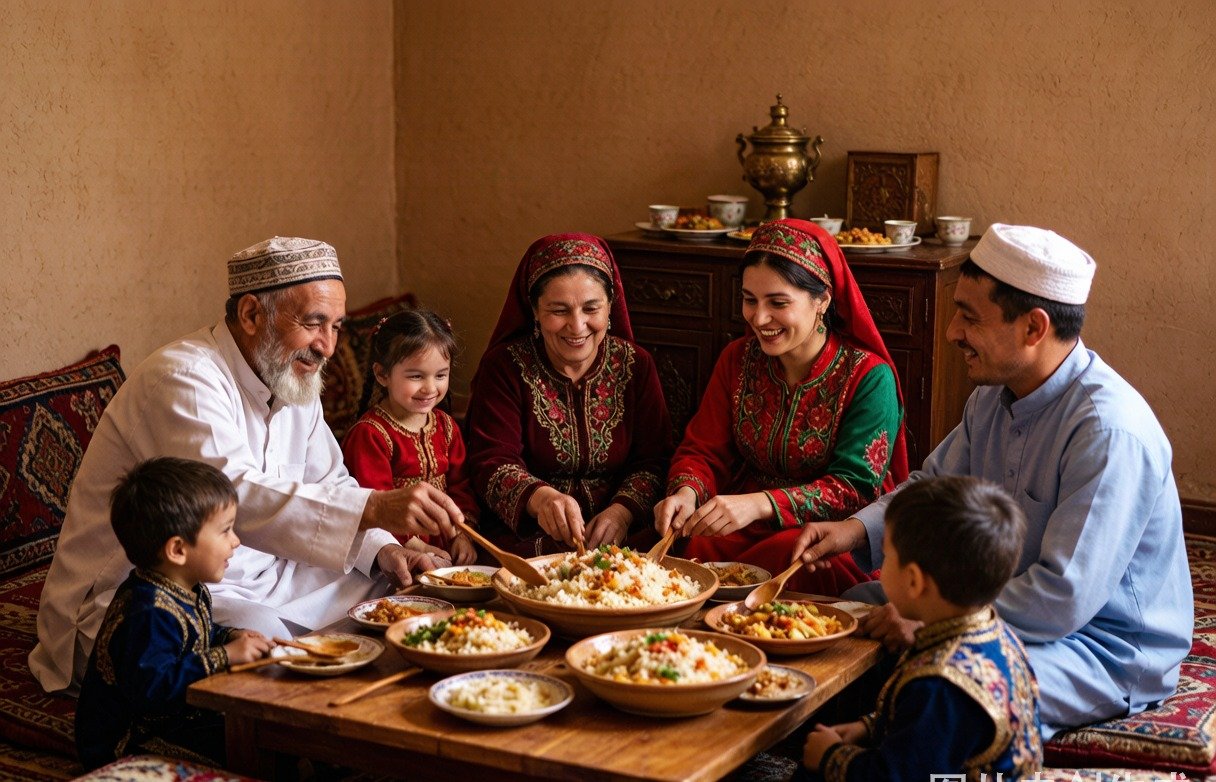
I landed that bowl by accident in a village north of Yining, where a family took pity on the soaked foreigner who had missed the last bus. The father ladled squash over noodles, the grandmother pressed a wedge of nan into my hand, and nobody would take money. That meal taught me more about the region’s food than any restaurant did. The gourd there was a way of feeding a stranger without spending the family’s meat, and the hospitality landed harder because of it.
If you get a similar invitation, accept it. The pumpkin dishes of the home kitchen are the ones that never make the tourist menus, and they are the ones worth the detour. Carry small gifts, learn two polite phrases, and you will eat better than the people who only ever sit at the counter on the main road.

The sweet breads and the stuffing
Now to the part that surprised me most. Xinjiang’s nan bread comes in dozens of shapes, and a good number of them hide squash inside. The round, domed nan baked against the wall of a tandoor often gets a brush of pumpkin paste before it goes in, which gives the crust a soft amber sheen and a faint sugary note you only catch on the second bite.
In Kashgar’s old town I found a baker who stuffed a small round bread with mashed sweet pumpkin and a pinch of something he would not name, likely a spice I could not place. It came out of the oven at 10am, cost ¥2.5, and made a breakfast better than any hotel buffet I have had in the region. The squash inside was smooth and barely sweet, more like a custard than a filling, and it steamed when I broke the loaf open.
Nan with a squash heart
Not every bakery does the stuffed version, and the ones that do often sell out before lunch. My rule became simple. If I saw a tray of small domed breads with a darker cap, I bought two, one to eat warm and one for the road. The darker cap was usually the pumpkin, caramelized just enough to signal what waited inside.
The best one I ate was in a side alley off the Id Kah mosque square, from a baker who had been at his tandoor since before dawn. He pulled the loaf off the wall with a long hooked tool, slapped it onto the counter, and waved away my attempt to pay extra. That ¥2.5 breakfast fed me until a late lunch 40km out of town, and I still think about the way the squash went grainy and sweet as it cooled.
The fried cousin at the festival stall
There is a fried cousin too, a puffy bread with a squash center that you find at festival stalls and outside mosques on Friday. It is heavier and greasier than the oven nan, but on a freezing December afternoon in Aksu it was exactly the right thing, and it cost less than a bottle of water at the tourist sites. The fry oil smells of the squash, and the whole snack eats like a savory donut with a vegetable soul.
Dungan kitchens and the northern edge
The further north you go, toward Ili and the Kazakh settlements around Sayram Lake, the more the gourd slides into noodle dishes. I ate a bowl of laghman in Yining where the cook had folded roasted squash into the stir-fry on top, so the sauce turned a muted orange and the whole thing read as comfort food rather than the chili-heavy version I had come to expect from the south.
The Dungan influence matters here. Their kitchens treat pumpkin as a vegetable to be braised, not just a sweetener, and they pair it with liangpi cold noodles in a way I did not expect at first. Cold wheat noodles with a smear of mashed squash and a sharp vinegar dressing made a fine lunch on a warm September day, and it was the only time I saw the gourd served cold rather than stewed or baked.
I should be honest that the northern squash is not always the orange kind. Much of it is the pale, waxy winter gourd that stores through the cold months and shows up in January markets still firm. That is the one you see stacked in the photographs of oasis towns, the one that travels well and feeds people when little else is growing in the frozen fields beyond the river.

Where to actually try these dishes
Enough scene-setting. If you want to eat your way through the gourd family, here is where I would point you, based on what I found and what I paid across a month of moving south to north.
Urumqi
Start at the morning market behind the south bus station, the one locals call the second-hand goods market on weekends but which turns into a food row on weekdays. The pumpkin pilaf pans open around 8am. From there, walk the side streets east of Renmin Road for nan bakeries, because the stuffed squash bread is common within two blocks of any working tandoor. Budget ¥15 for a full breakfast of soup, bread, and tea, and bring the cash before the banks open.
Kashgar
The old town is the easiest place to find the sweet stuffed nan, and the Sunday livestock market on the city’s edge has squash vendors who will let you taste before you buy. I paid ¥20 for a wedge of roasted pumpkin big enough to share, plus a flatbread, and sat on a low wall eating while the goats were led past. Eat there early. By midday the good stuff is gone and the tour buses arrive, and the stalls shift from food to the cheaper souvenirs.
Turpan and the oasis towns
Turpan runs hot and the gourd grows well in its fields, so the winter squash appears in everything from soup to the filling of festival pastries. The town’s night market, open from roughly 7pm in summer, is where I found the fried squash bread and a sweet pumpkin porridge that tasted like dessert but cost ¥5. In the smaller oasis towns like Toksun, ask at any Hui canteen for the vegetable soup of the day, because it is usually squash and it is always cheap.
How the gourd stores through the cold months
Part of why squash matters here is the climate. Winter in the north drops well below freezing for weeks, and fresh vegetables become a luxury. The dense winter gourd keeps without refrigeration in a cool room, which made it a survival crop long before the supermarkets arrived. You can still see the storage logic in how the markets are built, with the pale gourds piled in the back where the cold air settles.
This storage habit shapes the cooking. The autumn pumpkin is a treat, eaten fresh while it lasts. The winter gourd is a staple, the thing that carries a kitchen from November to March. When you eat squash soup in February you are tasting a food system built for a place where the ground is locked under snow, and that context makes the humble bowl taste like more than the sum of its parts.
Ordering when you cannot read the menu
The hardest part is not the food, it is asking for it. Menus in the smaller towns are often only in Arabic-script Uyghur or Chinese, and the squash dishes rarely have a Latin name posted where a foreigner can read it. My method was to learn two or three words by ear, point at whatever orange or pale vegetable sat on the counter, and trust the cook to make the local version of it.
If you have dietary restrictions, read up on dining with allergies before you go, because the squash dishes are usually safe but the breads share ovens with sesame, nuts, and dairy, and the soups often start from a meat broth even when the main ingredient is vegetable. I carry a small card with my restrictions written in the local scripts, and it has saved me from more than one accidental bowl of lamb stock at a counter where nobody spoke English.
Pumpkin and squash will not headline your trip. They are the quiet background note in a cuisine built on meat and grain, the thing you notice only once you slow down enough to eat where locals eat. For me that slowness was the whole point. The gourd family fed me cheaply, warmed me through a cold autumn, and gave me a reason to sit at a market stall long enough to watch a town wake up. If you give it the same patience, you will find a side of Xinjiang that the guidebooks skip, and you will eat very well while you do.