
Xinjiang Gemstones and Minerals Beyond Jade: Tourmaline, Sapphire and Crystals
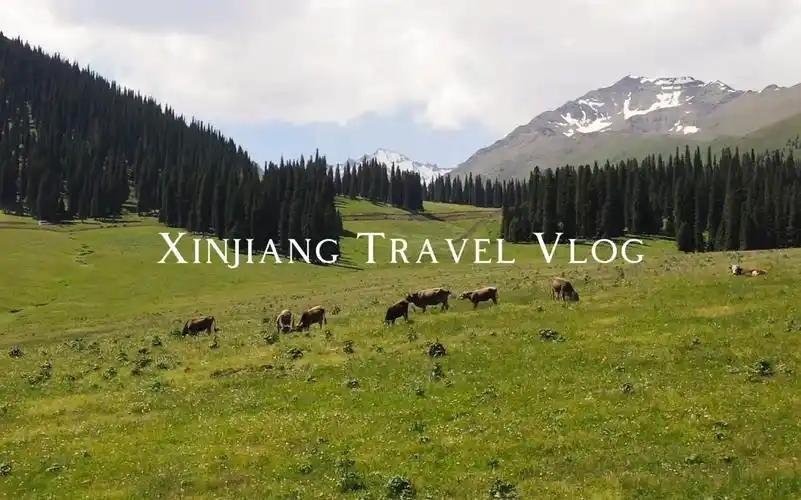
For years I told people back home that I went to Xinjiang to see deserts and mountains. The truth is, I came back with pockets full of stones. Not jade. Jade gets all the attention, the polite museum glass cases and the ¥5,000 bracelets in Hotan markets. But Xinjiang’s real mineral story runs far wider, through pink tourmaline pulled from the Altyn Tagh, sapphires washed out of river gravel, and quartz crystals you can pick up off the ground if you know where to stand.
I spent eleven days in October chasing that story. Below is what I learned, the places worth your time, and the mistakes I made so you don’t have to.
Why Xinjiang Is a Geologist’s Playground
The short version is collision. The Indian and Eurasian plates ground together here over millions of years, and the pressure cooked an extraordinary range of minerals into the crust. Add the Tian Shan, Kunlun, and Altai ranges, plus some of the driest air on the planet, and you get exposed rock, clear light, and minerals that sit half-buried waiting to be found.
The scale is hard to grasp until you stand in it. On the road from Urumqi to the Altai fringe, I counted four distinct rock colors in a single roadside cut, each band a different mineral era. A local pointed at a grey streak and called it “old as the mountains’ bones.” He wasn’t wrong in spirit. The crust here reads like a stacked library, and the gems are the bookmarks.
I am not a trained geologist. I am a traveler who got hooked after a Uygur shopkeeper in Kashgar slid a slice of black tourmaline across the counter and said, “This came from a mountain two hours from here.” Two hours. I had to see it.
Tourmaline: The Pink and Black Treasure of the Kunlun
Tourmaline was my first obsession. The Kunlun range south of Hotan produces some of the most saturated pink and watermelon tourmaline I have ever held. The mineral forms in long striated columns, and good specimens show a clean color shift from green at the core to pink at the rim.
I visited a small cutting workshop on the edge of Hotan in late October. The owner, who asked me to call him Abla, showed me rough stones the size of my thumb selling at ¥80 to ¥400 depending on clarity. Faceted stones jumped to ¥1,200 for a clean two-carat pink. He laughed when I asked if the cheap ones were fakes. “In Hotan we don’t fake tourmaline. We just sell you the ugly half.”
Where to Look and What to Pay
The productive zone sits roughly 90 km southwest of Hotan city, toward the Kunlun foothills. You cannot simply drive in and dig; most working sites are small family claims. The realistic play for a traveler is the city’s Sunday bazaar, where rough and cut material both turn up. Budget ¥50 for a decent rough sample and ¥600 to ¥2,000 for jewelry you’d actually wear home.
The bazaar itself opens around 8 a.m. and the good tourmaline is gone by ten. I learned this the hard way on my first Sunday, arriving at nine-thirty to a row of nearly empty felt cloths. The dealers hadn’t sold out; they’d simply moved the prime pieces to a back room for regulars. Show up at eight, drink the offered tea, and let a vendor remember your face. That patience bought me a watermelon tourmaline slice for ¥260 that a German buyer later offered ¥500 for on the same morning.
Bring cash. The bazaar vendors rarely take cards, and the few who do add a surcharge I found running about 5 percent. ATMs inside Hotan’s main market hall often run dry by afternoon, so pull ¥1,000 to ¥2,000 the day before you go.
Sapphire and the Quiet Rivers of the North
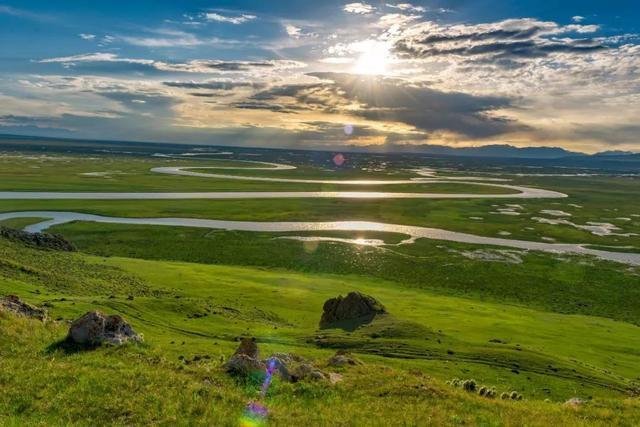
Most travelers picture sapphire as a blue Thai or Sri Lankan stone. Xinjiang grows its own, mostly in alluvial deposits where ancient rivers dropped heavy minerals into gravel beds. The Alban sapphires of the Ili region run blue to inky violet, smaller than their tropical cousins but dense and clean.
Near the Kazakh border town of Hoboksar I met a retired miner who spent his mornings scanning a dry river channel with a handheld magnet and a cheap loupe. He pulled a cornflower-blue grain from his palm that measured maybe three millimeters. “Not big,” he said. “But real. This ground gives real.”
Buying Sapphire Without Getting Burned
The single rule I learned: ask where it was mined, then ask to see the rough it came from. Cut-only stones with a vague “from Xinjiang” story usually traveled further than the seller admits. At the Ili market I saw honest rough selling at ¥30 to ¥120 per small stone, with faceted stones climbing past ¥3,000 for anything over a carat.
Test lighting matters more than you’d think. The bazaar’s warm bulbs flatter everything. Step outside into daylight before you commit. I once nearly bought a “violet sapphire” that turned flat grey the moment I saw it under the open sky.
I also learned to trust the scratch test, gently. Real corundum (sapphire’s mineral family) scratches glass without a mark on itself. A dealer in Ili handed me a stone and a scrap of window glass; the stone bit in and the glass gave way. That single demonstration, costing him nothing, told me more than any certificate. Fakes flinch. Glass and cubic zirconia leave a powdery trail or scratch themselves.
Crystals: Quartz, Amethyst, and the Desert Glass
If tourmaline is the star and sapphire the sophisticate, quartz is the friendly everyman. Xinjiang produces clear rock crystal, citrine, and amethyst in quantities that make collecting almost embarrassingly easy. The Taklamakan’s rim towns sell raw clusters for ¥20 that would cost ¥60 in a Western shop.
My favorite find came outside Turpan, where the heat bakes the ground hard and mineral veins sit exposed. I walked a dry wash for twenty minutes and came back with a pocket of smoky quartz points. No guide, no permit, just a rented bicycle and a lot of water.
That bicycle cost ¥15 a day from a shop near the Turpan bus station, and it changed the trip. Cars move too fast to spot surface crystal; on two wheels I caught the sun flashing off a cluster half-buried in sand, something I’d have blown past at 60 km/h. The points I found were small, an inch or two, but clean enough that a friend thought they were manufactured. They weren’t. Holding a thing the earth made and nobody touched is a small, silly joy I didn’t expect from a desert.
Tea Crystal and the Turpan Basin
The Turpan Depression, which bottoms out near Aiding Lake at roughly 154 meters below sea level, concentrates certain minerals through evaporation. Citrine and “tea crystal” quartz the color of strong black tea turn up in roadside stalls between Toksun and the lake. A good cluster costs ¥40 to ¥150. The pieces are heavy and pack badly, so ship them home rather than carry them if your bag is already full.
Lesser-Known Minerals Worth a Look
Beyond the headline three, Xinjiang hides a supporting cast. Kunzite, a delicate lilac spodumene, comes out of the Altai in the far north. Nephrite’s paler cousin, soapstone, gets carved into cheap cheerful figurines across the region. And near the salt lakes you can find translucent gypsum rosettes that look like frozen flowers.
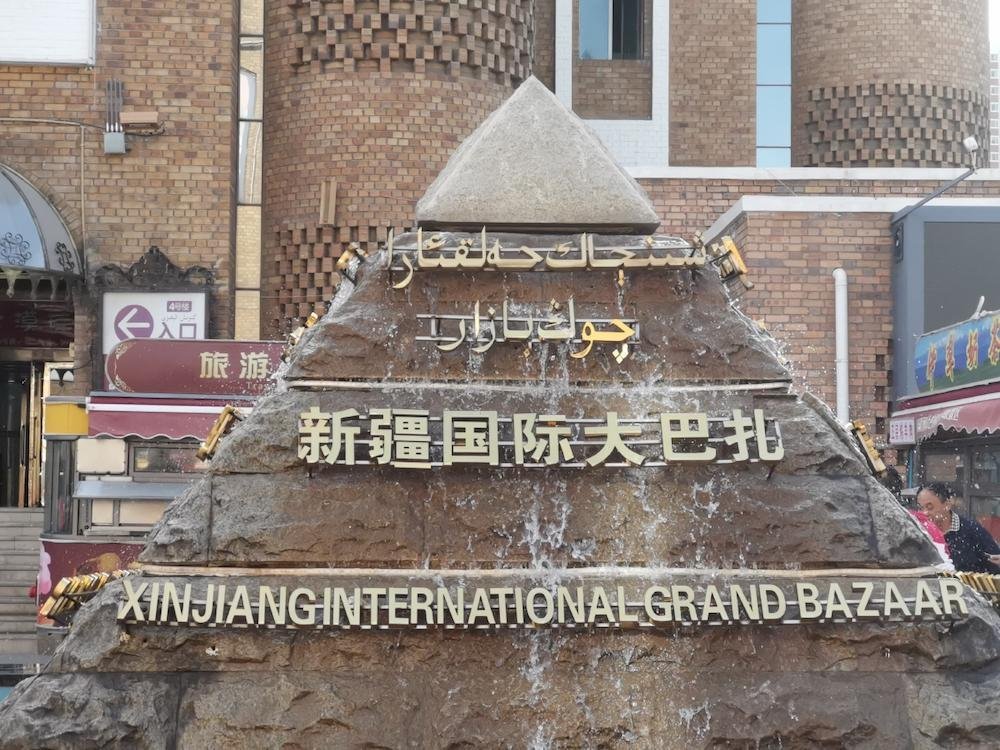
I picked up a kunzite shard in Urumqi’s international bazaar for ¥220, pale enough that it nearly vanished against my white shirt. The dealer wrapped it in red cloth “so the color remembers itself.” Superstition, maybe, but I kept the cloth.
The same bazaar sold me a gypsum rosette the size of a fist for ¥35. It looked like frost caught mid-bloom, and it survived the flight home in a sock inside my checked bag. These soft, fragile pieces won’t hold value like tourmaline, but they make the best gifts. My sister still keeps hers on her windowsill, where the morning light turns it translucent.
How to Travel This as a Collector
You do not need a geology degree. You need patience, a loupe, and a tolerance for being wrong. My routine was simple: arrive at a bazaar at opening, buy one cheap thing from three different vendors, compare, then go back to the one who wasn’t performing for me.
Plan around the weather. October and early November are ideal, cool enough to walk all day and quiet enough that vendors talk instead of hustle. Summer in the basins hits 45°C; I watched a French traveler faint near Toksun in July. Spring brings dust storms that shut the roads for hours.
Transport and Costs
Around Hotan and Kashgar, shared taxis run ¥15 to ¥40 for in-town hops, and a private car for a day of mineral hunting cost me ¥400 with a driver who knew the claims. Trains link Urumqi to Turpan in about 90 minutes for ¥30 in a hard seat. Flying Urumqi to Hotan takes 90 minutes and runs ¥600 to ¥1,100 depending on the month.
Pack a small digital scale, a 10x loupe, and a white reference card. Those three items saved me more money than any guidebook. The scale matters because vendors quote price per carat, and a hand-held estimate is always generous to the seller. My ¥40 scale paid for itself on the second transaction.
Give yourself margin in the schedule. The danger of this trip is not boredom but rabbit holes. I planned two hours at the Hotan bazaar and left five hours later with numb feet and a new friend. Build buffer days. The mineral towns reward lingerers, and a rigid itinerary will cost you the best room in the back of the shop.
Ethics and the Law
A quick, serious note. Some mineral sites sit inside protected areas or near sensitive borders. Digging without permission is not worth the fine, and in places like Hoboksar the border zones are off-limits to foreigners without paperwork. Buy from licensed dealers and markets. The specimens are just as good, and you sleep easier.
I also avoid anything labeled “fossil” too eagerly. Genuine fossils exist, but the carved-and-aged fakes are everywhere, and I am not qualified to tell them apart on a stall at dusk.
My Suggested Starter Route
If you want one loop that covers the highlights, fly into Urumqi, take the train to Turpan for quartz and citrine, fly south to Hotan for tourmaline, then use Kashgar as your base for Kunlun stories and market shopping. That is roughly 1,600 km of travel and ten to twelve days if you move slowly.
This pairs well with a longer cultural drive. I built mine around a Southern Silk Road itinerary that hit the same towns but framed them through history instead of stone. Doing both made the minerals mean more; I wasn’t just buying pretty rocks, I was holding pieces of a trade route.
The connection runs deeper than geography. Jade from the Kunlun moved along these same paths a thousand years before any tourist arrived, and the sapphire and tourmaline we covet now traveled the same dust. Sitting in a Kashgar teahouse with a ¥30 cup of brick tea, turning a Hotan tourmaline in the light, I felt the through-line. The Silk Road was always a road of stone as much as silk. Knowing that made every market bargaining session feel less like shopping and more like joining a very old conversation.
What I’d Tell a Friend
Start with one stone you love, not the whole shelf. Tourmaline taught me patience, sapphire taught me suspicion, and quartz taught me that the best finds are the ones you carried out under your own feet. Xinjiang will hand you all three if you slow down and actually look.
Bring an empty padded box. You will fill it. I came home with two, and a plan to come back for the Altai kunzite I left behind.