
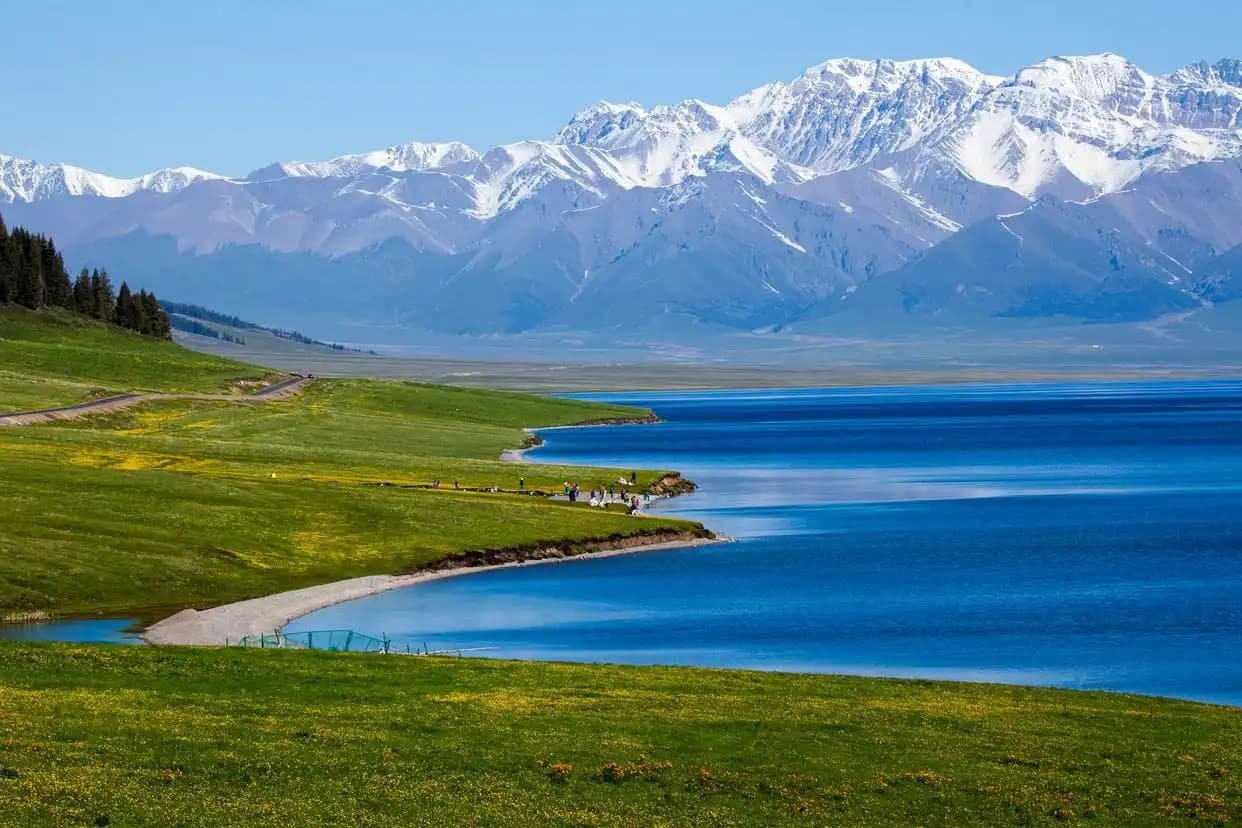
Toksun: Chasing the Hottest Corner of the Turpan Basin by Car
The thermometer in my hire car read 47°C the afternoon I rolled into Toksun, and the display was not even the hottest part of the day. This small county south of the Tian Shan, on the road from Urumqi to Turpan, is one of the hottest inhabited places in China — and, as it turns out, one of the best excuses to pull over and eat a bowl of noodles you will think about for a year.
Most drivers blast through Toksun at 120 km/h on the G30, eyes on Turpan or Kashgar ahead. I slowed down on purpose. The heat here is not a nuisance; it is the whole character of the place, and the locals have built a food culture around it that is worth the stop.
The drive down from Urumqi
From Urumqi, take the G30 south. The road climbs over the Tian Shan through a dry gorge the locals call the “dry ditch,” then drops onto the floor of the Turpan basin, and the temperature climbs with every metre of descent. On a July afternoon the difference between the mountain pass and Toksun can be 15 degrees. I left Urumqi at 30°C and arrived sweating at 46°C two hours later, having watched the car’s outside-temperature readout climb like a timer.
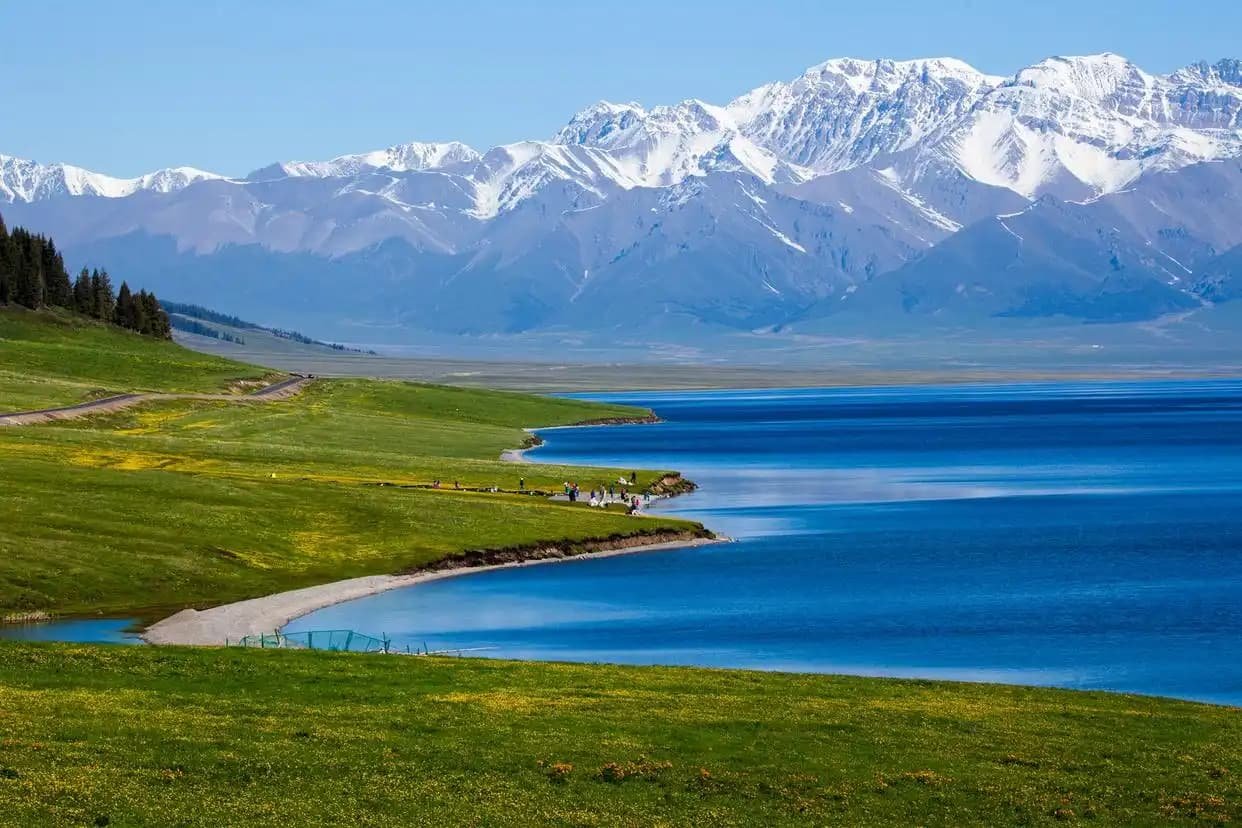
The basin floor is a different country from the cool city you left. The air shimmers, the poplars planted along every road stand in tight green tunnels, and the only movement is heat haze off the salt flats. It is beautiful in a punishing way. The month-by-month weather guide will tell you June through August is brutal here; it is also, oddly, the best time to feel what the basin really is.
Why Toksun, specifically
Two things. The first is the noodles. Toksun is famous across Xinjiang for its banmian — hand-pulled wheat noodles tossed with a fast-cooked topping of tomato, green pepper, onion, and lamb. The town has a whole district of banmian houses, some open since before dawn, and on a summer evening the streets fill with people escaping their hot rooms to eat in the slightly cooler open air. I ate at a place with no name, no menu, and a queue of thirty people, and it was the best 18 yuan I spent in Xinjiang.
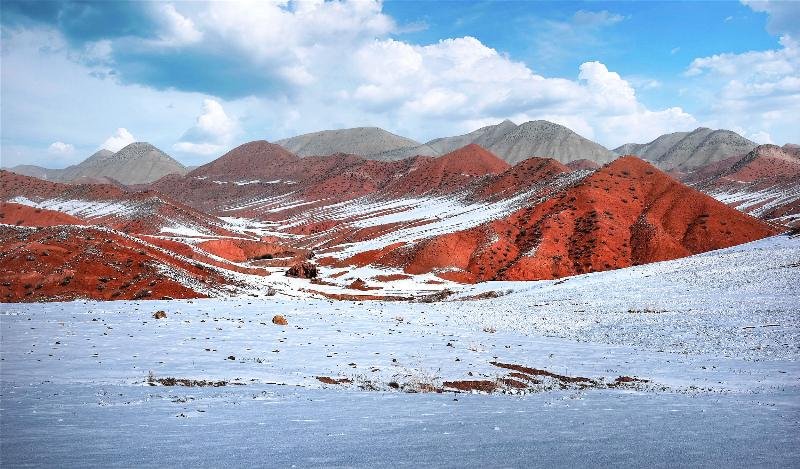
The second reason is the light. The desert around Toksun — flat, pale, edged with low red hills — catches the late sun in a way that turns the basin into a single enormous photograph. I drove the county ring road at 7 p.m. and stopped every few kilometres just to look. The Flaming Mountains guide covers the famous red range nearby, but Toksun’s own horizons are the quieter version.
The poplar tunnels
Planting poplars along every road is a basin-wide habit, but Toksun does it with particular devotion. The trees form continuous green roofs over the narrower county roads, and driving under them in the heat is the only shade for miles. I followed one such tunnel for 12 km, the temperature inside the car dropping a measurable few degrees, and felt like I was moving through a green cave with the desert pressing on both sides.
What to see
Toksun is not a sightseeing town, and that is fine. The draw is the basin itself: the salt flats north of the county, the low red hills to the south, and the endless poplar-lined roads between. A few kilometres out sits a stretch of yardang — wind-carved earth pillars — that you can reach on a graded track; I drove it slowly in a 2WD and it was fine, though a dry wash after rain would change that calculus. Bring water even for a short walk; the heat here takes fluid faster than you feel.
For the headline attractions, base yourself in Toksun and day-trip: the Grape Valley and karez system are an hour east in Turpan, and the Flaming Mountains an easy run. Toksun gives you the authentic basin at a third of the tourist price.
Food beyond the noodles
Banmian is the star, but do not miss the red dates. Toksun grows a small, dense date that locals dry on flat roofs in autumn, and a bag of them is the best trail snack on a hot drive. The county’s night market, such as it is, runs a few stalls of kebabs and cold noodles; I ate a plate of liangpi — cold wheat ribbons in vinegar and chilli oil — and it was the right food for 45°C.
Carry cash for the small stalls; the county ATM worked for me, but the noodle houses and date sellers wanted notes.
When to go
Spring (April–May) and autumn (September–October) are the comfortable windows, with highs of 25–35°C instead of 45°C. Summer is for heat-seekers only; if you come then, drive early and late, rest at midday, and drink constantly. The sun protection guide is essential reading for a basin summer — the UV at this latitude and altitude is brutal, and I burned through a car window in an hour.
Winter is cold and grey, the basin’s other extreme, and the noodle houses quiet down.
Practical notes for the self-driver
– Never let the tank drop below half in the basin. Distances between stations are long and the heat stresses the engine; I topped up in Toksun even though I had half a tank.
– Check tyres in the heat. Hot pavement raises pressure, and a worn tyre can fail on a 47°C afternoon. The Turpan guide has more on basin driving.
– Carry more water than you think. I keep four litres per person in the basin, and have finished two on a short hot walk.
– The G30 through Toksun has speed cameras; the limit drops near the exits. Watch the signs or pay later.
– Park in shade when you can. A car left in the sun here is an oven; I learned to crack every window a centimetre and still returned to a steering wheel too hot to hold.
The hottest stop worth making
Turpan gets the fame and the postcards. Toksun gets the heat without the crowds, and the noodles without the markup. Drive down from the cool of Urumqi, feel the basin close around you like a warm hand, and eat the best banmian of your trip at a plastic table on a side street. The full Turpan loop is worth doing; just promise yourself the Toksun detour on the way, because the hottest town in China feeds you better than the famous one.
The yardang drive
The wind-carved earth pillars south of Toksun are reachable on a graded track that runs about 8 km off the county road. I drove it in a 2WD at walking pace, the tyres humming on the hardpan, and reached a field of low red towers that the wind has been sculpting for millennia. Stand among them at sunset and the whole formation goes the colour of a coal ember, then fades to purple as the light goes. It is free, unsigned, and easy to miss if you are watching the GPS instead of the horizon. After a rain the track can run slick, so I check the sky before I turn off the tarmac; a dry day is the day for it.
Heat survival, specifically
The basin heat is not dramatic; it is relentless. It does not spike, it simply holds you at 45°C for hours, and your body loses fluid without the drama of sweat because the sweat evaporates instantly. I drink a litre every two hours here, eat salty snacks to replace what the heat pulls out, and wear a hat even in the car because the sun comes through the glass. The sun protection guide is the one to read before a basin summer; I burned through a closed window in an hour and learned the lesson expensively.
A morning and an evening
Toksun is best taken in two shifts. Go early — before 10 a.m. — for the yardang and the empty roads, when the air is merely hot rather than punishing. Rest through the midday peak in an air-conditioned room with a cold drink. Come back out at 7 p.m., when the poplar tunnels throw long shadows and the noodle houses fire up for the evening crowd. Splitting the day this way turned a hostile oven into a place I actually enjoyed, and the banmian at dusk was the best meal of the week.
Theft and the car
Park in shade, crack the windows a centimetre, and never leave anything visible. The basin sun will cook a phone left on the dash in minutes, and a thief will note an open glovebox from a hundred metres. The Turpan guide covers the wider basin; Toksun is the low-cost, low-crowd version of the same heat with better noodles.
Costs
Banmian runs 15 to 22 yuan; a plate of cold noodles 10 to 15; dates a few yuan a bag; fuel in Toksun is normal price. A half-day stop with a meal costs under 100 yuan beyond your fuel. For that you get the hottest air in China, the best noodles in the north, and a sunset over red earth that costs nothing at all.
Heat like Toksun’s changes how you travel, not just where. I learned to treat the basin day in two shifts — out early, in by eleven, out again at seven — and to measure water in litres, not bottles. The first time I ignored this I finished a short walk light-headed and spent an hour in a shop drinking cold things; the second time I carried four litres and finished clear-headed. The lesson cost me a headache and taught me a habit I now use across the region.
The poplar tunnels are more than shade; they are the basin’s logic made visible. Every road is lined because every road is a wind corridor, and the trees break the worst of it. Driving under them, the temperature inside the car drops a few degrees and the light turns green, and for a few kilometres the basin feels hospitable rather than hostile. I have driven the Toksun ring road slowly just for that green tunnel, window down, the hot air moving through like a held breath.
If you are continuing to Turpan, fuel and water in Toksun and check the tyres — the heat raises pressure and a weak tyre fails on a 47°C afternoon. The Turpan guide covers the next leg; Toksun is the last easy stop before the famous heat, and the last cheap noodles. Eat well, drink hard, and point the car east with the radiator full.
One more thing: the county’s red dates, dried on rooftops in autumn, are the best trail snack on a hot drive — dense, sweet, and they do not melt. I bought a bag for 10 yuan and ate it across two days of basin driving. Small wins like that are the difference between a survival crossing and a good one.