
Barkol Lake & Grassland: Historic Fortress & Wetlands Guide
I almost skipped Barkol. It’s off the main Ili–Kashgar spine, pinned in the northeast corner of Xinjiang near Hami, and the guidebooks give it a sentence or two before moving on. Then I spent two nights there in August and changed my mind completely. Barkol gives you three things most Xinjiang stops only give one of: a high grassland, a strange shrinking salt lake, and the bones of a Qing dynasty fortress you can actually walk on. I’ve now been twice, once solo and once with a friend who’d never left the Chinese coast, and both times we had the grassland nearly to ourselves while the famous spots 400 km west were packed.
Barkol (巴里坤) is a Kazakh autonomous county under Hami. The lake sits about 18 km west of the county seat at roughly 1,500 meters elevation; the grassland behind it climbs to around 2,000 meters. It’s cold here even in August — I woke to 6°C both mornings — so pack a jacket no matter what the season says. This is a place that rewards the traveler who goes out of the way, and almost nobody does.

The Barkol Fortress: Walking the Walls
Here’s the correction most travel blogs get wrong, and it matters for the story: the fortress wasn’t built in 1709. Barkol has two Qing cities, not one. The Han city (汉城) was built in 1731 under the general Yue Zhongqi during the campaigns against the Dzungar confederation, after he brought 25,600 troops to the area. The Manchu city (满城) followed in 1772 to house Banner troops and their families who were posted here long-term. Together the rammed-earth walls run 5,788 meters and stand about 7 meters high — the best-preserved Qing earthen walls in all of Xinjiang, and a national key cultural relic since 2019. Walking them, you’re stepping on 300-year-old military engineering.
I walked the Han city wall for a full hour and didn’t meet another tourist. The earth is the color of dried mud, packed in 11-centimeter layers you can still see stacked like a giant’s brickwork, with the old watchtower corners holding their shape against three centuries of wind. Stand on the wall at dusk and you understand why they built here: the grassland opens to the north, the mountains wall the south, and nothing moves except the occasional sheep dog. It’s free to walk, unlit, and quietly magnificent.
The Two Cities Side by Side
The Han and Manchu cities sit a few hundred meters apart, an unusual twin layout you won’t see elsewhere in the region. The Manchu city is the more intact rectangle, roughly 1,300 by 500 meters, with four small barbican gates set at right angles to the main gates — a defensive trick so attackers couldn’t charge straight through. Locals call the whole thing 会宁城 (Huining city). Bring a flashlight if you want to explore the gate arches after the light fades, because there are no railings, the footing is loose earth, and a turned ankle out here means a long walk back to town in the dark.
Barkol Lake: Why It’s Shrinking
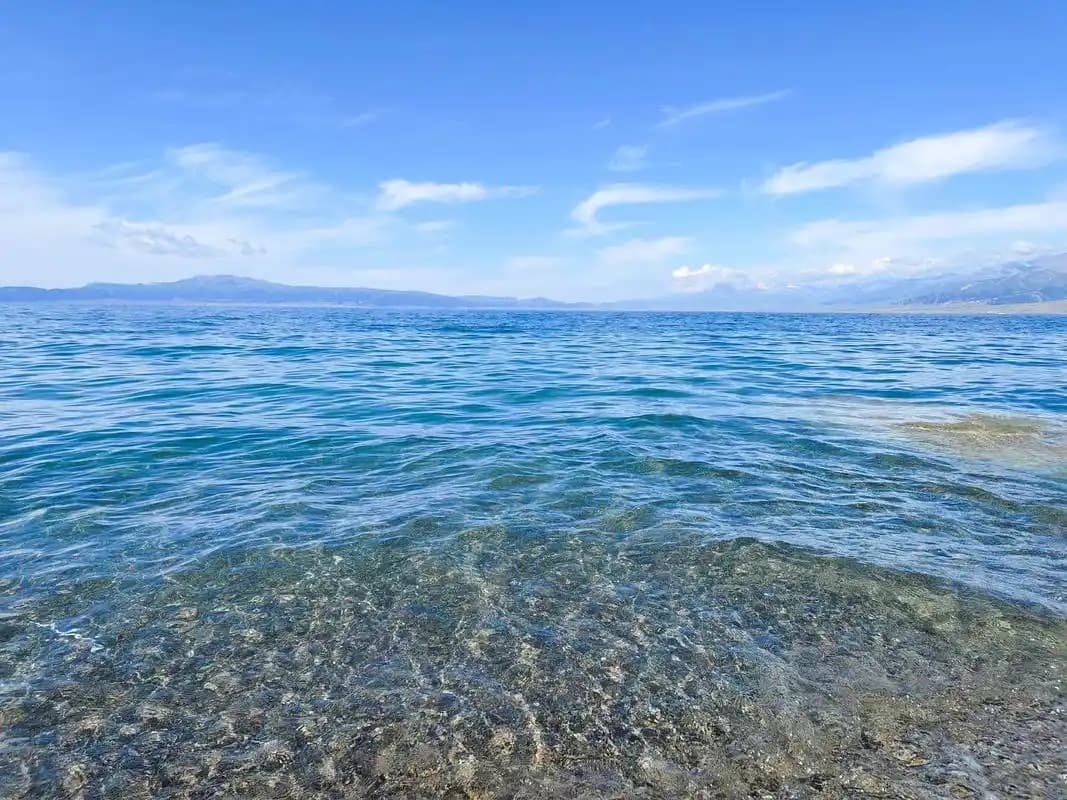
The lake is a saline lake fed by snowmelt and a few springs, and it has been shrinking for decades as inflow drops and the regional climate dries. What you see today is often a thin sheet of water against a vast white salt flat, the brine crust cracking into polygons under the sun, with a faint sulfur smell on still days. It’s not the postcard “blue lake” some Instagram photos promise after a heavy filter — it’s stranger and quieter than that. In wet years the water spreads and mirrors the sky; in dry years it retreats to a silver skim you could almost walk across. I caught it in between, and the white flat against the green grassland, with the Tianshan behind, was its own kind of beautiful, the kind that doesn’t photograph as well as it feels.

| Feature | Detail |
|---|---|
| Lake type | saline / salt flat, seasonal |
| Elevation | ~1,500 m |
| Distance from county | ~18 km west |
| Best visual | July-August, after snowmelt peak |
| Entry | free roadside viewing |
| Nearby wetland | 高家湖 (Gaojia Lake), ~10 km east |
The Grassland: Herder Camps, Summer Only
The Barkol grassland (巴里坤草原) is one of Xinjiang’s larger plains, and in summer Kazakh herder families move up with their flocks and string up yurts in the lee of the hills. I paid ¥150 to sleep in one and was woken at 6 a.m. by a sheepdog and the rhythmic sound of milking just outside the felt. The camps are simple — felt walls, a stove, no shower, a pit toilet a hundred meters off — but the morning view over the dewy grass with the Tianshan behind, the mist still in the valleys, is the entire reason to come. By late September the herders have dropped back down to the county and the camps close; time your visit for June through August or you’ll find empty posts and cold wind.
Birds: Bar-Headed Geese and Raptors
Barkol sits on a migratory corridor, and the wetlands at the lake’s edge and at Gaojia Lake pull in bar-headed geese (斑头雁) on their way over the Himalayas — birds that fly higher than any other, over 7,000 meters — plus various raptors riding the thermals off the grassland. I’m no birder, but even I spotted a dozen geese and two hawks in a single morning near Gaojia Lake, and a local told me the goose count in peak week runs into the thousands. Bring binoculars; the birds won’t let you close, and the wetland has no boardwalk, just dirt tracks that turn to mud after rain.
Getting There: Hami as the Gateway
Most people reach Barkol through Hami. A high-speed train from Urumqi to Hami covers about 600 km in roughly 3 hours (¥180 in second class), then it’s a 140 km drive northwest on the S303 over the Tianshan to Barkol — budget 2.5 to 3 hours, because the road climbs through a gorge and the views slow you down at every bend. I drove it once and stopped four times for photos, including a pass where the whole grassland unfolds below like a green rug. The S303 is paved and fine in summer; in winter it can ice over and occasionally closes, so check conditions before you set off.

Best Time and What to Pair It With
August is the sweet spot: the grass is green, the days are comfortable (high teens to low 20s°C), the herder camps are open, and the geese are moving through. If you want history beyond the fortress, the Jiaohe ancient city guide covers another Silk Road ruin style you can compare it to — Jiaohe is older and drier, Barkol greener and more lived-in. For a different grassland feel, Bayanbulak is the famous alternative to the south, bigger and busier but with the famous nine-bend river at sunset. For overnight planning across the region, the Xinjiang accommodation guide lists the few county hotels (¥160–¥300) and warns you to book ahead in August, when the melon festival crowds fill the rooms.
Getting Around Barkol and What to Eat
There’s no tourist bus loop here, so you need a car or a local taxi negotiated by the day — I paid ¥200 to a county driver to run me to the lake, the grassland camp, and back in an afternoon, and he waited while I shot. The county itself is small and walkable, with a handful of noodle shops and a market where the Hami melons in August are the size of basketballs and cost ¥3 a kilo. Eat the 羊肉焖饼 (mutton with steamed bread) at any county joint for ¥45; it’s the local signature and fills the cold right out of you. The grassland herder camps serve simpler fare — milk tea and boiled mutton — so if you want a real meal, eat in town before you head up.
The Grassland Flowers and the Salt
In July the Barkol grassland throws up a scatter of wildflowers — bluebells, a white daisy, and a yellow pea-flower the herders’ sheep ignore — low to the ground and brief, gone by August when the grass hits its green peak. The lake is working land: locals still rake the salt crust in dry years and the nearby flats produce 芒硝 (mirabilite) for industry, so don’t expect a pristine swimming hole. It’s a working, shrinking, slightly grimy saline lake, and that honesty is part of why I liked it more than the prettier postcard lakes. You come for the whole strange package, not one clean shot.
Summary
Barkol is for travelers who want history and nature in one quiet stop: walk 300-year-old Qing walls, watch a salt lake breathe in and out, and sleep in a Kazakh yurt while geese cross the dawn sky. Train to Hami, drive the S303, and give it two nights in August. I went expecting a footnote and left planning a third trip, and I’ve already told two friends to put it on their route instead of the obvious stops.