
Helicopter and Scenic Flight Tours Over Xinjiang: Seeing the Land from Above
I had driven the Dzungaria Basin for nine days before I ever looked down on it. From the ground, Xinjiang is a puzzle of gravel and salt. From the air, it is a single, brutal, gorgeous composition. My first flight left from a strip outside Urumqi on a clear October morning, and I have been chasing that view across the region ever since.
This guide comes from those flights and from the bookings I have helped friends make. Prices, seasons, and departure points change, but the logic of seeing Xinjiang from above stays the same. I will walk you through where the flights actually run, what they cost in 2025 and 2026, and how to decide whether a seat in a rotorcraft is worth your money.
Why Fly Over Xinjiang at All
The region covers about 1.66 million square kilometers. No traveler sees more than a sliver of it by road. A helicopter tour compresses a week of driving into twenty minutes of vertigo and wonder.
I once spent six hours on the G216 north of Urumqi staring at a brown horizon, only to later fly the same stretch and watch the Tian Shan peel away into snow-fed valleys I never knew existed. The ground lies. The air tells the truth.
There is also a practical side. Some scenery is simply closed to vehicles. Glacier tongues, desert dune seas, and alpine lakes with no road access become ordinary stops when you are above them. You trade immersion for perspective, and on a short trip that trade is usually worth it.
Where the Flights Actually Operate
Forget the brochure line about flying anywhere. Commercial scenic flights in Xinjiang cluster around a handful of hubs. Each has its own character, price, and best season.
Urumqi and the Tian Shan Front
Most first-timers start here. The southern edge of the city opens onto the Tian Shan, and several operators run loops toward Heavenly Lake Tianchi. A standard 15-minute hop costs around ¥1,280 per person in peak season, dropping to roughly ¥980 in the quiet months of April and November.
I flew this route in early October. The lake sat under first snow, a blue coin pressed into white felt. The pilot circled twice so both sides of the cabin got the shot. Bring a camera with a fast shutter; the vibration blurs anything slower than 1/1000 second.
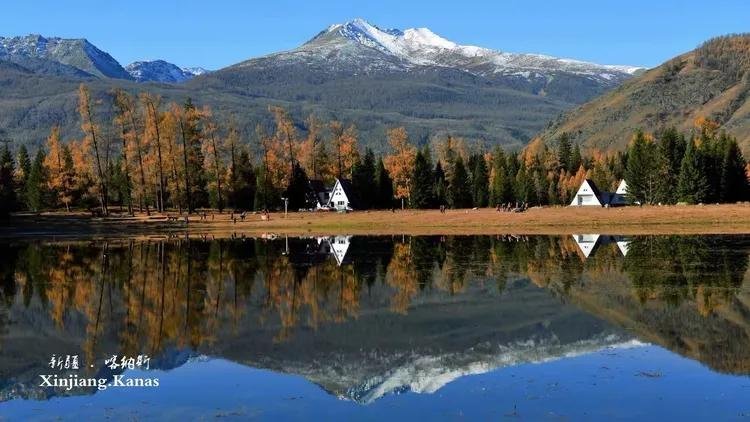
Kanas and the Altai in Autumn
The far north is the prize. Every September the larch forests around Kanas Lake turn gold, and the flight demand outruns supply. A 30-minute scenic loop from the Kanas airfield runs about ¥2,480 per seat, and you will wait your turn behind tour groups from Urumqi and Beijing.
Book this one before you leave home. I watched a couple bargain at the counter for two days and finally pay ¥3,100 each because the scheduled flights were full. September 20 to October 5 is the window; miss it and the gold is gone within a week.
Sayram Lake and the Ili Grasslands
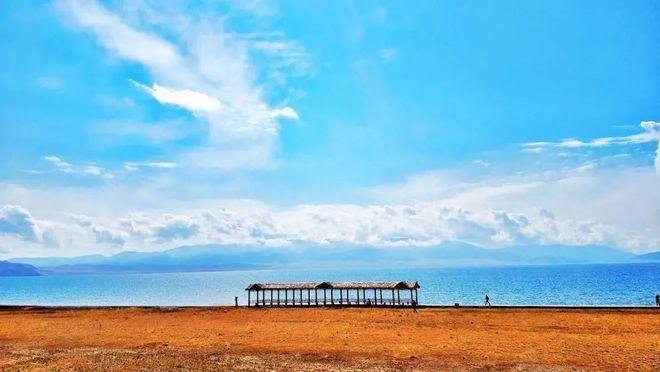
The high blue lake in the west rewards a different kind of flight. Operators based near Bole run 20-minute circuits over Sayram Lake and the surrounding grasslands, priced near ¥1,680. June is best, when the meadows explode with wildflowers and the lake holds its deepest color.
On my June flight a squall rolled off the mountains and the pilot banked hard to stay in clear air. We skimmed the eastern shore at maybe 200 meters, close enough to pick out individual yurts. That closeness is the whole point of a helicopter over a fixed-wing plane.
Helicopter Versus Fixed-Wing and Balloon
Not every “scenic flight” means a helicopter. Knowing the difference saves money and disappointment.
Helicopters give you the hover, the tight turn, the low pass. They are the most expensive option by a wide margin, often three times the cost of a small plane for the same minutes. Fixed-wing Cessna and PAC 750 flights run from a few airfields and cover more distance for less cash, but they cannot stop to stare.
Hot-air balloons operate seasonally over the Turpan basin and near some desert resorts, usually at dawn. I tried one outside Turpan in May. The silence at 400 meters over the grape fields was unlike anything a rotor could offer, but the flight lasted only 45 minutes and drifted wherever the wind chose. Choose the machine for the moment you want.
Age and health shape the choice too. Children under two are usually refused on rotor flights, and anyone with a heart condition should clear the low-pressure climbs with a doctor first. I met a retired traveler in Yining who picked the gentle gondola over the helicopter for exactly that reason, and he got the same ridge line for a tenth of the price.
For travelers who like altitude without the rotor, the region’s cable cars and gondolas climb the same ridgelines far more cheaply, though they follow fixed lines and never leave the valley.
What It Costs, Realistically
Prices below are what I recorded across 2024 and 2025 bookings, rounded to the nearest ¥50. Treat them as a floor; holiday weekends tack on 20 to 40 percent.
A short city-edge helicopter hop, 10 to 15 minutes, runs ¥950 to ¥1,300. A signature destination loop of 25 to 35 minutes costs ¥1,800 to ¥2,600. Private charter by the hour starts around ¥9,000 and climbs fast with distance and landing fees.
Fixed-wing scenic flights sit lower, about ¥680 for a 20-minute circuit. Balloon rides hover near ¥1,200 including transfer. None of these include park entrance, which you often pay separately even when landing inside a reserve.
Budget a full half day for any flight. Transfers to remote airfields eat time, and weather holds are common. My Kanas flight was delayed four hours by morning fog; the operator refunded nothing but eventually flew us at noon when the valley cleared.
Booking, Paperwork, and Fine Print
You cannot simply show up and fly. Chinese civil aviation requires ID at the desk, and foreign visitors must present a passport. Carry it even for the balloon; operators log every passenger.
Book through the operator’s official WeChat mini-program or a registered travel agent. I avoid third-party resellers who promise “guaranteed flights” because weather cancels flights daily and those sellers rarely refund quickly. Pay with a card that handles foreign transactions and keep the confirmation screenshot.
Weight matters. Most helicopters cap per-seat load near 100 kilograms including bags. A heavy backpack goes in the hold, not the cabin. Tell the desk your weight honestly; they balance the aircraft and an understated number can ground the flight.
Insurance is usually bundled into the ticket price, but read the clause. Some cheap fixed-wing operators sell a bare fare and push a separate ¥30 cover at the gate. Take it. The terrain below is unforgiving and a precautionary landing in the mountains is not free.
Season, Weather, and the Best Window
Xinjiang’s weather is the real boss of any flight plan. The north freezes hard from November to March, and most Altai operations shut completely. The Tian Shan flies year-round but winter brings sudden whiteouts.
My own rule: aim for late May through June in the west and Ili, July and August for high glaciers, and September into early October for Kanas and the northern forests. Avoid the sandstorm weeks of March and April in the Tarim basin; I lost a Turpan balloon to wind two years running in that stretch.
Morning flights beat afternoon ones almost always. Thermals build after 11 a.m. and turn the air rough. Every smooth ride I have had lifted before nine. Set an alarm, eat lightly, and get to the strip early.
Safety and What to Expect in the Cabin
These are working aircraft, not theme-park rides. The cabin is loud even with the headset they hand you. Conversation happens through the microphone, and the pilot narrates landmarks if you ask.
Do not open anything during takeoff and landing. Doors are sometimes removed on photography flights for a clear lens; if yours is, wear the harness they give you and keep a firm grip on your phone. I nearly lost a lens cap over the Taklamakan on a door-off hop near Hotan, and the pilot just laughed.
Motion sickness is real. The hover and pivot motions are gentler than a small plane’s banks but still unfamiliar. I take a mild remedy an hour before and skip the heavy Urumqi breakfast. Ginger chews help if you prefer the natural route.
If you want more than a passive ride, the region’s zip-line and via ferrata routes let you earn the altitude on your own terms, though they demand a steadier head than any helicopter seat.
Photography From the Air
The window is your lens’s only friend. Shoot through open glass only when the operator allows it; a dirty pane ruins a thousand-dollar view. Set your camera to shutter priority around 1/1600 and let the ISO float.
Window glare is the silent killer of aerial shots. Press the lens hood flat against the glass and shade it with your free hand. I learned this over Bosten Lake when a reflection of the cabin wall ate half my frame.
Shoot in bursts during turns. The best composition appears for two seconds as the aircraft banks, and you will miss it with a single press. Memory is cheap; restraint is not your friend in the air.
Sample Itineraries That Actually Work
A flying day needs buffer. Here is the shape of two trips I have run with travelers who trusted the plan.
The northern premium: fly into Urumqi, drive to Kanas over three days, and book the Kanas helicopter loop on your second morning there. Budget ¥2,500 for the flight and a full day of patience. Follow with the lake shore on foot the next day while the image is fresh.
The western value: fly to Yining, transfer to Sayram Lake, and take the 20-minute circuit at dawn for ¥1,680. Pair it with a grassland drive through the Ili valleys and a balloon over the basin if the season allows. Total air spend stays under ¥3,000 and the variety is better than chasing one expensive hop.
My Honest Verdict
A scenic flight is not the soul of a Xinjiang trip. The slow roads, the night markets of Kashgar, the long conversations over laghman noodles, those are the trip. The flight is the exclamation mark.
Spend the money once, on the view you cannot get any other way. For most travelers that means Kanas in autumn or Sayram in June, not a generic city circle. Choose the singular image, book it early, and let the rest of Xinjiang unfold slowly beneath your wheels.
I still think about that first October morning out of Urumqi, the Tian Shan unfolding like a map someone finally let me read. The ground had lied for nine days. Twenty minutes up, and it told me everything.