
Urumqi to Kanas: The Self-Drive Route I’d Do Again Tomorrow
Urumqi to Kanas: The Self-Drive Route I’d Do Again Tomorrow
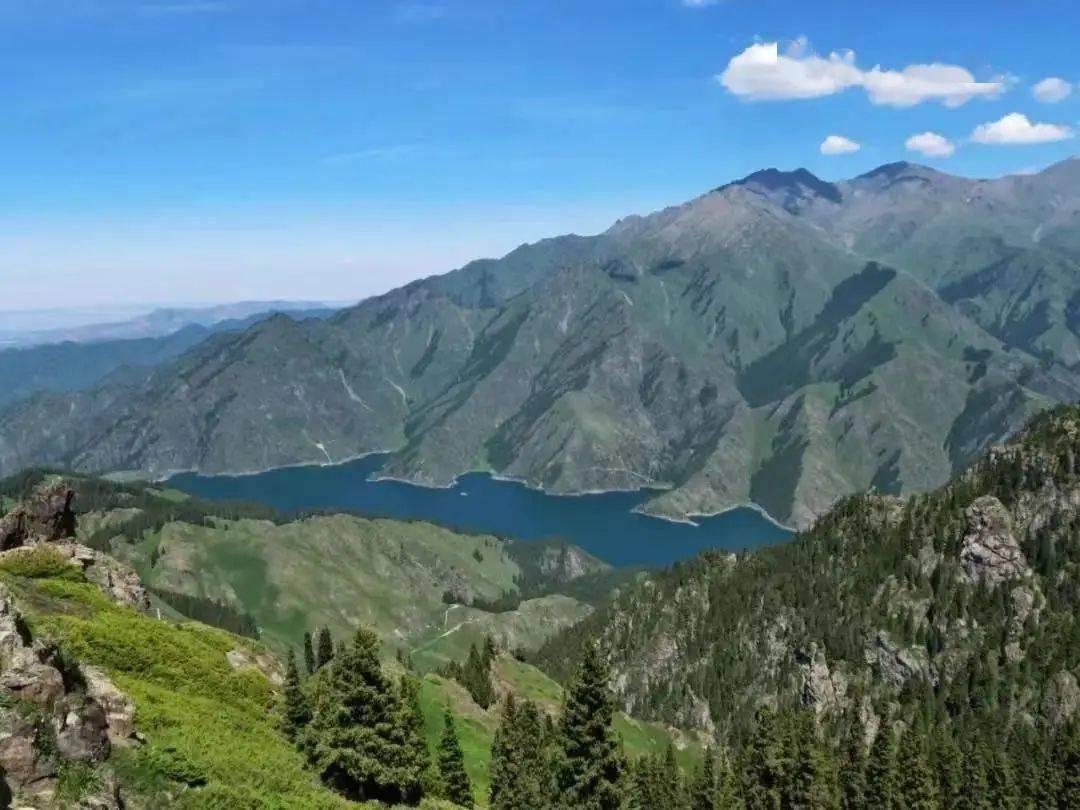
Last June I pointed a rented 2WD SUV north out of Urumqi at 6:40 in the morning, coffee in the cup holder and a rough idea that Kanas Lake sat about 700 km away. Eleven hours and three fuel stops later I was standing at the wooden viewing platform above the emerald water, watching mist roll off the surrounding larch forest. It remains the best single driving day I have had in China.
This is the route most first-time visitors to northern Xinjiang actually want but struggle to plan: a long, mostly highway run from the regional capital to the province’s most famous alpine lake. The best time to visit Xinjiang matters here more than almost any other decision you make, because the road and the lake change completely between July and October.
Below is the exact line I drove, where I stopped, what it cost, the permit wrinkle nobody mentions, and the one mistake that cost me three cold, dark hours.
Why drive it instead of flying or taking the train
Urumqi and Kanas connect by daily flights to Burqin (the nearest airport, roughly 130 km from the lake) and by an overnight train to Beitun followed by a bus. Both options work. Neither gives you what the car gives: the freedom to pull over where the Duku Highway splits off, to watch the land green as you climb toward the Altai, and to arrive at the lake on your own schedule rather than a tour bus’s.
If your trip is short, fly. If you have at least four days for the north and you want to control your own rhythm, drive. I did the round trip in five days and would do it again exactly the same way.
The route, day by day
Day one: Urumqi to Burqin, about 620 km, mostly on the G216 and G217. The first 200 km is flat desert highway where the speed limit is 120 km/h and the patrol cars are real. I filled up in Fukang and again in Karamay; both cities have large, foreigner-friendly stations that take Alipay and bank cards.
Burqin itself is worth a night. It is a small river town with a famous night market (the “Cold Water Fish Street”) where I ate grilled pike and a bowl of laghman for 38 yuan. The town sits at roughly 480 m elevation, so it is a gentle warm-up before the climb.
Day two: Burqin to Kanas Scenic Area, about 130 km on the S232. This is the pretty part. The road follows the river, the trees close in, and the air gets that cold, clean smell. You reach the ticket gate at Jiadengyu, about 30 km before the lake, where you hand over your passport and your entry ticket.
Day three: a slow day at the lake. Day four: drive back. I added a half-day at Hemu Village, a Tuvan settlement of timber houses about 40 km away, and it was the highlight of the whole trip.
The permit nobody tells you about
Kanas sits inside a protected scenic area, not a closed border zone, so most foreign travelers do not need a special border permit to enter. What you do need is your passport to buy the entry ticket, and you must carry it everywhere inside the park. I left mine at the guesthouse one morning and was turned back at a checkpoint 8 km from the lake. That was my three-hour mistake.
If you plan to continue past Kanas toward the Kanas Lake northern shore or toward the international border areas, rules tighten and you should read the current border-permit requirements before you leave Urumqi. For the standard Urumqi–Kanas–Hemu loop, passport plus ticket is enough.
What it actually costs
My five-day trip, driving solo, ran like this. Car rental: a 2WD Toyota-style SUV at 320 yuan per day including basic insurance, booked three weeks ahead, total 1,600 yuan. Fuel: about 95 litres round trip at an average of 7.4 yuan per litre, roughly 700 yuan. Park entry: 230 yuan for the Kanas ticket plus 100 yuan for the shuttle bus inside the park. Hemu entry: 106 yuan. Guesthouses: 260 yuan per night in Burqin, 420 yuan per night inside the scenic area where prices jump because supply is limited. Food came to about 150 yuan a day, heavy on grilled fish and laghman noodles.
All in, the drive cost me around 4,200 yuan excluding flights to Urumqi. Split between two or three people in the same car, the per-person number drops fast, which is why this route is such good value as a small group. I met a Swiss couple who shared a 4WD and landed at under 1,500 yuan each for the whole loop, rooms included.
Driving conditions and fuel
The G216 and G217 are paved, well-marked, and busy with trucks. The S232 into Kanas is narrower and has speed bumps near villages, but it is in good shape. I never felt the need for 4WD on this route in summer; the only place it would help is deep-winter snow, and the park largely closes then anyway.
Fuel is never a worry on the main line. Karamay and Burqin both have big stations. Fill up before the final 130 km into Kanas, because the stations inside the scenic area are limited and pricey. I learned this the hard way and paid 1.2 yuan more per litre at the Jiadengyu pump, about 50 yuan I could have avoided.
The G216: what the highway is really like
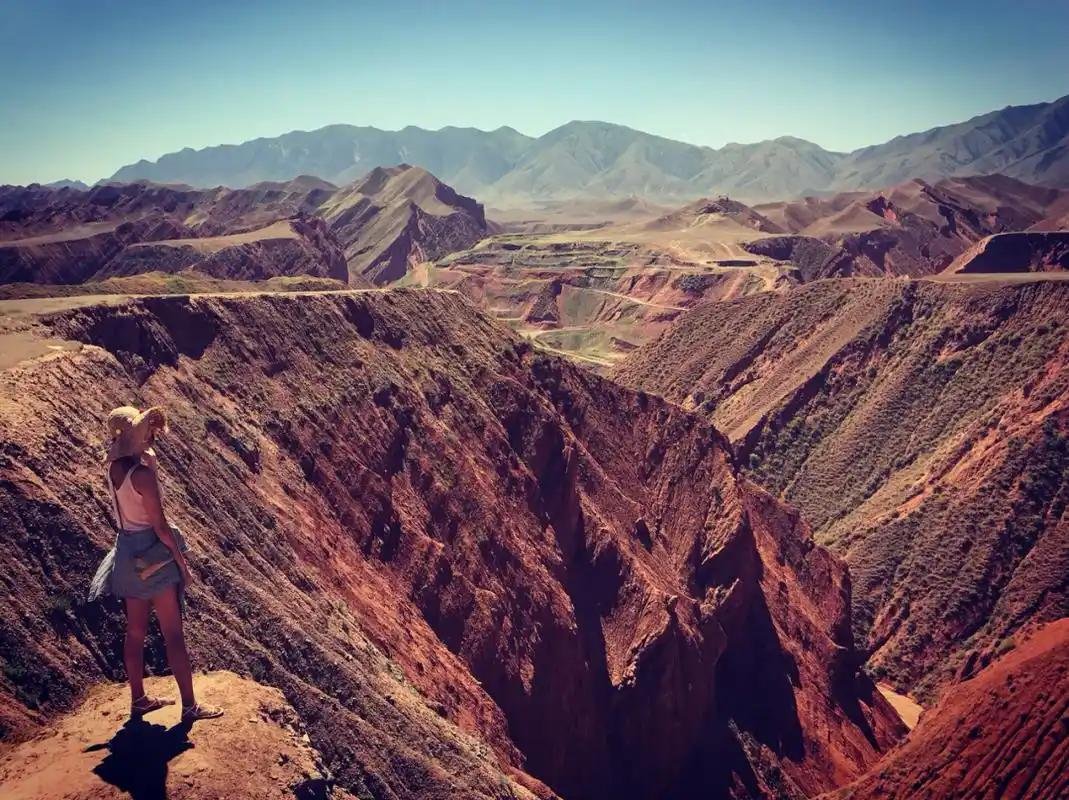
People picture Xinjiang driving as empty desert, and the first stretch from Urumqi south toward Fukang is exactly that: long straight lines, distant mountains, and the occasional camel fence. Past Karamay the land opens into the Junggar Basin, flat and tawny, with pumpjacks nodding in the distance like slow metal birds. It is hypnotic and a little dull, which is why I built in a stop every two hours. Screen fatigue on these roads is real, and a 20-minute break at a service area resets you better than another coffee.
Truck traffic is heavy on the G217, especially near the oil fields, and the big rigs do not slow for tourist cars. Keep right, pass on the straights only, and never draft a truck through a curve. I saw one near-miss at a blind crest and have kept my distance ever since.
A note on the nearby border areas
Kanas sits close to where China meets Kazakhstan, Russia, and Mongolia, and the wider Altai region has restricted zones. For the standard Urumqi–Kanas–Hemu loop you need only your passport and park ticket. If you want to push north toward the international border posts, the rules tighten and you should read the current travel permit requirements before you leave Urumqi, because some checkpoints turn back foreigners without the right paperwork.
When to go
July and August are green and busy, with wildflowers across the alpine meadows and daytime highs around 22°C at the lake. September is the sweet spot: the larches turn gold, the crowds thin after the mid-autumn holiday, and the light is absurd. By early October the lake road can see frost, and some guesthouses close.
I went in June and caught the tail of spring snow on the peaks, which was stunning but meant cold mornings near 5°C. Pick your month by the picture you want, not by convenience, and remember the best time to visit shifts a little each year with the snow line.
My practical mistakes, so you skip them
First, book the in-park guesthouse early. The 420-yuan room I got was one of the last; a family behind me was turned away and had to drive 30 km back to Jiadengyu. Second, carry your passport. Third, download offline maps before you leave Urumqi, because signal drops for long stretches on the S232.
Fourth, and this one surprised me: the lake itself is a 20-minute walk from the main parking, but the best view is from a higher platform another 40 minutes up a wooden stair. Most people stop at the first railing. Walk the extra stairs. That is where the photograph everyone posts actually comes from.
A slower alternative: the train plus local car
If eleven hours of driving sounds like too much, there is a gentler version I have used with older companions. Take the overnight train from Urumqi to Beitun (about 11 hours, soft sleeper around 400 yuan), then rent a car in Beitun or Burqin for the final leg to Kanas. You skip the long highway slog, arrive rested, and still get the freedom of a car for the lake and Hemu.
The trade-off is a little more logistics and a slightly higher total cost once you add the train and the local rental, but for anyone who finds long drives tiring it is the better plan. The train guide covers the classes and booking, and Beitun’s rental desks are used to foreigners doing exactly this.
I tried it on a trip with my mother and we both preferred it: a real bed instead of a windshield, and a fresh start at the lake. The only catch is booking the sleeper early in summer, when it sells out. Do that a week ahead and the rest is easy.
One more option worth knowing: a private driver for the Urumqi–Kanas run costs roughly 1,200–1,600 yuan a day including the car, which splits kindly between three or four people and removes the fatigue of you being both navigator and chauffeur. For a group that wants the route without the effort, it is the sweet spot, and it lets everyone watch the landscape instead of the road.
Last thoughts on the drive north
If I could send my pre-trip self one note, it would be to leave earlier and book the in-park room sooner. The 6:40 start saved me from a hot, crowded afternoon at the lake, and the booked room meant I actually watched the dawn instead of fighting for one. The Urumqi–Kanas drive rewards people who plan the boring parts, because the interesting part at the end is fixed and beautiful no matter what.
I would also tell myself to bring more than one layer even in June, because the lake morning was colder than the forecast promised, and to download the offline map before leaving the city, because the signal on the S232 is patchy in a way that surprises first-timers. Small things, but they are the difference between a good trip and an easy one, and the north is worth doing easy.
The bottom line
Urumqi to Kanas is a long day of driving wrapped around one of the most beautiful lakes in Asia. It rewards preparation and punishes carelessness in equal measure. Give it four or five days, keep your tank half full, and walk further than the crowd does. The road is the trip, and the lake is the reward at the end of it.