
Best Time to Visit Kanas: A Month-by-Month Breakdown
I Have Been to Kanas in Four Different Months. Here Is the Truth
Kanas Lake sits in the Altai mountains of northern Xinjiang, near the border where China meets Kazakhstan, Russia, and Mongolia. It is the one place in the region that foreign travellers ask me about most, and almost always with the same question: when should I go? I have driven up there in May, July, September, and December. Each trip felt like a different country. This is a straight month-by-month breakdown from someone who has stood on that lakeshore in half a metre of snow and in shirt-sleeves.
Kanas in Spring (May to early June)
May is the quiet shoulder. The road from Burqin is clear of snow by mid-month most years, but the lake itself can still be half frozen and the surrounding birch trees are bare. I went in mid-May 2022 and had the east boardwalk almost to myself. The downside is the colour: brown grass, grey water, no leaves yet. Temperatures ran 5 to 18 Celsius. If you hate crowds and want the cheapest rooms (I paid ¥220 for a cabin that is ¥900 in August), May is honest value. Just do not expect postcard green.
Kanas in Summer (July to August)
This is peak season and it shows. July and August bring wildflowers on the upland meadows, warm days of 20-28 Celsius, and the lake at its bluest. It also brings Chinese school-holiday crowds. The shuttle buses ran every few minutes and the village bakery had a 20-minute queue at 09:00. I still enjoyed it, but the calm I love about Kanas was gone. If you must come in summer, arrive at the lake before 09:00 and stay inside the scenic area overnight so you beat the day-trippers from Burqin.
Kanas in Autumn (September to early October)
This is the answer most people want, and it is the right one. From roughly September 20 to October 10, the birch and poplar forests turn gold, the sky is reliably clear, and the temperature sits in a comfortable 8-20 Celsius range during the day. I drove up on September 28, 2023, and the hills above Hemu Village were a solid sheet of yellow against a sharp blue sky. Photographers call this the window, and they are right. The catch is that everyone else knows it: rooms inside Kanas and Hemu book out weeks ahead and prices triple. Book by late August if you want autumn.
For the broader foliage picture beyond Kanas itself, my route notes on northern Xinjiang foliage routes cover the whole golden loop. And if you are fixing dates, the September peak autumn guide explains why the last week of the month is the sweet spot.

Kanas in Winter (November to March)
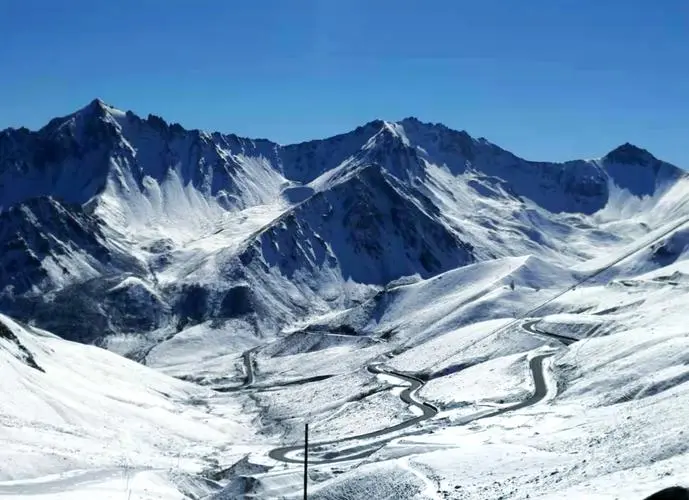
I went in December and wrote about it at length in my winter itinerary. The lake freezes, the forests are snow-laden, and the silence is total. Daytime temperatures hit minus 20 Celsius. It is spectacular and almost empty, but it demands winter tires, snow chains, and respect for the cold. The scenic area shortens its hours and some restaurants close. For a first visit, I would not start with winter; do it once you know the layout in a warmer month.
Month-by-Month Quick Table
- May: Empty, cheap, brown. Good for solitude, weak on scenery.
- June: Green returns, wildflowers start, still few crowds. My sleeper pick.
- July-August: Blue lake, warm, packed. Book everything early.
- September (late): Gold foliage, clear skies, crowded and pricey. The classic.
- October (early): Last of the colour, colder nights, thinning crowds. Underrated.
- November-March: Snow, ice, silence. For confident winter drivers only.
How the Weather Actually Behaves
Kanas sits around 1,300 metres at the lakeshore and the surrounding peaks top 2,500. That elevation means weather flips fast. I have seen sun, hail, and snow in a single September afternoon. Pack a waterproof shell even in summer. Mornings are always cold relative to midday; the gap can be 15 Celsius. The lake itself is glacial-fed and stays around 6-8 Celsius year round, so nobody is swimming, but the shoreline walk is the main event regardless.
Getting There and Timing the Gate
Most foreigners self-drive from Urumqi via Burqin, about 700 km total over two days, or fly to the small Kanas airport (seasonal) and rent locally. The scenic area uses a combined ticket (about ¥100 in winter, ¥230 in peak summer including the shuttle). The gate opens around 08:30 in summer and 09:30 in winter. I always enter at opening: the light on the water is best and the tour groups have not arrived. For the full driving approach, the northern Xinjiang loop is the route I use, and the dedicated Kanas Lake guide has the gate and shuttle details.

Where to Stay and Why It Changes the Month
Inside the scenic area, you have Kanas village (mid-range wooden hotels, ¥400-¥900 by season) and Hemu Village (cabins, ¥280-¥1,000). Staying inside is the single biggest factor in a good trip because it lets you reach the viewpoints before the shuttles dump the day crowds. In May and October you can often walk up and find a room; in late September you will be turned away without a booking. I learned to reserve through the official platform three weeks out for autumn and one week out for spring.
Hemu deserves its own night. The Hemu Village guide explains the sunrise platform and the wooden-bridge walk I rate as the best easy stroll in the whole region. Go at first light; the smoke from the cabins against the gold forest is the image everyone carries home.
Avoiding the Two Big Mistakes
The first mistake is showing up for autumn without a room. The second is visiting in high summer and complaining about people. Match your tolerance for crowds to the month before you buy the ticket. If you want the famous beauty shot, late September is non-negotiable; if you want peace, June or October are better trades.
What to Pack by Season
The kit changes more than you would expect. In May and October I carry a warm fleece and a light rain shell; the mornings at the lake are cold enough for breath to fog. In July and August the shell stays but the fleece becomes a single long-sleeve, and the real item is sun protection: SPF 50, a brimmed hat, and lip balm, because the alpine UV at 1,300 metres burns faster than the temperature suggests. In winter the list is serious: down jacket rated to minus 25, insulated trousers, two glove layers, and chemical hand warmers. I keep a thermos year round; the lake wind cools you faster than the thermometer says.
The Crowd Calendar
If crowds decide your month, here is the honest shape. Late May to mid-June is the calmest, with maybe a tenth of peak volumes. July and August are the worst, especially the first three weeks of August during the school holidays, when the shuttle queues at the Kanas gate can run 40 minutes. Late September is busy but moves; the crowds are there for the colour and most are at the main viewpoints by 11:00, so early entry still buys you quiet. October drops off sharply after the National Day holiday ends around October 7. Winter is empty almost everywhere except the ski adjacent towns.
Photo Timing
The light on Kanas is best in the first two hours after sunrise and the last hour before sunset, same as anywhere, but the famous “morning mist on the lake” shot needs still air and a temperature inversion, which happens most reliably in September and October. Hemu’s sunrise platform fills by 06:30 in autumn, so if you want a spot with a tripod, be there at 06:00. I have had my best frames on overcast mornings when the gold forest reflected flat and even in the water, no harsh shadow. Do not chase only blue skies; the moody grey days photograph beautifully and the trails are empty.
Wildlife You Might See
Kanas is one of the few places in Xinjiang where large wild animals are part of the experience. The protected area is famous for the “Kanas monster” legend, but the real residents are more interesting: herds of deer near the meadows at dawn, the occasional eagle over the lake, and the domesticated horses and yaks that graze the high pastures. I watched a stag cross the eastern shallows one September morning and stood still for ten minutes. Bring binoculars; the animals are shy and the distances are long. The quieter the month, the more you see, another small point for June and October over the busy peak.
How I Booked and What It Cost Me
For my September 2023 trip I booked the Kanas and Hemu cabins through the official scenic-area platform three weeks ahead and paid ¥720 a night for a wooden room that was ¥260 in May; the autumn premium is real. The combined ticket was ¥230 with the shuttle, against ¥100 in winter. Fuel from Urumqi and back ran about ¥900, and food was modest because I ate simply. Total for two people, five days, was around ¥3,400 excluding the car rental. The lesson: the scenery is free, but the autumn room is the single biggest cost, and booking early is the only way to control it. The budget breakdown has the fuller line items if you are planning.
The Kanas Airport Shortcut
If you do not want the long drive from Urumqi, there is a small airport at Kanas (seasonal, roughly June to early October) with flights from Urumqi that take about 90 minutes. I have not taken it, but travellers I met did and saved a full day of driving each way, at a price: the flights are pricier and weather cancels them more often than the trains. If you fly, rent a car or join a shuttle at the airport for the in-area driving, because the scenic spots are spread out. For a first visit in autumn, I would still drive once for the approach through Burqin, but the airport is the smart play if your time is short and the weather holds.
A Closing Thought on Crowds
The month you pick is mostly a decision about people. Kanas is a famous place, and fame brings bodies; the only variables are how many and how cold. If you cannot travel in the quiet months, do not cancel the trip, just plan for the crowds: stay inside the area, wake at first light, and treat the shuttle queues as part of the experience rather than an insult. The lake does not change because others are there; your experience of it does, and that is yours to manage with timing. I have had crowded and empty Kanas, and the empty one was better, but the crowded one was still a place I am glad I saw.
My Recommendation
If you can choose one window, I send most travellers to the last week of September. You get the gold without the worst of the August heat and with slightly fewer people than early October, when cold nights start turning some visitors back. If you want my personal favourite and do not mind missing the peak colour, the first three weeks of June offer green valleys, empty trails, and prices that feel like a different century. Either way, stay inside the area and wake up early. Kanas rewards the patient far more than the efficient.