

A Xinjiang Food Tour by Car: Eating Your Way Across the Region
A Xinjiang Food Tour by Car: Eating Your Way Across the Region
The best meal I ate in Xinjiang was not in a restaurant. It was a flatbread pulled hot from a roadside tandoor at 8 a.m. in a village whose name I could not pronounce, eaten standing next to a truck driver who shared his walnuts. Xinjiang food is the kind of cooking that rewards movement: the farther you drive, the better and weirder it gets. This is a road-food plan, not a restaurant list, because the road is where the good stuff lives.
For finding sit-down meals, the halal restaurant finder and dining card is the tool I keep bookmarked. And if you eat plant-based, read the vegetarian and vegan survival guide before you assume the region is all meat, because it is not.
Breakfast on the road
Start days with samsa, the baked buns filled with lamb and onion, pulled from a clay oven at markets across the south. In Kashgar the International Bazaar opens early and the samsa there are the standard by which I judge every other. Pair them with black tea and a spoon of rock sugar. A real breakfast runs 8 to 15 yuan and sets you up for a morning drive.
In the north, near Yili, the morning move is milk tea with a fried dough twist called sankuaizi. The dairy up there is richer than in the desert south, and the herders sell it straight from the cow. I once paid 5 yuan for a bowl of fresh yogurt thicker than pudding.

The lunch pull-off
Highway service areas in Xinjiang have improved enormously, but the food inside is generic. The trick is to exit at the county town ten kilometers before the area and eat at a local noodle house. The road-food and service-area guide maps the towns worth the detour. A bowl of laghman with hand-pulled noodles and sauteed tomato, pepper, and lamb is 18 to 25 yuan and beats any highway burger.
Carry your own water and a cooler. The food hygiene and stomach guide is blunt about this: the food is safe, but your gut is not used to the oil load, and a cooler with yogurt and fruit between heavy meals keeps you on the road instead of in the hotel bathroom.
Fruit you will brag about
Xinjiang fruit is a different species from supermarket produce. The melons around Hami and Payzawat are the headline, but the real prize is the apricots of Kashgar in June and the seedless grapes of Turpan in August. The Payzawat melon-country guide shows you where to buy at the field gate, often for a third of city prices, and the farmers will let you taste before you buy.
Dinner, the long way
Nights are for the grill. Every town has a chuanr stall where lamb is cubed, salted, and rolled in cumin over coals. The good ones have a queue of locals by 9 p.m. In Urumqi’s night market the spreads run to a hundred dishes; in a small oasis town you might get exactly four, and they will all be perfect. Budget 40 to 60 yuan for a filling dinner with tea.
Do not skip the polo, the Xinjiang pilaf of rice, carrot, and lamb raisin, cooked in a single vast wok and scooped into bowls. It is the everyday fuel of the region, and a proper version in Hotan or Kashgar is worth a detour of its own.
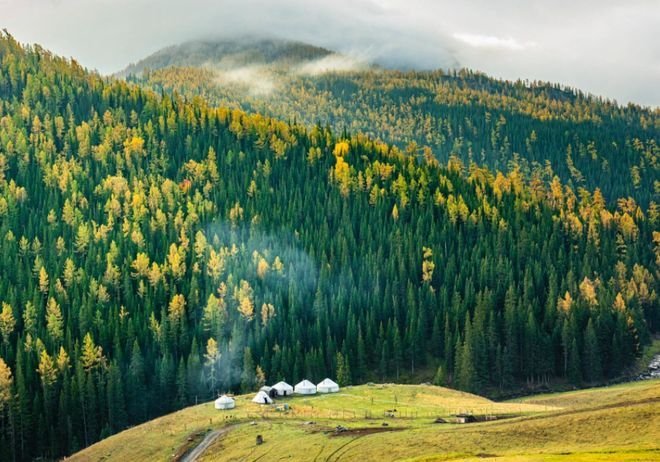
A four-region eating loop
North for dairy and grasslands around Yili. East for melons in Hami and grapes in Turpan. South for the grills and bazaars of Kashgar and Hotan. West for the Pamir trout and the high-altitude noodle soups near Tashkurgan. Two weeks covers all four if you are willing to drive four hours between food zones, which you should be, because the drives are the point.
Staying well while eating everything
Pace yourself. The oil is heavier than Western food, the portions are generous, and the temptation is to eat five meals a day. I ate two proper meals and snacked on fruit between, drank bottled water, and skipped tap water for brushing in the smallest towns. Nobody on my trips has gotten sick doing it that way.
A food tour of Xinjiang is the easiest trip to justify and the hardest to forget. The landscapes are the postcard, but the food is the part you tell people about when you get home. Drive hungry, stop often, and let the next pull-off decide dinner.
Markets and the art of the morning shop
The best food in Xinjiang is in the morning market, before the heat and before the crowds. In Kashgar the Sunday bazaar is famous, but every day the International Bazaar’s food section opens early with fresh samsa, stacks of flatbread, and pyramids of dried fruit. I made a habit of buying breakfast at the market and packing fruit for the car. A bag of seedless grapes from Turpan and a loaf of hot naan kept us fed through a long desert drive for under 20 yuan.
Learn three words: nan (bread), samsa (bun), and chay (tea). With those and a point at the thing you want, you can eat well in any town without a menu in English. Vendors respond to curiosity, not fluency, and a laugh over a wrong order often ends with a free sample.
Sweet things and the ice-cream surprise
Xinjiang grows some of the sweetest fruit on earth, and the dried versions travel well. I brought home kilos of dried apricots, raisins, and the knife-shaped chips of Hami melon that keep for weeks. The surprise was the ice cream: in Urumqi and the big southern cities, local dairy ice cream rivals anything in Europe, made with the rich milk of the northern pastures. A cone on a hot evening in Kashgar became a daily ritual.
Nuts are the other travel trophy. Walnuts, almonds, and the local pine nuts are cheap by the kilo and make a perfect car snack. Buy from a vendor with a scale in the open and you will pay local price, not tourist price.
A sample food-day on the road
7:30 breakfast at a market, samsa and tea. 10:30 a roadside melon bought at a field gate. 13:00 lunch at a county noodle house, laghman with tomato and lamb. 16:00 yogurt and fruit from the cooler. 20:00 dinner at a chuanr stall, grilled lamb and polo. That day costs roughly 80 to 120 yuan per person and touches four regions of flavor. Repeat it across two weeks and you will have eaten the region more completely than any single restaurant could manage.
The food tour is the easiest trip to love in Xinjiang because the food comes to you. Drive hungry, stop often, ask for the local thing, and the region feeds you better than you expected. The diet is heavy, so walk it off at every scenic stop, and the scale at home will forgive you.
Drinks: tea, milk, and the yogurt surprise
Tea is the backbone of every meal. In the south it is black tea with milk and a cube of rock sugar; in the north it is milk tea with salt and butter, an acquired taste that grows on you after a cold morning on the steppe. I drank it at every stop and it became the through-line of the trip, a small warm ritual four times a day. Vendors refilled the glass before you finished, and refusing felt rude, so I learned to sip slowly.
The fresh yogurt of the north is the sleeper hit: thick, tangy, unsweetened, sold by the ladle at market stalls. I ate it with honey and walnuts and called it breakfast. The factory yogurt drinks in shops are fine too, but the stall version is the memory. Carry your own spoon or use the provided one; either way, do not skip it.
Staying well while eating widely
The oil is heavier than most Western palates expect, and the portions assume you worked for your meal. I balanced heavy dinners with fruit and yogurt, drank bottled water, and kept a roll of toilet paper in the car because not every stop has it. Nobody in my group got sick doing it that way, and the food was the highlight they still talk about. Eat boldly, hydrate harder, and the region feeds you better than any itinerary promised.
Street food versus the restaurant
The stalls beat the restaurants here, almost every time. A chuanr stall with a local queue has earned its reputation nightly for years; a sit-down place with a glossy menu and English photos is often cooking for the tourist, not the town. I ate at the stall with the longest local line and never had a bad meal. The rule of thumb: if the grill master ignores you because he is busy with regulars, you are in the right place.
Bringing the flavor home
Dried fruit, nuts, and sealed spice mixes travel well and make the trip last past the airport. I shipped a box of Hami melon chips and Hotan walnuts home from the post office in Kashgar for a few dozen yuan, and they arrived intact. Fresh produce will not clear agricultural inspection at the border, so buy the dried versions for the suitcase and eat the fresh ones on the road. The pantry you build in Xinjiang outlives the sunburn.
Final thought
A Xinjiang food trip rewards the curious and punishes the hurried. Step off the highway, find the stall with the local queue, and order the thing you cannot pronounce. The region feeds the traveler who engages, and the memories are in the market at eight in the morning, not the hotel at eight at night. Drive hungry, eat often, walk it off, and the diet becomes part of the adventure rather than a footnote to it.
One practical note: carry small cash for the markets. The best stalls do not take cards, and a handful of notes buys you the freshest melon and the warmest welcome. I kept a roll of small bills and never haggled hard; the difference of a few yuan is nothing next to the meal you remember for years.