

Korla Fragrant Pears: Orchards, Markets and a Self-Drive Fruit Loop
The first time I bit into a Korla fragrant pear I was standing in the red dust of a roadside orchard south of Korla, a late-August sun already sliding behind the Tianshan. The grower handed it to me unwashed, still faintly warm from the branch. I expected something close to the small European pears I grew up with. What I got was closer to a crisp apple wearing the perfume of a rose garden, sweet to the core with a snap that no imported pear from a supermarket shelf had ever shown me. I ate three before I reached the car, my hands sticky, my plans for dinner forgotten.
That was six years and four harvest seasons ago. Since then I have built every early-autumn road trip through southern Xinjiang around the fruit. The Korla fragrant pear is small, round-shouldered, green-gold when ripe, and grown almost entirely on the arid oasis land that rings the Tarim Basin south of Korla. It is the kind of regional specialty that rewards the driver who leaves the highway and follows the orchard lanes. This is the loop I wish someone had handed me on my first trip.
What Makes the Korla Fragrant Pear Different
Most travelers expect a pear to be soft, grainy, and shaped like a teardrop. The Korla fruit breaks that template. It is about the size of a large walnut or a small fist, rarely weighing more than 90 grams. The skin stays thin and green even when fully ripe, turning a pale yellow only in the best specimens. The flesh is dense and crunchy rather than buttery. You do not wait for it to soften. You eat it cold and crisp, the way you would an apple, but with a fragrance that fills the cabin of your car for an hour after the bag is closed.
The aroma is the whole point of the name. Local markets label it fragrant for a reason. Hold one near your nose and you get a floral, almost musky sweetness that European conference pears and Bartletts never reach. The sugar content climbs to around 12 to 16 percent by harvest, yet the fruit stays refreshing rather than cloying because the desert nights pull the acidity into balance.
Texture matters as much as taste. A good Korla pear shatters when you bite, then melts. There is almost no grit, no woody core, no mealy aftertaste. I have carried specimens in a cooler for nine days and still cracked one open that tasted like it had been picked that morning. That travel toughness is exactly why it works for a self-drive fruit loop.
The Harvest Window and the Desert Climate
Time your trip wrong and you will find only cold-storage fruit shipped from last year. The fresh harvest opens in late August and runs through September, with the peak around the first two weeks of the month. I aim to arrive in Korla by August 25 and drive the loop before the first week of October, when the night temperatures start to bite and the orchards close for the season.
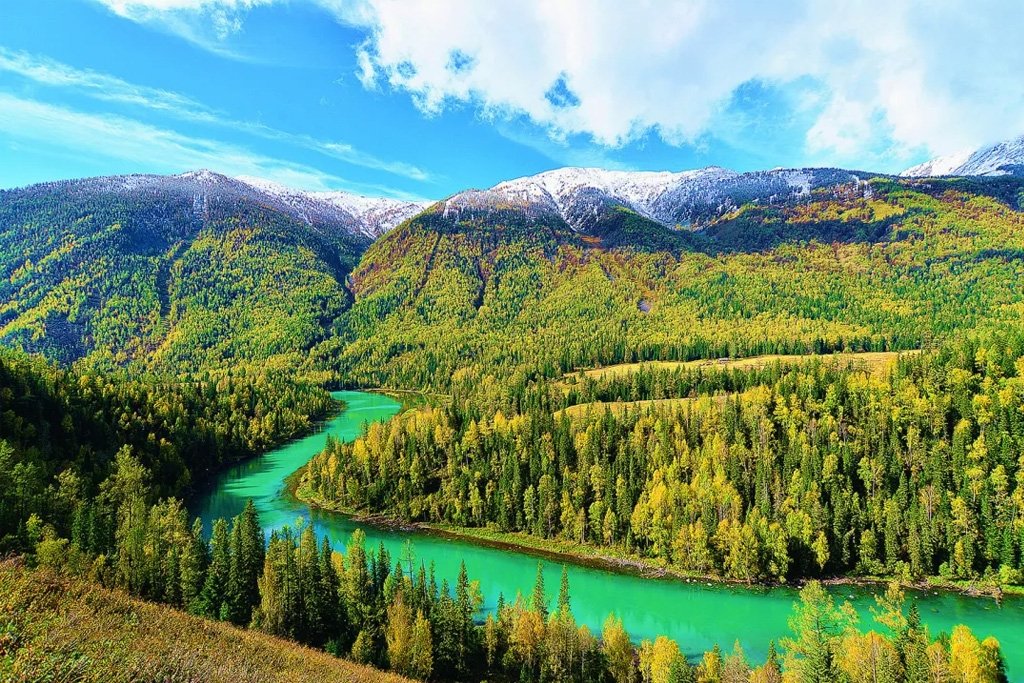
The sweetness is a direct product of the desert. Korla sits on the northern edge of the Tarim Basin, sheltered by the Tianshan to the north and the Taklamakan to the south. Summer days push past 35 Celsius while the oasis soil drains fast and stays dry. The pear trees respond with small fruit and slow growth, concentrating sugar instead of water. The real magic is the swing between day and night: afternoons roast at 34 to 38 Celsius, then temperatures can fall twenty degrees after dark. That daily shock locks in crispness and color.
Irrigation comes from snowmelt carried down from the mountains through the old karez-style channels and modern piped systems. The trees drink on a strict schedule and never sit in wet ground. Growers I have spoken with in Luntai swear the best pears come from the oldest plots near the old river bends, where the soil carries a fine silt left by floods a century ago.
One more climate note for drivers. September in this corner of Xinjiang is dry and dazzling. You will see blue sky every day, dust on the horizon, and fruit stands every few kilometers once you leave the city. Pack sunglasses, a wide-brim hat, and more water than you think you need. The same sun that ripens the pears will roast you at a roadside stop.
Driving the Orchard Road: Korla to Luntai to Aksu
The fruit belt runs roughly along the northern Tarim rim, and the obvious spine is the G3012 highway. But the pears live on the service roads and village lanes that parallel it, so plan to drop off the tarmac often. I drive a compact SUV with a rooftop box, and the loop below fits comfortably into three loose days without any forced marching.
Start in Korla and head north and east toward Luntai, about 170 kilometers on good divided road. The first orchards appear 30 kilometers out, where the city gives way to canal-lined fields. Luntai itself is the quiet heart of the pear country, with family plots tucked behind mud-brick walls and signs you can only read by slowing down. Continue southwest from Luntai to Aksu, roughly 260 kilometers, and the landscape shifts from pear oasis to the broader apple and melon country around Aksu’s apple orchards, where the fruit logic of the whole basin becomes clear.
Road conditions are excellent. The G3012 is smooth and fast, but the joy is in the side trips. Watch for unpaved lanes marked only by a cluster of fruit crates at the turn. I have pulled into a dozen such spots and never regretted one. Fuel up in each town, because the gaps between stations on the quiet roads can stretch past 80 kilometers and your air conditioning will be working hard.
Where to Buy, and How to Shop the Stalls
Korla has a proper wholesale fruit market on the eastern side of the city, open from early morning. Go before 9 a.m. if you want the widest pick and the lowest prices, when growers unload straight from the field. The market is loud, fast, and glorious, with pyramids of pears, grapes, and melons three meters high. Bring cash and a reusable crate; the vendors wrap fruit in yesterday’s newspaper and stack it by the kilogram.
Roadside orchard stalls are where the memories come from. A grower near Luntai once let me walk the rows and choose my own, then weighed the bag on a brass scale he kept in the truck. That pear cost me less than a bottle of water back home and tasted better than anything I have bought since. Stalls like his appear from late August, usually with a tarp, a folding chair, and a child selling cold drinks beside the crates.
For the trip home, the airport in Korla sells sealed gift packs in foam-lined boxes, typically 5 to 6 kilograms, wrapped and labeled for checked baggage. They cost more per kilo than the market but save you the wrapping hassle. I buy a market sack for the road and one airport pack for the folks back home. The airport packs are the safer bet if your flight leaves within two days, because they are pre-cooled and cushioned against the baggage belts.
If you want to compare the region’s other harvests, the same season rewards a second loop through the red date and goji orchards farther south, where the dry heat produces a different kind of sweetness. And once you have tasted the Tarim fruit belt, the the Yecheng pomegranate belt to the southwest makes a natural next stop for travelers with another week free.
A Suggested Self-Drive Fruit Loop
This is the route I run most years, tuned for fruit rather than speed. Distances are by road and assume a relaxed pace with long stops.
Day one begins in Korla. Spend the morning at the wholesale market, then drive the orchard lanes east of the city and picnic under the poplars. Sleep in Korla or push 170 kilometers to Luntai and stay there, which I prefer because the dawn light on the pear rows is worth waking for.
Day two is the Luntai heart. Wake early, buy from the family plots, and follow the old river road south toward the edge of the Taklamakan before looping back. In the afternoon, run the G3012 southwest toward Aksu, stopping at every honest-looking stall. Cover around 260 kilometers and arrive in Aksu with the cooler full. The apple country around the city pairs beautifully with the pears, and the Aksu’s apple orchards make a fine contrast in both taste and texture.
Day three is flexible. Either return north to Korla for a flight, or extend west toward Kashgar and let the fruit theme bleed into the wider harvest. If you have the season wrong for pears, the Ili Valley up north offers summer flower-field drives that trade fruit for a different kind of roadside wonder, though that loop belongs to June and July rather than September.
Keep your daily driving under 300 kilometers on fruit days. The point is the stops, not the mileage. I have ruined a good loop by pushing too far and arriving after the stalls closed at dusk.
Storing and Carrying Them Home
Korla pears travel better than most fruit but they are not invincible. At room temperature they keep about a week before the skin shrivels, so the moment you buy, get them into a cooler or the hotel mini-fridge. In a fridge set near 2 to 4 Celsius they hold three to four weeks, still crisp, still fragrant when you bite.
For the flight home, the airport gift pack is the easy answer. If you are wrapping your own, line a hard-sided case with bubble wrap, nestle the pears in a single layer, and pad the gaps with clothing. Check the bag, never carry it on, because the hold stays cool and the cabin pressure bruises soft fruit. I have flown Korla to Urumqi to Europe with a box that survived two transfers and opened to a cabin full of perfume.
One caution: customs rules differ by country, and fresh fruit is often restricted on international legs. I eat my overflowing share in Urumqi or ship a domestic box to friends inside China rather than risk a confiscation at the border. The memory travels better than the fruit anyway.
Prices You Can Expect in 2026
Numbers shift with the harvest, but here is the range I saw across the last two seasons. At the Korla wholesale market, loose fragrant pears run about 4 to 8 yuan per kilogram in peak September, cheaper the closer you are to the orchards and the earlier in the morning you arrive. Roadside stalls near Luntai typically ask 6 to 12 yuan per kilogram, with a discount if you fill a whole sack of 10 kilograms or more. The airport gift packs land around 60 to 90 yuan for a 5-kilogram box, which works out to 12 to 18 yuan per kilogram once you count the packaging and cooling.
Compared with a supermarket pear in Europe that might cost the equivalent of 15 to 25 yuan per kilogram and taste of nothing, the math is absurd in your favor. Spend the savings on a second cooler. You will fill it.
The Korla fragrant pear is the rare travel souvenir that improves the trip while you carry it. It sits in the passenger seat, scents the whole drive, and turns a gas-station stop into a picnic. Drive the loop once in harvest season and you will understand why I plan every September around it. Bring an empty cooler, leave room in the trunk, and eat the first one warm from the tree before you ever reach the highway.