
The Qinghai to Xinjiang Overland Loop: Xining to Kashgar
The Loop I Did Backwards on Purpose
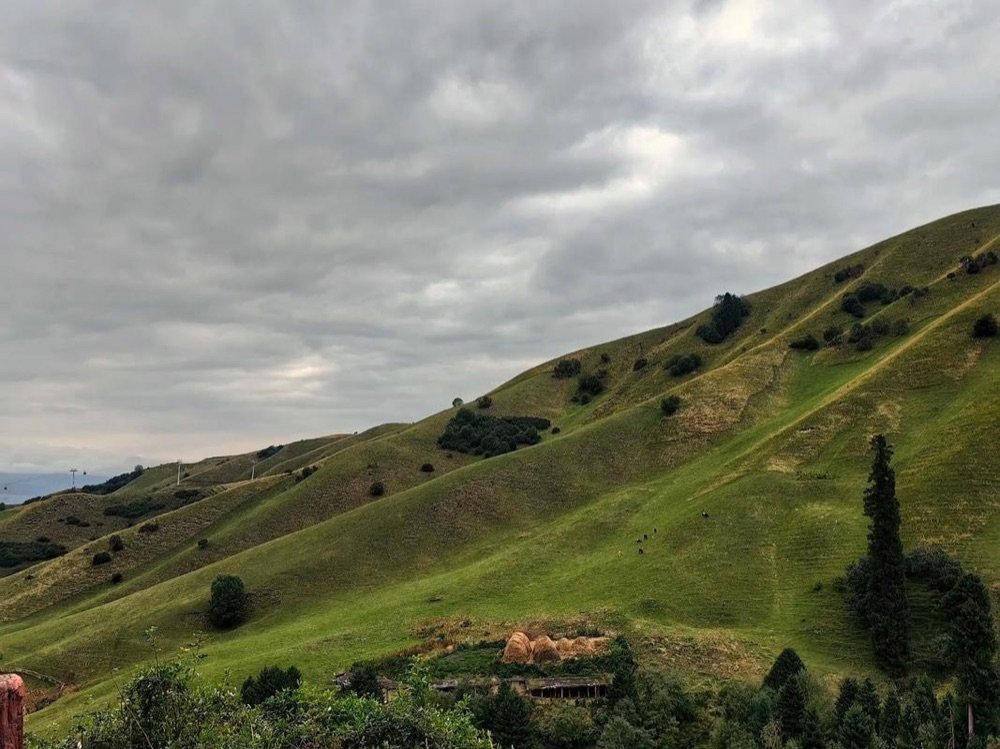
Most people enter Xinjiang and never think about the province to the southeast. I did the opposite. I flew into Xining, the capital of Qinghai, rented a car, and spent eleven days driving a giant counterclockwise loop that ended in Kashgar. The route threads the Qinghai Lake, climbs onto the Tibetan plateau edge, runs the weirdly beautiful G315 highway across the desert, and then drops into the Tarim Basin. It is one of the best overland drives in western China, and almost no foreign tourists do it.
This guide is for self-drivers who want a Xinjiang trip that does not start at Urumqi. It starts higher, colder, and emptier, and it gives you the G315, a road so straight and so barren it feels like a special effect.
Xining to Qinghai Lake (150 km)
Xining sits at 2,275 meters, which means you are acclimatizing whether you like it or not. The drive east to Qinghai Lake, China’s largest inland lake, takes about two hours and climbs gently through Tibetan farmland where the prayer flags outnumber the billboards. I arrived in late May to find the lake still half frozen and the surrounding meadows just turning green. The cold wind cut through every layer I owned.
Sleep in a lakeside town rather than the city. At dawn the lake is mirror-flat and the distant snow peaks reflect without a ripple. It is worth the early wake-up.
Qinghai Lake to Golmud (500 km)
The road south to Golmud crosses the backbone of the plateau. This is high, empty country, and the oxygen at 3,000 meters is thin enough that I felt it walking to the car. Golmud itself is a gritty industrial city, but it is the last real resupply point before the desert, so stock water and snacks here. The G315 highway guide picks up the story from Golmud and is essential reading for the next leg.
The G315: The Straightest Road I Have Ever Driven
From Golmud the G315 runs west across the Qaidam Basin and then into Xinjiang, eventually reaching Ruoqiang. Parts of it are arrow-straight for dozens of kilometers, and the famous “sky road” sections near Lenghu look like the surface of another planet. The Ruoqiang and Loulan guide covers the far end, including the ruined desert kingdoms you can permit into if you plan ahead.
This stretch is where the trip earns its character. There are long gaps without fuel or signal. I passed one stretch of 220 km between pumps and learned to treat a half tank as empty. The desert here is not the sandy Taklamakan but a salt-and-gravel flat, pale as bone, that goes on until the horizon folds.
Ruoqiang to Korla (450 km)
Ruoqiang is the southeastern gateway to Xinjiang and a small, sleepy place. From here the road north to Korla follows the eastern edge of the Tarim Basin. Korla is a real city and the capital of Bayingol, and it is where the loop rejoins the more traveled routes. The Korla travel guide has the practical stop details, and the nearby Bosten Lake guide is worth a detour for the water sports and the lotus in summer.
Korla to Kashgar (1,000 km)
The final run west is the well-trodden southern expressway. I broke it at Aksu and arrived in Kashgar on the eleventh day with a full memory card and a sore back. If you want the longer Silk Road context from the east, the Gansu-to-Urumqi route guide explains how this loop connects to the classic corridor.
Why Do the Loop at All?
Three reasons. First, it avoids the flight into Urumqi and the rental-car scramble there. Second, it shows you the Tibetan-edge landscape that most Xinjiang itineraries skip entirely. Third, the G315 is a genuine once-in-a-lifetime road, the kind you describe to people later and watch them not believe you.
The costs are real, though. Eleven days of fuel, roughly 3,000 km, came to about 1,400 RMB in petrol for a compact SUV at 2026 prices, plus accommodation that ranged from 180 RMB for a clean roadside room to 420 RMB near Qinghai Lake in peak season. Food was cheap and excellent: noodle bowls for 25 to 40 RMB, lamb skewers by the string.
Practical Notes
- Altitude: Spend a night in Xining before driving higher. The plateau does not care about your fitness.
- Fuel: Fill at every town. The G315 gaps are long and unforgiving.
- Permits: Ruoqiang and the Loulan area can need border paperwork; arrange it in Golmud or Korla.
- Season: May through September is the window. Winter closes parts of the plateau road with snow.
If you have the time, do the loop. It is the Xinjiang trip most people do not know exists, and that is exactly why it is worth doing.
Permits for the Loulan Section
The Loulan ruins and the deeper desert counties around Ruoqiang are restricted and need a border permit arranged in Golmud or Korla, often with a licensed guide. I did not enter Loulan itself but booked theouter permit for the Ruoqiang edge, which was enough to feel the emptiness. If Loulan is your goal, start the paperwork a week early and expect a fee and a fixed itinerary.
Where to Sleep Each Night
Xining (1), a Qinghai Lake town (1), Golmud (1), a G315 waypoint near Lenghu if you want the salt flats at dawn (1), Ruoqiang (1), Korla (1), Aksu (1), Kashgar (2). That is nine nights for an eleven-day loop with two buffer days. The lake and Golmud book ahead in summer; the desert towns take walk-ins.
What the Whole Loop Cost
Fuel for 3,000 km in a compact SUV was about 1,400 RMB. Accommodation averaged 260 RMB a night, totaling roughly 2,300 RMB. Food, heavy on lamb and noodles, ran 120 to 180 RMB a day for two. Tolls on the expressway sections added maybe 300 RMB. All in, the loop cost me under 5,000 RMB excluding the flight into Xining, which is remarkable for a cross-provincial overland trip.
The G315 Sky Road Photo Stops
The G315 earns its reputation in two specific places. The first is the “sky road” near Lenghu, where the highway runs dead straight toward a horizon that bends upward, a trick of perspective that photographs like a road to the sky. Shoot it at dawn when the light is flat and the illusion is strongest. The second is the waterless lake beds near Mangya, pale white pans that reflect the sky after rain and look like ice from a distance. Both are unmarked; watch your odometer and slow down, because the pull-offs are soft shoulders and a stuck car out here is a serious problem. The Ruoqiang and Loulan guide maps the southern end where these pans sit.
Altitude Sickness on the Plateau
The loop climbs above 3,000 meters between Golmud and the Qinghai Lake approach, and some travelers feel it: headache, poor sleep, shortness of breath on the slightest exertion. I felt a dull throb the first night in Golmud and was fine after a day of easy pacing and heavy water. The rule is simple: ascend slowly, sleep low if you can, drink more than feels necessary, and do not push a hard drive the day you gain altitude. If symptoms worsen with rest, descend. The plateau is beautiful but unforgiving, and the nearest proper hospital can be a long drive.
Why Start in Xining, Not Lanzhou
You could begin this loop from Lanzhou and save a few hours, but Xining is the better launch. It sits higher, which starts your acclimatization earlier, and it is the cultural capital of the Tibetan plateau edge, with a monastery and a museum that frame the landscape you are about to cross. The drive from Xining to Qinghai Lake is prettier than the Lanzhou alternative, and the city itself is a gentler introduction to high-altitude travel than a blunt Golmud start. I would not swap the Xining opening for the time it saves.
Packing for the Plateau
The loop’s first half is high and cold even in summer, so pack as if for two climates. A warm layer and a windproof shell earned their place every morning at Qinghai Lake, where the dawn wind cuts sharp. Sunglasses are not optional; the plateau glare off pale ground is brutal by midday. Lip balm and moisturizer matter more than you expect in the dry air. I also carried a basic altitude-aware plan: ascend slowly, hydrate hard, and skip the heavy drive on the first day off the plane. The gear is simple; the discipline is the part travelers skip.
Wildlife and the Long Empty Road
The G315 crosses terrain where life is sparse but present. I saw gazelle near the salt flats, cranes in the wetland edges, and hawks riding the thermals over the Qaidam. None of it is guaranteed, and that is the point; the desert rewards patience, not schedule. Drive slowly through any area with animals, because a collision out here means a long wait for help. The emptiness is the feature, not the bug, and the wildlife is the quiet proof that the land is alive even when it looks vacant.
My Favorite Unexpected Stop
The stop I did not plan was a small teahouse in a Golmud backstreet, where an owner who spoke no English fed me butter tea and pointed at a map of the plateau with pride. It was not in any guide, cost nothing, and told me more about the place than the lake did. The loop is full of such moments if you let the schedule breathe. I would rather arrive in Kashgar a day late with a story than on time with none, and the G315 taught me to build that slack into every plan.
Getting Fuel on the Loop
Fuel on the Qinghai half is easy: Xining, Golmud, and the towns between are well served. The Xinjiang half is where you pay attention. After Ruoqiang the next reliable pump can be 200 km away, and the G315 stations are smaller and sometimes cash only. I filled in Golmud, again near Lenghu, topped up in Ruoqiang, and once more in Korla, and never dropped below a third tank. The habit of filling at every town cost me ten minutes a day and saved a probable bad afternoon. On a loop this empty, the tank gauge is a planning tool, not a warning light you wait for.
My One Regret
I skipped the Lenghu Mars Camp, a simulated base near the red crater landscape, because I was tired and the detour looked like a gimmick. Locals I met later said it was the most otherworldly stop on the whole Qaidam. Next time I would trade an hour of sleep for it. The loop is full of such choices, and the honest lesson is that the weird, unnamed detours are often the ones you remember, while the famous lakes can blur together. Say yes to the strange stop; the safe plan will still be there tomorrow.