
Expat Life and Long-Stay Living in Xinjiang: Settling in for a Season or a Year
I arrived in Urumqi on a cold March morning with one suitcase and a vague plan to stay three weeks. Fourteen months later I was still there, renting a corner apartment near Hongshan, buying my vegetables from the same vendors at the morning market, and arguing good-naturedly with the guy at the noodle stall about whether my Mandarin was improving. Long-stay living in Xinjiang is nothing like the two-week sprint most visitors attempt. It is slower, messier, and far more rewarding.
Most travel advice treats Xinjiang as a place to pass through. I want to make the opposite case: staying for a season or a year lets you actually feel the rhythm of a region that covers one sixth of China’s landmass. You learn which bus goes where, which teahouse has the good samsa, and how the light falls on the Tianshan at 7 p.m. in June. Here is what I learned from doing it.
## Why Stay Longer Than a Vacation
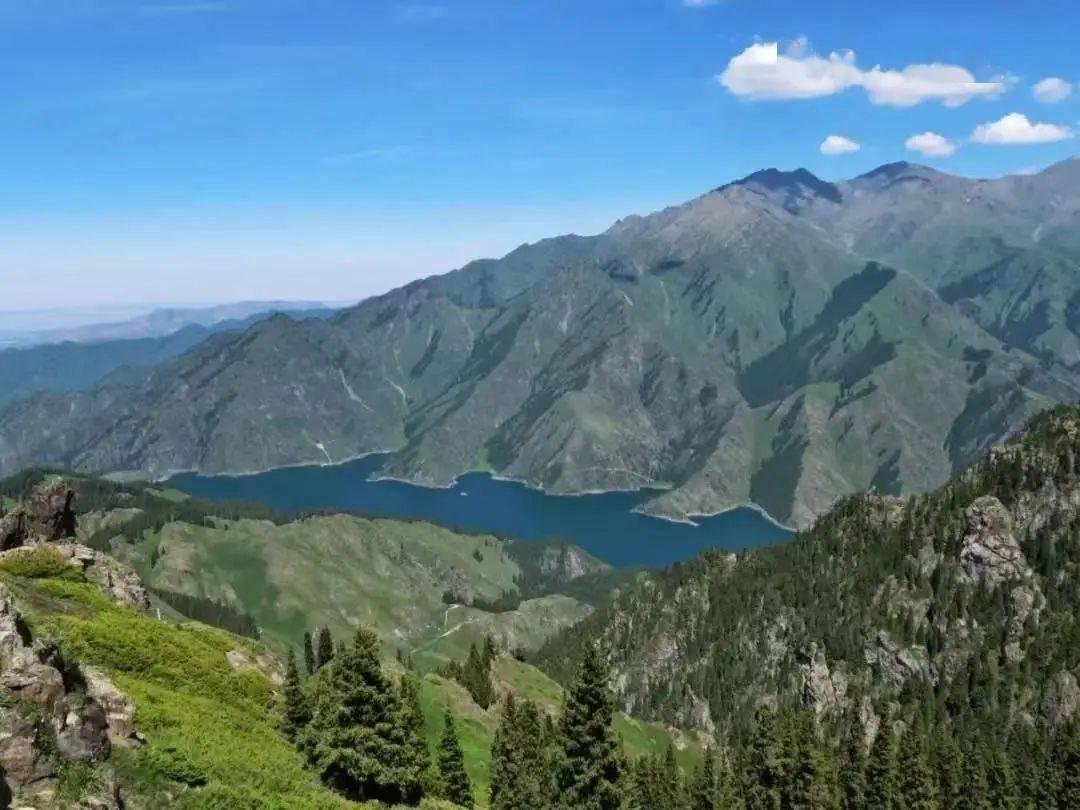
The first thing you notice is the scale. Xinjiang is roughly 1.6 million square kilometers, split between the Dzungaria basin in the north and the Tarim basin in the south, with the Tianshan range cutting straight through the middle. Trying to “see it all” in two weeks is a recipe for exhaustion. When you settle, the distances stop being a problem and start being the point.
I spent my first month within the Urumqi ring road, simply getting oriented. Rent for a furnished one-bedroom in a mid-range apartment block ran me about ¥2,400 a month, utilities included. That single decision, slowing down, saved the trip. I began taking weekend trains instead of flights and the journeys became part of the story.
A longer stay also changes how locals treat you. On day three you are a curious foreigner. On day ninety you are the regular who always orders the laghman with extra chili. That shift opens doors no itinerary can.
## Sorting Out the Paperwork First
Before you fall in love with the idea of wintering in Kashgar, deal with the practical side. Depending on your nationality, you may enter under the new visa-free policy that expanded in 2026 for short visits, but a stay of several months usually needs a tourist (L) or private-affairs visa arranged before arrival, plus address registration at the local police station within 24 hours of moving in. I learned this the hard way after a friendly but firm chat at the Hongshan substation.
Border regions are a separate matter. If your long-stay plan includes southern Hotan, the Taklamakan’s edge, or the far west toward the Pamirs, you will need travel permits for certain counties. Get these sorted in Urumqi or Kashgar before you head out; the checkpoints are real and they check.
None of this is difficult. It is just paperwork that rewards people who read the rules before they book the train. Keep photocopies and a cloud backup of every document. My phone gallery of passport scans saved me twice.

## Choosing a Base That Fits Your Season
Where you plant yourself matters more than any single sightseeing list. Urumqi is the obvious hub: an international airport, two rail stations, and enough expat-facing cafes to keep you sane. I treated it as my winter base because heated apartments and indoor markets make January bearable when it drops to minus 20 Celsius.
Kashgar suited me for spring. The old town’s mud-brick lanes come alive after the snow melts, and the Sunday livestock market is the best anthropology lesson in Central Asia. A basic guesthouse room there cost me ¥120 a night, or ¥2,000 a month if you negotiate a quiet room for the season.
Ili and the town of Yining stole my early summer. The grasslands around Sayram Lake and the apricot blossoms near Tuergen draw domestic tourists in waves, but if you stay, you catch the in-between days when the valleys are empty and the air smells of wildflowers. Renting a room with a Uyghur family outside the city ran ¥1,800 a month and came with more fresh bread than I could eat.
Turpan is the contrarian choice for autumn. It is hot, dry, and small, but the grape harvest in September is a genuine festival and the railway puts you two hours from Urumqi. Each base taught me something the next one built on.
## Getting Around When the Region Is Your Neighborhood
For a long stay, you eventually tire of tour buses. I started renting a car for multi-week stretches, which changed everything. A compact SUV from a Urumqi agency cost about ¥280 a day in the low season, dropping to ¥7,500 for a full month. Fuel is cheap; distances are not. The drive from Urumqi to Kashgar is 1,470 km and eats a full day and a half if you stop for the good roadside mutton.
Trains remain my favorite for routine moves. The high-speed line from Urumqi to Turpan takes 50 minutes and costs ¥51. The sleeper to Kashgar runs about 24 hours and lets you wake up in a different world for ¥420 in a soft berth. Buses fill the gaps the rails miss, especially toward the smaller county towns.
If you stay put in one city, a bicycle and the cheap DiDi rides handle most needs. Urumqi’s metro has two lines now, quiet and clean, good for the brutal winter commutes.
## Making a Home: Housing, Food, Money
Where to stay stops being a hotel question and becomes a lease question after week three. Local rental platforms and the ubiquitous WeChat groups list apartments; agents charge roughly half a month’s rent as commission. I signed a six-month lease on a 60-square-meter place and the landlord threw in the washing machine when I asked nicely.
Food is where long-stay life pays off hardest. A plate of hand-pulled noodles at a neighborhood stall is ¥15. Fresh naan from the corner oven is ¥3. The evening barbecue streets, where skewers of lamb sizzle over coals, will feed you royally for ¥40. My monthly grocery and eating-out budget settled around ¥1,600, and that included too many pistachios from Hotan.
Money moves are easy once set up. Alipay and WeChat Pay cover nearly everything, but link them to a foreign card early because verification can stall. Carry some cash for the rural markets; the old woman selling melons at the Bosten Lake roadside did not take QR codes.
## The Social Texture You Only Get by Staying
Short visitors see monuments. Stayers see people. My strongest memories are not of Kanas Lake at sunrise but of the retired engineer who taught me xiangqi on a park bench, or the Kazakh family near Hoboksar who welcomed a stranger into a yurt for afternoon milk tea without a word of shared language.
Language helps but is not required. A few hundred words of Mandarin carried me through most transactions, and Uyghur hospitality needs no translation. I downloaded an offline phrasebook and pointed a lot. Smiles did the rest.
The slow travel approach also protects your wallet and your nerves. Instead of racing 800 km to the next checkpoint, you let a place reveal itself. Some of my best weeks had no sightseeing at all, just markets, walks, and the slow accumulation of belonging.

## Health, Weather, and the Long Game
Xinjiang’s climate is extreme and worth respecting. Urumqi swings from minus 20 in January to 38 in July. The dry air cracked my lips for the first month; a humidifier and constant water fixed it. Good pharmacies stock everything a traveler needs, and a basic clinic visit costs ¥30 to ¥80 without insurance.
Air quality is generally excellent outside the occasional spring dust storm sweeping off the Taklamakan. On those days, which hit Yining and Turpan hardest in April, stay indoors with the windows shut and a mask handy. I lost two productive days to one bad storm and learned to watch the forecast.
Build a routine for the sake of your mind. Loneliness is real when you are far from home for months. I joined a weekly hiking group that met at the foot of the Tianshan, found a gym for ¥99 a month, and called family every Sunday. The expat community is small but warm, centered on a handful of cafes and language exchanges.
## Markets, Festivals, and the Weekly Clock
Once the paperwork settles, daily life organizes itself around markets and the calendar. Urumqi’s International Grand Bazaar is touristy by midday, but go at 9 a.m. and you shop alongside grandmothers haggling over cumin by the kilo. The real education happened at the smaller neighborhood bazaars, the ones with no signs in English and no entrance fee.
Friday matters in the south. In Kashgar and Hotan the weekly rhythm bends around the midday gathering, and the old town quiets then swells in a way you only notice after weeks on the ground. I planned errands around it without thinking by my third month.
Festivals rewarded the patient. The spring Nauryz celebrations in Ili, with horses, songs, and endless bowls of sumalak, were never on my original plan. Staying meant I happened into them. Autumn’s grape festival in Turpan pulled the whole town into the streets for a week, and I helped carry baskets for the price of a laugh and a handful of the season’s best fruit.
Learn the discount hours. Bakeries drop naan prices after 8 p.m. Markets clear produce at half cost near closing. These small savings, repeated across months, quietly funded my weekend train trips.
## Staying Connected and Getting Work Done
Remote work is entirely feasible from a Xinjiang base, and many long-stayers rely on it. Mobile data is fast and cheap; a 100 GB monthly plan on China Mobile ran me ¥99, and 5G coverage held up even in Yining and along the main Urumqi to Kashgar corridor. The one catch is the firewall: Google, WhatsApp, and a few Western services need a VPN that you must set up before you arrive, since downloading one locally is unreliable.
Coworking spaces are thin outside Urumqi, so I built my office from a good laptop, a mobile hotspot, and the quiet corner of a cafe that opened at 10 a.m. Power cuts were rare but real during a windy Ili spring, so a small power bank became part of my daily kit. Time zones favor Europe for meetings; I scheduled calls for my evening, which lined up with morning in Berlin.
Mail and deliveries work through the standard local apps without drama. A package from Shanghai reached my Urumqi door in three days for ¥12. For important documents from home, use a tracked international service and pad the timeline; border-region addresses occasionally trigger extra inspection.
## A Sample Season, Not a Checklist
If you want a shape to copy, here is mine. March and April in Urumqi, learning the basics and the cold. May in Kashgar as the old town warms. June and July drifting the Ili grasslands and Sayram Lake. August in the cooler north around Hoboksar and the Bosten Lake shore. September in Turpan for the harvest. October back to Urumqi to close the loop.
That arc covered roughly 4,000 km of travel and cost me about ¥28,000 all in, rent, food, trains, and the occasional rental car included. Your numbers will differ, but the principle holds: a season beats a sprint.
## What I Would Tell a Friend Planning the Same
Pack for two climates even if you stay in one city, because the heating indoors and the cold outside will both surprise you. Learn the address-registration rule before you sign anything. Make one real local friend early, the kind who texts you about the good melon stand, and the whole region opens up.
The hardest part is the beginning. The first month feels like constant paperwork and confusing errands. Push past it. By month two I had a favorite seat at my corner cafe and a barber who knew my hair. By month six, Xinjiang felt less like a destination and more like a home I had chosen.
Stay for a season if a year sounds like too much. Either way, slow down enough to let the place speak. The monuments will wait. The people, the light, and the ordinary Tuesday mornings are what you will actually remember.