
Tuyugou Ravine and the Oldest Uyghur Village Near Turpan
The Oldest Living Village in the Turpan Basin
Most travellers who come to Turpan see the Flaming Mountains from the highway, photograph the Grape Valley, and leave. They miss the best part. About forty kilometres east of the city, tucked into a narrow ravine that cuts straight into the red sandstone, sits Tuyugou, a village that locals will tell you has been continuously inhabited for more than two thousand years. I spent a full day there last spring, and by the time I left I had a much clearer sense of what everyday Uyghur life in this basin actually looks like than I got from any museum.
Tuyugou is really two things stacked against each other. Up on the cliffs to the west is a warren of cave dwellings and a Buddhist site carved into the rock a millennium and a half ago. Down in the ravine floor is the present-day village, a tight knot of mud-brick houses, a stream, and the kind of quiet that city people have forgotten exists. The combination, ancient and modern in the same frame, is what makes the place unusual.

Getting There and the Drive In
I drove from Turpan city in a little over an hour, following the road east past the vineyards and then turning into the ravine just before the mountains close in. The final few kilometres run along a single-lane track between apricot orchards and mud walls, and you share it with donkeys and children on bikes, so keep the speed down. There is a small parking area at the entrance to the village where a few vendors sell dried grapes and walnuts.
The road continues past the village up to the Buddhist caves, but that upper section is rougher and I would not take a low-clearance car all the way in wet conditions. In late April, when I went, it was firm and fine. Fuel and supplies are only available back in Turpan, so fill up and bring water before you commit to the ravine.
The Village Floor: A Working Oasis
What struck me first was the water. A shallow channel runs the length of the village, fed by melt from the surrounding peaks through the same kind of underground karez channels that made Turpan habitable in the first place. Women were washing scarves at the edge, old men sat in the shade of a mulberry, and every courtyard had a grape arbor heavy with new leaves. This is not a stage set. People live here, farm here, and largely ignore the occasional foreigner with a camera.
I was invited, through a chain of smiling gestures and one teenager who spoke some English, to drink tea in a family courtyard. We sat on a raised platform, ate warm naan broken from a round loaf, and watched the light move across the opposite cliff. Nobody asked for money. That hour of unplanned hospitality was the real Tuyugou, and it cost me nothing but the time to slow down.

The Cliff Dwellings and the Buddhist Past
Above the village, honeycombed into the orange rock, are the remains of cave houses where people lived within living memory, and further up, the Buddhist grottoes that date back to the 5th century. This was once a major stop on the northern Silk Road, and the coloring and construction of the cliff settlement show clear links to the better-known sites around the basin. You can walk up on a marked path; wear proper shoes because the steps are worn and the loose grit will slide under you.
The caves themselves are modest compared to the painted grottoes at nearby sites, and many are locked or empty. Do not expect frescoes. What you get instead is the sheer strangeness of a vertical village, hundreds of small openings in the rock, with the modern mud-brick town directly below. Stand at the top and look down, and the two thousand years compress into a single photograph.
Respecting the Place You Are Visiting
Tuyugou is a conservative, religious village, and the difference between a welcome and a cold shoulder is mostly about behaviour. Dress so shoulders and knees are covered. Ask before photographing people, and accept a refusal with a smile. Women in particular should expect more attention than they might in a big city, and a headscarf is a friendly signal rather than a requirement.
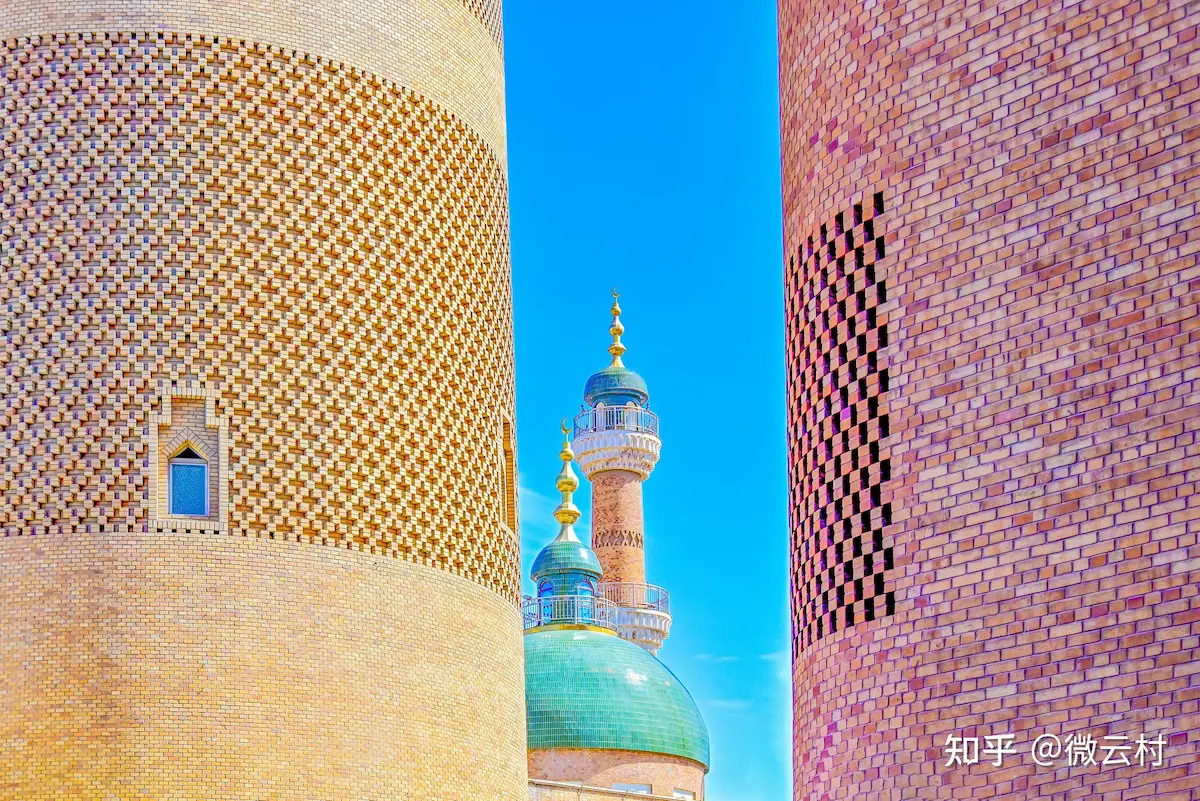
The religious sites of Xinjiang deserve the same courtesy you would show a church or temple at home. Inside the village mosque, if you are invited in, remove your shoes and step to the back. The point is not to perform piety but to not be a disruption.
Best Season and How Long to Stay
Spring and autumn are ideal. I went in late April and the apricot trees were flowering, the ravine was green, and the heat had not yet arrived. October is the other sweet spot, when the grape harvest fills the village with activity and the light turns the cliffs deep red. Summer is brutally hot and the ravine holds the heat; winter is calm but cold and some family guesthouses close.
You can see the headline sights in two hours, but I recommend blocking half a day. The village rewards lingering in a way the famous ruins do not. If your trip overlaps a local festival, even better, because the spring gatherings spill music and food into the streets and the whole ravine turns festive.
Pairing Tuyugou With the Bigger Sites
Tuyugou sits neatly between two of the basin’s headline ruins, which makes it an easy addition to a Turpan loop. The Jiaohe ruins and the Gaochang ruins are both within an hour’s drive, and the Flaming Mountains lie on the way back toward the city. I did Gaochang in the morning, Tuyugou for a long lunch, and Flaming Mountains at golden hour, which kept me off the roads during the worst of the midday heat.
For the broader context, read a proper Turpan travel guide before you set out, because the town is the supply base for everything in this corner of the basin. Tuyugou itself has almost nothing to buy and almost nowhere to eat beyond a few family tables, so arrive fed and watered.
Reaching Tuyugou Without Your Own Car
Not everyone drives, and Tuyugou is reachable on public transport if you plan around it. Buses run from Turpan city to the nearby town of Shanshan and pass the turnoff, but the final few kilometres into the ravine are not served regularly, so most car-free travellers hire a local driver for the day from Turpan, typically 200–300 yuan for a round trip with waiting time. I met a French couple who had done exactly this; they negotiated at the bus station, agreed a price and a return hour in writing on a phone translation app, and came back happy. The key is the return: do not rely on flagging a ride from the village, because traffic is thin and the last buses leave mid-afternoon.
If you are on a tighter budget, the local public bus gets you to the junction, and from there a shared van sometimes waits for the morning market crowd. Ask at the Turpan bus station the day before, because the schedule shifts with the season. Either way, carry water and a charged phone, since you are committing to a place with weak signal and few services once you are in the ravine.
Photographing the Ravine and the Cliffs
Tuyugou rewards a slower camera than the big scenic areas. The village is best shot from across the stream in the early morning, when the low sun lights the mud-brick walls to terracotta and the apricot trees throw long shadows. The cliff dwellings above want a longer lens and patience, because the openings are small and the rock face plays tricks with the light; I found the hour after sunrise gave the cleanest detail on the cave mouths. Inside the ravine, the narrow sky between the walls makes for dramatic vertical compositions, but watch your exposure, because the bright sand and the dark rock will fool any automatic meter.
People are the real subject here, and the rule is simple and non-negotiable: ask before you point the lens at a face. A raised camera and a smile, followed by showing the person the screen, almost always earns a nod. The one photograph I treasure from Tuyugou is not of the cliffs at all, but of an old woman laughing at my terrible Uyghur greeting, framed by a vine-covered door. That picture exists only because I asked, and because I was willing to look foolish first.
A Half-Day That Actually Works
Tuyugou is easy to rush and hard to enjoy that way, so I plan it as a slow half-day rather than a tick on a longer drive. I leave Turpan after an early breakfast, reach the village by mid-morning when the light is soft and the cliff dwellings are open, walk the floor and the lower caves for an hour or two, then eat a long lunch in a family courtyard before the heat builds. By early afternoon I am back on the road toward Gaochang or the Flaming Mountains, having seen the place rather than skimmed it.
The mistake is treating Tuyugou as a photo stop between bigger sites. It is small, but small places reward time disproportionately, because the interest is in the detail, the carved door, the irrigated lane, the old woman at the well, none of which survives a ten-minute walk. The ravine also has its own rhythm through the day: the morning mist lifts off the cliffs, the afternoon sun flattens the colour, and the evening brings the families home from the fields. Catch more than one of those moods and the place reveals itself.
If you are building a two-day Turpan loop, put Tuyugou on the eastern day with the Jiaohe ruins and the Grape Valley, and save Gaochang and the Flaming Mountains for the western day. That split keeps the driving short and the afternoons in shade, which in a basin this hot is the whole game. Tuyugou repays the slow plan, and punishes the fast one, exactly as the old villages always have.
Why It Stayed With Me
I have stood in a lot of “ancient villages” that turned out to be gift shops with a backdrop. Tuyugou is the opposite: a place so ordinary in its daily rhythm that the antiquity sneaks up on you. You are drinking tea in a courtyard that sits beneath caves older than most European nations, and the family you are with could not care less about the archaeology. That quiet overlap of deep time and normal life is the thing worth the drive, and it is the part no guidebook photograph can carry.