

Accessible and Wheelchair Travel in Xinjiang: A Realistic Guide for Travelers with Limited Mobility
My mother uses a wheelchair, and we drove the Ili loop in 2025. I am writing this from the other side of that trip: tired, a little sunburned, and convinced that Xinjiang is possible for travelers with limited mobility if you plan with clear eyes. It is not easy. Pretending otherwise would waste your time and your money.
This guide is the honest version. I will tell you which scenic spots have paved paths, which hotels had working elevators, how far the boardwalks run, and where we simply turned the car around. The goal is to help you build a route you can actually complete, not a fantasy itinerary.
Start with the honest truth
Xinjiang is enormous and its tourism infrastructure was built for people who can walk, climb, and stand for long stretches. Many ticket gates sit at the top of a flight of stairs. Many bathrooms labeled accessible are a ramp down to a stall with a lip too high for a wheelchair to cross. I learned to ask one question at every stop: can a wheelchair reach the actual viewpoint, or just the parking lot?
The answer was usually the parking lot. That is the gap you have to design around. The good news is that the region’s best landscapes, the wide valleys and the big lakes, are often flat by nature. You just need to know which ones.
Public toilets are the quiet stress of the trip. The cleanest stops were at the big service areas on the highway, which had wide doors and a choice of seated or squat pans. County-town toilets near scenic gates were a gamble. We kept a portable toilet insert in the car for exactly those moments, and it paid for itself on day three.
Getting to Xinjiang and moving around
Flying into Urumqi Diwopu International Airport is the simplest arrival. The terminal has elevators and baggage claim is step-free, though the distance from gate to curb is long. We booked an accessible van through the rental company two weeks ahead, because walk-up wheelchair vans at the counter are rare.
Trains are better than you think
The high-speed line from Urumqi to Turpan and on toward the Ili corridor runs modern EMU trains with dedicated wheelchair spaces near the doors. Station platforms are level with the carriage floor on the new trains, which removes the single biggest barrier I feared. Booking the accessible berth takes a phone call or a counter visit rather than the app, since the reserved spot is not always shown online.
I cover train classes, the accessible bunks, and how to book them in the full Xinjiang train travel guide, because the details change by route and by season.
Why we chose to self-drive
For a wheelchair user, a private car is freedom. We rented an SUV, removed the front passenger seat, and secured the chair with ratchet straps and a four-point harness bought in Urumqi. That sounds extreme; it was the single decision that made the trip work. Buses in Xinjiang often cannot stow a folded chair, and the step-up into a coach is brutal.
Self-driving also let us control the day’s length. My mother tires fast in heat, so we drove at dawn and rested through the afternoon. No tour bus schedule would have allowed that.
Urumqi: your easiest base
Spend your first two nights in Urumqi to acclimatize and test your setup. The city is flat in its core, the roads are wide, and the newer hotels almost all have elevators. We stayed near Renmin Square, where the sidewalk ramps are frequent and the crossings are long but manageable.
Hotels with working elevators
Do not trust the booking-site checkbox. I called three hotels that claimed accessible rooms and found one had an elevator out of service, another had a step at the room threshold. The third, a mid-range tower near the museum, had a wide elevator, a roll-in shower, and a threshold strip we could bump over.
Use our Xinjiang accommodation guide to see which properties travelers have confirmed have elevators and step-free bathrooms, because the list is short and worth knowing before you book.
What we actually saw in the city
The Xinjiang Regional Museum is genuinely good for wheelchair users. The entrance is level, the galleries are on one floor with wide aisles, and the famous mummy exhibits have bench seating every few meters. We spent three calm hours there, which was more than enough.
Hongshan Park is a different story. The lower plaza and the lake path are paved and gentle, but the red hill pagoda at the top requires a staircase we could not climb. We enjoyed the base and went home happy. Pick your victories.
The Ili valley: where the plan came together
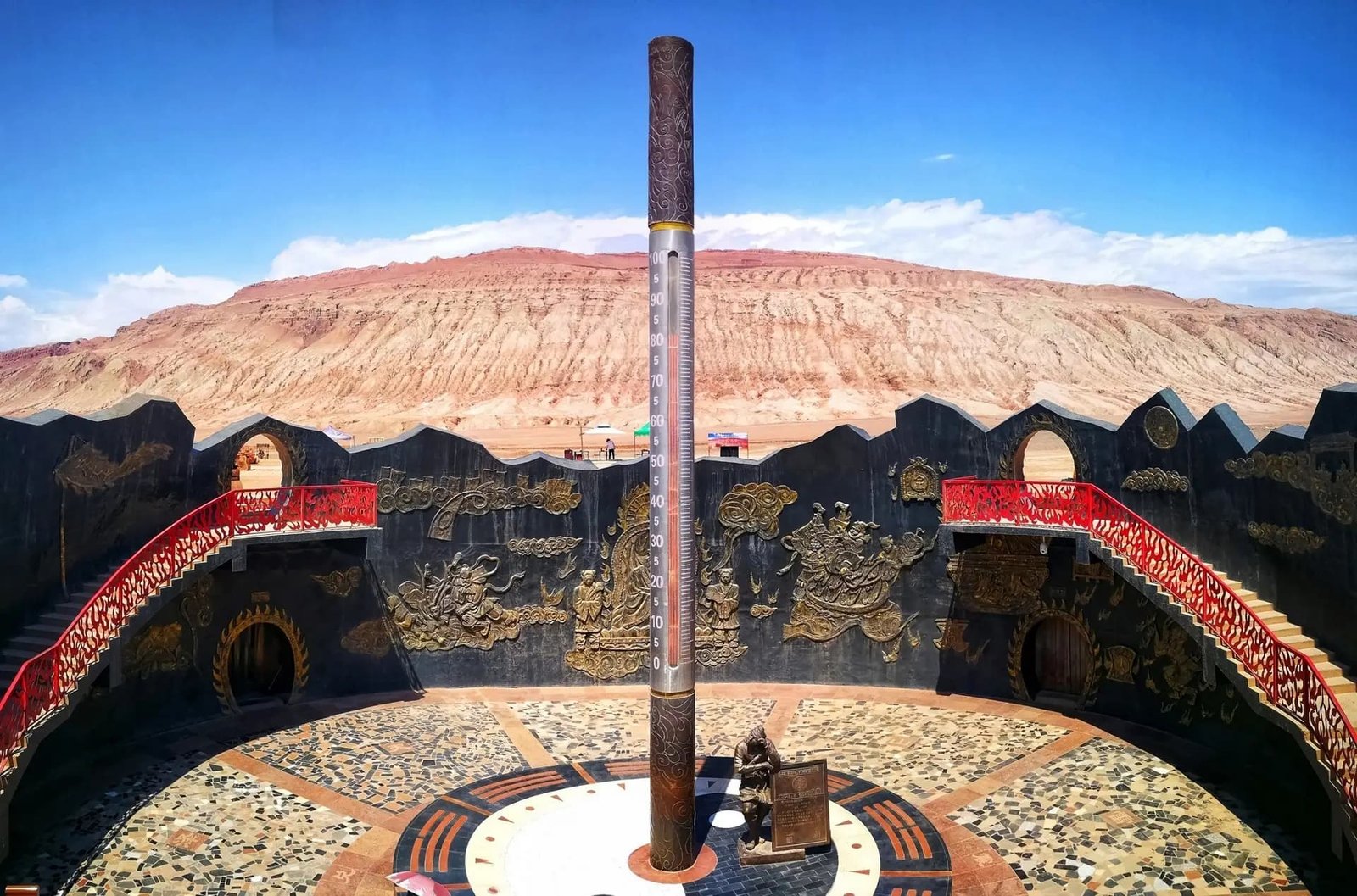
Ili in early summer is the reason we came. The valley floor is flat, the roads are excellent, and several of the signature spots have been built with boardwalks a wheelchair can roll across smoothly. This is the region I would send a mobility-limited traveler first, ahead of anywhere with mountains and stairs.
Sayram Lake and its loop road
Sayram Lake stopped me in my tracks. The scenic loop road is paved and the main viewing platforms near the south gate have level boardwalks running right to the water’s edge. We parked, unloaded the chair, and my mother rolled out to watch the wind push whitecaps across a lake the color of a storm sky.
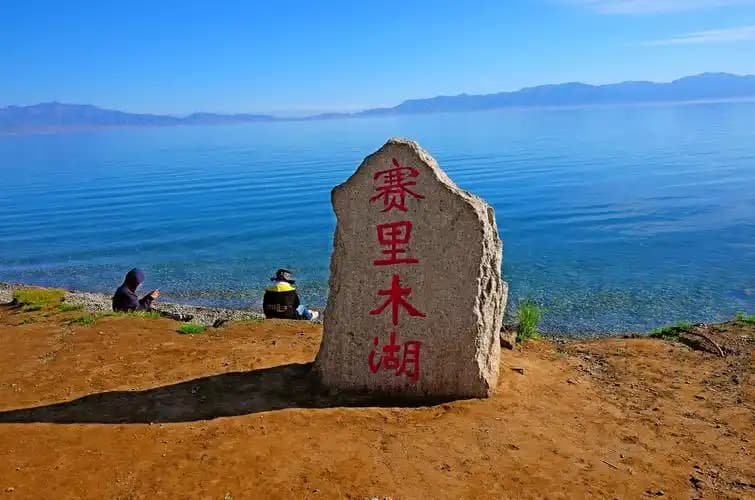
The catch is distance. The full loop is about 90 kilometers, and the farther platforms are reached by paths that turn to gravel and grass. We drove the southern half, stopped at three boardwalk points, and skipped the northern cliffs entirely. That was the right call; the cliffs were stairs-only.
Sayram sits at around 2,000 meters, and the wind off the water is cold even in July. Dress the chair user in layers and bring a windproof blanket, because cold makes stiffness worse and shortens the time you can stay outside. We gave ourselves forty minutes at the shore and that was plenty.
Where the ramp ends
The flower fields at Nalati and the grassland boardwalks are lovely but uneven. Some sections are timber with gaps a small front wheel catches in. My mother made it a few hundred meters before the surface got too rough, and we turned back. Carry a lightweight folding chair as backup so the person on foot can still walk the rough bits while you wait in the shade.
If you are traveling with an older parent who can stand but walks slowly, our guide to a comfortable pace in Xinjiang walks through daily distances and rest-stop timing that kept my mother from crashing on long driving days.
Turpan: flat, hot, and surprisingly workable
Turpan sits in a depression below sea level, which means it is the flattest major destination in Xinjiang and also the hottest. In July the afternoon heat is dangerous for anyone, let alone someone who cannot retreat to shade quickly. We visited in late May and still started at 7 a.m.
The spots that worked
The Grape Valley has a long, shaded, mostly paved promenade with benches every twenty meters. It was one of the few places my mother could roll for a full kilometer without a single step. The Turpan Museum is small, level, and air-conditioned, a perfect midday refuge when the temperature climbed.
The Jiaohe Ruins are the hard no. The site is reached by a walkway, but the ruins themselves sit on a plateau reached by a long staircase with no ramp. We viewed them from the entry terrace and read the placard. Sometimes that is the trip.
The Tian Shan and the places to skip
Heavenly Lake near Urumqi is the postcard everyone expects, and it is the one I tell wheelchair travelers to skip or see from the cable car only. The cable car is not wheelchair-accessible and the lakeside walk is a series of stone steps and sloping paths. We drove up, looked from the lower viewing deck, and drove down.
The same goes for most canyon and waterfall sites. Vertical scenery is, by definition, not flat. Build your route around valleys and lakes, and treat the mountains as views from the car window.
A practical packing and planning list
Bring more than you think you need. We carried a spare wheelchair tire, a portable ramp that weighed four kilos and bridged small steps, a manual transfer board, and a cooler for medication that had to stay cold. None of it was excess; the ramp alone got us into two restaurants.
Carry a printed medical summary in English and keep a photo of it on your phone. Travel insurance that covers a wheelchair user in remote China is worth the premium, because a broken frame in a town with no repair shop is a real risk. We found one international provider that listed Xinjiang without exclusion and booked before we left.
Download offline maps before you leave each town. Signal dies on the open highway, and you do not want to be decoding a rural junction while your passenger needs a bathroom with a step-free door. We used offline maps for the entire Ili loop and never regretted the preparation.
Where to stay and what to ask
Ask four questions when you book: is the elevator working, is there a step at the room door, is the shower roll-in or tub, and is there a grab bar? If the desk cannot answer, assume no. We learned to confirm by phone in English through the hotel’s chat app, and to screenshot the reply.
Families with small children in carriers will hit some of the same flat-path wins and stair-blockers we did, so our kid-friendly route tips overlap more than you would expect with a mobility plan.
Safety and the solo driver
One more thing if you are the sole driver and also the carer. You cannot leave the chair user alone for long in a remote lot, so fuel up and use bathrooms in pairs at the larger service areas. The region is safe and locals were unfailingly helpful when we needed a hand with a step, but self-reliance is the default.
Solo women driving the same loop should also read our solo female travel safety guide for the specific checks around fuel, parking, and roadside help that apply to any lone driver out here.
What I would tell a friend
Go, but go shaped by reality. Pick Urumqi, the Ili valley, Sayram Lake, and Turpan as your spine. Rent a car you can adapt. Call every hotel. Expect to miss the famous mountain stairs and make peace with the wide, flat, beautiful things instead.
My mother rolled to the edge of a cold blue lake in a place most people told her she could not reach. That moment was worth every awkward transfer and every phone call. Plan for the gaps, and Xinjiang will still give you something unforgettable.