
Working from Xinjiang: Coworking, Cafes and the Digital Nomad’s Route
Working from Xinjiang: Coworking, Cafes and the Digital Nomad’s Route
I did not plan to work from Xinjiang. I planned a two-week driving loop and a camera full of dunes. Then my editor emailed at 11pm in Kashgar asking for a rewrite due Friday, and I learned something useful: the northwest corner of China is one of the most underrated places on earth to keep a laptop charged while the landscape does the rest of the work for you. Three months later I had driven 4,200 km across the region, filed eleven articles, and joined a quiet community of remote workers who have figured out that you can run a business from a Silk Road oasis.
This is the guide I wish someone had handed me before I left. It covers where to actually sit down and type, how to stay online when the signal thins to nothing, what the connectivity and cafe scene really costs, and the route I would drive again tomorrow.
Why Xinjiang Works for Remote Work
The case for a Xinjiang workation is simple. You get European-scale geography, a cost of living that makes Chiang Mai look expensive by comparison, and a rhythm of small cities and vast empty road that forces a healthy split between screen time and fresh air. I rented a compact SUV in Urumqi for 280 yuan a day, including full insurance, and covered the ground I needed without a single missed deadline.
The climate helps. From late May through early October the days are long and dry. I regularly finished a draft by 3pm, then drove two hours to a lake or a ruined fort and watched the light change. In July the sun did not set in the far west until after 10pm, which meant my “evening walk” happened at a time most offices were still at their desks.
Money is the quiet selling point. A month of cafes, guesthouses, fuel, and fruit ran me under 5,000 yuan, less than a single week in most European capitals. The exchange rate stretched my savings exactly when I needed a break, and the low daily spend meant I could take a slow route instead of a cheap one. That freedom is the real luxury of working from here.
People ask whether it is lonely out here. It is not. The slow travel and long stays crowd has already mapped the good corners, and you will meet them in the same three cafes every town seems to have.
Urumqi: The Natural Base
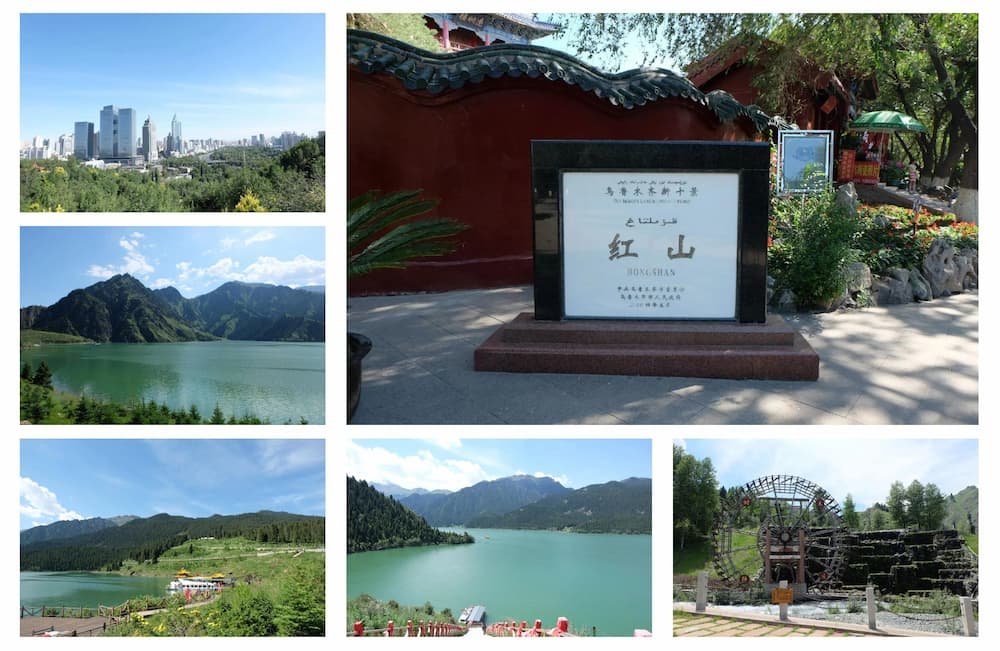
Urumqi is where almost every self-drive trip starts, and it is the only place in the region with a genuine coworking scene. I spent my first nine nights there, working from a bright cafe near the university district that charged 38 yuan for a bottomless coffee and never asked me to leave. The wifi ran at a steady 90 Mbps, which handled video calls with London better than my apartment back home.
For proper desk space, the city has two or three shared offices aimed at local startups. I paid 25 yuan an hour at one near the business strip, got a sit-stand desk, and a quiet room with a door. On a Tuesday in June I counted eleven other laptops around me, four of them clearly foreign. The cafe culture here is real and growing, with oat milk now standard at the better spots and baristas who will remember your order by day three.
Logistics in Urumqi are painless. The international airport has a metro link to the center, ride apps work without a hitch, and the old town south of the main square is walkable after dark. I treated the city as a weekly reset: laundry, a proper grocery run, a long cafe session to clear the backlog, then back to the open road.
Staying Connected on the Road
The single biggest worry for any remote worker here is signal. The good news is that it is solvable before you land. I set up eSIM data cards before my flight, and the moment I cleared customs my phone was online. A 20 GB plan ran me about 130 yuan and lasted three weeks of maps, calls, and tethered laptop use.
Still, the region is enormous and some passes drop you to zero bars for an hour at a time. I learned to download everything the night before a big drive. The offline maps and roaming setup I used saved me on the road from Kuqa to the southern edge of the Taklimakan, where a wrong turn would have meant 60 km of nothing but poplar trees and silence.
A practical tip that took me too long to learn: carry a second device as a hotspot backup. My phone died at 4% outside Dushanzi one afternoon, and the spare tablet kept a client call alive while I nursed the car battery. Small redundancies turn a crisis into a footnote.
The Cafe Route: From Urumqi to Sayram Lake
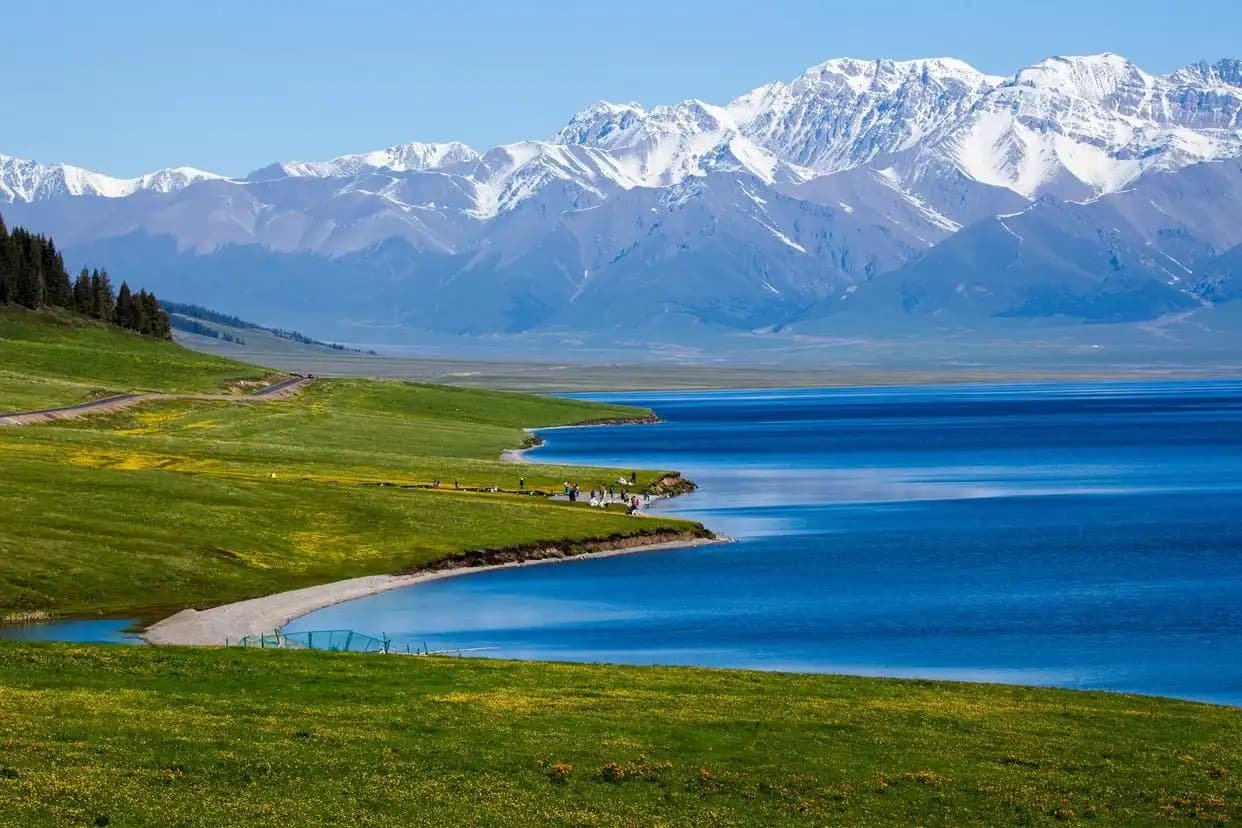
Once the base is set, the fun begins. I built a loop that linked decent work spots with scenery I could not get anywhere else. The first leg ran 540 km west to Sayram Lake, a sheet of blue water at 2,000 meters that freezes most of the year but turns electric in August. I worked from a lakeside guesthouse each morning, then walked the shore before the afternoon wind picked up.
Kuqa was the surprise. I expected a dusty stopover and found a restored old town with rooftop cafes serving proper flat whites for 32 yuan. I uploaded a 1.2 GB photo batch there in twenty minutes, something I could not have done three towns earlier. The southern route rewards patience: long drives, sudden oasis towns, and a cafe appearing exactly when your coffee needs a refill.
Altay in the far north was the opposite experience: cool, green, and quiet enough that I finished a whole report in one sitting at a wooden table by a river. The drive from Urumqi to Altay is 620 km of changing terrain, and I split it over two days, working a half day from each overnight stop. That is the trick of this region. You do not choose between work and travel. You let the distance structure both.
Where to Sleep Without Breaking the Budget
Nightly costs stay low if you know the pattern. I averaged 160 yuan for a clean guesthouse room with fast wifi, and 90 yuan for the occasional hostel bunk when I wanted company. The budget hostels here are cleaner and safer than their reputation suggests, and several now have dedicated work corners with power strips and decent chairs.
For longer stays, monthly rent drops fast. A friend of mine kept a one-bedroom apartment in Yining for 1,800 yuan across September, worked from the balcony overlooking the river, and only moved when the first snow threatened. That kind of arrangement is the real digital-nomad play: commit to one town for a month, build a routine, then trade it for the next.
I kept a simple rule. Spend under 200 yuan a night on sleep, under 50 yuan a day on coffee, and the rest of your money goes to fuel and fruit. The fruit alone is worth the trip. Roadside melons in August cost 2 yuan a kilo, and I ate more cantaloupe in three months than in the previous decade.
Power, Plugs and the Quiet Art of Charging
Before the romantic part, a boring truth: your plan lives or dies on power. I carried a 65W GaN charger that ran my laptop, phone, and a power bank from one wall socket, and a 20,000 mAh bank that bought me a full extra day off grid. Most guesthouses had the right sockets, but a few older buildings in the southern towns used the round-pin style, so a small adapter lived in my bag permanently.
The car mattered more than I expected. My rental had two USB ports and a 12V socket, so I charged the bank while driving the long empty highways between Kuqa and the desert’s edge. On the 300 km stretch with no town in sight, that trick kept my phone at full and my maps alive. Treat the vehicle as a rolling power station and you stop worrying about the next plug.
Working the Southern Silk Road
The north gets the lakes and the brochures, but the south hooked me deeper. From Kuqa I followed the old oasis chain south, where every town sits like a green comma in a sentence of sand. I worked from a courtyard teahouse in one such town for two mornings, the owner bringing endless cups for 15 yuan and never once suggesting I leave. The light through the pomegranate trees was better than any office plant I have owned.
The southern route tests your connectivity plan hardest, which is exactly why the offline maps setup earns its keep. I drafted a long piece there with no signal at all, then drove 90 km to the next oasis and uploaded it in one go. That rhythm, write offline and send in bursts, became my default. It is slower than constant streaming but somehow calmer, and the work was better for it.
A Sample Two-Week Workation Plan
If you have a fortnight and a laptop, here is the route I would hand a friend. Days one to three in Urumqi, setting up the SIM, finding your cafe, and clearing email. Days four to six, drive to Sayram Lake, work mornings, and hike the rim. Days seven to nine, push south to Kuqa and use the cafes as a base for the canyon drives. Days ten to twelve, loop back east through the desert highway, saving the big uploads for the towns with signal. Days thirteen and fourteen, return to Urumqi for a final sprint and a proper hotpot.
The total driving came to about 1,900 km, fuel was roughly 900 yuan in my efficient rental, and I never went more than four days without a fast connection. I shipped a 6,000-word feature from that trip and still had time to swim in a mountain lake.
The Honest Downsides
No guide should hide the rough edges. The region is far, and a flight from Europe or the east coast is long and often involves a connection. Border areas require permits, and you should check the current rules before pointing the car toward the remote western counties. Some guesthouses list wifi that barely reaches the second floor, so I always tested speed on arrival and moved if it failed.
Winter is a different country. From November to March, temperatures in the north drop below minus 20 Celsius, and many mountain passes close. I would not attempt a workation then unless you love isolation and own a serious coat. Late spring through early autumn is the window, with September my personal favorite for clear air and thin crowds.
What I Would Tell a Friend
Bring the laptop. Xinjiang taught me that remote work is not about where the office is, it is about whether you can find a quiet table, a steady signal, and a reason to close the computer at five. This region gives you all three, plus a backdrop that makes every video call background look like a postcard.
Start with a week in Urumqi and one good cafe, then let the road pull you outward as the work allows. Book the guesthouses with the fastest reviews, not the cheapest, because an hour of lost upload time costs more than the price difference. Tell your clients you are unavailable after 6pm your time, then mean it. The whole point is that the screen stops at the right moment and the mountains take over.
Three months in, my only regret is that I did not stay longer. The work got done. The photos got taken. And somewhere between Urumqi and Altay, I stopped thinking of it as a trip and started thinking of it as a place I could actually live. If your job fits in a backpack, this is one of the last great corners of the world where that still feels like an adventure.