
Refueling in Xinjiang: Fuel Prices, Payment Methods & Remote Range Planning

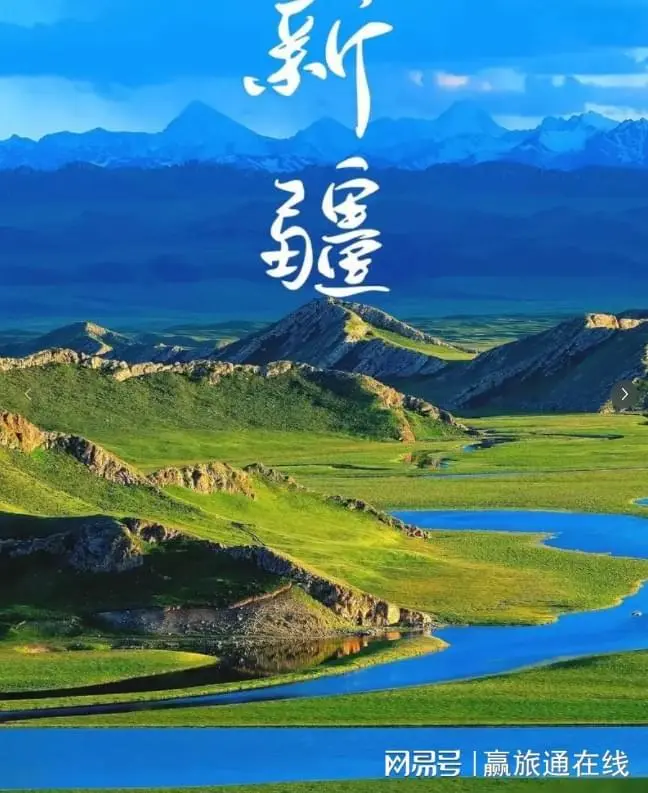
My first drive into Xinjiang was July 2021, off the expressway at Liuyuan, Gansu, heading toward Hami. With half a tank I figured a province this size could not lack a station. Then came the Gobi between Xingxingxia and Hami: signal came and went, the roadside held nothing but tumbleweeds, and the needle crept down while my palms sweated. I later learned the real difficulty of driving Xinjiang was never the road — it was fuel: when to fill, what grade, how to pay, and how to keep a margin in no-man’s-land. This piece lays out the pits I fell into and the prices I logged, so you do not sweat it like I did.
Xinjiang’s gas stations come in four flavors
Most people think stations are just PetroChina and Sinopec. In Xinjiang you soon meet a third.
The most common is PetroChina, red sign with yellow text, everywhere on national roads, in county towns and at highway exits — my trusted fallback. In 2023 on the northern loop from Urumqi through Karamay to Burqin, I saw its sign at nearly every county entrance. Fuel is stable, receipts easy, and the Kunlun card works nationwide, easiest for long hauls. One National Day on the G217 a station’s system failed and cards would not read, but cash still worked — that “there is always a way to fill” feeling is its most valuable trait.

Sinopec has slightly fewer outlets than PetroChina, but is easy enough to find around Kashgar, Hotan and Aksu. Prices are nearly level, a cent or two per liter at most, not worth detouring for, and my 2.0T SUV felt no difference between them. The one “difference” was in Hotan, where Sinopec ran an app discount — ¥8 off a ¥200 fill, which covered a plate of polo rice.
The interesting one is the Bingtuan (Production and Construction Corps) station. Corps regiment farms spread across Xinjiang, many with their own fuel system under a “Bingtuan Petroleum” or regiment name. In 2022 around Shihezi and Fangcao Lake, Bingtuan stations ran about ¥0.2 to ¥0.4 cheaper per liter than PetroChina; on a 60 L tank that saved ¥14–15. The downside is many small stations with low brand recognition, easy to overshoot — search “Bingtuan fuel” on Amap first.
The fourth type is the private station. Prices are often lowest, sometimes over ¥0.5 below PetroChina, but the water is deepest. In a southern county I saw one listing 92 at ¥6.9, far under official; I dared only 20 L as a test and 200 km later the warning light blinked once. An old hand told me: private stations are not off-limits — the ones open for years with locals queued up are usually fine; a lone station in the wild with a suspiciously low price, push on to PetroChina. When unsure, look at the cars: a row of out-of-town tourist plates means trust it.
92 or 95 — what your car should take
This is the question I get most. The answer is simple: read the line inside the fuel flap. Most family cars say “use 92 or above unleaded,” so take 92; no need to force 95. Mine says exactly that, and three years on 92, from the Pamirs to the Turpan basin, never a problem. Forcing 95 will not hurt the car but costs ¥100–200 a month for nothing.
If your car has a high compression ratio and the manual demands 95, take 95 honestly. Xinjiang’s 95 supply is widespread above county level; only the remotest township stations may carry only 92. In 2024 a friend in an imported performance car on the Duku found Qiaolma out of 95 and waited half an hour for a tanker. So if your car needs 95, fill at the start before the mountains; do not bet on a mid-route station.
One missed point: at altitude, lower-grade fuel resists knock better. Many passes sit at 3,000–4,000 m — Hashilegen on the Duku is about 3,400 m, thin air, lower in-cylinder pressure, so blending in 92 once or twice will not ping. But that is emergency logic, not daily advice; follow the manual. A Urumqi mechanic with a decade’s experience put it best: “Use what it says, no tricks.”
Diesel owners are separate. Many Xinjiang off-roaders, pickups and RVs run diesel. Zero diesel runs about ¥7.3 in the north, a bit higher south, well below gasoline. Winter is another matter, covered later.
Prices: is Xinjiang fuel expensive
A number first. Across 2024–2025, 92 in northern cities like Urumqi and Changji ran about ¥7.6 to ¥7.9 per liter, 95 about ¥8.1 to ¥8.5. Xinjiang sits near the oilfields with low transport cost, so fuel is actually two or three cents cheaper than the eastern coast.
But do not cheer yet. The remoter you go, the higher the price climbs. Along the Taklamakan desert highway, 92 reaches ¥8.3 to ¥8.7; toward the Pamirs at Bulunkou and Tashkurgan, transport is so hard I have seen ¥8.8 even past ¥9. A tank can differ by ¥30–40. So in a long-haul budget, do not price fuel at city rates — expect about ¥1 more per liter on remote stretches. My Kashgar–Tashkurgan–Kashgar round trip of about 600 km cost nearly ¥60 more in price gap alone.
Cities differ slightly too. Karamay and Dushanzi by the oilfields stay among the cheapest, 92 often around ¥7.5; Kashgar and Hotan run a bit higher; Hami and Turpan middle. If you pass Karamay, fill there rather than at a scenic gate. Turpan summers hit 50°C and gasoline evaporates fast; some old stations lack shade and the fumes are strong, but the price does not drop, so fill anyway.
Diesel users breathe easier — zero diesel about ¥7.3 in the north. Winter is separate: from November the northern night drops to minus twenty or thirty, you need −35 diesel, a step up in price and not stocked at every station. I covered this in the winter Xinjiang self-drive guide; getting a diesel through winter is its own study.
For the big picture — how fuel fits against tolls and lodging — see the 2026 Xinjiang travel budget breakdown, which spreads daily costs by travel style.
Cash or phone — which is more reliable
In cities and county towns, WeChat, Alipay and UnionPay flash pay all work.
But Xinjiang is vast and signal is the hard limit. Into the mountains, desert or border regiment farms, 4G often drops to one bar or none. In 2023 on the Yizhao Highway my phone lost all network and could not scan; the ¥300 cash in my pocket saved the fill. Since then I keep ¥500 in small bills in the glove box.
A fuel card is worth getting. PetroChina’s Kunlun card and Sinopec’s card slot straight into the self-service pump, no phone signal needed, and they lock in discounts. Mine is Kunlun, recharged on the app, then just insert at the station. For border and no-man’s-land stretches this beats cash. One catch: some small stations run old systems that reject out-of-province cards, so still carry cash. I was burned once at an Altay regiment station where my Hangzhou-issued Kunlun card would not read, and I dug out ¥200 to escape.
Some stations near borders and checkpoints fuel only by ID face-scan, so the driver’s documents must be on hand. Once I sent my passenger to fuel; the station required “whoever drives does the scan,” a wasted trip. Documents, cash and card — all three ready is what “settled” means. Night checkpoints check these too.
Range planning on remote stretches is the real skill
A few roads I have driven and seen others stranded on.
The Duku Highway runs about 561 km and opens only five months a year. Fuel points cluster at Dushanzi, Qiaolma, Nalati, Bayinbuluk and Kuqa; long middle sections are no-man’s-land. The Qiaolma–Bayinbuluk stretch is about 150 km over several passes, burning more than flat road — my car’s usual 9 L/100 km hit 12 there. My method: fill at the start, top up at Nalati and Bayinbuluk, never bet on “the next station has it.” For the road’s scenery and timing, the Dushanzi self-drive guide breaks down the nodes; read it alongside the fuel points.
The Taklamakan desert highway — the 522 km Minfeng-to-Luntai crossing, the world’s longest through a shifting desert. It has service areas, but not all fuel year-round. In 2022 I filled at Minfeng, topped up at the mid-desert Tazhong PetroChina, and saw no station until Luntai. Rule: if your tank is low before the desert, do not enter; loop to the nearest county and fill. A breakdown in the desert can mean rescue counted in days; summer cabin temperatures hit sixty or seventy degrees.
The same logic holds for the Yizhao and Karakoram highways. Yizhao from Yining to Zhaosu is under 200 km but crosses the Wusun mountains with fewer stations; I fill at Yining first. The Karakoram (G314, Kashgar to Tashkurgan), about 300 km, climbs past 4,000 m; Oytak and Bulunkou have stations but not densely — filling at Kashgar before the mountains is the floor. A less-mentioned road, the Ahe Highway (Aral to Hotan), crosses the southern Taklamakan, about 430 km with wide service gaps and few travelers, so plan more conservatively.
My iron rule: whenever the nav shows the next fuel point beyond 200 km, or the road enters a “no signal” zone, fill at the current station even if you have only run 300 km. A 10–20 L reserve can (a proper anti-static can, not baking in the cabin) works too, but I avoid carrying fuel for heat-safety and prefer “fill early.”
Range has a seasonal side. In July and August, queues of half an hour at popular stations are normal; from October some mountain stations close early. So on remote stretches do not run to the last bar; keep a full bar of margin. One early October on the Duku, the Bayinbuluk station closed at 6 p.m.; lucky I had topped up at Nalati at noon.
Fuel at altitude is a little different
Drivers on the Pamirs and Kunlun notice the car seems “stronger” up high. The higher you go, the thinner the air, intake drops, but the ECU leans the mix so power dips a bit. At Tashkurgan (about 3,100 m) I ran 92 and the car was as smooth as on the plain.
What to really guard is cold and ice. Pamir nights drop below zero; a station’s pipe and your fuel cap can freeze. Once at Bulunkou the cap froze shut and warm water freed it after half a minute. Avoid fueling at the coldest dawn and dusk; midday is smoothest.
CNG stations: gas car or gasoline car
Xinjiang is among China’s most CNG-saturated provinces; taxis and many local cars run on gas. Stations cluster in city circles like Urumqi, Changji, Shihezi and Korla, about ¥3.8 to ¥4.5 per cubic meter — cost per km far below gasoline, saving local drivers real money.
If you live here and commute, CNG is great. But as a long-haul tourist I do not recommend renting a CNG-only car: station density is far below gasoline, and outside the city circle finding gas is a lottery. I saw a couple in a CNG sedan from Kashgar to Tashkurgan run short with no station and call a tow. Dual-fuel (gas and petrol) cars are the exception — out of gas, petrol backs you up, and these thrive in Xinjiang.
Plain conclusion: tourists on long trips, burn petrol; leave CNG to locals. Unless you rent dual-fuel and stay between northern cities, then you save. The 2026 Xinjiang travel budget breakdown spreads fuel, tolls and lodging so RV, sedan and CNG costs are all clear.
Lessons from a few near-disasters
First, the Xingxingxia stretch — “do not trust half a tank to reach the next city.” Second, on the Pamirs, 95 ran out and I waited forty minutes, a line of cars behind me. Third, the stupidest: I split my fuel card and ID into different bags; at a border-area station that required a face-scan, the card was in one bag, the ID in another. Now documents, card and cash all go in one envelope on the passenger seat.
Another time a friend’s car blew a tire on the desert highway; the tow truck’s first question was “do you have enough fuel to reach the nearest town.” Fuel is not just power, it is safety margin. This mirrors the backstop thinking in how to buy Xinjiang travel insurance: insurance is for after something happens, range planning is to keep it from happening. I recommend both, but in priority, first put yourself where insurance is not needed.
If your route touches sensitive border counties, have documents ready before fueling. Which places need a permit and how, the step-by-step border permit application spells out clearly; every time I take friends toward Kashgar I have them prepare early so the face-scan and checks flow without delay.
My southern Xinjiang fuel timeline
Take the 2022 Kashgar–Tashkurgan–Kashgar trip. Day one I filled 92 at Kashgar at ¥7.8, ¥468 for 60 L. Day two into the Karakoram, topped up 20 L at Bulunkou where the price had jumped to ¥8.6; mountains and wind pushed consumption to 11 L/100 km. Day three returning from Tashkurgan, only 92 at ¥8.9 was available, 30 L. Three days came to about ¥1,100, nearly ¥200 more than the same distance from Urumqi. The extra is transport cost and altitude stacked, not the fuel itself. I note each station’s name, price and liters in my phone; totaling on return tells me the real number, so next time I budget a flat ¥1 more per liter.
A money-saving trick: Karamay and Dushanzi are the region’s price lowlands; fill there en route. I once saved over ¥80 on a tank versus Tashkurgan. The “fill in low-price zones, top up only for emergencies in high-price zones” strategy pays off on long lines.
The hidden pits: meters, pitches and queues
First pit is the meter. Major stations need no worry, but some private nozzles “jump fast,” a full tank short by two or three liters. My fix: fuel at the same station long enough to log mileage and volume; if “the same tank clearly runs fewer km,” switch next time. Second is the pitch. Entrances push additives and coolant with a script — “your engine is carboned up, it will break down without this.” I smile and wave on; if I buy, it is a name brand from a city supermarket. Third is the queue. In July and August the Duku and Sayram Lake stations can queue twenty minutes at midday; go early or just before closing.
How Xinjiang fueling differs from inland
Inland you barely think about fueling — stations anytime, phone pays in a second. Xinjiang breaks that ease: stations 200–300 km apart, signal on and off, payment needing cash and card both. The habit shifts from “fueling is a by-the-way” to “fueling is part of the plan.” Once you flip that mindset, Xinjiang is easier than you thought — its stations are far but punctual, fuel stable, everything present, just a step ahead.
Fueling and checkpoints
Xinjiang has many checkpoints, especially south and toward borders. Fueling and passing a checkpoint are separate but often bound: before a checkpoint, best to have enough fuel, because beyond it is sparse. I fill in the nearest county before the checkpoint rather than after. At face-scan stations the driver must be present, so on a trip with rotating drivers, the fueling leg must be driven by the owner. Time windows matter too — some small stations close at six or seven in the evening, especially in mountains and regiment areas; do not arrive at closing. My rule: have the day’s last tank by 4 p.m., earlier rather than later. Night checkpoints also check documents; with documents on hand neither gate rattles you.
For first-time Xinjiang fuelers
If this is your first drive in Xinjiang, remember three lines: never let the gauge drop below one bar before seeking a station; cash and a fuel card beat the phone; on remote stretches fill and go, do not bet on the next station. Xinjiang’s stations are not as few as you fear, just not as dense; shift the inland habit of “fuel anytime” and the trip flows. Of the dozen-plus first-timers I have taken, the only one stranded ignored “fill early.” The rest now mark fuel points before departure, stay calm at the pump, and snap a photo before rolling on.
Frequently asked fuel questions
Q: Does 95 feel stronger than 92? A: For a car rated 92, barely noticeable — pure overspend. Q: Are private stations off-limits? A: Long-established ones with locals queued are fine; lone wild low-price stations, skip. Q: Can I carry a fuel can? A: Yes, a proper anti-static can in a ventilated trunk, out of the sun; declare it at checkpoints. Q: Are EVs easy in Xinjiang? A: City chargers suffice, but be cautious in no-man’s-land where range drops hard; this piece is about fuel cars. Q: Do prices change daily? A: They follow the NDRC schedule, adjusted every ten days; remote stations lag half a beat, and higher prices there are transport, not gouging.
A checklist before you leave
ID, license, registration — always on you, needed for the scan. ¥500 cash in small bills. Kunlun or Sinopec card, precharged. Before mountains or desert, fill the tank and screenshot the distance to the next fuel point. On remote routes do not trust half a tank; keep one bar margin. Private stations only those locals frequent; avoid lone low-price ones. In northern winter use −35 diesel. Tourists skip CNG; dual-fuel excepted. At altitude fuel at midday, avoid the coldest hours.
Once I knew the rhythm, Xinjiang fueling stopped scaring me — it just forces you to be a little more “planned” than inland. Treat fuel as part of the journey, not something you remember mid-road, and the Gobi, snow mountains and desert all become enjoyment.
At bottom, half the freedom of a Xinjiang drive comes from that endless road, the other half from knowing — the next tank, you will fill it steady. I keep the station names and prices from this piece in my phone and reread before each departure; three years on I have never panicked over fuel again. May your Xinjiang run let you fret over scenery, not the tank.