
No-Photo Zones in Xinjiang: Where Your Camera Should Stay Down
The lens that got waved down
On the G314 toward the Pamir, I once slowed to photograph a bridge and a soldier stepped into the road, hand up. No anger, just a clear signal: not here. I lowered the camera, smiled, and drove on, and that was the whole lesson of photography in Xinjiang. The region is gloriously photogenic and mostly welcoming to cameras, but some places are off-limits, and the cost of guessing wrong is a deleted card or worse. Knowing the line before you point the lens is the skill.
Military and border zones
The hard restriction is around military areas, which in Xinjiang are more common than a visitor expects: bases, training grounds, some bridges, border posts, and stretches near any frontier. Signs may read “military restricted zone” in Chinese or show a camera with a slash, and some posts have no sign at all, just a fence and a watchtower. If you see a soldier, a camera-icon sign, or a clearly sensitive installation, do not shoot it. The same rule covers the permit counties like Tashkurgan; near the actual frontier, the lens stays down. The Tashkurgan guide flags the sensitive stretches; I treat the last 30 km to a border as a no-photo zone by default.
Infrastructure you should skip
Across China, certain civilian infrastructure is also off-limits on camera: airports, train stations inside, some large bridges and tunnels, and police checkpoints. The checkpoint is the live one, a traveler snapping the setup annoys the officers and risks the phone. I keep the camera in the pocket at every checkpoint and every bridge that feels strategic, and I shoot the scenery from a distance on public land instead. The photography route guide maps the safe landscapes; the gap is the infrastructure.
People and consent
The rule I hold dearest is the simplest: ask before you photograph a person, especially in a village, a bazaar, or a religious setting. A raised camera in someone’s face is rude anywhere; in a close community it reads as worse. I point, smile, mime the camera, and shoot only after the nod. The etiquette guide says the same in other words; consent is the whole of the law. Markets are fair game for the stalls, less so for the faces, and a “may I” in a few Uyghur words opens more doors than a long lens.
Religious sites
Mosques and mausoleums vary. Some welcome photography of the courtyard, some charge for it, some forbid it inside. The Id Kah Mosque guide and the sacred-sites guide note the practice; on the ground, I look for the sign or ask the attendant. During prayer, especially the Friday noon and the sunset prayer in Ramadan, I do not photograph the worshippers at all, out of respect and because it draws a complaint. The Ramadan guide covers the timing; the point is let worship happen, then shoot the architecture.
Drones overlap the same lines
The drone rules are their own subject, covered in the drone guide, but the no-fly zones sit exactly where the no-photo zones do: frontiers, military areas, cities’ centers, and most scenic reserves. If you would not point a camera, do not launch a drone. I treat the drone as the stricter tool, a no-fly map loaded before I leave the hotel, because a careless launch near a post is the fastest way to lose the aircraft and the welcome.
The polite retreat
If someone signals you to stop, the only right move is to smile, lower the camera, and if asked, delete the frame on the spot. Arguing reads as guilt and escalates a non-event. I have deleted a landscape shot that caught a fence by mistake, and the officer waved me on in ten seconds. Compliance is not submission; it is how a visitor shows they understand the ground rules. The safety guide frames the same calm habit for the whole trip.
What you can shoot freely
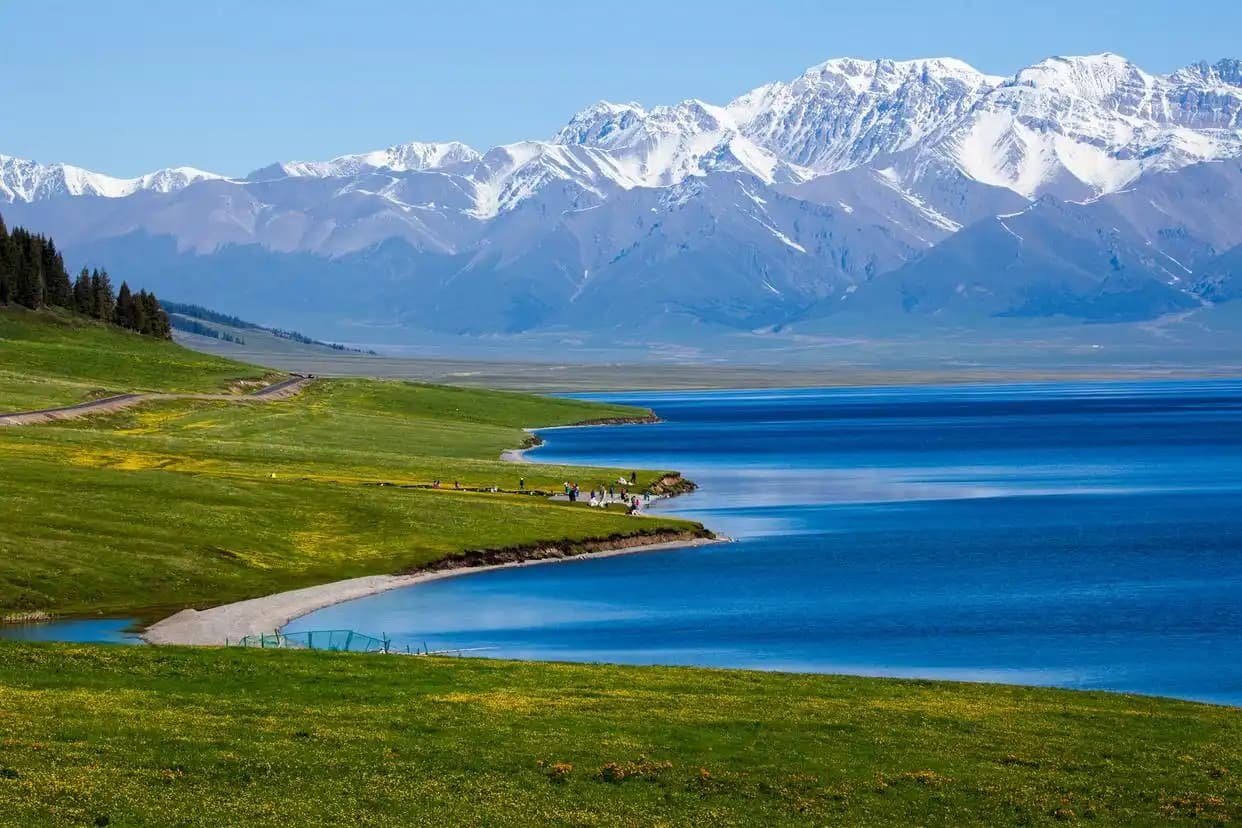
Most of Xinjiang is open to the lens: the lakes, the mountains, the roads, the bazaars’ goods, the grasslands, the deserts, the star fields. The stargazing guide and the best-time guide point at the easy subjects. A long lens from a public road, shooting a mountain and not a post, is normally fine. The line is military, border, infrastructure, and people without consent, and outside that line the region is one of the most rewarding places I have ever pointed a camera.
A pre-trip habit
Before any remote drive I write down the sensitive zones from the permit guide and the drone map, and I brief my passenger: “no lenses near fences, ask for faces, pocket the phone at checkpoints.” The first-timer FAQ pushes the same preparation. Ten seconds of briefing saves a deleted card and a bad memory. Xinjiang rewards the photographer richly; it only asks that the photographer know where not to look.
A sign I learned to read
The most useful sign is the one I almost missed, a small white board with a red circle and a camera, often at a bridge or a junction near a town. It means no photography, and it is the law, not a suggestion. I now scan every bridge and every fence line for it, and when I see it the camera goes down before I am told. The first-timer FAQ pushes the same awareness for documents; for a photographer the sign is the document. When in doubt, the absence of other tourists’ cameras is itself a clue.
Border towns specifically
In Tashkurgan, Khorgos and the smaller frontier posts, the no-photo rule tightens to the whole approach. The permit guide explains why, the line is real and the officers are serious. I keep the lens on the mountains and the lakes, never the posts or the gates, and I shoot the Tashkurgan scenery from a distance on public land. A portrait of the Pamir is fine; a frame of the fence is not, and the difference is a few hundred meters of respect.
Drones, the strict version
For a drone the zone is wider and the penalty harder. The drone guide lists the no-fly map, and it covers most of what this article covers, plus city centers and scenic reserves. I load the map before I leave the hotel and treat a red zone as a wall. A careless launch near a post is the fastest way to lose the aircraft and the welcome, and the local operator who sold me the permit will not argue on my behalf. The drone is the stricter tool; the camera is the cautious one.
What happened to a friend
A photographer I met lost a morning’s work at a checkpoint near the frontier, an officer asked him to scroll and delete the frames that showed the post, and he did, politely, and was waved on. No fine, no drama, just a deleted card and a lesson. The safety guide frames the calm habit; for a shooter, the habit is preview-and-delete before you are asked. Compliance costs a few frames and buys a clean conscience and a moving day.
Social media caution
A frame that is legal to take is not always wise to post. A checkpoint, a bridge, a known sensitive area, even from a distance, can read as careless online and draw a takedown or worse. I self-edit before I upload, dropping anything that shows a fence or a face I should not have shared. The etiquette guide is the off-screen version of the same rule; the internet is permanent, and a careless post outlives the trip.
The grey areas
Some places are unclear, a pretty bridge with no sign, a village near a post. Here I default to no, because the cost of a wrong yes is a deleted card and a delay, while the cost of a right no is one missed frame. The photography route guide lists the safe subjects; the grey is the gap, and I fill it with caution. A local shaking their head is the answer, not a debate, and the landscape will still be there at the next pullout.
A camera-bag checklist
Before any remote drive I pack the no-fly map on the phone, a lens cloth, spare cards, and a clear rule in my head: fences, posts, faces, ask. The essentials list is for the car; this is for the camera. I brief the passenger on the same, because two people noticing a sign beats one. The DIY planner should note the sensitive zones along the route, so the lens stays down before the moment arrives.
Why the rules exist
It is easy to read the restrictions as suspicion of visitors, and unfair to take them that way. The frontiers are live, the military is real, and a stranger’s camera at a post is a genuine concern anywhere on earth. I shoot the region’s staggering beauty, the lakes, the snow, the alleys, and I leave the fences to the map. The stargazing guide and the best-time guide point at the open subjects; the closed ones are few, and respecting them is the price of the rest.
Night photography and the dark
After dark the rules loosen in one way and tighten in another. A star field over the desert is fair game, and the stargazing guide points at the open skies; a long exposure of a frontier post at night is the worst possible frame, lit or not, and draws the fastest response. I shoot the sky from a public pullout well away from any fence, keep the tripod off the road, and never aim a long lens toward a lit installation. The dark hides nothing from a watchtower’s eye, and a red light on a camera draws more attention than a flash. The lesson from the no-photo zones holds at midnight: if you would not shoot it by day, the night does not make it legal.
Storing and backing up your cards
A deleted card at a checkpoint is a lost day, but a lost card at home is a lost trip. I shoot to two cards where the camera allows, and every evening I copy the day’s frames to a phone or a small drive, so a single deleted card or a dropped camera is a setback, not a wipeout. The essentials guide covers the power; the backup is the photographer’s version. I keep the originals off the cloud until I am clear of the sensitive zones, because uploading from a frontier town can prompt the same questions a frame would. Shoot freely where it is legal, store quietly, and the region’s beauty comes home intact.
The frame I am glad I didn’t take
I will end with the one that stays with me. At a Pamir pass a soldier posed for a photo with a traveler, smiling, and a second later waved the same camera away from the post behind him. The lesson was instant and kind: the people are welcome, the installation is not, and the line is drawn by the uniform, not the lens. I have kept that moment instead of a frame, because the story teaches more than the picture would. The etiquette guide says the same in prose; the Pamir said it in a gesture. A traveler who learns that line shoots the region freely and leaves the fences to the map, and the region shoots back with everything it has.
The no-photo zones are few and clearly bordered by common sense. Respect them, and the rest of the region is yours to frame, from the Pamir’s snow to a Kashgar alley at dusk.