
Xinjiang’s Silk Road Caravanserais: The Roadside Inns That Kept the Trade Alive
What a Caravanserai Actually Was
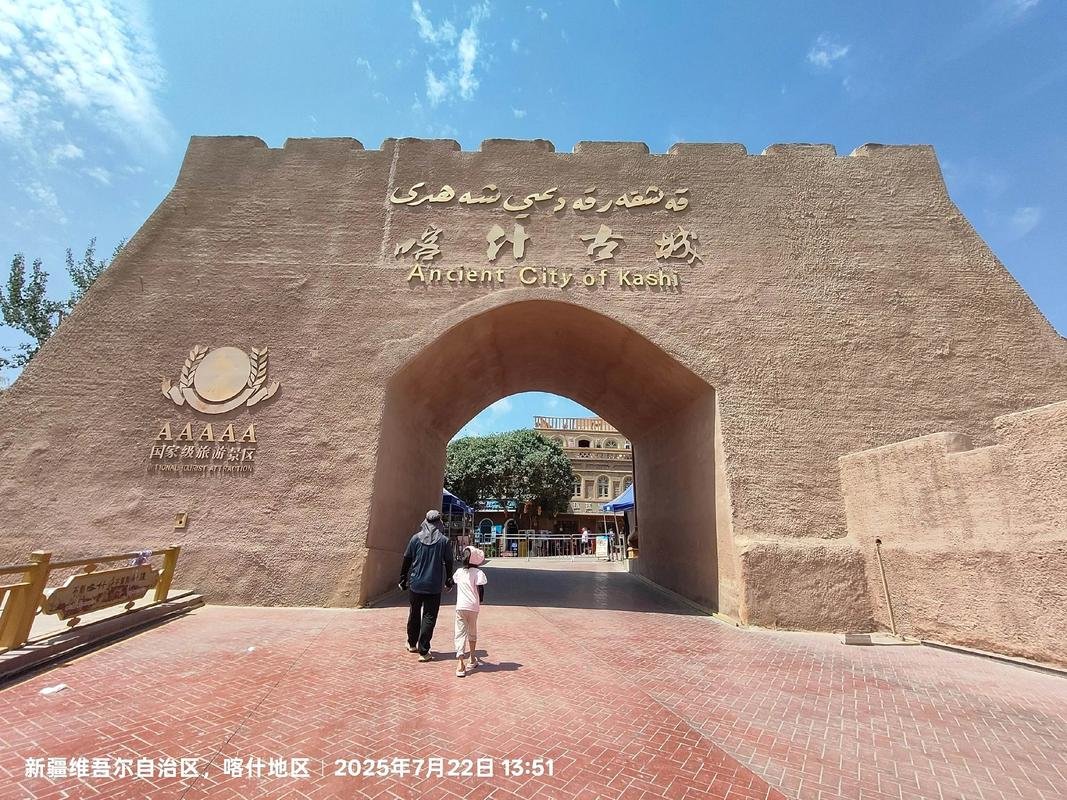
Last October I pulled off the G314 somewhere between Kashgar and Upal, not because my tank was low but because a low mud-brick wall caught my eye. Behind it sat a square courtyard ringed by a collapsing arcade, and a caretaker waved me in with a thermos of tea. That, I realised, was a caravanserai: the roadside inn of the Silk Road, the place where everyone from Samarkand merchants to Qing tax collectors once slept, fed their animals, and swapped news. The word comes from the Persian kārvān-sarāy, a building for the caravan, and Xinjiang is littered with them. You pass dozens without knowing.
Unlike the grand mosques and fortresses that get the postcards, caravanserais were humble, repeatable buildings. A typical one had a single vaulted entrance wide enough for a laden camel, a walled yard where beasts were unloaded, a raised platform or gallery for sleeping, and sometimes a small shrine or kitchen. They sat roughly a day’s travel apart, about 25 to 40 km depending on terrain, because that was how far a caravan moved before men and animals needed water and rest. When you drive the Tarim rim today and notice how oasis towns line up at suspiciously even intervals, you are looking at the ghost of that spacing.
I did not understand this on my first trip, treating them as background scenery and driving past. On the second, a flat tyre stranded me three hours near Aksu, and I walked into the nearest walled compound. The gate faced the road, the yard drained inward, and the sleeping platform caught the morning sun but not the afternoon wind. Someone had solved a problem I had not noticed, the same way, for a thousand years.
Why Xinjiang Has So Many of Them
Xinjiang was the seam where several Silk Roads met. The northern route ran the Tianshan foot through Kuqa, Korla and Turpan. The southern looped under the Taklamakan through Khotan, Niya and Miran. A central route cut across the desert on the river lines. Every route needed inns, and the harsh terrain made them survival infrastructure, not comfort. A traveller stranded between two caravanserais in January stood a real chance of dying. The Silk Road history of this region is really a story of these unremarkable courtyards holding the whole trade together.
The buildings survive unevenly. Mud-brick ones in dry climates, like the Turpan basin, have stood for 600 years with almost no maintenance. Stone ones on the wet Pamir erode faster. What they share is scale: most are bigger than they look from the road, often 30 by 40 metres, with walls a metre thick. I once counted eleven doorways off one yard near Korla, each worn differently.
There is also a political reason for the density. Every empire here, Han, Tang, Mongol, Qing, rebuilt the inns to claim the road, and a caravanserai doubled as tax post and garrison. The ruined forts above the oasis towns were the same system’s armed end.
The Ones You Can Still Walk Into
The easiest caravanserai to visit is inside the Jiaohe ruins near Turpan, where the inn quarter sits beside the Buddhist districts of a city abandoned around the 14th century. Jiaohe is compact and walkable, and the caravanserai structures there are clearly the commercial heart, not a side note. I spent a morning there and the layout made the economics obvious: rooms open onto a central street, and the street leads straight to the gate, so a merchant could unload, trade, and reload without ever leaving sight of his goods.
Nearby, the Gaochang ruins show a larger version of the same idea, a walled city with distinct caravan and temple zones a few kilometres east of Turpan. Gaochang is bleached and enormous, and the caravanserai blocks are rubble you have to imagine, but the scale tells you how much traffic this corner handled. For a quieter experience, Beiting, north of Jimsar, preserves a Tang-era garrison town whose inn district is among the best kept in the region and gets a fraction of the visitors.
Beiting deserves more than the half hour most people give it. I arrived at 4 p.m. and the caretaker unlocked a side gate he keeps shut. We walked the quarter alone. The sleeping platforms still hold the channels where rainwater ran off, and a mulberry throws shade across what was the livestock pen. It is the rare place you have the Silk Road to yourself.
Kuqa and the Temple Towns
Down on the southern route, the Subashi ruins outside Kuqa pair a caravanserai quarter with a major Buddhist monastery complex. Subashi mattered because Kuqa was a kingdom, not just a stop, and its inns served pilgrims heading to the cave temples as well as silk traders. The site sits on a river terrace now, and the wind off the Taklamakan makes the broken walls sing. I arrived at closing time and the guard still let me walk the eastern stupa; those small courtesies are common at the less-famous sites if you are polite and not in a tour bus.
What struck me at all of these places is how little they resemble a “ruin” in the European sense. There is no roped-off path and no gift shop. You climb over the same threshold a Bactrian camel once ducked through, and the only interpretation is sometimes a single steel sign in three languages. That is part of the appeal and part of the risk: bring water, a hat, and your own sense of the past, because nobody will hand it to you.
Kuqa itself is worth a night. The old town runs on the same clock the caravans did, awake at dawn, quiet by noon, loud again at dusk. I ate laghman at a stall whose owner pointed, without a word, at the ruined wall behind his shop. That wall was almost certainly part of an inn. The town has done this for fifteen hundred years.
The Living Caravanserai
Not everything old is abandoned. Many oasis towns still run a hans, the Uyghur word for the same inn, as working buildings. The covered bazaars of Kashgar and Hotan often occupy former caravanserai courts, where early arrivals still see donkeys and three-wheelers delivering goods through the old archways. The logic has not changed in a thousand years: a walled court, a gate you can shut at night, and a roof over the stuff that cannot get wet.
I stayed one night in a restored han outside Yengisar, the knife-making town, its original vaulted gateway kept, rooms built around the yard. Sitting there after dark, listening to the wind and the occasional goat, the continuity was easy to feel. The food of the region grew up around these courtyards: the nan baker at the corner, the tea seller by the gate, the melon pile in the shade, none needing a museum to explain.
The best version I found was in Kashgar’s old city, where a working han still takes overnight traders. For 40 yuan I slept on a raised platform under a vaulted roof and woke to someone sweeping the yard. I have paid ten times as much for worse sleep in a chain hotel, and learned less doing it.
The Stone Caravanserais of the Pamir
The southern run out of Kashgar toward Tashkurgan is where the caravanserai idea gets serious, because the terrain is unforgiving and the next roof is often a long way off. The first proper one sits at Upal, about 15 km past the city, a stone compound beside the river where traders last watered. Beyond it the road rises hard. At Karakul Lake, roughly 190 km from Kashgar near 3,600 metres, a ruined stone inn stands where camel trains paused.
I drove this stretch in late September. The poplars along the river were turning, and the wind had the cold edge that means snow is near. At one stone site a shepherd invited me to share his fire, and we sat without much language. That is the part the guidebooks miss. The reason to slow down is the people still living the same road.
These high sites need the border permit that Tashkurgan county requires, and the checkpoints actually check it. I applied in Kashgar three days before leaving, paid 5 yuan for the photo, and had the paper by afternoon. The gate is 120 km from anywhere that prints permits, so do not treat this as fixable on arrival.
Practicalities for the Self-Driver
Most caravanserai ruins are free or cost 15 to 30 yuan, and rarely crowded except at Jiaohe and Gaochang in peak summer. Open hours are loose, often 9:30 to 19:00 in summer and shorter in winter. Roads to the famous ones are paved and signed in English as well as Chinese. The remote stone ones on the Pamir, near Tashkurgan, need the border permit that the southern counties require, so sort that paperwork before you go.
Bring your own water and shade. There is almost no facility at the ruins themselves, and the Tarim summer heat routinely hits 40°C by noon. I learned to visit these sites before 11:00 or after 17:00, which also gives you the best raking light on the mud walls for photography. A good pair of closed shoes helps; the ground is broken brick and camel thorn, and sandals turn the visit into a limp. Fuel is the other thing to plan. I never let the gauge drop below a third between Turpan and Korla, because the gaps between stations out here are 80 to 120 km of nothing.
One more practical note: gates close when the caretaker leaves, not when a sign says they do. I have been locked out at 18:10 and let in at 19:40 elsewhere the same day, no explanation. Build slack into the day and treat posted hours as a rumour.
Reading the Landscape
Once you know what to look for, the whole drive changes. A straight stretch of old road between two towns, a low wall on a hill, a clump of poplars where none should be, these often mark a caravanserai or its oasis. The poplars are the giveaway: people planted them for shade and fodder, and where people planted poplars a thousand years ago, they usually planted an inn too.
I now plan routes around these stops rather than past them. A day that links Kuqa’s Subashi with the red cliff canyons east of town and ends at a working teahouse is far richer than ticking a list of cities. The caravanserai teaches you to slow down, because the road was never meant to be rushed. The merchants who built this network understood that the journey, not the destination, was the point.
A Day on the Northern Route
For a single manageable day, start in Turpan and go north. I left at 8 a.m., paid 35 yuan to walk Jiaohe in the cool, and on the G30 by 10. It is about 290 km to Jimsar, Beiting a short hop off the highway. I reached it around 1:30 p.m., ate noodles for 18 yuan, and had the quarter to myself. The loop back to Turpan ran roughly 600 km on a full tank, and taught me more than a week of museums.
The northern route has the better weather for most of the year. Turpan in July is a furnace, but Jimsar stays 10 to 15 degrees cooler. I would rather do this loop in May or September than fight midsummer on the Tarim.
When to Go
Timing matters more than the guidebooks admit. April to early June is my favourite window: green poplars, clear passes, and empty sites before the domestic summer rush. September and October are nearly as good. Avoid July and August in the basins, where Turpan and Aksu pass 40°C and the ruins offer no escape. Winter works but the Pamir permits get harder and the Daban pass can close on snow, stranding you in Tashkurgan until the plows run.
I have now done this road in three seasons. Spring was the kindest and autumn the most beautiful, while summer is the one I would skip. The caravanserai does not care which you pick, but your comfort does.
A Sample Loop for the Self-Driver
For a longer trip, link the clusters. Fly into Urumqi, drive the G30 to Turpan (180 km), spend two days on Jiaohe and Gaochang, then north to Jimsar and Beiting (another 290 km). Drop south via Korla and Kuqa, where Subashi waits 22 km out of town. The Kashgar to Tashkurgan leg is 290 km each way, so plan an overnight. Count on roughly 1,400 km across a week, plus border paperwork.
This loop works because the sites are not random. They sit where the old road forced them, so you end up in courtyards, not on the highway. The buildings were made to break a long road into human pieces.
A Note on Respect
Several of these sites are also Muslim burial or worship adjacent, and local communities care about them deeply. Dress modestly, ask before photographing people, and never climb on structures marked fragile. The caretakers are often locals who have tended the place for decades on almost no pay; a small donation or even just a thank-you in broken Uyghur goes a long way.
If you take one thing from a caravanserai visit, let it be this: the romance of the Silk Road was mostly logistics. The poetry came later. The buildings that actually kept the trade alive were practical, repeated, and humble, and Xinjiang still has hundreds of them waiting by the side of the road.