
Wild Honey and Tianshan Black Bees: A Road Trip Guide to Xinjiang’s Sweetest Stops
Last July I pulled off the G30 expressway near Yining with a throat dry from desert dust and bought a plastic cup of honey from a roadside stand that changed how I think about the stuff. The woman running it dipped a stick in and let the ribbon fall back slow and glassy. I paid 40 yuan for a kilo and ate it by the spoonful that night on flatbread. Xinjiang’s wild honey, gathered mostly by the Tianshan black bee, is not a souvenir you tolerate. It is one of the real reasons to drive the western loop in summer. This guide is what I wish I had read before my first jar, and what I learned after three more trips chasing the flower bloom up the mountains.
The Tianshan black bee
The bee behind most of this honey is a distinct mountain strain, a dark, heavy-bodied animal that survives winters at minus thirty and flies at altitudes where other bees quit. Locals call it the Tianshan black bee. It is a forest bee by habit, built for short summers and long cold, and it forages across a huge range of wildflowers rather than a single crop. That mixed diet is the whole secret of the flavour.
I first saw a hive stack outside a herder’s winter cabin above the Ili valley, boxes weathered grey, bees moving in a low black cloud. The keeper told me in broken Mandarin and gestures that one strong colony might fill two boxes in a good year. He tapped the side and the hum dropped an octave. You do not need to understand the words to get the pride.
What matters for you as a traveller is that this bee produces thick, slow honey with a real floral backbone. Because the foraging season runs only from roughly May through August, the honey is harvested once or twice, not pumped out weekly the way factory apiaries do it. The result is denser and less uniform jar to jar. A cloudy jar is not a bad jar. It is usually the honest one.
The breed is also protected. Local agriculture stations keep registered queen lines and the good beekeepers are careful about who they sell stock to, because cross breeding with imported Italian honeybees weakens the cold tolerance that makes the Tianshan bee special. You will not see the breed in a city jar from a discount shelf. When a seller near the mountains can name the valley his bees work, that is a better sign than any label.
I learned to read the harvest rhythm on my third trip. Early summer honey, taken in June, is pale and mild from orchard and meadow flowers. Late summer honey, taken in August after the high herbs bloom, is darker and sharper, almost medicinal in a good way. If you go twice, buy both and taste the difference side by side at your hotel. That little experiment taught me more about honey than any book.
Ili and Tianshan honey regions
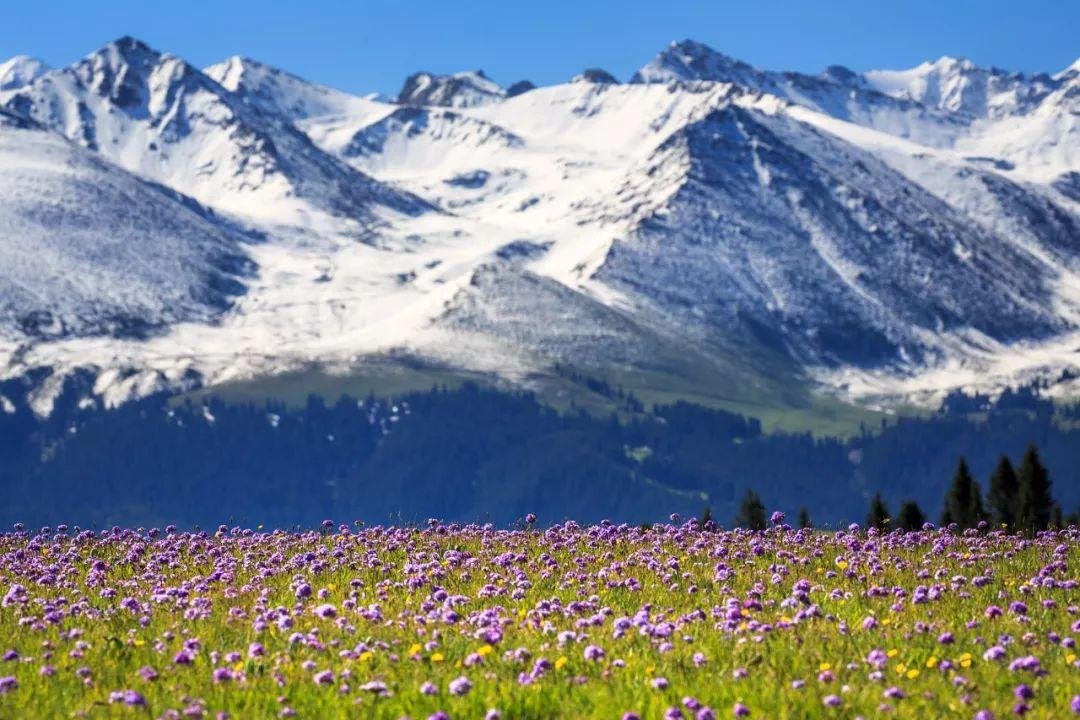
The flower meadow is the real product. The bees are just the collectors. Most of the honey sold to travellers comes from the Ili valley and the forests of the northern Tianshan, where snowmelt keeps the grasslands green well into summer while the basins bake dry.
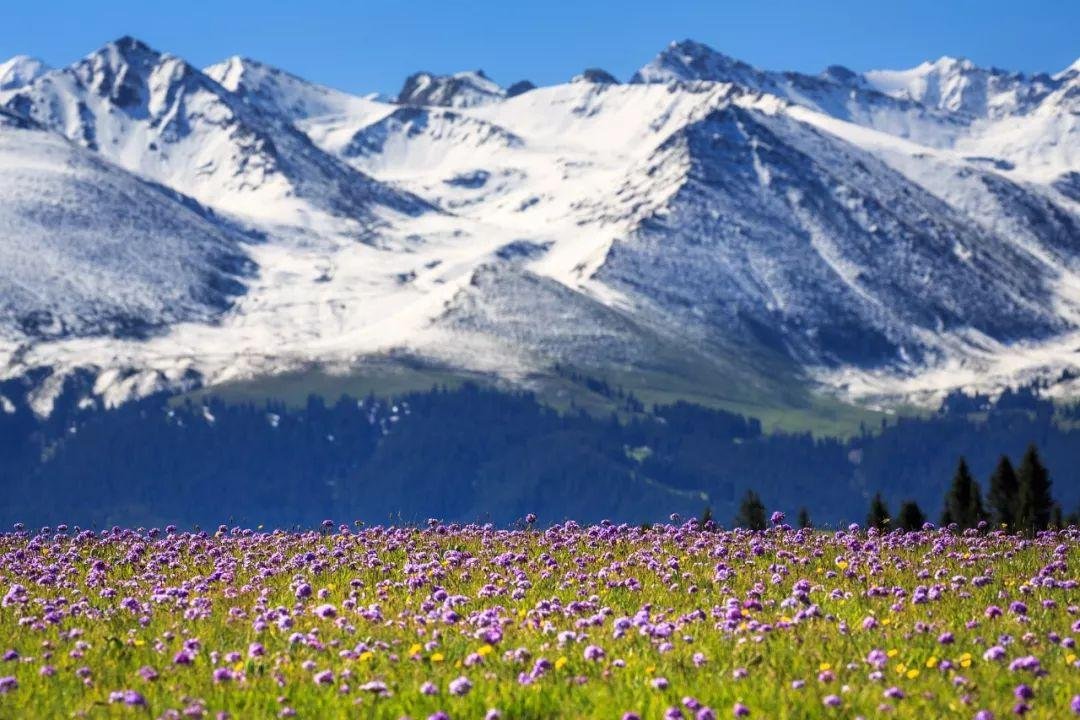
In Ili the bloom marches uphill. By mid May the fruit orchards and field flowers open around Yining and Zhaosu. By June the alpine meadows above 1,500 metres are thick with clover, vetches and wild herbs. July is peak honey month in the high pastures. If you drive the Ili spring flower route, you are literally driving through the bees’ pantry, and the roadside stands appear exactly where the bloom is best. I planned one trip around that route and hit honey stands every forty kilometres from Yining toward Zhaosu.
The northern Tianshan side, around places like the forests above Urumqi and the high meadows toward Bayinbuluke, gives a different honey. Cooler, more conifer and wild mint in the taste. It is harder to buy casually because the beekeepers are deeper in the hills, but the tourist stops on the Dushanzi to Bayinbuluke road often stock it.
Do not sleep on the smaller flower events either. On a later trip I detoured to see the wild tulips of the Barluk mountains in Yumin county, and found a handful of beekeepers there selling a pale, almost perfume-light honey from the steppe flowers. It was the most delicate jar I brought home, and the stands were three wooden boxes on a tarp with no sign in any language I could read.
Tasting and grading
You will not get a tasting flight like wine. You get a stick and a smile. Learn to read the jar instead.
Colour tracks the flowers. Orchard and clover honey is light amber and mild. Alpine meadow honey runs deeper gold, sometimes with a faint green edge, and tastes of herbs. Dark, almost red honey from wild roses or buckwheat is rare and strong, the kind you take a half spoon of. Smell the lid before you buy. Real wild honey smells like the field, not like sugar syrup.
Price is the other signal. A fair price in 2024 for raw, unblended honey bought at the source was about 35 to 60 yuan per jin, that is half a kilo, so 70 to 120 yuan per kilo. Stands near big tourist towns like Sayram Lake or Kashgar charged 80 to 120 yuan per jin and you pay for convenience. Anything under 20 yuan per jin at a busy market is almost certainly blended with imported syrup. I learned that the hard way with a jar that never crystallised and tasted of nothing.
Watch the container too. Real raw honey is sold in plain plastic buckets or glass, rarely in fancy gift boxes at the source. The fancy boxes belong to the city shops. If a field stand has engraved jars and a fixed price list in English, you are paying for packaging, not honey. The best buys I made were from buckets with a ladle and a scale, where the price moved a little depending on how much I took. Buy two jin and the per jin drops. Buy five and the keeper grins.
Crystallisation is not spoilage. Pure honey from cold mountain flowers often goes grainy by winter. Hold the jar in warm water, never boil it, and it clears. If a jar stays liquid and glossy through a Xinjiang winter, ask why. The fake stuff is engineered to stay pretty on a shelf.
Roadside stops to buy
The easiest honest honey I found was on the Ili loop, especially the stretch from Yining west toward Sayram Lake and the fruit-seasons towns. In June and July the parking areas fill with pop-up stands: a trestle table, five or six buckets, and a scale. Point at the bucket, taste, weigh, pay. Carry small cash because signal dies out there and the card readers are unreliable.
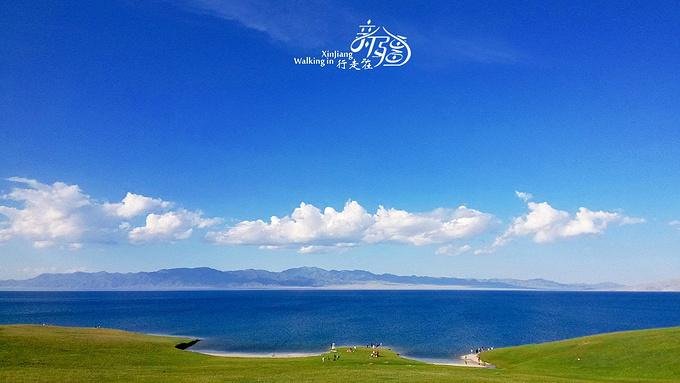
Around Sayram Lake the ring road has seasonal sellers near the south gate and at the herder camps where horses graze the lakeside. The honey here is alpine meadow, a bit pricier, and the view makes the stop worth it even if you buy nothing. I once ate yogurt with this honey at a yurt camp for 15 yuan and it beat any restaurant dessert I had all trip.
Time your stop with the weather, not the clock. After a cold wet week the bees forage less and the stands thin out, while a warm dry spell in July brings them out in force. I started checking the forecast for the Ili valley the way I check it for hiking, because a grey week meant empty tables and a blue week meant a bonanza. The herders know the pattern better than any app, so when you see smoke from a yurt and bees in the air, pull over.
In Zhaosu and the high pastures you can sometimes buy straight from the cabin, but you have to be invited. Do not walk into a fenced apiary unannounced. Beekeepers are friendly but protective of their colonies, and a surprised hive is a fast way to end a good day. Wave, wait, let them come to you.
For a clean, labelled product without the chase, the bigger bazaars in Yining and Urumqi sell branded jars from registered cooperatives, usually 50 to 90 yuan for a 500 gram jar. Less adventure, more certainty about what is in it. I keep one of each kind at home now: the wild roadside jar for eating, the labelled jar for giving away.
If your trip overlaps with Xinjiang’s fruit seasons, buy honey and dried fruit the same day. The stands sit side by side, and a bag of dried apricots plus a jar of orchard honey is the cheapest gift that actually tastes like the place. The dried fruits of the region keep for months and pack flat, which solves half your souvenir problem.
How to pack honey for the flight home
Honey is a liquid at security. Anything over 100 millilitres will not pass carry-on, full stop. Plan to check it.
I wrap each jar in two layers: a zip bag, then a sock, then a second zip bag, then a towel in the middle of the suitcase. On my second trip a jar cracked at the neck despite bubble wrap, and the double bag saved my clothes. Tape the lid with clear packing tape after you close it, and stand the jars upright between soft clothes. A hard-sided case is better than a soft one for this.
Buy honey late in the trip, in the last town before your flight out, so it spends less time rattling around. Urumqi’s airport shops sell sealed, labelled jars that are boxed for travel, and those are the safest to fly with if you do not trust your packing. For souvenir honey to take home, the registered cooperative jars in airport-approved boxes are worth the small markup over a bucket from a field.
One more thing. Declare agricultural products if your home country asks. Most nations allow small amounts of processed honey, but a sealed commercial label moves through customs faster than a mystery bucket with a wing sticker. I have walked through EU and US customs with both, and the labelled jar never got a second look.
The honey I remember is not the prettiest jar. It is the one I bought at a tarp table above the Ili valley at golden hour, bees in the air, a herder’s dog asleep under the table, and a woman who waved me off with a grin when I paid too much on purpose. That is the version worth the drive. Go in June or July, follow the flowers up the mountain, and let the bees do the rest.