
Naan Bread Varieties of Xinjiang: A Baker’s Tour
Abdulla starts his fire at 05:10. I know this because in October 2023 I asked if I could watch a full morning at his bakery on a side lane off Kuqa’s Youyi Road, and he said yes, and then seemed surprised when I actually turned up in the dark. By 06:40 he had pulled 94 rounds of bread out of a clay pit oven that reaches somewhere around 300°C. He sold the last one at 11:15 for ¥2.
Naan is the one food in Xinjiang you cannot avoid, and the one most visitors flatten into a single category. There are dozens of types. The differences are not decorative. They come from fuel, flour, fat content, oven depth and how long the bread needs to survive on a camel, a donkey cart, or now the back of a Wuling minivan.
The Oven Does Most of the Work
The tonur (tandoor in most English writing) is a clay-lined pit, usually 70 to 90 cm deep, fired with poplar or apricot wood, occasionally coal in colder towns. The baker slaps wet dough onto the inside wall and it sticks. Gravity, heat and the water in the dough do the rest.
Three variables produce almost all the variety you will see:
Dough hydration. Wetter dough sticks better and puffs more. Drier dough gives you a cracker.
Fat. Sheep tail fat, vegetable oil, or nothing. Fat means richness and a shorter shelf life.
Time on the wall. Ninety seconds gives a soft bread. Six minutes gives something that will still be edible in three weeks.
That last point matters historically. Along the southern Silk Road, traders needed bread that survived a fortnight in a saddlebag. The thin, dry, heavily docked varieties are travel food, engineered before anyone used the word.
The Main Varieties, Ranked by How Often You Will Meet Them
Toqach: The Everyday Round
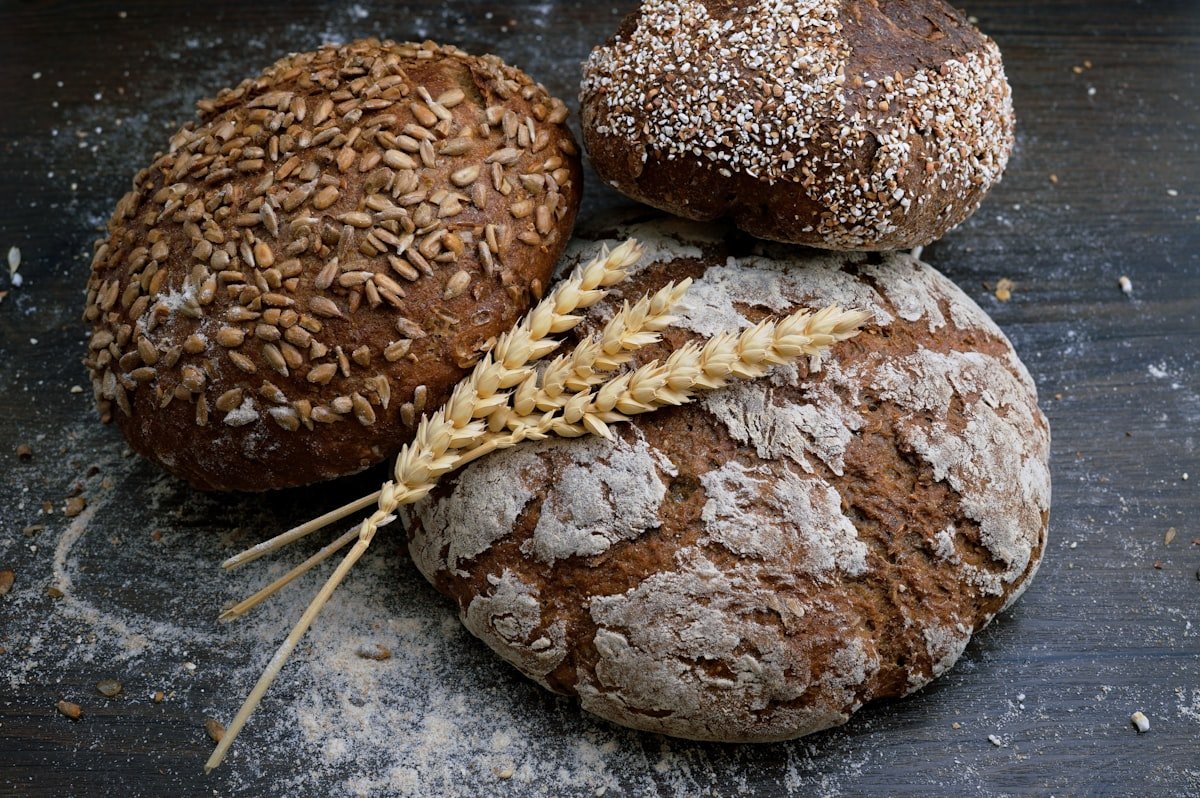
The workhorse. Roughly 20 to 25 cm across, 1 cm thick at the rim, pressed flat in the middle with a docker (a wooden stamp with nails, called a chekich) that both decorates the bread and stops the centre from ballooning. Slightly salty, no fat, faint char on the underside.
Price: ¥1.5 to ¥3 across most of the region. In Urumqi city centre I have paid ¥4. Anything above ¥5 for a plain toqach is a tourist price and you should walk another block.
This is the bread that goes with tea, with polo, with lagman, with everything. A household buys four to eight a day.
Girde Nan: The Thick Ring
My favourite, and the one people underestimate. Girde is small, maybe 12 to 15 cm, with a raised doughy rim and a deeply pressed centre, so it looks like a bagel that gave up. The rim is chewy. The centre is crisp. It uses more yeast and a longer proof, which gives it a faintly sour edge.
Best girde I have had came from a stall near the Kashgar night market entrance, where the baker adds a wash of oil and onion water to the centre before it goes in. ¥3 each. I ate there four separate evenings on my 2024 trip and bought two every time, which the man eventually found funny enough to comment on.
Girde is also the standard bread served in Kashgar hotels for breakfast, usually reheated badly. Buy fresh instead.
Gosh Nan: Meat Naan
Two discs of dough sealed around minced lamb, onion, cumin and pepper, then pan-fried in a shallow layer of oil or baked. Diameter varies wildly, from a 12 cm personal size to a 30 cm sharing slab cut into wedges.
Price: ¥8 to ¥15 for the small, ¥25 to ¥40 for the large. It is greasy and enormously satisfying and I would not eat one before a long drive.
Common across the south. In Hotan they tend to spice it harder. In Yining the version I had in 2022 included more onion and less cumin, which suited it.
Kuqa Big Naan (Kümäch Nan)
The famous one. Kuqa bakes a naan up to 50 cm across and about 5 mm thick, thin enough to see light through in places, big enough that people carry them under an arm like a vinyl record. Locals call the largest ones chong nan.
They cost ¥5 to ¥10 depending on size. The texture is somewhere between flatbread and cracker, and it keeps for weeks. If you are heading up the valley towards the Subash monastery ruins, buy one at the bazaar first. There is no food up there, and a Kuqa naan plus a bottle of water is a functional lunch that will not go soggy in a daypack.
Kuqa’s bread market operates from roughly 07:00 to 13:00 Beijing time. Go before 10:00 or the good ones are gone.
Sesame Naan (Küncüt Nan)
Toqach with a sesame crust, sometimes with a nigella seed mix, sometimes brushed with a sugar-water glaze that caramelises. ¥3 to ¥6. Very common in Turpan and Hami. The sesame burns easily so a slightly pale one is usually the better bread.
Yagh Nan: Oil Naan
Laminated with sheep tail fat or oil, layered like a rough puff pastry, then baked or fried. Rich, flaky, heavy. Served at weddings, Eid, and to guests you want to impress. ¥5 to ¥12.
I ate this at a family lunch in Yarkant in 2019 where the host put four on the table for six people and looked personally offended when we could not finish them.

Shirin Nan: Sweet Naan
Sugar, sometimes rose jam, occasionally milk powder in modern versions. Softer crumb, pale gold, often smaller. ¥4 to ¥8. Popular with children and with bakeries near schools. Not traditional in the way the others are, and better for it in some cases.
Kömech: Ash Bread
Rare and worth chasing. Dough buried directly in hot ash and sand, no oven wall, dug out and beaten clean. Rural Kashgar prefecture and parts of Hotan still do it, mostly at home rather than commercially. The crust tastes of smoke in a way no tonur bread does.
I have eaten it exactly twice, both times as a guest, never bought. If someone offers, take it.
Reading a Bakery in Ten Seconds
Practical field test, developed after a lot of mediocre bread:
- Is there a queue of locals? Single strongest signal. Bakers who sell out by 11:00 are baking fresh.
- Is the stack tall and cold? A pile of forty naan sitting under plastic at 15:00 was baked at dawn. Fine for travel. Not fine for eating now.
- Is the oven lit? Look for heat shimmer or the baker’s arm going in. Bread coming out in front of you is worth waiting eight minutes for.
- Underside colour. Ask to see the bottom. You want mottled brown with a few dark blisters, not uniform pale.
The single best naan I have bought cost ¥2 from a woman working out of a doorway in Kashgar’s old quarter with no sign at all. The worst cost ¥12 in a hotel lobby in Urumqi. Price correlates negatively with quality here, which is unusual and useful.
How Locals Actually Handle Naan
Some habits worth copying.
Bread is torn by hand, not cut. Cutting with a knife at the table reads as slightly aggressive in Uyghur households.
Naan is never placed upside down. Rim up, always. I have had this corrected for me three times by three different people in three different cities, which tells you how consistent the rule is.
Stale naan gets revived, not binned. Sprinkle water on it, thirty seconds over a flame or in a dry pan, and it comes back to about 80% of fresh. Or crumble it into hot tea, which is standard breakfast behaviour and covered in more detail in our Xinjiang food guide.
Naan is also currency of a sort. Guests get bread. Neighbours get bread. Drivers who help you get bread. Buying an extra one to hand over costs ¥3 and changes interactions.
Where to Buy: Specific Places
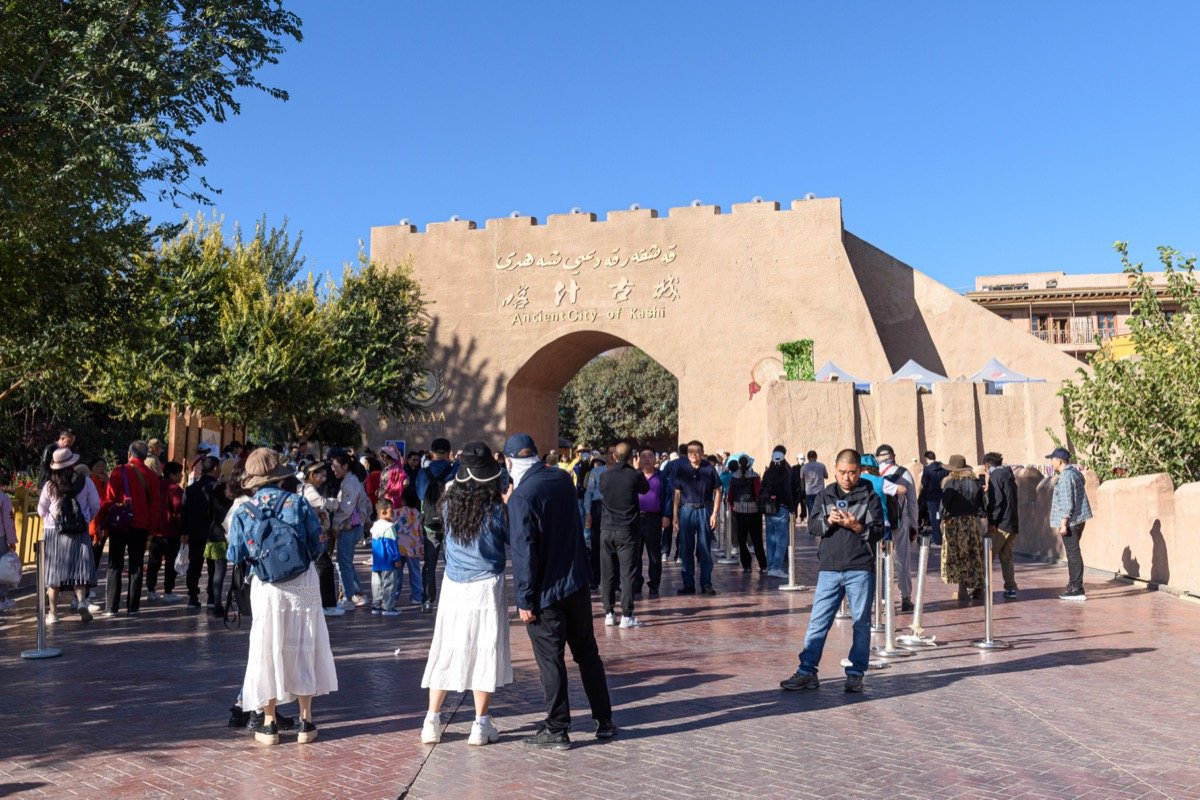
Kashgar. The lanes north of Id Kah Mosque have working bakeries roughly every 60 metres. The tourist-facing ones on the main pedestrian street charge double. For a broader map of where to eat around here, see our Kashgar food streets guide.
Kuqa. The old bazaar near the Kuqa Grand Mosque, Friday morning especially. This is the epicentre for oversized naan.
Hotan. Sunday market. Meat naan here is heavier on spice and the sellers work from carts rather than fixed shops.
Turpan. Sesame and sweet varieties dominate. Grape-drying-room district bakeries near Grape Valley sell to farm workers, so they are cheap and unglamorous.
Urumqi. The Grand Bazaar sells a decent product at inflated prices. Better: any residential district bakery in Shayibake or Tianshan, ¥2 to ¥4.
Yining. More Central Asian in style, sometimes with a softer crumb reflecting Uzbek and Tatar influence.
Taking Naan Home
Dry varieties travel well. Kuqa naan and plain toqach will survive a flight and stay edible for two to three weeks in a paper bag. Do not use plastic. It sweats and moulds. Oil naan and meat naan will not last two days.
Customs is generally relaxed about baked goods within China. International is your own risk assessment. I have carried three Kuqa naan to Shanghai in hand luggage without anyone caring.
Cost of a week’s bread supply for one traveller: roughly ¥25. It is the cheapest reliable food in a region where lamb prices have climbed steadily. When I am budgeting tightly, naan plus a bowl of yoghurt plus fruit comes to about ¥18 for a full day, which is covered further in our broader Silk Road cuisine overview.
Back at Abdulla’s
At 11:15 that October morning, the last naan went to a man on an electric scooter who paid with a ¥5 note and did not wait for change. Abdulla let the fire die, swept the ash, and went home. He does this six days a week. His father did it in the same pit.
Buy the bread while it is hot. Tear it, do not cut it. And if you only try one variety, make it girde, from a stall with a queue, before nine in the morning.