
Rooftop Tent Road Trips in Xinjiang: Sleeping Above the Car
Sleeping above the car
I resisted the rooftop tent for years. It looked like a gimmick — a bulky pod on the roof, more wind noise, more weight, more money. Then I spent a week in northern Xinjiang with one bolted to a rented 4WD, and I changed my mind somewhere around the third night, parked at 2,600 meters with the stars doing their thing through the tent’s skylight. For a self-drive trip in Xinjiang, a rooftop tent is not a luxury. It is a freedom multiplier.
Here is the honest, experience-based case for it, and the parts nobody mentions until you are already on the road.
Why it fits Xinjiang specifically
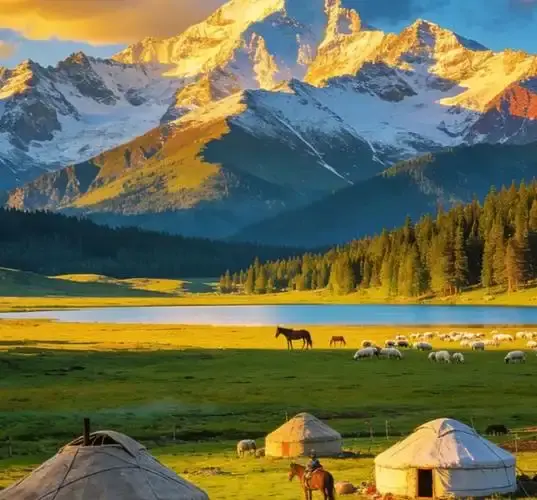
Xinjiang is enormous and its distances are brutal. A normal trip means hotel-hopping, and in peak season (July–August) the good oasis towns sell out or triple their prices. A rooftop tent lets you stop wherever the light is good — a lakeshore pull-off, a quiet grassland track — and sleep there. I once camped at Sayram Lake’s northern shore for free instead of paying ¥600 for a lakeside yurt that was booked anyway.
It also pairs perfectly with the region’s dispersed attractions. Our general camping guide covers ground tents; the rooftop version solves the two worst problems of ground camping here — hard, rocky or wet ground, and the cold that sinks up from the earth at 3,000 meters.
What it actually costs and weighs
A decent hard-shell rooftop tent rents as an add-on in Ürümqi or Yining for about ¥80–150 per day on top of the car, or you can buy a used one for ¥3,000–6,000. The roof pod adds 50–70 kg and roughly 8–12 cm of height, which matters in two ways: your clearance under low signs (rare problem here) and your fuel burn (a few percent worse). I tracked about 0.6 L/100 km extra on a gasoline SUV.
The trade-off is setup. A hard-shell opens in 60 seconds; a soft-shell canvas tent takes me 8–10 minutes of swearing in the wind. For a solo traveler doing move-every-day, the hard shell is worth the premium.
The sleeping experience, unromantic edition
Up high, you are above the ground chill and the bugs, and the mattress in most models is genuinely comfortable. But you are also above the wind. On a gusty night near the Dabancheng wind corridor the whole pod creaked like a ship, and I slept maybe four hours. Pick your overnight spot with wind in mind — a sheltered valley beats an exposed ridge.
Climbing the ladder at 2 a.m. to pee is less fun than it sounds at altitude, but it beats walking 200 meters into the dark to a freezing ground tent. Small wins.
Where you can and cannot park it
Xinjiang is relaxed about roadside overnight parking compared to coastal China, but not everywhere. Scenic areas with ticketed entrances often forbid overnight stays inside; the lake shore outside the gate is fine. I relied on our parking and vehicle security guide to pick spots where the car and gear would be safe overnight, and never had an issue.
For a more social, serviced version of the same idea, the glamping and yurt camps offer fixed beds under the same skies without the setup. The rooftop tent is for when you want to be somewhere the camps are not.
Packing the car around it
The roof pod eats your roof, so your spare gear moves inside. I reorganized using the system in our car packing and organization guide — soft duffels instead of hard cases, heavy items low, and the fridge within arm’s reach. Without that discipline the cabin turns into a obstacle course by day three.
After a long day, the hot-spring reset
One of the underrated joys of rooftop-tent touring is the loop where you camp cool nights and then thaw out. The natural hot springs guide became my reward map — a 40°C soak after sleeping at 5°C is a level of smugness I recommend.
Bottom line
For a two-week Xinjiang loop, a rooftop tent paid for itself in avoided hotel costs and gained me a dozen spontaneous stops I would have driven past otherwise. It is not for everyone — if you hate ladders or sleep light in wind, skip it — but for a self-driver who wants the region’s scale on its own terms, it is the single best gear decision I made.