
Earth Architecture and Cave-Dwelling Stays in Xinjiang
The Night I Slept Inside a Mountain
I still remember the first time I pressed my palm against a wall in Tuyugou and felt nothing. Not the chalky cold of a concrete hotel, not the warm hum of a radiator. The mud was perfectly neutral, like the air itself had been baked into stillness. It was the tail end of a July heatwave, 43℃ outside according to the thermometer bolted to the village teahouse, and I had just walked into a cave room cut straight into the loess cliff. The interior read 26℃ on my own phone. That single walk through a four-foot-thick doorway taught me more about Xinjiang’s earth architecture than any guidebook page.
For travelers who picture this region as endless dunes and snow peaks, the buildings themselves come as a quiet surprise. The earth here is not a backdrop. It is the material, the shelter, and often the reason a village has survived for a thousand years.
Adobe Courtyards and Beehive Domes
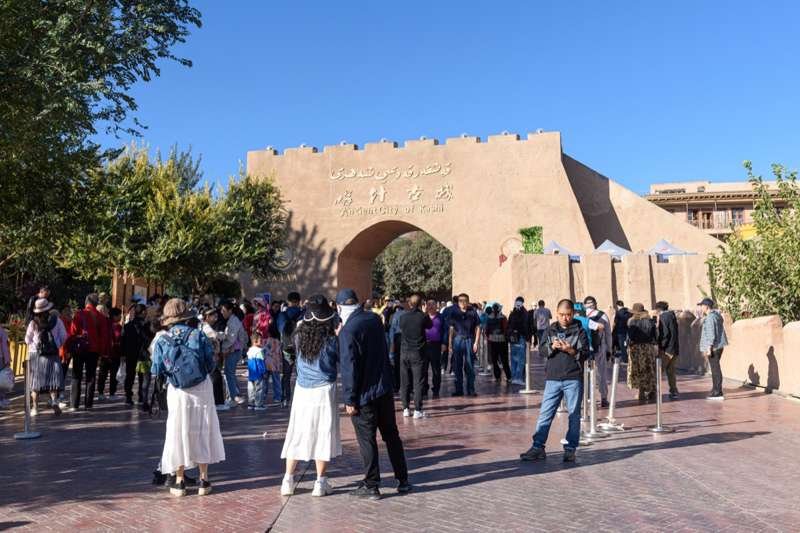
The common thread across Turpan, Kashgar’s old towns, and the scattered settlements near the Kumtag edge is sun-dried earth. Locals call the process what it is: mud, straw, and patience. Bricks are pressed in wooden frames and left to harden under a brutal summer sun for two weeks. The result is a building block that costs almost nothing, insulates like a sleeping bag, and blends so completely into the ground that from a distance a whole village looks like a low brown smudge on the horizon.
In the oasis towns around Turpan you will find walled courtyard houses with flat roofs and deep shaded porticos. Step through the gate and the noise of the street vanishes. The courtyard does the work of an air conditioner, trapping cool air at floor level while the thick adobe walls absorb the day’s heat and release it slowly after midnight. I have spent afternoons in these courtyards reading while the rest of the town shimmered, and the only sound was the trickle of a narrow irrigation channel running past the grape arbor.
Then there are the beehive-domed structures, the rounded earthen rooms that look like someone pressed a giant thumb into the clay. They appear in older parts of Kashgar and in village workshops where the dome shape lets the roof stand without timber. Standing inside one feels like being held. The curve throws sound upward and the mass of the wall keeps temperature steady. These are not museum pieces. Many still function as storerooms, tea rooms, or the occasional guest sleeping chamber when a family opens its home.
The Cliff Cave Dwellings of Tuyugou
Tuyugou sits about 70 km east of Turpan, a cleft in the mountains where the canyon walls are made of soft yellow loess. People have carved homes directly into that cliff face for centuries. From the road the village looks like a termite mound sculpted by hand, windows and doorways punched into the earth at every level, connected by narrow footpaths worn smooth by generations.
What struck me on my second visit was how alive the place remains. This is not a restored attraction with ropes and ticket booths at every turn. Families still live in the upper caves, hang rugs over the lintels, and keep chickens in the lower ones. The oldest occupied caves have been continuously used for roughly 600 years, and the masonry at their mouths has been rebuilt so many times that the earth itself tells a layered story.
Similar loess settlements dot the region, though Tuyugou is the one most travelers can reach and walk through in an afternoon. The light there is unforgiving at noon and golden beyond words two hours before sunset. If you are self-driving, the gravel approach road is fine for a normal sedan in dry weather but turns slick after rain, so plan the visit for a clear day.
Why Thick Earth Wins Against Heat and Cold
The physics is simple and it is also the reason these buildings outlast concrete boxes in the desert. A wall of packed earth half a meter thick has enormous thermal mass. It soaks up heat through the day and gives it back at night, flattening the swing between a 42℃ afternoon and a 14℃ desert dawn into a room that stays near 24–28℃ almost year round. In winter the same mass holds the warmth of a single stove for hours after the fire dies.
During a January trip near the Kumtag edge I measured a 19℃ difference between the outside air at dawn and the inside of a mud-brick guest room that had no heating running at all. The family simply banked the previous night’s stove embers and the earth did the rest. For a foreign traveler used to thin drywall, sleeping in a building that breathes this slowly feels almost medical. Your body stops fighting the temperature.
The roofs matter too. Flat adobe roofs shed the midday sun, and the small high windows catch the evening breeze that rolls in off the dunes. None of this is high technology. It is a climate response refined over a thousand years of trial and error in one of the harshest inhabited places on earth.

Where You Can Actually Stay
The good news for self-drivers is that sleeping in earth is no longer a fantasy reserved for archaeologists. Several places let you book a room that is genuinely made of mud or carved from a cliff.
Tuyugou Village Guesthouses
The most authentic option is a family guesthouse inside the old cave settlement. Expect a room carved into the hillside with a wood door, a raised platform bed, and a plug socket that may or may not hold your adapter. I paid ¥120 per night for a cave room with breakfast in spring, and the host brought warm flatbread and a bowl of melon at seven in the morning. The bathroom is usually a shared block a short walk downhill, so pack a headlamp. The trade for the simplicity is silence deeper than any hotel, and a view of the canyon turning pink at dusk.
Mud-Brick Homestays Near the Kumtag Edge
A cluster of newer mud-brick homestays has grown up where the oasis meets the desert, about 6 km from the Kumtag dune line. These are purpose-built with the same earthen technique but with proper mattresses and en-suite showers. Rates run ¥180 to ¥260 a night depending on the season, and most include a home-cooked dinner of laghman noodles and roasted lamb. The selling point is waking up, stepping outside, and having the dunes a ten-minute drive away before the wind reshapes them.
Earthen Courtyard Inns
In and around Turpan you can find restored courtyard inns where the shell is historic earth but the comforts are modern. Think air conditioning as backup, a proper cafe in the shaded portico, and rooms arranged around a central grape arbor. Prices here climb to ¥320–¥450 a night, which buys you the atmosphere without the compromise. For travelers with less tolerance for rough edges, this is the gentle introduction before you commit to a real cave.
Photographing Earth and Light
Earth architecture lives or dies by light, and Xinjiang gives you two golden windows a day. The first is the hour after sunrise, when the cliffs of Tuyugou glow a soft orange and the shadows inside the caves stay deep and clean. The second is the two hours before sunset, when the flat adobe walls of Turpan courtyards pick up a warmth that flat midday light destroys.
Bring a wide lens for the canyon settlements and a 35mm or 50mm for the texture of mud brick up close. I learned the hard way that noon washes everything to a featureless tan, so I schedule my driving for the middle of the day and save the camera for early and late. A small tripod helps for the blue-hour shots of lit cave windows, and a polarizer cuts the glare off pale walls.
If you want people in the frame, always ask first. The families who host you are usually delighted to pose by their doorways, and a few yuan or a printed photo sent later goes a long way. Respect the moments when a courtyard is clearly a private family space and step back.
Pairing Earth Stays With Orchard Farm Stays
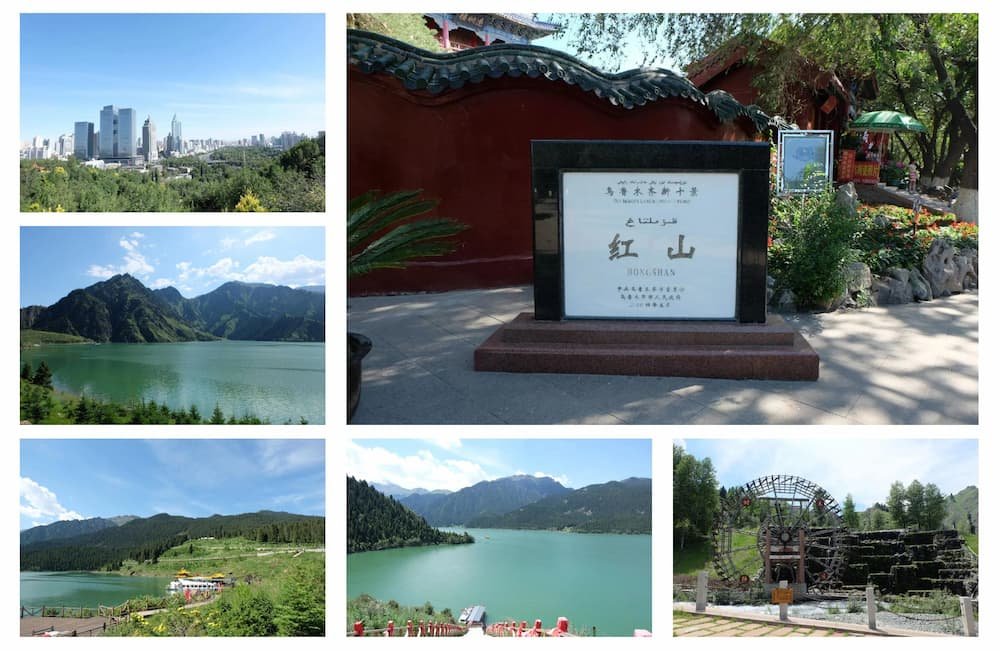
One of the best ways to round out a self-drive loop is to alternate earth architecture with the green world just behind it. The same oasis villages that build mud walls also grow grapes, apricots, and walnuts under irrigation channels older than most European cities. Booking a few nights of orchard farm stays lets you wake to birdsong and fresh fruit, then drive an hour to sleep in a cliff cave that stays cool without a single wire.
I once built a five-night loop this way: two nights in a Tuyugou cave, one night wild camping out near the Kumtag dunes under a ridiculous spread of stars, then two nights in an orchard courtyard where the host taught me to prune grape vines. The contrast between the dense quiet of earth and the open air of the desert made both experiences sharper.
What to Expect Before You Book
The honest part is that earthen and cave lodgings trade polish for character. Walls are thick and cool, sometimes a full 50 cm of packed earth, and they muffle sound so well you may wonder if the village has emptied. Interiors stay comfortably cool even when the thermometer outside screams, but the lighting is often dim and the plumbing basic. Bring your own toilet paper, a universal adapter, and a respect for the fact that you are sleeping in someone’s home as much as a hotel.
Comfort levels vary by property. The cave guesthouses are the most rustic, the mud-brick homestays sit in the middle, and the restored courtyard inns offer the softest landing. None will match a chain hotel, and that is exactly the point. For budget hostels you trade privacy for price, while earth stays trade convenience for memory.
Self-drivers should note that the most interesting properties sit 60 to 90 km outside the big cities, so build the stay into a longer route rather than treating it as a day trip. Fill the fuel tank in Turpan or Urumqi before heading out, because roadside stations thin out fast once you leave the ring road. A paper map still beats a dead phone in the canyons.
Carrying the Feeling Home
What stays with me is not any single room but the logic of it all. A people shaped by extreme heat and cold chose not to fight the land but to dig into it, pack it, and trust its mass. The nomadic felt interiors of the northern pastures share the same instinct for thermal survival, just expressed in wool instead of earth.
If you are planning a Xinjiang road trip and want more than photos through a bus window, sleep in the ground at least once. Book a cave in Tuyugou, watch the temperature hold steady while the desert rages outside, and you will understand a kind of architecture that no blueprint can capture. The wall will be neutral to your touch, the room will be quiet, and you will leave with a story the air-conditioned hotels never gave you.