
Brown Bears and Wolves of Xinjiang: Wilderness Wildlife and How to Stay Safe
The Morning a Brown Bear Walked Across My Track
A brown bear crossed the forest track ahead of me in the Tianshan before I’d even killed the engine. He was maybe forty metres off, a dark humped shape moving with that odd, unhurried bear grace, and for a full second I forgot to breathe. Then he slipped behind a stand of spruce and was gone, leaving only the smell of wet needles and the sudden, electric awareness that I was a guest in someone else’s kitchen.
That was my third day of a solo drive from Yining west into the mountain reserves, roughly 140 km of paved road giving way to graded forestry track. I had come to Xinjiang expecting deserts and silk-road towns. I did not expect to share a clearing with a wild brown bear before my coffee had cooled.
This guide is the one I wish I had read before that trip. It covers where Xinjiang’s brown bears and wolves actually live, how to read the landscape for signs of them, and the practical routines that keep a solo camper and a lone driver safe. The wildlife here is real, and mostly uninterested in you, but indifference cuts both ways: a bear that ignores you can still crush a tent or a cooler without meaning to.
Where Xinjiang’s Brown Bears Live
Xinjiang’s brown bears are Eurasian brown bears, Ursus arctos, the same species that ranges from the Pyrenees to Kamchatka. The ones here are smaller than the coastal giants of Alaska but no less serious. Two regions hold the bulk of the population, and they behave differently in each.
The Tianshan Population
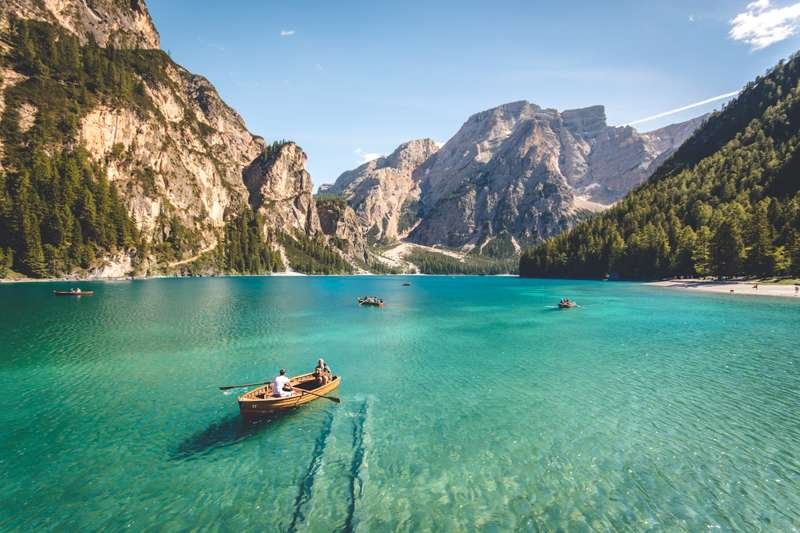
In the Tianshan, bears favour the conifer belt between about 1,800 m and 3,200 m, where spruce and fir give way to alpine meadow. They move up with the snowmelt, chasing the first green shoots in April and May, then follow the berry crop back down through July and August. I met mine at 2,400 m, in a valley of old-growth spruce roughly 90 km south of the nearest town with a fuel pump.
These bears are largely solitary and crepuscular, most active at dawn and dusk. In a good autumn they pack on fat from sea-buckthorn, wild apple and rosehip before denning in late October or November. By December the high forests are empty of them, and they stay down until the snow pulls back in spring.
The Altai and the Far North
The Altai range in the north holds the other major population, bears that roam the taiga and the river valleys along the border country. Here the forests run denser and colder, and the bears grow a touch heavier on a diet of fish, roots and the occasional ungulate. Altitudes run a little lower, often 1,200 m to 2,600 m, but the country is vast and lightly patrolled.
Both populations are protected, and numbers are modest. You are far more likely to see fresh tracks, a torn anthill or scat studded with seeds than the animal itself. That scarcity is its own comfort, but it also means a sighting can happen anywhere the habitat looks right, not just inside a fenced reserve.
Wolves on the Open Steppe and in the Forests
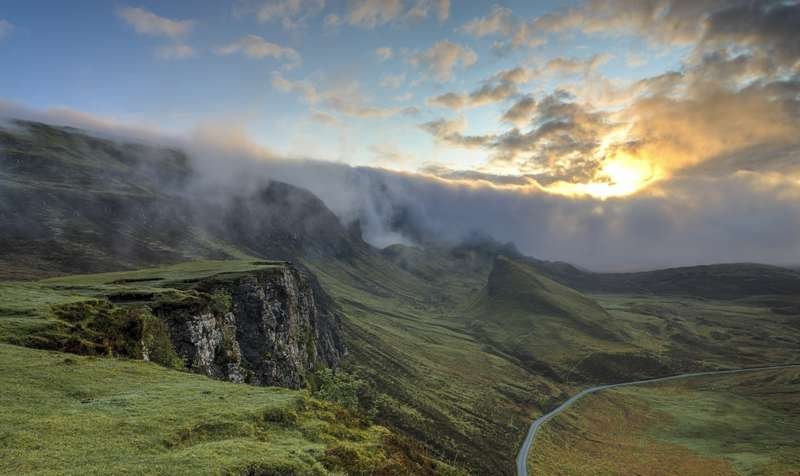
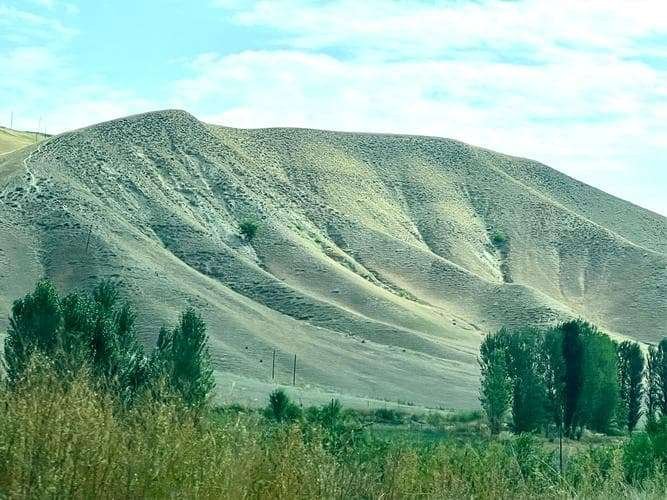
Wolves are the other large predator a self-drive traveler should understand, and they occupy a wider range than bears. Packs hold the Altai, the northern Junggar basin and many of the grassland foothills where livestock outnumber people. A lone wolf or a small pack will shadow a valley for weeks, hunting marmot, deer and the occasional sheep.
The truth is that healthy wolves want nothing to do with a human on foot or in a vehicle. Attacks are rare and almost always link to habituation or a cornered animal. What you will more likely hear is the sound itself: a pack chorus at dusk, starting as one low note and rolling into something that raises the hair on your neck. I heard it from inside my roof tent at a pass below 2,000 m, and I did not sleep much after.
Livestock herders across the north lose animals to wolves and that tension is real for the people who live here. For a traveler the risk is low, but it shapes where you can camp: many herders will wave you off a meadow they use for grazing, and that is a request worth honouring.
Reading the Signs Before You Ever See One
You can travel the bear country for weeks and never meet the animal, yet the forest leaves a clear diary if you know how to read it. Fresh tracks in mud by a stream are broader than your spread hand, with five toes and a blunt heel pad. Claw marks on a tree trunk, three or four metres up, mark a male rubbing scent in late spring. Turned-over rocks and dug anthills mean a bear was grubbing for grubs the day before.
Scat tells you the season. In May it is grass and leaf matter, loose and green. By August it is packed with berries and seeds, sometimes the size of your fist. A strong, sweet smell of fermented fruit near a thicket is a bear kitchen, and the rule is simple: do not walk into it. Give any fresh sign a wide berth and change your camp if you find it close to where you planned to sleep.
Wolves leave neater stories. Their tracks are longer than a dog’s and fall in straight, purposeful lines, often on game trails and frozen riverbeds. Scrapes and urine marks on rocks mark a pack boundary. None of these signs mean danger, but they tell you who shares the ground, and that knowledge changes how you park and how you cook.
Camp Safety: Food Storage and the Night Watch
The single most important habit is keeping food away from where you sleep. Bears that learn a camp means calories become repeat visitors, and a repeat visitor is a dead bear and a closed valley. I store all food, toothpaste and anything with a smell in a sealed barrel lashed into the roof of the vehicle, or hung from a branch at least four metres high and two metres out from the trunk. Never keep a snack in the tent, not even a granola bar.
Cook at least a hundred metres downwind from your sleeping spot, and pack the kitchen the moment you finish eating. Wash dishes away from camp and strain the greywater so no grease soaks into the ground. Burn or carry out all scraps. A clean camp is a boring camp, and boring is exactly what you want at 2,400 m with a bear in the valley.
At night, keep a light and a loud signal within reach. I carry a compressed-air horn and a powerful torch, and I sleep with the vehicle doors unlocked on the driver’s side. If a bear investigates, your job is to stay inside, make noise, and let it lose interest. Do not step out to photograph it. The bear is not performing, and a tent wall is no shield.
If you meet a bear on foot by daylight, the advice is unglamorous: stand your ground without advancing, speak in a low calm voice, and back away only once it looks away. Running triggers a chase response you cannot win. Most encounters end with the bear leaving first, often because you made yourself large, loud and unappetising.
Driving the Passes: What to Do at the Wheel
A self-drive trip is where most travelers actually meet wildlife, through the windscreen rather than on foot. On the high tracks above 2,500 m, bears and wolves cross at dawn and after rain when the dust settles. Slow down on blind crests and in any dip with a stream crossing, because that is exactly where an animal will be drinking.
If a bear steps onto the road, stop at a calm distance, maybe thirty metres, and wait. Do not honk or creep forward; let it cross on its own schedule. Wolves near the road are usually a passing glance, a grey shape loping along the verge, gone before you reach for the camera. The danger is not the animal but the swerve, so keep both hands on the wheel and brake straight.
Should you strike a large animal despite your care, pull fully off the track, switch on hazards, and stay inside until you have judged the scene. A wounded bear or wolf is far more dangerous than a calm one, and the road at altitude is no place to wander. Photograph the spot, note the GPS, and report it to the next ranger station; the information helps them track injured wildlife and warn following drivers.
Mountain driving here demands its own discipline, and the techniques for steep, loose-surface passes matter as much as the wildlife does. Before you tackle the high country, study the routines for national parks and reserves so a hairpin in the clouds does not become the day’s headline.
A Quiet Word on Reserves and Respect
Xinjiang’s protected areas vary from tightly managed national parks to loosely patrolled nature reserves, and the rules differ by gate. Some valleys close entirely from early November to mid-April for the denning season, and rangers will turn you back at a checkpoint with no argument. Always check the status of wild camping in the specific reserve you plan to enter, because a site legal one ridge over may be forbidden the next.
The deeper point is that this is working wilderness, not a zoo with a fence. Herders, rangers and the animals themselves all use the same valleys, and a traveler who respects the boundary lines keeps those valleys open for the next person. Stay on established tracks, take nothing but photographs, and leave no food smell behind.
Other Wildlife Worth Knowing
Bears and wolves are the headline acts, but the same forests hide quieter neighbours. The dry southern ranges and remote basins shelter snow leopards and wild camels, elusive and far from any camp, yet worth understanding if your route runs south toward the deserts. Knowing the full cast of the region makes you a better, safer traveler, because every species leaves its own signature on the land.
And the small things bite too. The high meadows swarm in July, and a bad night with no net or repellent will teach you faster than any warning. Before a summer trip, read up on biting insects and mosquitoes so the wildlife you remember is the bear, not the itch.
What I Carry Now
After that first morning I rebuilt my kit around the bear, not against it. A bear barrel, a hundred metres of paracord, a horn, a bright torch, and a habit of scanning the track three bends ahead. I keep the vehicle fuelled above half a tank in bear country because the next fuel may be 120 km off, and I never camp beside a river ford where animals must drink.
None of this is fear. It is simply the courtesy of traveling where the wild still runs free, from the spruce at 2,400 m in the Tianshan to the cold taiga of the Altai. The bear crossed ahead of me and never looked back, and that, I have decided, is the perfect encounter: close enough to remember, far enough to remain a guest.